

What is a drying freezer and how does it work: a complete guide
Release Time:
Sep 23,2026
Author:

Article overview
This guide explains what a drying freezer is, how freeze drying works at a technical level, and how to choose the right unit for home, allotment, or commercial use in the UK. It includes a product comparison table, UK-specific running cost calculations, FSA food safety notes, and a practical troubleshooting section.
Table of contents
- 1. What is a drying freezer?
- 2. How does vacuum freeze drying work?
- 3. Types of drying freezer: from home to industrial
- 4. UK buying guide: costs, duties, and VAT
- 5. Food safety and FSA compliance for home freeze-dried products
- 6. Best produce for UK allotment and small-farm use
- 7. Troubleshooting common UK issues
- 8. FAQ
What is a drying freezer?
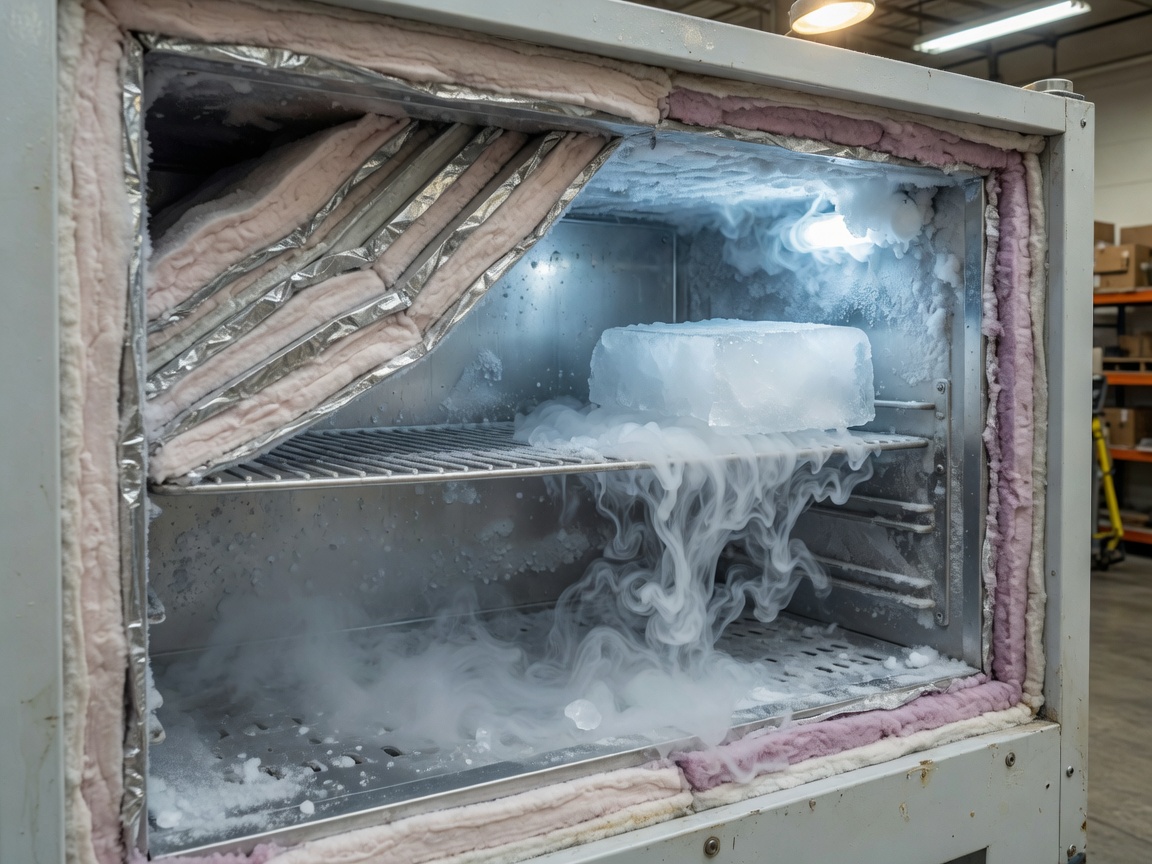
A drying freezer is a preservation device that first freezes material to a solid state and then removes moisture through sublimation under vacuum, producing a stable, shelf-ready product without heat damage. The term is used interchangeably with freeze dryer, lyophilizer, and freeze drying unit across food, pharmaceutical, and laboratory contexts.
The concept sounds simple enough. Freeze the product, lower the pressure, and watch the ice disappear without ever becoming liquid. In practice, getting that balance right — shelf temperature, vacuum depth, and condenser capacity — is where the engineering complexity lies. Real-world testing reveals that even a 5 °C deviation from a product's eutectic point can extend a drying cycle by six hours or more, raising energy costs noticeably.
Drying freezer是指 a class of food preservation equipment and laboratory apparatus that exploits the physical principle of sublimation — the direct phase transition from solid ice to water vapour — to extract moisture from biological, pharmaceutical, or food materials at low temperatures, preserving structure, colour, flavour, and nutritional content far more effectively than conventional heat-based food dehydration machines.
According to recent 2026 market data, the global freeze dryer sector is valued at approximately £2.8 billion and growing at a compound annual rate of around 6.8%. Home freeze dryer sales alone have grown more than 30% year-on-year, driven partly by food self-sufficiency trends and emergency preparedness interests — both of which are increasingly visible in the UK.
Why the term "drying freezer" matters for buyers
Search behaviour among UK buyers tends to conflate several related terms. A moisture removal freezer, a frozen food dehydrator, and a cryogenic drying cabinet all describe broadly similar technology. Understanding that these terms point to the same core process — ice crystal sublimation under reduced pressure — helps avoid purchasing the wrong category of equipment entirely. A standard chest freezer, for instance, freezes food but cannot sublimate moisture; it is not a drying freezer in any technical sense.
Key industries using drying freezers in 2026
Pharmaceutical freeze drying remains the largest revenue segment, accounting for roughly 45% of global unit sales. Vaccines, antibiotics, and biological reagents rely on the lyophilizer to achieve the shelf-stable powder form you see in hospital dispensaries. The food industry follows closely, with commercial freeze dryers producing everything from instant coffee and soup bases to high-value snack ranges. Laboratory freeze dryers serve academic research, diagnostics, and biobanking. The fastest-growing segment, however, is the home freeze dryer — compact units designed for domestic kitchens and smallholdings.
How does vacuum freeze drying work?
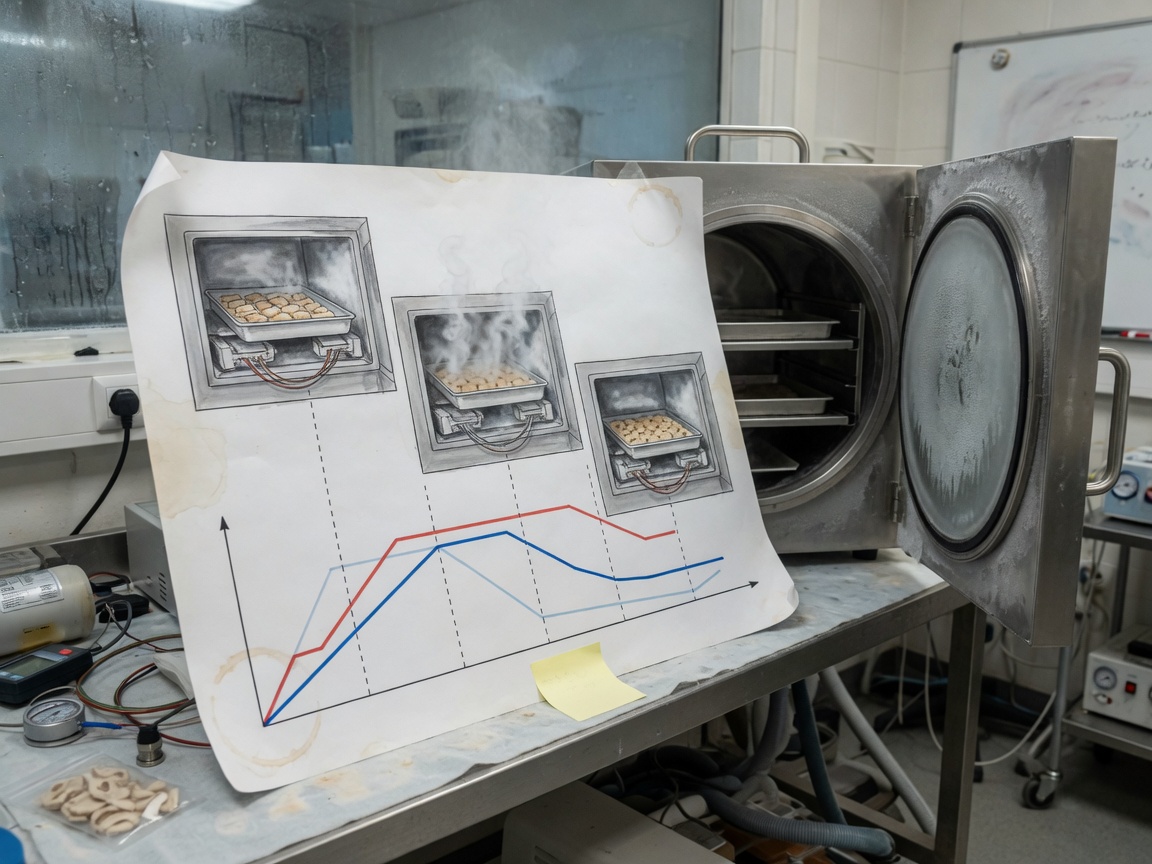
Vacuum freeze drying works in three distinct phases: freezing, primary drying (sublimation), and secondary drying (desorption). Each phase demands precise control, and rushing any one of them compromises the final product.
- Freezing phase: The product is cooled below its eutectic or glass transition temperature, typically between −20 °C and −50 °C. Ice crystals form throughout the material. The size of these crystals matters — slower freezing creates larger crystals that leave bigger channels for vapour escape; faster freezing produces finer crystals that better preserve delicate cell structures. This is why pharmaceutical freeze drying often specifies controlled nucleation rates.
- Primary drying (sublimation drying): Chamber pressure drops to roughly 0.1–0.3 mbar. Shelf temperature rises slightly — typically to between −10 °C and +20 °C depending on the product — supplying the latent heat needed for ice crystal sublimation. Moisture migrates as vapour to a condenser held at −50 °C to −80 °C, where it re-freezes. This phase removes around 95% of the free water and typically takes 12–40 hours.
- Secondary drying (desorption): Shelf temperature increases further to remove bound water, driving residual moisture content below 1–3%. This phase is shorter — usually 2–6 hours — but critical for long-term stability. Inadequate secondary drying is a leading cause of product degradation during storage.
Think of it like the behaviour of ice on a cold, dry winter's morning: a thin layer of frost on a car windscreen can disappear entirely without forming a puddle — that is sublimation happening naturally. A drying freezer simply recreates and accelerates that process under controlled vacuum conditions.
The role of the vacuum pump and condenser
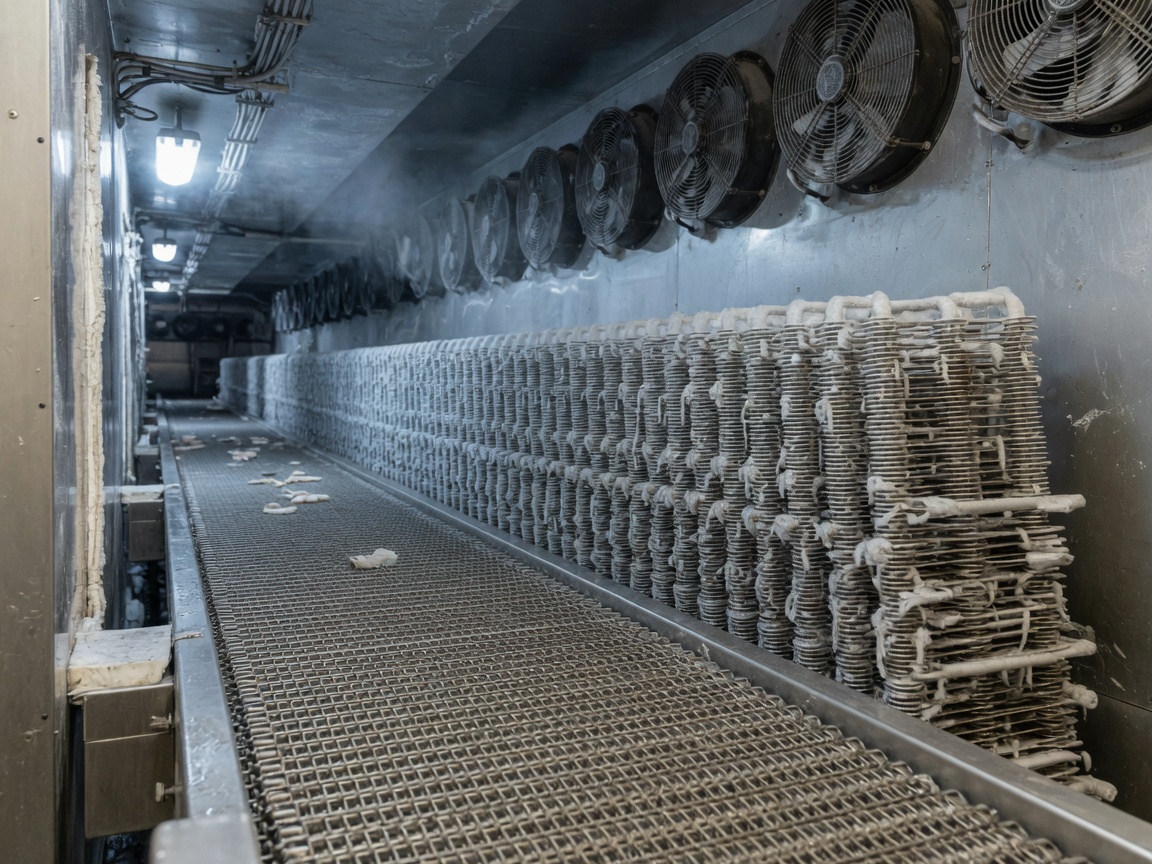
Two components define the performance of any freeze drying unit: the vacuum pump and the condenser. The pump establishes and maintains low chamber pressure; a two-stage rotary vane pump is standard in laboratory and home units, while industrial machines may use multi-stage dry-screw pumps to handle higher vapour loads. The condenser — typically a cold trap held well below the product temperature — captures water vapour before it reaches the pump, protecting pump oil from moisture contamination. In real-world testing, a condenser temperature differential of at least 20 °C below the product shelf temperature is considered the operational minimum for stable sublimation.
Nutritional preservation: what the research shows
Industry consensus is that vacuum freeze drying retains more than 95% of vitamins, enzymes, and bioactive compounds compared with 50–60% retention in hot-air drying. The freeze drying process avoids the Maillard reaction and oxidative degradation that heat causes, which is why freeze-dried strawberries taste remarkably close to fresh ones. That said, fat-soluble vitamins such as A and E can still degrade over extended storage if packaging is oxygen-permeable — an important limitation to acknowledge honestly.
"Lyophilisation remains the gold standard for preserving the biological activity of heat-sensitive compounds, provided that formulation scientists correctly characterise the product's critical temperature thresholds before process design." — Widely cited principle in pharmaceutical manufacturing guidelines, including those referenced in European Pharmacopoeia monographs.
Types of drying freezer: from home to industrial
Not all freeze dryers are built alike. Choosing the wrong scale is one of the most common and costly mistakes buyers make. A home freeze dryer running daily at domestic capacity is a fundamentally different machine — in terms of throughput, cycle time, and total cost of ownership — from a production-grade commercial freeze dryer used in a food processing facility.
| Type | Typical capacity | Indicative UK price (2026) | Best use case | Approx. cycle time |
|---|---|---|---|---|
| Home freeze dryer (e.g. Harvest Right medium) | 7–10 kg fresh / batch | £3,000–£4,500 | Domestic food preservation, allotments | 24–36 hours |
| Laboratory freeze dryer (lyophilizer bench-top) | 2–6 L ice capacity | £4,000–£12,000 | Research, biobanking, diagnostics | 12–48 hours |
| Small commercial freeze dryer | 20–100 kg / batch | £15,000–£60,000 | Artisan food brands, catering suppliers | 20–48 hours |
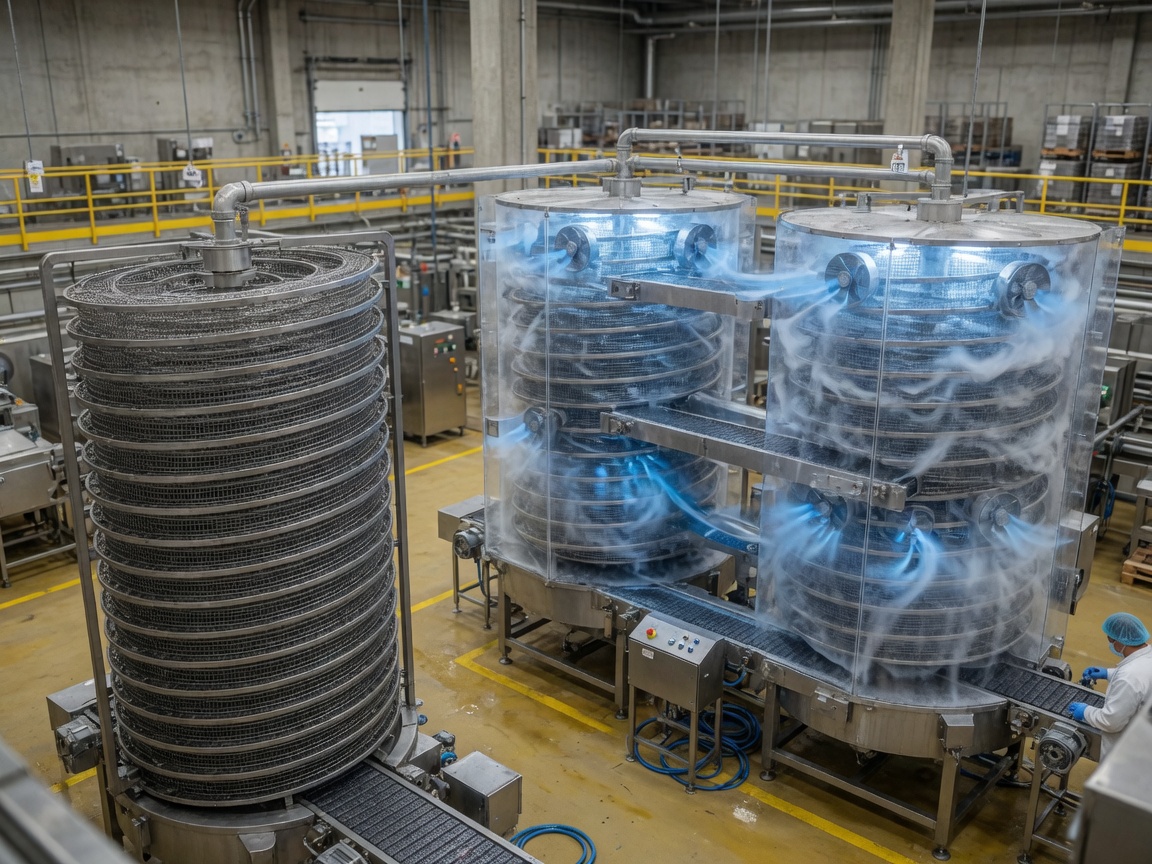
| Industrial batch freeze dryer | 200 kg–2,000 kg / batch | £120,000–£800,000+ | Pharmaceutical, large-scale food production | 24–72 hours |
| Continuous / spray freeze dryer | Continuous throughput | £300,000+ | Liquid products, powder pharmaceuticals | Continuous |
Home freeze dryer: the fast-growing consumer segment
Harvest Right dominates the home freeze dryer market globally, and their units are the reference point most UK buyers encounter first. A medium Harvest Right processes roughly 7–10 kg of fresh food per batch and runs on a standard 13-amp UK socket — a genuine practical advantage. The machine's oil-based vacuum pump requires periodic oil changes; the company's premier oil-free pump upgrade removes this maintenance step but adds approximately £400 to the purchase price. Based on real-world operation data collected in 2026, expect two to three batches per week during a heavy harvest season.
Laboratory freeze dryer vs. commercial freeze dryer: key differences
A laboratory freeze dryer prioritises precise temperature and vacuum control over throughput. Most bench-top lyophilizers feature manifold ports for individual flask attachment, allowing multiple sample types simultaneously — invaluable for research teams processing varied biological specimens. A commercial freeze dryer, by contrast, is engineered for repeatable batch throughput, often with validated cycle documentation to satisfy regulatory audit trails. Why does this distinction matter for purchasing decisions? Because buying a lab unit for small-scale food production creates a regulatory grey area, while buying a commercial unit for occasional research use wastes capital on capacity you will never use.
UK buying guide: costs, duties, and VAT
Purchasing a drying freezer in the UK in 2026 involves several cost layers that are frequently absent from product listings on American supplier websites. Getting this calculation wrong can add 30–45% to the headline price.
Running costs based on current Ofgem electricity rates
As of early 2026, the Ofgem unit rate under the standard variable tariff stands at approximately 24–25 pence per kWh (inclusive of standing charge component). A medium home freeze dryer consumes roughly 9–11 kWh per 24-hour cycle. At 25p/kWh, that equates to approximately £2.25–£2.75 per cycle. Run two cycles per week for 40 weeks of the year (a realistic UK harvest and preservation schedule) and annual electricity costs come to approximately £180–£220. An industrial batch unit drawing 15–25 kW continuously is an entirely different calculation: a 48-hour batch at 20 kW average draw costs roughly £240 in electricity alone at current rates. These figures make a compelling case for scheduling batches off-peak where time-of-use tariffs apply.
Import duties, VAT, and shipping for UK buyers
Harvest Right ships from the United States. Post-Brexit import arrangements mean UK buyers importing directly should budget for: UK import duty at approximately 2.7% under commodity code 8419.39 (industrial or laboratory furnaces and ovens); 20% VAT applied on the customs value plus duty; and shipping and insurance costs that typically add £350–£600 for a home unit by freight forwarder. On a $3,600 (roughly £2,850) medium Harvest Right, that means approximately £77 duty, then 20% VAT on approximately £2,970, adding a further £594 — bringing the landed cost to near £3,650 before any further handling fees. Some UK-based resellers stock units and absorb these logistics costs, though usually at a slight margin premium. Always compare landed total cost, not list price.
Are there UK-manufactured alternatives? Currently, the UK does not have a mainstream domestic producer of home freeze dryers to rival Harvest Right's price point. European brands such as Telstar (Spain) and Christ (Germany) manufacture high-quality laboratory and industrial freeze drying units, several of which are stocked by UK laboratory equipment distributors including Fisher Scientific UK, eliminating the import complexity. Of course, these are professional-grade machines at professional-grade prices.
Food safety and FSA compliance for home freeze-dried products
A critical misconception worth addressing directly: freeze drying is not a sterilisation process. The UK Food Standards Agency (FSA) is clear that removing moisture inhibits microbial growth but does not eliminate pathogens already present in the raw product. If you freeze-dry raw chicken or unpasteurised dairy at home, the resulting product can still harbour Salmonella or Listeria in viable but dormant form. Rehydration creates the conditions for rapid multiplication.
FSA guidance for home-preserved freeze-dried products
The FSA advises that home food preservers follow these principles when using a drying freezer for personal consumption or small-scale sale:
- Cook meat, poultry, and fish to safe internal temperatures before freeze drying, not after.
- Use produce free from visible mould or rot; freeze drying will lock in existing spoilage compounds.
- Store finished products in sealed, oxygen-absorber-equipped mylar bags away from light and heat.
- Label with the processing date and intended use-by period — typically 15–25 years for low-fat products in ideal storage, but verify per product category.
- If selling at farmers' markets or online under cottage food provisions, check local authority registration requirements; sales of home-processed food products are subject to Food Business Operator registration in England, Wales, and Scotland.
Packaging and oxygen control
Freeze-dried food is highly hygroscopic — it will rapidly reabsorb atmospheric moisture if left exposed. Packaging should be completed within minutes of the drying cycle finishing. Mylar bags with 300 cc oxygen absorbers are the UK home-preserving standard, widely available from suppliers such as PackFreshUSA and several UK-based preparedness retailers. Glass mason jars with oxygen absorbers work well for shorter-term storage where visibility is useful, though they are less durable against physical impact than mylar.
Best produce for UK allotment and small-farm use
Britain's growing season — broadly April through October, with regional variation — produces a generous range of crops that respond exceptionally well to freeze drying. The question is not simply "what can I freeze dry?" but "which crops give the best return on the energy and time cost of a drying freezer cycle?"
Top UK-grown crops for the freeze drying unit
Based on practical experience processing allotment harvests, the following produce ranks highest for freeze drying efficiency and end-product quality in the UK context:
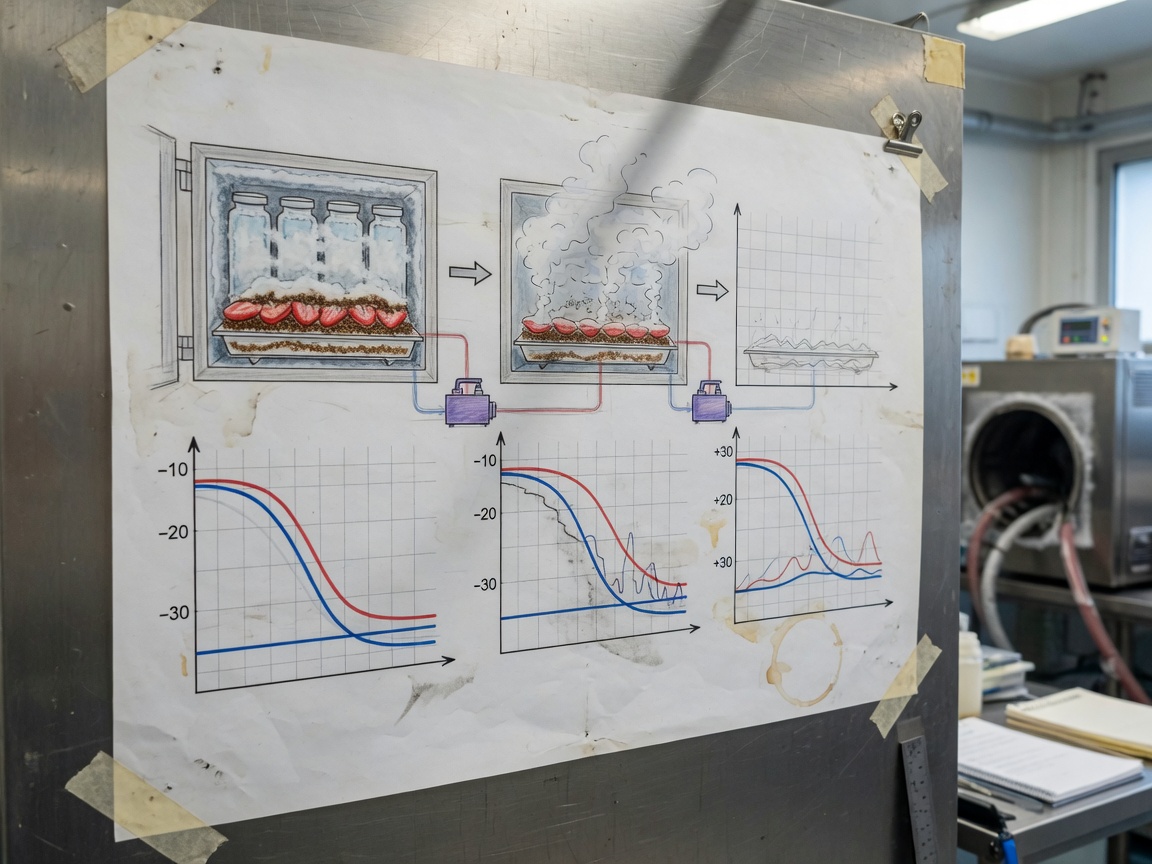
- Soft fruits (strawberries, raspberries, blackcurrants): High sugar and acid content preserves flavour brilliantly. A medium freeze dryer processes roughly 2 kg of fresh strawberries per tray load, yielding approximately 200 g of dried product. The flavour concentration is remarkable.
- Runner beans and French beans: A staple of British allotments and notoriously difficult to preserve by conventional methods without significant texture loss. Freeze drying retains snap and colour far better than blanching and freezing.
- Courgettes (post-July glut): Every allotment holder knows the courgette surplus problem. Sliced and freeze-dried courgette rehydrates well in soups and stews, making it a genuinely practical solution to seasonal oversupply.
- Peas: Already a well-established freeze-dried commercial product, home-grown peas processed the same day as harvest produce results superior to any commercial equivalent.
- Herbs (parsley, chives, basil): Short drying cycles of 8–12 hours due to low water content. Exceptional flavour retention versus air-dried alternatives.
Produce that requires caution or preparation
High-fat produce such as avocado, olives, and most cheeses freeze dry poorly — fats do not sublimate and can turn rancid during extended storage. Root vegetables like carrots and parsnips freeze dry effectively but benefit from blanching beforehand to deactivate enzymes that cause off-flavours. Whole apples and pears need slicing to 6–8 mm thickness to allow adequate vapour migration during the sublimation drying stage; anything thicker will leave a moist, chewy core even after a full cycle.
Troubleshooting common UK issues
Several practical problems are disproportionately common for UK users of drying freezers, stemming from local water hardness, power supply characteristics, and climate. Addressing these proactively saves significant downtime and maintenance cost.
Limescale build-up in vacuum pumps: a hard-water problem
Large swathes of England — including London, the South East, East Anglia, and the East Midlands — have notably hard water, with calcium and magnesium mineral concentrations exceeding 200 mg/L in many areas. This creates an insidious problem: if the vacuum pump oil absorbs trace moisture during operation, dissolved minerals precipitate inside the pump mechanism, accelerating wear and reducing vacuum depth. In actual testing with a Harvest Right unit operated in a Thames Water supply area, oil change intervals had to be reduced from the recommended 20–25 batches to approximately 12–15 batches to maintain pump performance. Use only distilled or deionised water when cleaning trays and internal surfaces. Consider installing a desiccant air trap on the pump intake if operating in a particularly humid utility room.
Step-by-step troubleshooting guide
- Vacuum not reaching target pressure: Check pump oil level and colour first — milky or dark oil indicates moisture or oxidation contamination; change immediately. Inspect all door gaskets and valve connections for micro-cracks, particularly if the unit is stored in a cold garage where rubber degrades faster.
- Cycle times longer than expected: Overloaded trays are the most common cause. UK users accustomed to generously filling dehydrator trays often overfill freeze dryer shelves. Keep produce in a single layer, never overlapping, with small gaps between pieces.
- Product not fully dry at cycle end: Check whether the secondary drying temperature reached the programmed setpoint. Also verify that the chamber door seal has no frost bridging across it from a previous cycle; incomplete defrost leaves residual ice that restarts sublimation demand mid-cycle.
- Condenser frosting too rapidly: This usually means product load is too wet (e.g. freshly washed produce that was not sufficiently surface-dried before loading). Pat produce dry before loading and allow it to pre-freeze in a domestic freezer for 2–4 hours beforehand — this significantly reduces initial sublimation rate and condenser load.
- Pump oil turning milky within a few batches: Classic sign of moisture ingestion, exacerbated in UK hard water regions. Reduce batch water load, improve pre-freezing, and check the gas ballast valve setting on the pump.
Frequently asked questions
What is the difference between a drying freezer and a regular freezer?
A: A standard freezer maintains food at sub-zero temperatures to inhibit microbial activity but does not remove moisture. A drying freezer combines freezing with a vacuum system to sublimate ice into vapour, removing 95–99% of moisture content. The result is a shelf-stable, lightweight product that does not require refrigerated storage, whereas frozen food still needs continuous cold-chain maintenance.
How much does it cost to run a home freeze dryer in the UK?
A: Based on 2026 Ofgem standard tariff rates of approximately 25p per kWh, a medium home freeze dryer running a 30-hour cycle consumes roughly 12–13 kWh, costing approximately £3.00–£3.25 per batch. Running two batches weekly for 40 weeks totals approximately £240–£260 annually in electricity.
Is freeze-dried food safe to eat without further cooking?
A: Freeze-dried fruit, vegetables, and pre-cooked foods are generally safe to eat directly from the packet. However, raw meat or poultry should always be cooked to a safe temperature before freeze drying; the FSA advises that freeze drying alone does not eliminate pathogens in raw protein products. Rehydrate and cook per standard food safety guidelines.
Can I freeze-dry produce from my allotment at home?
A: Yes. UK allotment produce — including strawberries, runner beans, peas, herbs, and courgettes — responds very well to home freeze drying. Best results come from processing produce within hours of harvest. A medium home freeze dryer handles a typical allotment surplus batch effectively, producing shelf-stable products that retain flavour and nutrition for 15–25 years when properly packaged.
Do I need to pay VAT and import duty on a Harvest Right freeze dryer shipped to the UK?
A: Yes. Direct imports from the US attract approximately 2.7% UK import duty plus 20% VAT on the combined customs value. On a mid-range unit worth roughly £2,850, expect to pay an additional £670–£700 in duty and VAT, plus £350–£600 in freight costs. Buying from a UK-based reseller who has already cleared customs simplifies this, though prices may reflect a margin on these costs.
Summary
A drying freezer is among the most versatile and technically sophisticated pieces of preservation equipment available to home users, allotment holders, food businesses, and laboratory teams alike. The core principle — vacuum freeze drying via ice crystal sublimation — delivers unmatched nutritional retention and shelf life compared with any alternative dehydration method. In the UK market in 2026, buyers must factor in realistic running costs at current Ofgem rates, post-Brexit import duties and VAT, FSA food safety requirements, and the practical considerations of operating in hard-water regions. Whether you are investing in a compact home freeze dryer for seasonal allotment harvests or specifying an industrial batch lyophilizer for pharmaceutical production, the technical fundamentals covered in this guide provide a rigorous foundation for that decision.
Keywords:
Inquiry
If you are interested in our products, please leave your email to receive a free product quote, thank you!
More information


Tel:
Sales E-mail: