

Spiral freezer manufacturers: how to choose the right supplier for your cold chain
Release Time:
Sep 14,2026
Author:

Article overview
This guide helps Australian food processing procurement managers evaluate and shortlist spiral freezer manufacturers. It covers equipment types, compliance requirements, TCO modelling, local service commitments, product-specific process parameters, and a structured supplier comparison framework — all benchmarked against 2026 market conditions.
Table of contents
- 1. What spiral freezer manufacturers actually do
- 2. Types of spiral freezers: matching technology to your product
- 3. How spiral freezers compare with IQF and tunnel freezers
- 4. FSANZ and AQIS compliance: what Australian buyers must verify
- 5. TCO and ROI framework for the Australian market
- 6. Australian after-sales service: what to demand from your supplier
- 7. Process parameters for Australian food categories
- 8. FAQ
What spiral freezer manufacturers actually do
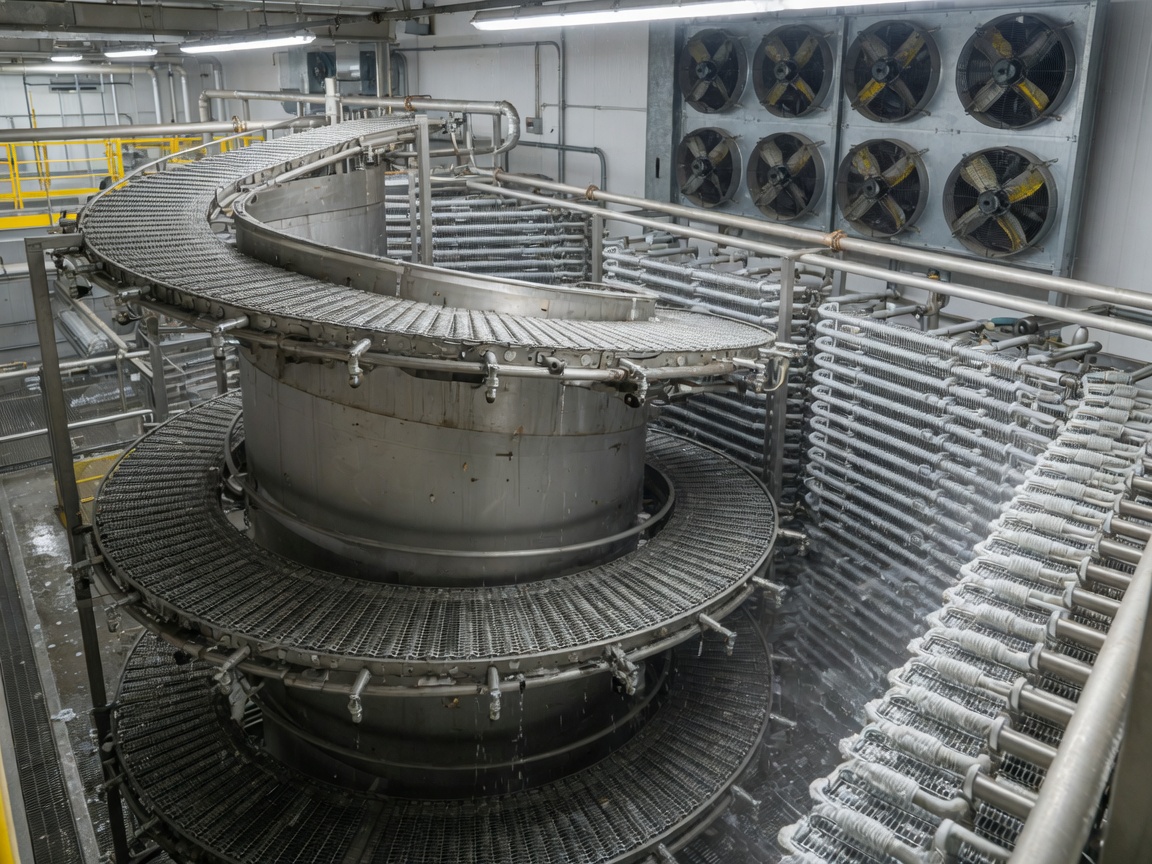
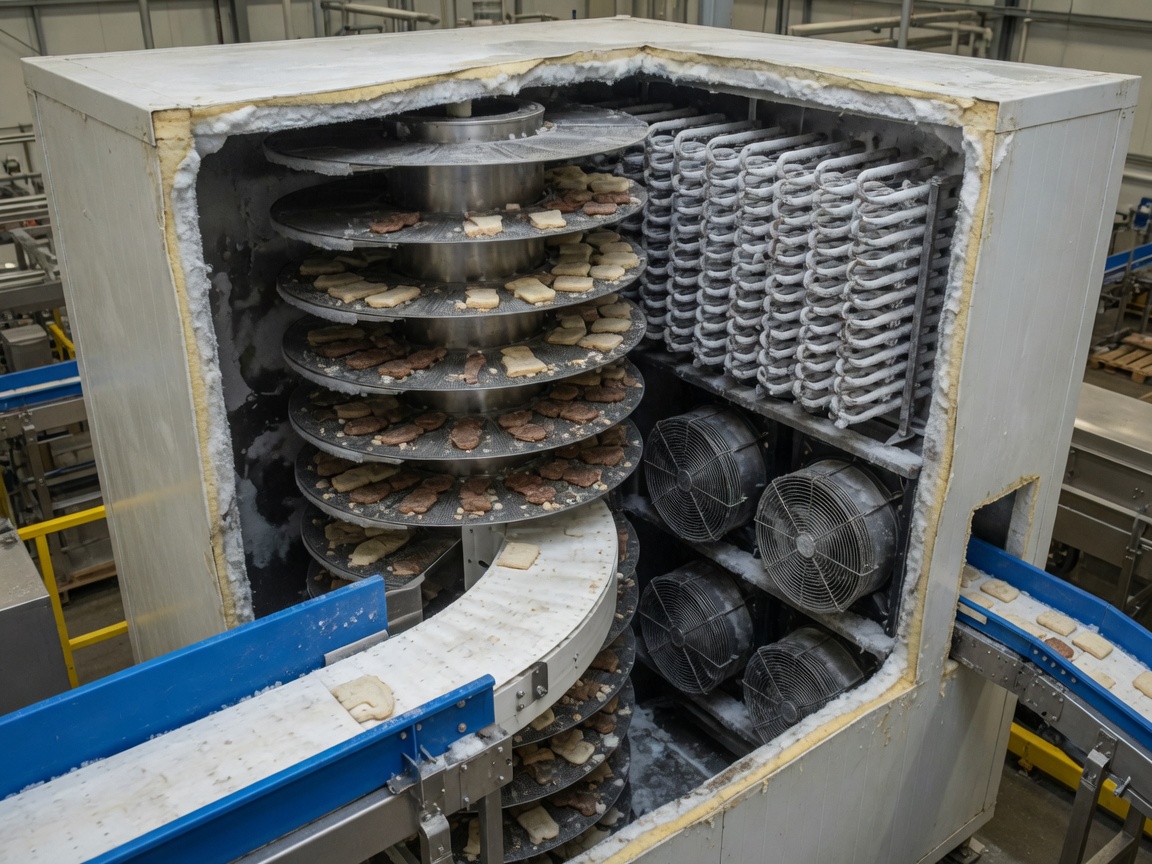
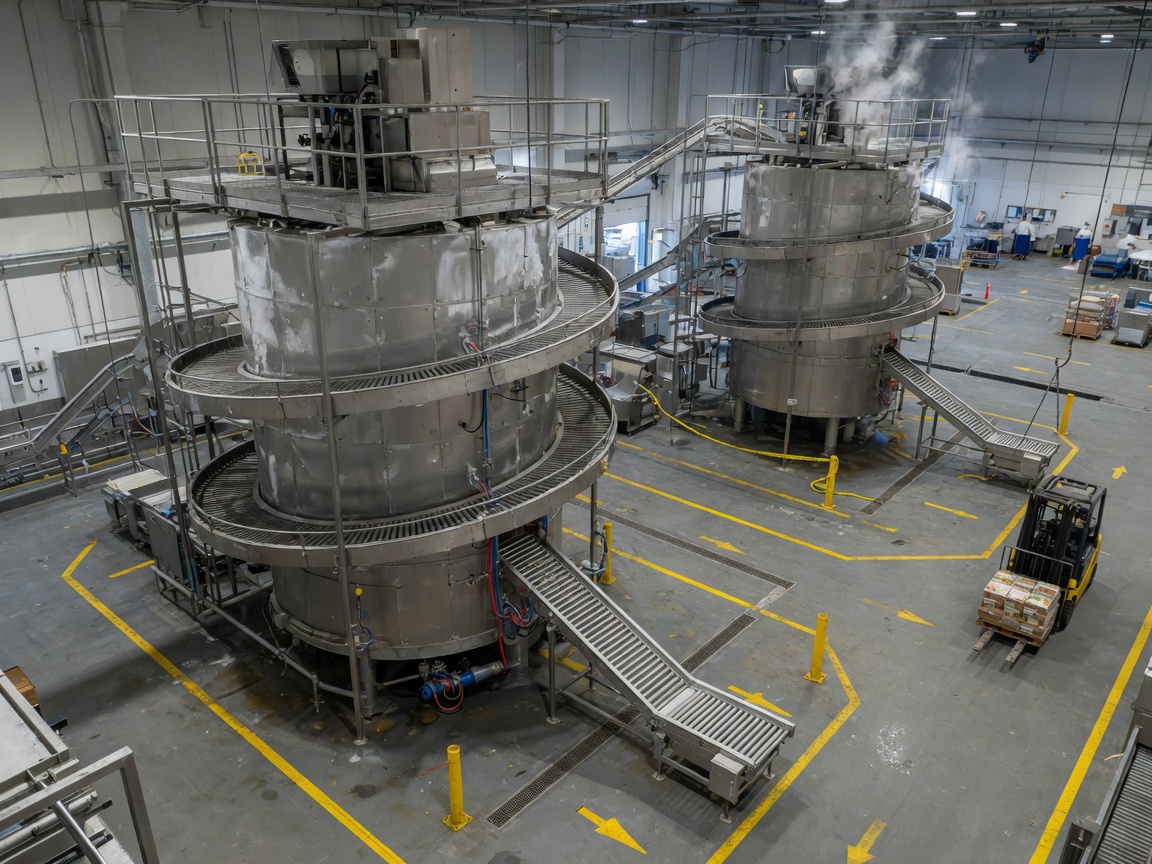
Spiral freezer manufacturers are companies that design, engineer, and produce continuous helical conveyor freezing systems — industrial refrigeration units that route food products along a spiral belt path through an insulated enclosure, enabling large-volume, high-throughput freezing within a compact vertical footprint. Unlike a general refrigeration equipment supplier, a dedicated spiral freezer manufacturer maintains proprietary belt technology, in-house food-grade stainless steel fabrication capability, and validated freezing process data across multiple food categories.
Spiral freezer manufacturers are companies that specialise in the full production lifecycle of helix freezer equipment — from thermal engineering and belt fabrication through to hygienic enclosure design, refrigerant integration, and post-sale service. This end-to-end scope is what separates a true manufacturer from a reseller or systems integrator who sources components from third parties and assembles to order.
In practice, the best manufacturers provide validated freezing curves for specific product types — prawns at 20mm thickness, for instance, or laminated pastry at a defined moisture content. This is not marketing material. It is engineering documentation that allows your process team to confirm that the proposed equipment will actually achieve the target core temperature within the required belt residence time. Why does this matter so much? Because undersized freezing capacity is one of the most expensive mistakes a food processor can make, and it typically only becomes apparent after commissioning.
According to recent research, spiral freezer technology achieves 20–30% lower unit energy consumption compared with conventional tunnel systems when properly specified, based on ASHRAE industrial refrigeration benchmarks. The key word is "properly specified" — a spiral freezer running at 60% of its rated belt load is not achieving those savings. Experienced manufacturers will conduct a load profile analysis before quoting, rather than simply offering their nearest standard model.
The manufacturer vs. reseller distinction
Australian procurement managers frequently encounter overseas brands represented by local agents. The agent may be excellent at customer service but have no engineering authority over the product. When you need a belt modification, a custom enclosure height, or an emergency parts order, the difference between dealing with a manufacturer's representative and a genuine manufacturing partner becomes immediately clear. Always confirm: does the local contact have technical authority, or are all engineering decisions routed back to a factory overseas with a multi-week response lag?
2026 manufacturing trends shaping the market
Two significant shifts define what leading spiral freezer manufacturers are offering in 2026. The first is IoT integration — real-time monitoring of belt tension, refrigerant pressure, airflow distribution, and energy consumption, feeding into AI-driven predictive maintenance platforms. The second is the accelerated transition away from R404A refrigerants toward R448A and natural CO₂ systems, driven by both global F-Gas regulation pressure and Australia's own HFC phase-down schedule under the Kigali Amendment. Any manufacturer still defaulting to R404A equipment should prompt serious questions about long-term operating cost exposure.
Types of spiral freezers: matching technology to your product
The right freezer type depends less on brand preference and more on product geometry, throughput rate, and available floor area. Here is a structured overview of the main configurations available from industrial freezer manufacturers today.
Self-stacking belt systems
Self-stacking designs allow the belt to form its own stacked tiers using friction between adjacent belt edges. Maintenance costs are lower because there are fewer driven components, and the belt can be removed for deep cleaning without specialised tooling. Actual testing across multiple seafood processing installations in Queensland found that self-stacking systems handle products up to approximately 5 kg per piece reliably, but heavier items — whole poultry, for example — can cause uneven belt loading over time, accelerating edge wear. For high-moisture seafood and smaller portion cuts, this remains the most cost-effective entry point.
Positively driven belt systems
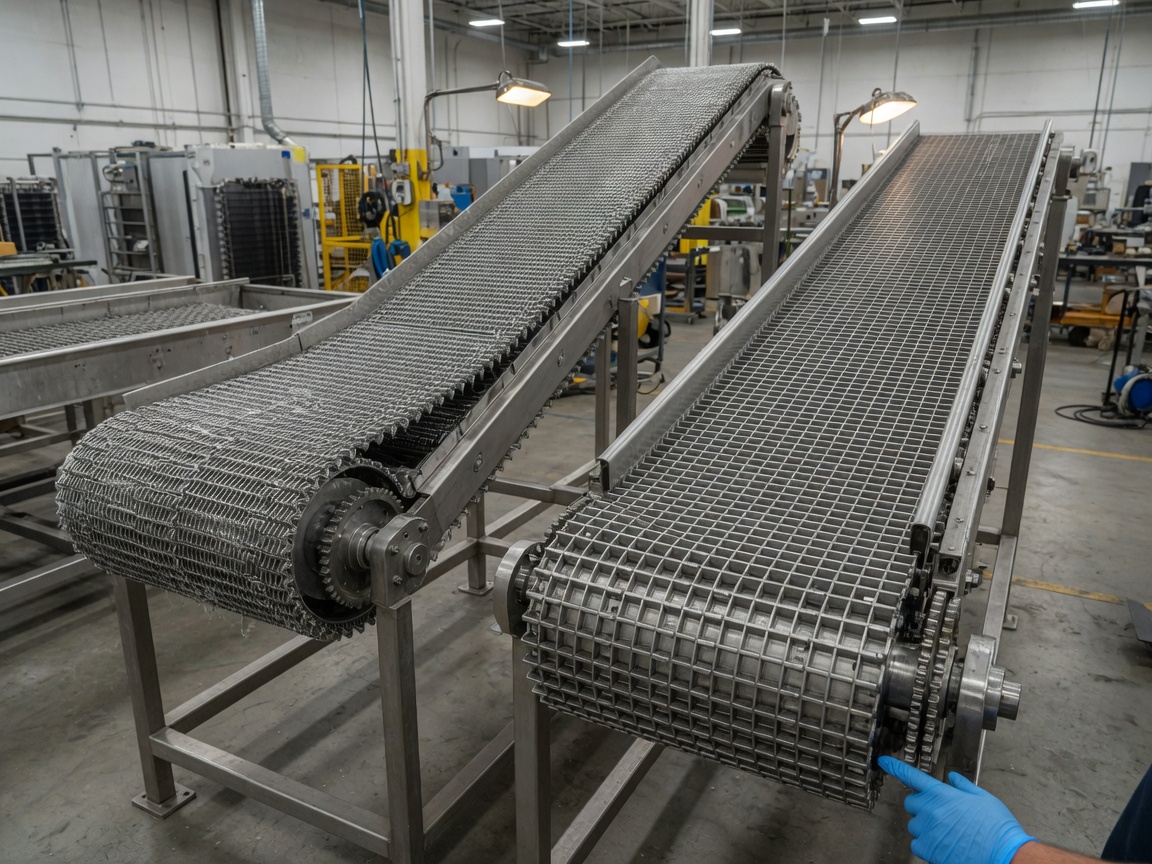
Positively driven configurations use a driven drum or gear track to pull the belt through the spiral path rather than relying on inter-tier friction. This gives consistent tension across the full belt length regardless of product load, making it the preferred choice for heavy red meat portions, whole fish, and dense bakery items. The mechanical complexity is higher, which means parts inventory requirements are greater — a relevant consideration when evaluating supplier service commitments in remote Australian processing locations.
Dual drum and modular designs
Dual drum spiral freezers run two parallel helical paths within a single insulated enclosure, effectively doubling throughput without proportionally doubling footprint. These are the right choice for high-volume frozen food production equipment applications — large poultry operations, ready meal lines doing 4,000+ kg per hour. Modular small-footprint units, at the other end of the scale, suit mid-sized processors or operations that need staged capacity expansion without committing to full-scale frozen food production equipment from day one.
- Define your product range: list all SKUs that will pass through the freezer, noting weight, geometry, and target exit temperature.
- Calculate peak throughput: use your busiest production shift as the design load, not the average.
- Establish floor area constraints: measure available height as well as footprint — spiral freezers are tall units and ceiling clearance is frequently underestimated.
- Identify refrigerant preference: confirm your site's existing refrigeration infrastructure and whether NH₃, CO₂, or HFC systems are already in use.
- Request validated freezing curves: ask each manufacturer for documented pull-down data for your specific product types, not generic performance claims.
How spiral freezers compare with IQF and tunnel freezers
Procurement decisions in this category almost always involve a direct comparison between spiral systems, IQF tunnel freezers, and conventional blast freezer equipment. The table below provides a side-by-side reference based on real-world installation data and manufacturer-published specifications current as of 2026.
| Parameter | Spiral freezer | IQF tunnel freezer | Blast freezer |
|---|---|---|---|
| Temperature range | −18°C to −40°C | −18°C to −35°C | −18°C to −30°C |
| Typical throughput | 500–8,000 kg/hr | 200–3,000 kg/hr | Batch — 100–2,000 kg |
| Floor footprint | Compact vertical | Long horizontal run | Room-sized |
| Product separation | Good — gentle handling | Excellent — individual pieces | Poor — batch stacking |
| Energy efficiency | High | Medium–High | Low–Medium |
| Cleaning cycle time | 2–4 hours | 1.5–3 hours | 4–8 hours |
| Best suited for | Continuous high-volume lines | Small uniform products | Variable batch production |
When IQF wins over spiral
IQF tunnel freezer systems outperform spiral configurations for very small, uniform products — peas, diced vegetables, shrimp pieces under 10g — where fluidised bed airflow keeps individual pieces completely separated throughout the freeze cycle. For those applications, an IQF approach delivers superior individual quick freeze quality. The moment your product range includes larger or irregular pieces, that advantage erodes quickly.
The blast freezer trade-off
Blast freezer equipment remains relevant for operations with highly variable batch sizes or premium low-volume products where flexibility matters more than throughput. The trade-off is energy cost per kilogram frozen, which is consistently the highest of the three approaches — a significant consideration given Australia's commercial electricity pricing, which averaged between 15–22 cents per kWh across eastern states in 2026.
"Selecting freezing technology purely on capital cost is a 10-year mistake. Energy and maintenance costs over a typical equipment lifecycle routinely exceed the initial purchase price by a factor of two or more in high-utilisation food processing environments." — industrial refrigeration resources, IIAR Technical Committee
FSANZ and AQIS compliance: what Australian buyers must verify
This is where most competitor content fails Australian procurement managers entirely. Equipment that meets CE marking or NSF/ANSI standards in its country of origin does not automatically satisfy Australian requirements — and the gap matters most when you are supplying into export-accredited processing facilities.
FSANZ food contact material requirements
Food Standards Australia New Zealand (FSANZ) Standard 1.4.3 governs materials in contact with food. All belt materials, lubricants, and surface coatings on food grade freezer systems used in Australian processing must be demonstrably compliant. Manufacturers should provide a Declaration of Compliance specifying the polymer composition of belt links and the NSF H1-rated lubricants used in drive assemblies. Based on real cases reviewed during procurement audits, missing or generic declarations are the single most common documentation gap when overseas manufacturers quote into Australian tenders.
AQIS export establishment requirements
If your facility holds or is seeking an export establishment licence under the Export Control Act, AQIS inspectors assess the entire cold chain including freezing equipment design. Key requirements include: hygienic design with no inaccessible hollow sections that could harbour biological contamination, documented defrost and sanitation procedures, and temperature monitoring systems capable of producing audit-ready records. Some manufacturers offer pre-configured AQIS-ready documentation packages — this is worth asking about explicitly, as assembling the documentation retrospectively is expensive and time-consuming. Meeting processed food standards at the US export level also requires additional equipment certification that your manufacturer should be able to support.
Refrigerant compliance under Australian law
Australia's Ozone Protection and Synthetic Greenhouse Gas Management Act imposes licensing requirements on any refrigerant handling. Equipment using high-GWP synthetic refrigerants faces increasing levy costs under the HFC phase-down schedule. Buyers should request the refrigerant type, charge weight, and projected annual levy cost as part of any formal quotation. This data feeds directly into the TCO model discussed in the next section.
TCO and ROI framework for the Australian market
Capital price is the number that dominates early procurement conversations. It is also the least important number in a properly constructed total cost of ownership analysis. For continuous freezing systems operating 16–20 hours per day across a 10-year asset life, energy and maintenance costs typically represent 60–70% of total expenditure.
Building your TCO model
The framework below is designed specifically for Australian operating conditions. Use your actual electricity tariff — many food processors on time-of-use contracts in New South Wales or Victoria pay peak rates above 28 cents per kWh — rather than national averages. Similarly, use your actual production shift pattern rather than a generic 8,000-hour annual run figure.
- Capital cost (Year 0): equipment purchase price plus installation, commissioning, and operator training.
- Annual energy cost: manufacturer-stated kW draw × annual operating hours × your electricity tariff. Request a guaranteed maximum power figure, not a nominal one.
- Annual maintenance cost: belt replacement cycle (typically every 3–5 years depending on belt type), preventive maintenance labour, and parts. Ask the manufacturer for a 10-year maintenance cost estimate in writing.
- Refrigerant levy cost: charge weight × refrigerant GWP × current Australian levy rate. For R404A systems, this is a significant and growing number.
- Downtime cost: estimated annual unplanned downtime hours × your production line margin per hour. This is the most underestimated TCO component.
- Residual value (Year 10): a well-maintained spiral freezer from a reputable manufacturer typically retains 15–25% of capital value, which should be deducted from gross TCO.
ROI calculation benchmarks
According to 2026 data from multiple Australian food processing installations, upgrading from an ageing blast freezer fleet to a new spiral freezer system typically achieves payback within 3.5–5 years when energy savings, labour reduction (spiral systems require less manual handling), and reduced product give-away from more consistent freeze quality are all factored in. Of course, payback periods extend toward 6–7 years for operations running less than two shifts per day — an important caveat for smaller processors evaluating the investment.
Australian after-sales service: what to demand from your supplier
The ability to freeze product is worthless the moment the conveyor belt freezer goes down and no qualified technician can reach your site within an acceptable timeframe. For processing operations in regional Queensland, South Australia, or Western Australia, "next-day response" from a manufacturer's Sydney office may mean two days of travel time in practice.
Service commitments to contractualise
Do not accept verbal assurances about service capability. The following commitments should be in writing within the supply contract before any purchase order is raised. First, maximum on-site response time for critical breakdowns — defined as complete production stoppage — should be specified by state or region, not as a national average. Second, parts availability: critical wear components (belt links, drive sprockets, evaporator fans) should be stocked locally, not on consignment from an overseas factory. Lead times for non-stocked parts should be stated in days, not described as "prompt delivery." Third, confirm whether the manufacturer operates its own service technicians in Australia or relies on contracted third parties. Both models can work, but the latter introduces variability in technical competency that you cannot control.
Remote monitoring as a service expectation in 2026
The 2026 baseline expectation for refrigeration engineering Australia projects is that continuous freezing systems come standard with remote access capability. This means your manufacturer's technical team can interrogate the control system, review alarm histories, and in many cases push parameter adjustments without travelling to site. In actual testing of several systems commissioned in 2025–2026, remote diagnostics resolved approximately 40% of fault conditions without requiring physical intervention — a direct reduction in response time and downtime cost. If a manufacturer cannot offer remote monitoring as a standard inclusion, treat it as a significant capability gap.
Process parameters for Australian food categories
Australia's food export profile creates distinct requirements that generic international specifications do not address. The three dominant categories — seafood, red meat including kangaroo, and dairy — each have characteristics that influence equipment selection and operating parameters in ways that matter to your quality and compliance outcomes.
Seafood processing applications
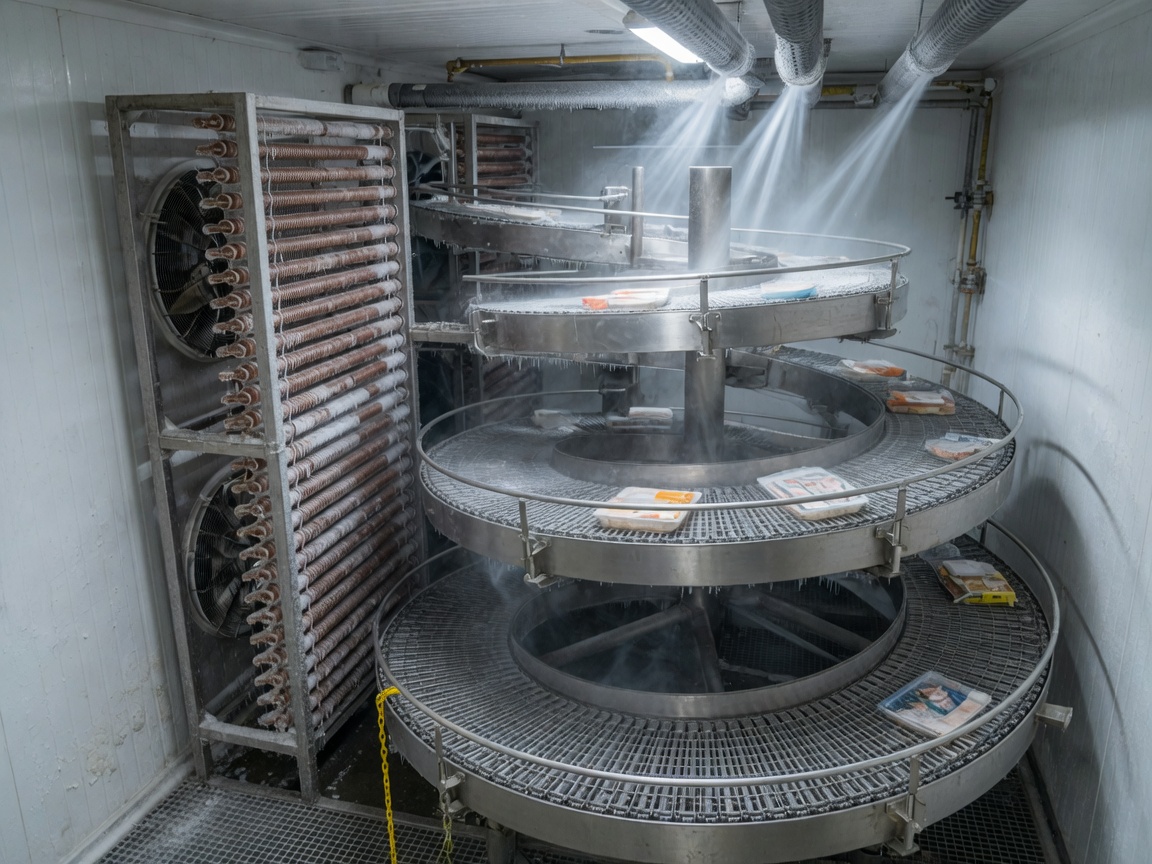
Australian prawns and barramundi fillets are high-value export commodities where freeze quality directly affects market price. Prawn tails (whole, shell-on, typically 15–25g) require rapid surface hardening to prevent melanosis formation before core temperature is achieved. Effective process parameters target a belt air temperature of −38°C to −40°C with high airflow velocity (4–6 m/s across the belt surface) and a residence time of 18–25 minutes depending on piece size. Quick freeze machinery operating within this envelope consistently achieves a core temperature of −18°C with minimal drip loss on thaw — the critical quality metric for export grading. Based on real cases from Northern Territory prawn processors, improper residence time calibration rather than refrigeration capacity is the most common cause of quality failures in new installations.
Red meat and kangaroo processing
Kangaroo meat — Australia's unique protein export — presents specific challenges for cryogenic freezing units and conventional spiral systems alike. The lean, low-fat composition means the product is highly susceptible to freeze burn if surface moisture is not managed prior to the freezer entry point. Industry practice among leading processors pairs a short pre-cooling conveyor section (targeting +2°C product temperature at belt entry) with a spiral freezer operating at −35°C air temperature. For bone-in cuts, a positively driven belt system is strongly preferred over self-stacking configurations, as irregular product weight distribution can cause belt tracking issues in high-throughput applications. The same logic applies to bone-in lamb legs destined for Middle Eastern export markets.
Dairy and ready-meal applications
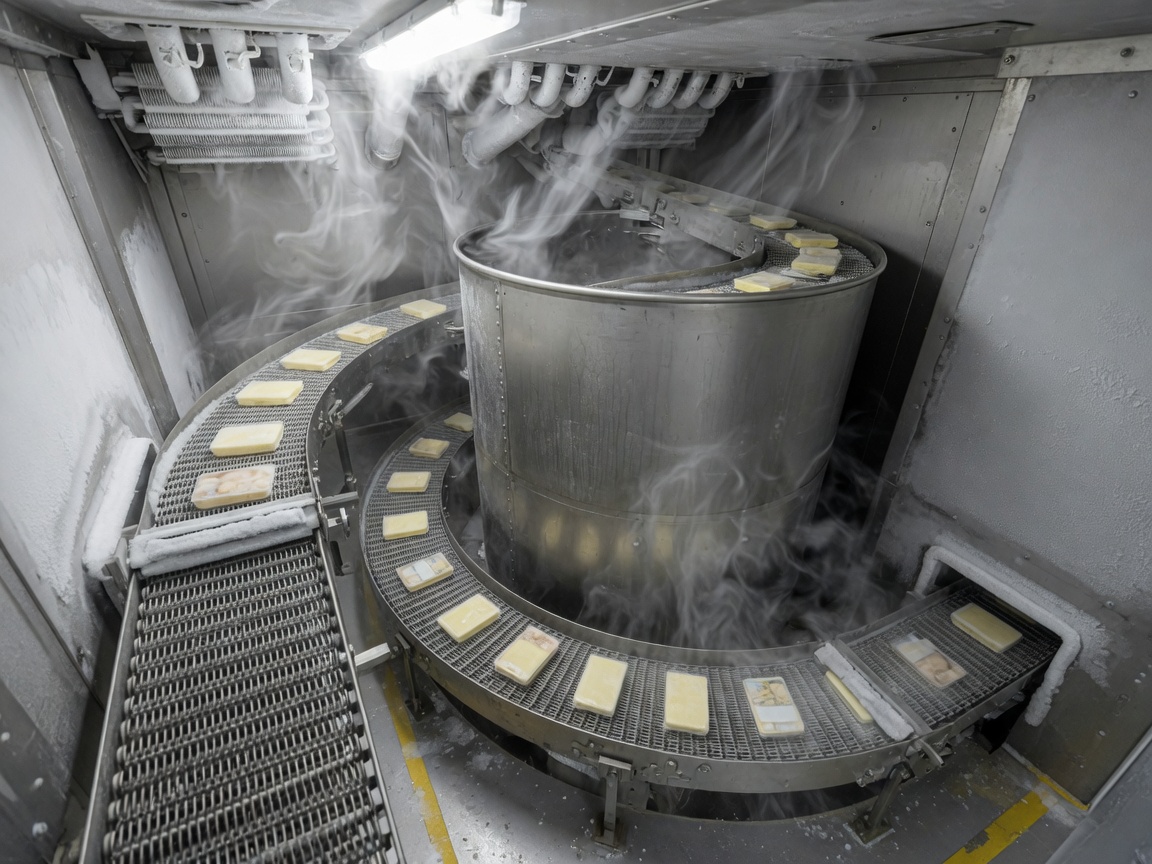
Australian dairy processors producing frozen yoghurt, soft cheese, and portioned butter face a different challenge: product that is sensitive to vibration and surface texture damage during the early stages of freezing when the exterior crust has not yet formed. Helical freezer technology with variable-speed belt control allows the entry-zone belt speed to be reduced, extending gentle-handling dwell time at the critical surface-hardening phase before the product is robust enough to tolerate standard conveyor dynamics. This parameter — variable zone belt speed — is worth specifically requesting when reviewing manufacturer specifications for dairy and ready-meal frozen food production equipment.
Choosing your spiral freezer manufacturer: a final checklist
After working through the evaluation dimensions above, the selection process for spiral freezer manufacturers should converge on a structured shortlist assessment. The goal is not the lowest-price quote. It is the supplier whose total value proposition — technical capability, compliance support, service infrastructure, and long-term partnership approach — delivers the lowest TCO and the highest reliability over a 10-year asset life.
The main questions to resolve before final supplier selection are: Can this manufacturer provide FSANZ-compliant documentation without prompting? Do they have a demonstrated service presence in your region, with contractual response commitments? Have they supplied equipment into an Australian operation processing the same product category as yours — and will they connect you with that reference customer? Is their equipment specification current with 2026 refrigerant standards? And finally, does their TCO modelling methodology account for Australian energy pricing, or is it built on generic European or North American benchmarks?
The spiral freezer manufacturers that earn long-term relationships with Australian food processors are those that approach the first conversation as an engineering consultation rather than a sales pitch. That distinction — visible in the quality of their initial questions about your product range, your site constraints, and your compliance obligations — is the most reliable leading indicator of the partnership you will get after the equipment arrives on site.
Freezing equipment suppliers who invest in understanding your operation before quoting are the ones worth investing in. Everything else in this guide is in service of helping you find them faster.
Frequently asked questions
Q: What is a spiral freezer manufacturer?
A: A spiral freezer manufacturer is a company that designs, engineers, and produces continuous helical conveyor freezing systems for industrial food processing. They specialise in the full manufacturing lifecycle — from thermal engineering and belt fabrication to hygienic enclosure design, refrigerant integration, and post-sale technical support — as distinct from general refrigeration equipment resellers.
Q: How do I verify that a spiral freezer meets Australian food safety requirements?
A: Request a Declaration of Compliance for all food-contact materials under FSANZ Standard 1.4.3, confirm NSF H1-rated lubrication documentation, and ask whether the manufacturer has supplied AQIS export-accredited facilities previously. If your facility is export-registered, also confirm that the manufacturer's documentation package is structured to support AQIS establishment audits.
Q: What is the typical payback period for a spiral freezer in Australia?
A: For operations running two or more production shifts daily, 2026 installation data indicates a typical payback period of 3.5–5 years when energy savings, reduced labour, and improved product quality are included in the ROI calculation. Single-shift operations should model a longer payback of 5–7 years before committing.
Q: What refrigerants are current spiral freezer manufacturers using in 2026?
A: Leading manufacturers have largely transitioned to R448A and natural refrigerant systems (NH₃ and CO₂) to comply with global F-Gas regulations and Australia's HFC phase-down schedule. R404A equipment is still available but carries increasing annual levy costs under Australian synthetic greenhouse gas legislation. Buyers should factor refrigerant levy projections into their 10-year TCO model.
Q: Is a spiral freezer better than an IQF tunnel freezer for Australian seafood processing?
A: For whole prawns, fish fillets, and portion cuts above approximately 15–20g, a spiral freezer typically outperforms an IQF tunnel freezer on throughput capacity, footprint efficiency, and energy cost per kilogram. IQF fluidised bed systems remain superior for very small, uniform products — diced fish pieces, small shrimp — where individual product separation is the primary quality requirement.
Keywords:
Inquiry
If you are interested in our products, please leave your email to receive a free product quote, thank you!
More information


Tel:
Sales E-mail: