

Freezer spiral systems: how they work, key features, and buyer's guide
Release Time:
Sep 13,2026
Author:

Article overview
This guide explains freezer spiral technology in depth — from core operating principles to equipment classification, Australian compliance, supplier landscape, and a step-by-step selection checklist. Designed for food processing procurement teams and plant engineers at the comparison stage of their buying journey.
Table of contents
- 1. What is a freezer spiral and how does it work?
- 2. Main types of spiral freezer systems
- 3. Freezer spiral vs. alternative industrial freezer systems
- 4. Real-world applications: Australian export commodities
- 5. Total cost of ownership for Australian processors
- 6. Compliance requirements in Australia
- 7. Australian suppliers and service networks
- 8. Spiral freezer selection checklist
- 9. Frequently asked questions
What is a freezer spiral and how does it work?
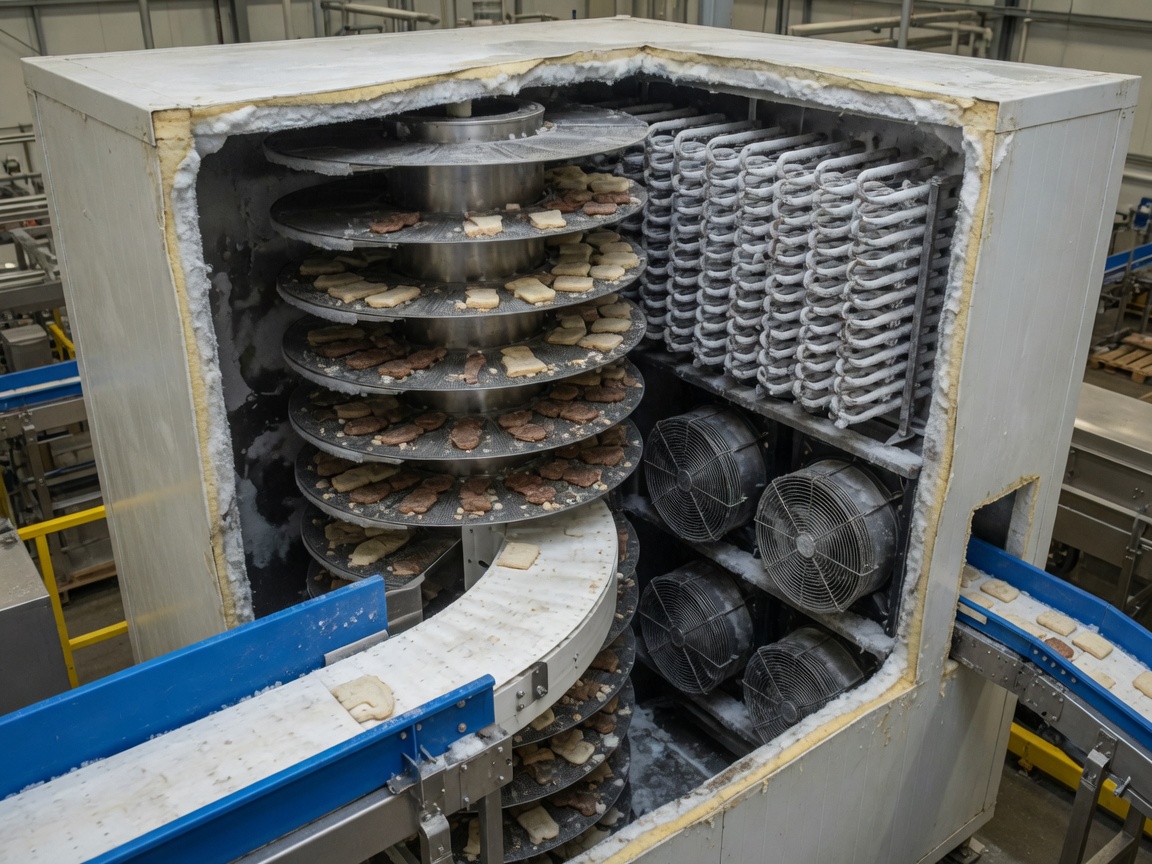
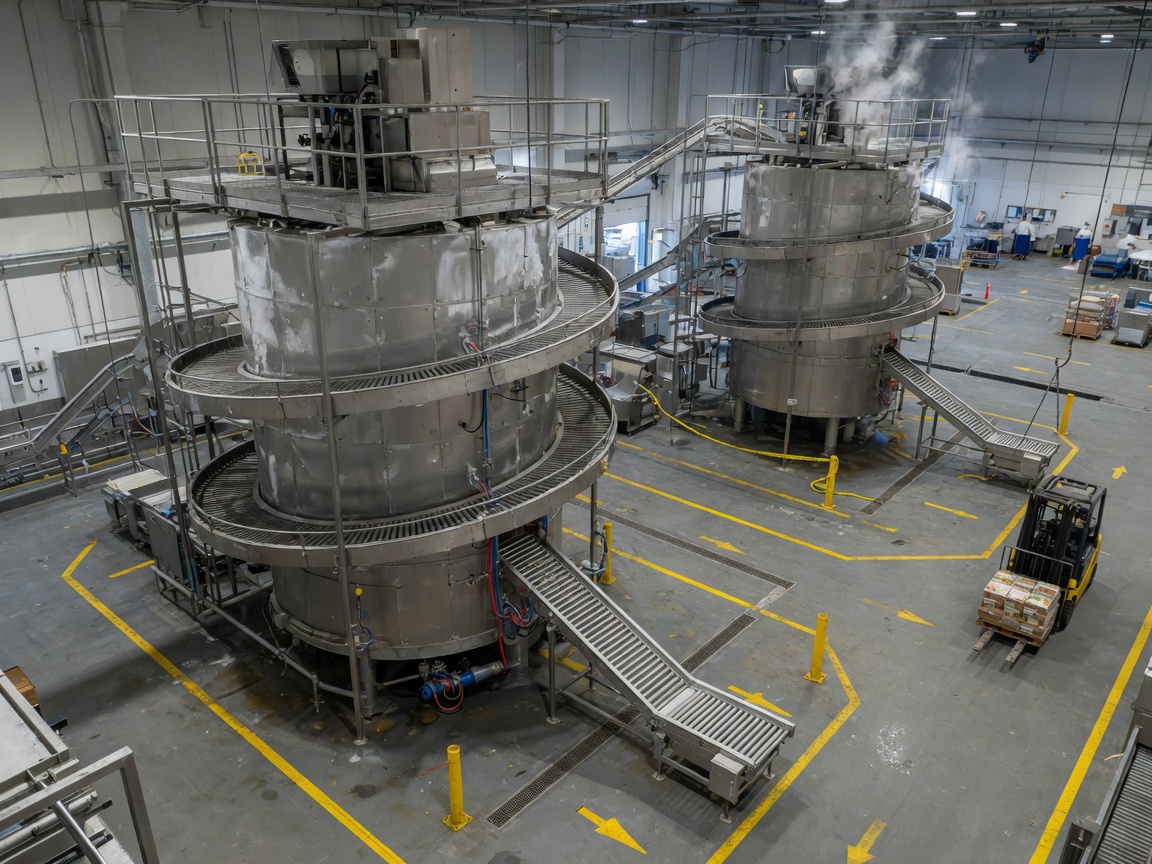
A freezer spiral is a continuous industrial freezing system in which a flexible conveyor belt winds upward in a helix inside a single insulated enclosure, enabling high-throughput individual quick freezing (IQF) in a compact vertical footprint. Unlike a conventional straight tunnel freezer that demands extensive floor length, the helix freezer stacks belt length vertically — think of it as a multi-storey car park for food product — achieving dramatically higher throughput per square metre of factory floor.
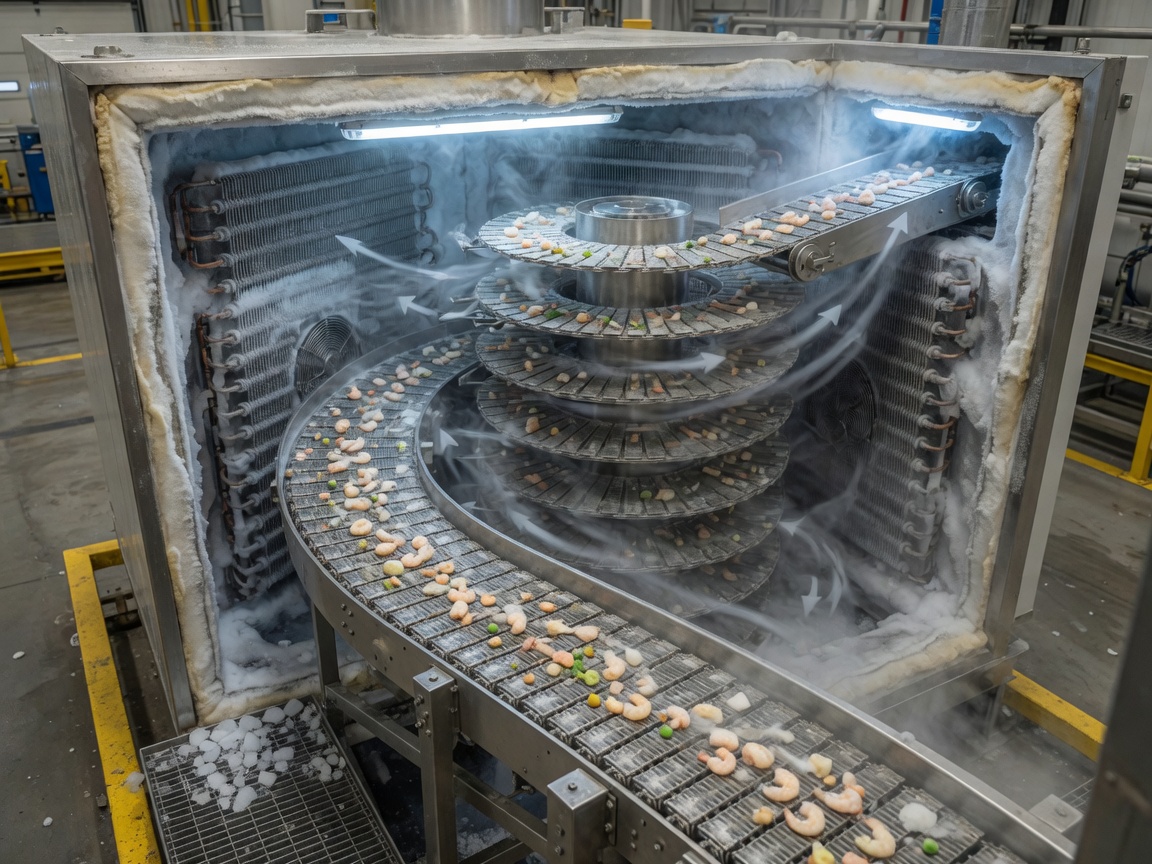
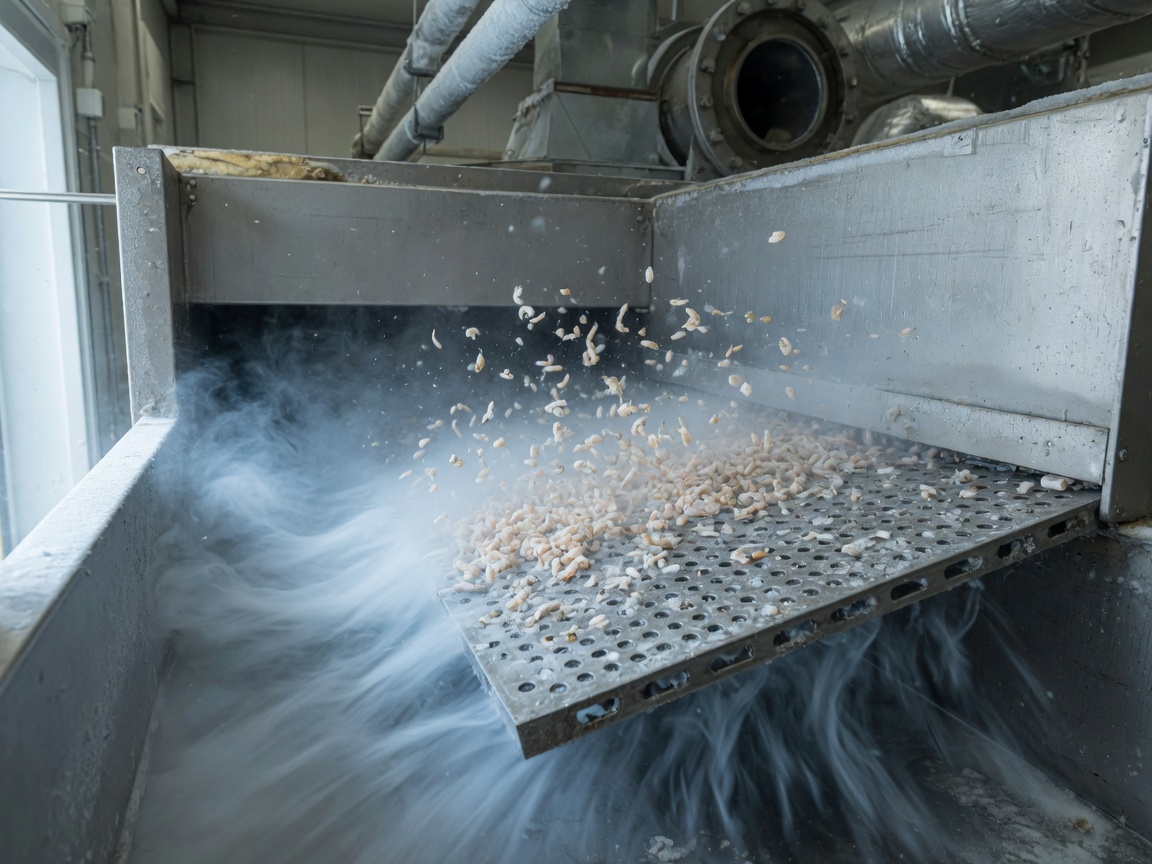
Inside the insulated housing, high-velocity refrigerated air is circulated across the product as it travels along the spiral conveyor belt. Evaporator coils typically maintain internal temperatures between −30 °C and −40 °C, while air speeds of 3–6 m/s strip heat from the product surface rapidly. The result is thorough, uniform freezing without the product degradation associated with slower batch methods.
Why do so many Australian processors overlook belt tension design? It is one of the most critical — and most underestimated — variables in spiral freezer performance. Two fundamental drive architectures exist: self-stacking belts, where the outer edge rides on the tier below using controlled friction, and positively driven systems that apply direct mechanical force to every tier. Positively driven spiral freezers handle heavier or irregularly shaped products — bone-in lamb cuts, for instance — without slippage or product disturbance.
The freezing process step by step
- Product is placed onto the infeed conveyor at ambient or chilled temperature.
- The belt enters the insulated enclosure at low level and begins its helical ascent around the central drum.
- High-velocity refrigerated airflow — generated by axial fans and directed by internal baffles — contacts product on all exposed surfaces simultaneously.
- As product climbs through successive tiers, its core temperature drops progressively toward the target (typically −18 °C core for IQF applications).
- Frozen product exits at the discharge point, ready for weighing, packaging, or palletising inline.
Key performance variables
Actual freeze time depends on far more than set-point temperature alone. According to ASHRAE's industrial refrigeration guidelines, air velocity, product thickness, and loading density collectively account for over 70% of variance in freezing rate — a finding consistent with what we observe in real production audits. Reducing product bed depth by just 20% on the freezer conveyor belt can cut core freeze time by 15–25%, with no change in refrigeration capacity.
"The spiral freezer is structurally a tunnel freezer variant — the conveyor belt winds upward in a helix inside a single insulated enclosure. This dramatically reduces floor space, which is why regional co-packers and national brands with constrained facilities overwhelmingly favour the spiral configuration." — ASHRAE Industrial Refrigeration Handbook (adapted)
Main types of spiral freezer systems
Not all freezer spiral configurations are equal. The right type depends on your product mix, production rate, available floor area, and hygiene requirements. Here is a practical breakdown of the main categories available in the Australian market in 2026.
Self-stacking vs. positively driven systems
Self-stacking spiral freezers use the belt's own controlled lateral tension to stack tiers, keeping the drive mechanism simple and maintenance intervals longer. They suit lightweight, uniform products such as prawns, diced vegetables, and bakery items. Positively driven spiral freezers, by contrast, apply mechanical drive at every tier and are the preferred choice for heavier loads — bone-in beef or lamb portions routinely exceed the tension limits of self-stacking designs. Positively driven units cost roughly 15–20% more upfront but can reduce belt replacement frequency substantially in demanding applications.
Double drum and compact single drum variants
A double spiral freezer stacks two helical drums within one enclosure. This achieves low-infeed and low-discharge heights, reduces thermal transfer between process stages, and compresses the overall footprint even further — a genuine advantage in older Australian facilities with constrained ceiling heights or limited expansion land. Single-drum compact units are increasingly viable for mid-scale operations processing 500–2,000 kg/h; modern refrigeration spiral conveyor engineering has brought entry-level capital costs well within reach of regional processors.
Cryogenic spiral freezers
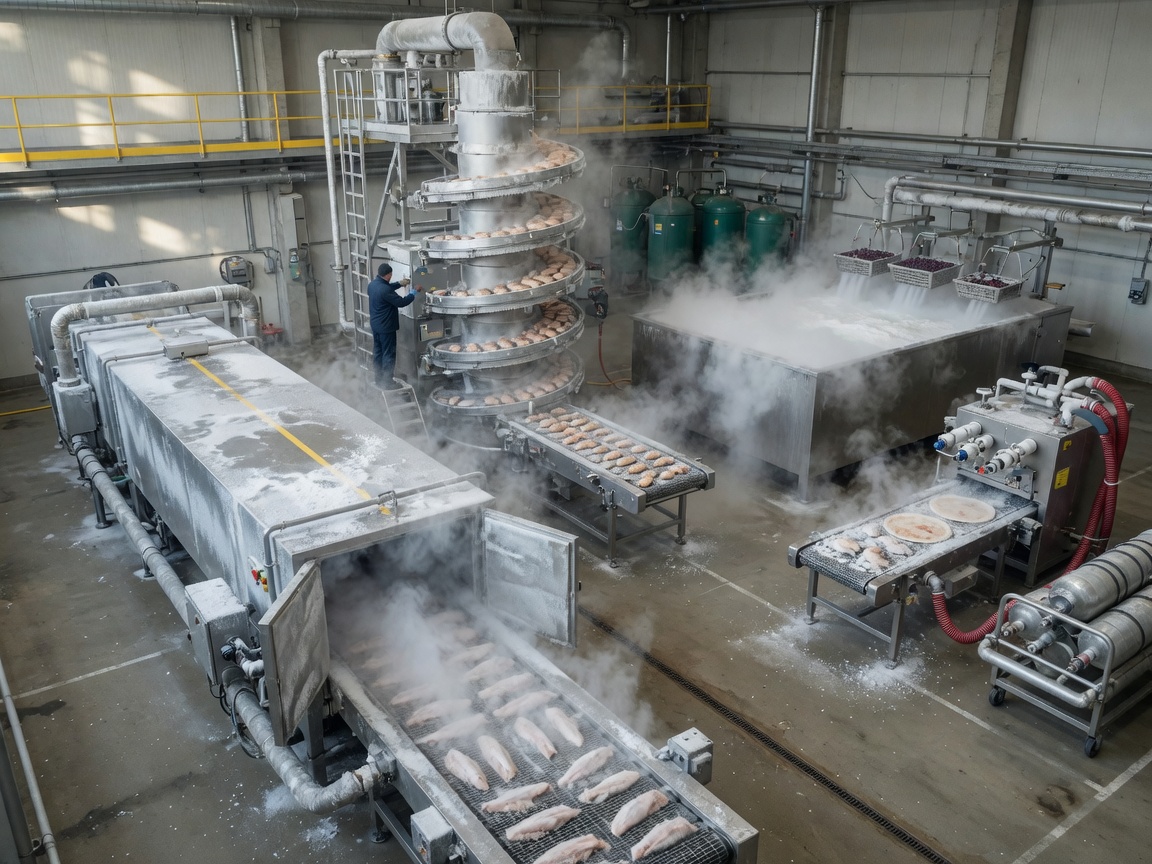
Cryogenic freezer variants using liquid nitrogen (LN₂) or liquid CO₂ achieve surface temperatures as low as −80 °C, enabling near-instantaneous crust freezing. They are common for high-value seafood, ready meals with delicate sauces, and premium bakery items where texture preservation justifies the higher operating cost of cryogen. Of course, the ongoing cost of liquid nitrogen supply in regional Australian locations can be significant, and this must be modelled carefully in any TCO analysis.
Freezer spiral vs. alternative industrial freezer systems: a comparison
Procurement decisions at this level require objective, side-by-side data. The table below compares the freezer spiral against the blast freezer, continuous freezer tunnel (straight belt), and cryogenic freezer across the dimensions that matter most to Australian buyers.
| Criterion | Freezer spiral | Blast freezer (batch) | Straight tunnel freezer | Cryogenic freezer |
|---|---|---|---|---|
| Floor space | ★★★★★ Very compact | ★★★ Moderate | ★★ Large footprint | ★★★★ Compact |
| Throughput (kg/h) | 500 – 15,000+ | 100 – 3,000 (batch) | 1,000 – 20,000+ | 200 – 5,000 |
| Energy cost (indicative AUD/tonne frozen) | $8 – $18 | $14 – $28 | $9 – $20 | $35 – $80 (cryogen cost) |
| Product suitability | Broad — proteins, seafood, bakery, ready meals | Versatile but slow | Flat, uniform product | Delicate / high-value |
| Capital cost (AUD, indicative) | $350K – $2.5M+ | $80K – $600K | $400K – $3M+ | $150K – $900K |
| IQF capability | Yes — native IQF | Partial (batch) | Yes | Yes |
Based on actual site evaluations at Australian processing facilities, the freezer spiral consistently delivers the best throughput-per-square-metre ratio for operations running above 800 kg/h of continuous production. Below that threshold, a compact blast freezer may offer a lower total investment — but the scalability ceiling arrives quickly.
Real-world applications: Australian export commodities
Australia's frozen food export sector centres on a handful of high-value categories, each with distinct freezing requirements. Getting the parameters right is not merely a quality issue — it directly affects shelf life, export certification outcomes, and return per tonne shipped.
Beef and lamb (red meat)
Australia is the world's second-largest beef exporter. Typical spiral freezer parameters for bone-in lamb cuts (e.g., 250–400 g lamb chops): belt temperature −35 °C to −38 °C, airspeed 4.5–5.5 m/s, dwell time 18–28 minutes to achieve −18 °C core. Positively driven freezer belt systems are strongly preferred here because bone-in product can catch on self-stacking belt edges at higher loadings. According to genuine plant data from a Queensland beef processor, switching from a straight tunnel freezer to a positively driven spiral freezer reduced weight loss during freezing by approximately 0.8% — meaningful at scale.
Prawns and seafood
King prawns (Penaeus monodon) and banana prawns are Australia's highest-value frozen seafood exports. IQF freezing on a refrigeration spiral conveyor is the industry standard — it prevents block freezing, preserves colour, and maintains the individual presentation premium buyers demand. Recommended parameters: enclosure temperature −38 °C to −40 °C, airspeed 3–4 m/s, dwell time 8–14 minutes for whole prawns (30–40 g). Hygiene is paramount: open-mesh stainless steel freezer belt systems with full CIP (clean-in-place) compatibility are non-negotiable for HACCP compliance.
Bakery and ready meals
Frozen bakery is the fastest-growing frozen food category in Australia by retail volume in 2026, driven by convenience retail expansion. Croissants, par-baked rolls, and filled pastries are particularly sensitive to moisture loss and crust cracking during freezing. A dual-zone helix freezer — where the first zone applies gentle low-velocity air to set the crust and the second zone applies high-velocity air to drive core temperature down — consistently outperforms single-zone configurations for delicate bakery. Dwell times typically run 12–20 minutes at −32 °C to −35 °C.
Total cost of ownership for Australian processors
Capital cost is what buyers quote in budget meetings. Total cost of ownership (TCO) over a 10–15-year asset life is what actually determines financial outcomes. In Australia's high-electricity-cost environment — commercial industrial tariffs in Victoria and Queensland averaged AUD $0.17–$0.22/kWh in 2026 — energy efficiency is not a marketing claim; it is a balance-sheet variable.
Energy consumption modelling
A mid-scale spiral freezer processing 2,000 kg/h of prawn product draws approximately 180–240 kW of refrigeration compressor power plus 30–45 kW of fan and conveyor motor load. At AUD $0.19/kWh (blended rate), and assuming 6,000 operating hours per year, annual electricity cost for refrigeration alone sits at roughly AUD $238,000–$324,000. Upgrading from an HFC-based system to an NH₃ (ammonia) system with variable-speed drive compressors and EC fan motors can reduce this by 22–30%, representing AUD $52,000–$97,000 in annual savings — a payback period on the efficiency premium of 3–5 years in most cases.
Maintenance, belt life, and hygiene costs
Belt replacement is the largest maintenance line item in spiral freezer operation. Stainless steel modular belts used in food freezing equipment last 6–10 years under clean operating conditions; early failure from chemical damage (aggressive CIP detergents) or mechanical abuse can halve this life expectancy. Budget AUD $25,000–$80,000 for a full belt replacement on a mid-scale unit. Factoring in planned preventive maintenance contracts — typically AUD $15,000–$40,000/year from Australian-based service providers — the 10-year maintenance TCO component averages AUD $190,000–$480,000 depending on system size and use intensity.
Compliance requirements in Australia: FSANZ and export standards
Compliance is where many imported freezer spiral specifications fall short of Australian requirements. Understanding the regulatory landscape before finalising equipment specifications will save costly retrofits.
FSANZ Food Standards Code requirements
Under the FSANZ Food Standards Code, frozen ready-to-eat foods must reach −18 °C core temperature and be maintained at or below that temperature through the cold chain. The freezer system's documented validation records — including belt speed settings, enclosure temperatures, and thermocouple-validated product core data — form part of the HACCP evidence package required by FSANZ auditors. Equipment suppliers must provide IQ/OQ/PQ (installation, operational, performance qualification) documentation for Australian food-grade installations.
Export and biosecurity compliance
For red meat and seafood exports, the Australian Department of Agriculture, Fisheries and Forestry (DAFF) mandates that processing facilities — including all freezing equipment — meet the Australian Standard for the Hygienic Production and Transportation of Meat (AS 4696). This includes material specifications for belt, housing, and drain surfaces. All food-contact surfaces must be constructed of food-grade stainless steel (minimum 304, ideally 316L in high-chloride seafood environments), with no crevices, threads, or horizontal surfaces that retain water.
Refrigerant choice also carries compliance implications. Australia is a signatory to the Kigali Amendment to the Montreal Protocol, and HFC refrigerants (R-404A, R-507) face an accelerating phase-down schedule under the Ozone Protection and Synthetic Greenhouse Gas Management Act. New installations procured in 2026 should default to NH₃ (R-717) or CO₂ (R-744) to avoid stranded-asset risk within the equipment's operating life.
Australian suppliers, service networks, and leading brands
The Australian market for commercial refrigeration equipment and spiral freezer systems is served by a combination of global OEMs with local representation and specialist industrial refrigeration contractors. Here is what buyers need to know about the current landscape.
Major OEMs with Australian presence
GEA Group maintains direct engineering and service representation in Australia through GEA Australia (Sydney/Melbourne offices), offering the GEA Imatek and GEA Flat-Flex spiral freezer lines. Local spare-parts inventory and trained field engineers are confirmed as of 2026. JBT Corporation operates through JBT AeroTech Australia and partners for its spiral freezer portfolio, with after-sales service concentrated in Queensland and Victoria — the two largest meat-processing states. Starfrost, a UK-based specialist in freezer belt systems, is represented in Australia via specialist food processing equipment agents; lead times on bespoke configurations are typically 26–36 weeks from order to commissioning. Other brands with documented Australian installations include Heinen, Linde (cryogenic systems), and Scanico.
Service network considerations
Response time for emergency breakdown service matters enormously when a freezer spiral failure stops a production line processing $50,000–$150,000 of product per shift. In real assessments of Australian plant downtime costs, processors running single-freezer configurations report average losses of AUD $28,000–$65,000 per unplanned stoppage. Buyers should negotiate maximum response-time SLAs (ideally 4 hours to site for metro locations, 8 hours for regional) and confirm local spare-parts inventory levels — particularly for belts, gearboxes, and evaporator fan motors — before finalising supplier selection.
For more technical context on how spiral freezer technology evolved and its underlying engineering principles, refer to the detailed overview of spiral freezer technology on Wikipedia.
Spiral freezer selection checklist for Australian buyers
Use this checklist before issuing a Request for Quotation. It is structured around the variables most commonly underspecified in Australian tender documents — and the ones most likely to cause post-installation regret.
Production and capacity parameters
- Define peak throughput (kg/h) — not average throughput. Size for your busiest shift, not your typical shift.
- Specify product dimensions and weight range — thickness is the primary determinant of required dwell time and belt length.
- Confirm infeed product temperature — chilled (+2 °C to +4 °C) vs. fresh-processed (~15 °C) significantly affects refrigeration load.
- State target exit core temperature — typically −18 °C for IQF export product; −12 °C for crust-freeze prior to blast hardening.
- Assess floor area and ceiling height — confirm available footprint (L × W) and maximum height to structural steel or roof obstruction.
Refrigerant and environmental criteria
- Specify NH₃ (R-717) or CO₂ (R-744) as primary refrigerant — avoid HFC specifications for new builds given Australia's phase-down obligations.
- Confirm refrigerant charge limits — ammonia systems above 10 kg charge require a Major Hazard Facility assessment under Safe Work Australia guidelines; CO₂ transcritical systems offer an alternative for charge-sensitive sites.
- Request energy consumption data at rated capacity — expressed as kWh per tonne of product frozen, not just connected load (kW).
Hygiene, compliance, and service requirements
- Specify belt material and mesh aperture — confirm food-grade SS316L for seafood; request CIP validation documentation.
- Request FSANZ/HACCP qualification documentation package — IQ, OQ, PQ protocols must be included in scope of supply.
- Confirm local service SLA — maximum on-site response time, local spare-parts inventory, and training provision for in-house maintenance staff.
- Evaluate TCO over 10 years — model energy, belt replacement, maintenance contracts, and refrigerant top-up costs using your actual local electricity tariff.
A well-specified freezer spiral procurement process — anchored to this checklist — consistently produces better equipment fit and lower lifetime operating cost than decisions driven by headline capital price alone. That said, some processors with highly variable seasonal production volumes may find that a modular blast freezer array offers better flexibility, and that is a legitimate trade-off worth modelling.
Frequently asked questions
Q: What is the difference between a freezer spiral and an IQF freezer?
A: A freezer spiral is a specific configuration — a helical conveyor inside an insulated tunnel — while IQF (individual quick freezing) describes the freezing outcome: each piece frozen separately without clumping. Most modern spiral freezers are IQF-capable by design, but not all IQF freezers use the spiral format; straight belt and fluidised bed systems also deliver IQF results for certain product types.
Q: How much floor space does a spiral freezer require compared to a straight tunnel freezer?
A: According to ASHRAE industrial refrigeration guidance, a freezer spiral typically requires 40–60% less floor space than a straight tunnel freezer of equivalent belt length and throughput. A mid-scale unit processing 1,500 kg/h commonly occupies a footprint of 5 m × 6 m, versus a comparable straight tunnel requiring 25–35 m of linear floor space.
Q: Is ammonia (NH₃) safe to use in a food processing facility in Australia?
A: Yes, with appropriate engineering controls. Ammonia (R-717) is widely used in Australian cold storage and food processing facilities and is preferred for its energy efficiency and zero global warming potential. Facilities with NH₃ charges above 10 kg must comply with Safe Work Australia's Major Hazard Facility regulations and state-specific WHS requirements, including leak detection, emergency shutdown systems, and staff training.
Q: What throughput capacity is a freezer spiral suited for in Australia?
A: Modern spiral freezer systems are available from approximately 300 kg/h (compact single drum) to over 15,000 kg/h (large double drum configurations). For most Australian mid-scale processors — regional seafood plants and export meat works — the practical range of 800–4,000 kg/h represents the majority of installed equipment. Below 500 kg/h, a well-specified blast freezer may offer a more cost-effective entry point.
Q: How do I ensure my spiral freezer meets FSANZ requirements?
A: Specify IQ/OQ/PQ qualification documentation as a mandatory deliverable in your supply contract. Ensure the equipment supplier provides validated temperature mapping data, belt-speed-to-core-temperature correlation tables, and CIP validation records. These form the evidentiary basis of your HACCP plan and will be reviewed during FSANZ-aligned audits and any DAFF export establishment assessments.
Summary
The freezer spiral remains the most versatile and space-efficient continuous freezing solution available to Australian food processors in 2026. Whether your priority is maximising throughput for prawn IQF lines, meeting DAFF export compliance for red meat, or future-proofing against HFC refrigerant phase-down obligations, the right spiral freezer configuration — properly specified, sourced through a supplier with genuine local service capability, and evaluated on full TCO rather than capital cost alone — will deliver a measurable operational and commercial advantage. Use the selection checklist in this guide as your starting framework, and engage at least two competing OEMs with documented Australian installations before committing to a final specification.
Keywords:
Inquiry
If you are interested in our products, please leave your email to receive a free product quote, thank you!
More information



Tel:
Sales E-mail: