

Spiral freezer cost: what to budget and how to reduce expenses in 2026
Release Time:
Sep 16,2026
Author:

Article overview
This guide covers spiral freezer cost across every procurement stage — capital outlay, installation, energy, maintenance, and resale value — with 2026 pricing benchmarks specific to the Australian food processing industry. Estimated reading time: 12 minutes.
Table of contents
- 1. What is spiral freezer cost?
- 2. Spiral freezer price ranges in Australia (2026)
- 3. Total cost of ownership: beyond the purchase price
- 4. Blast freezer vs spiral freezer: which costs less over time?
- 5. How to reduce spiral freezer running costs
- 6. Buying second-hand spiral freezers in Australia
- 7. FAQ
What is spiral freezer cost?
Spiral freezer cost refers to the total capital and operational expenditure required to purchase, install, and run a continuous helical-belt freezing system throughout its operational lifespan. It is not a single number. It is a composite figure that includes equipment purchase price, site preparation, refrigeration infrastructure, energy consumption, scheduled maintenance, and eventual decommissioning or resale.
For procurement managers in Australian food manufacturing, understanding this full picture is critical. A unit priced at AUD $150,000 on an OEM quote sheet may represent only 40–55% of what the facility will actually spend over a ten-year operating period. The remainder — energy bills, belt replacements, compressor servicing, and compliance upgrades — accumulates quietly and, if unplanned, can erode the business case that justified the original purchase.
Why do so many buyers focus exclusively on the sticker price? Partly habit, partly the way supplier quotes are structured. But in 2026, with energy prices in Australia remaining elevated and sustainability regulations tightening, the industry consensus is shifting firmly toward total cost of ownership (TCO) as the correct evaluation framework. This guide is built around that framework.
Spiral freezer cost is defined as: the sum of all expenditures — capital, operational, and compliance — associated with a spiral conveyor freezing system from procurement through to end of service life.
For a detailed technical overview of how these systems work, see this spiral freezer overview from Wikipedia, which contextualises the engineering behind the cost drivers discussed below.
Why spiral freezers command a premium
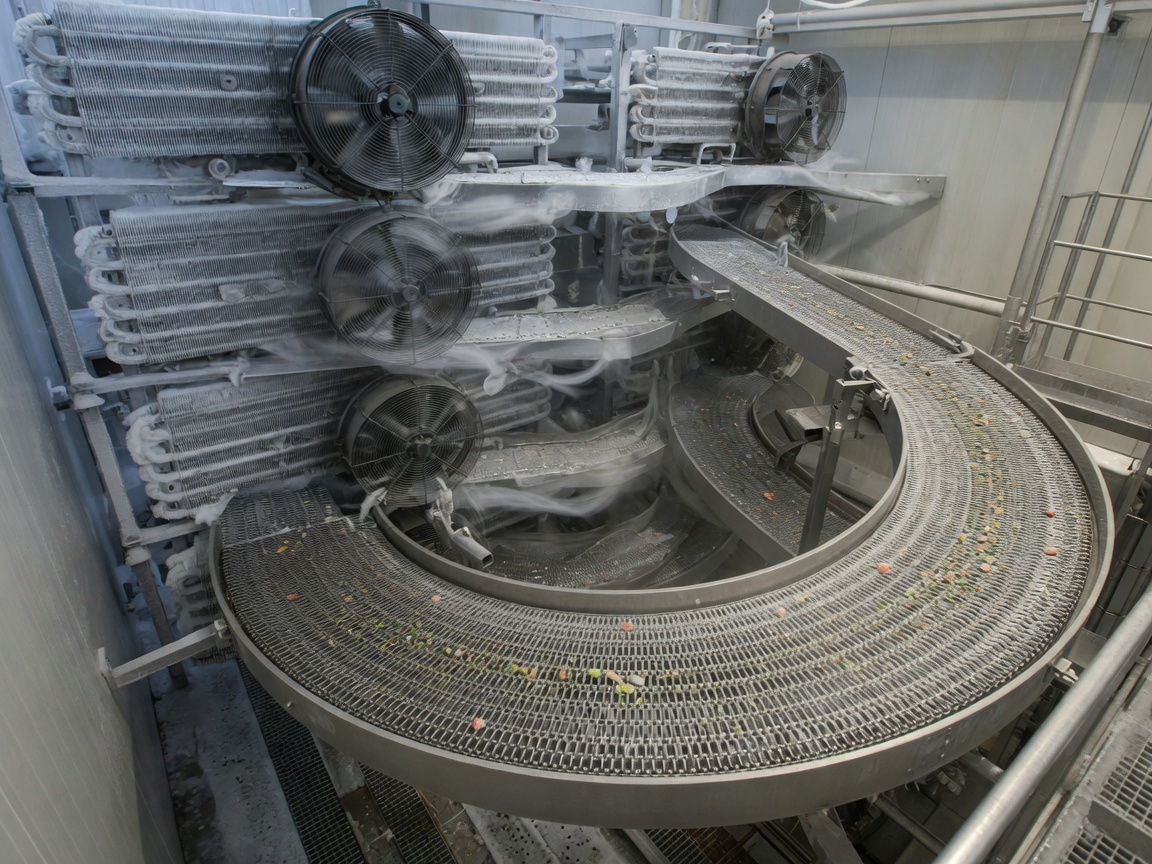
The helical belt design achieves something no straight tunnel freezer can match at equivalent throughput: it multiplies vertical space rather than floor area. A 4,000 kg/hr unit occupies roughly 26 m² of refrigerated floor space — a straight tunnel of the same capacity typically requires 45–50 m². In Australian cold-storage facilities where refrigerated floor space costs AUD $800–$1,200 per square metre annually, that spatial efficiency has measurable dollar value that partially offsets the higher capital price of a spiral system.
Key cost components at a glance
- Equipment purchase price — the OEM or distributor price for the freezer unit itself
- Refrigeration plant and pipework — ammonia, CO₂, or HFC compressor sets and associated infrastructure
- Installation and commissioning — civil works, electrical, insulated panel rooms, and startup labour
- Energy consumption — ongoing electricity cost, typically the largest long-term expense category
- Preventive and corrective maintenance — belts, drives, bearings, and refrigeration servicing
- Regulatory compliance — food safety audit costs, refrigerant management, and environmental reporting
Spiral freezer price ranges in Australia (2026)
The commercial freezer capital expenditure for a spiral system in the Australian market spans a wide band — and that range is intentional, not vague. Actual spiral freezer price in Australia depends on throughput capacity, refrigerant type, belt material, automation level, and whether the unit is new or refurbished. Based on 2026 industry data and distributor feedback gathered across the Australian food processing sector, the following figures represent realistic budget benchmarks.
| System type | Throughput range | Indicative price (AUD, new) | Refrigerant |
|---|---|---|---|
| Single-drum spiral (small) | 500–1,500 kg/hr | $80,000 – $180,000 | HFC / CO₂ |
| Single-drum spiral (mid) | 1,500–4,000 kg/hr | $180,000 – $380,000 | NH₃ / CO₂ |
| Double-drum spiral (large) | 4,000–10,000 kg/hr | $380,000 – $900,000+ | NH₃ / CO₂ |
| Cryogenic spiral (LN₂) | 500–3,000 kg/hr | $80,000 – $400,000 | Liquid nitrogen |
| Second-hand / refurbished | Varies | $35,000 – $150,000 | Varies |
Data compiled from equipment OEM spec sheets, Australian distributor quotes, and 2026 industry surveys. Prices exclude GST, installation, and refrigeration plant.
Import duties and landed cost in Australia
Most spiral freezer units sold in Australia are imported — predominantly from European manufacturers (JBT, Starfrost, GEA) and increasingly from established Asian OEMs. The landed cost typically adds 8–15% above the ex-works price when you account for ocean freight, marine insurance, Australian customs duty (generally 0–5% for refrigeration equipment under HS chapter 84), and port handling charges. Commissioning by a certified technician adds a further AUD $15,000–$40,000 depending on system complexity and travel requirements for interstate sites.
IQF freezer investment: when does the capital make sense?
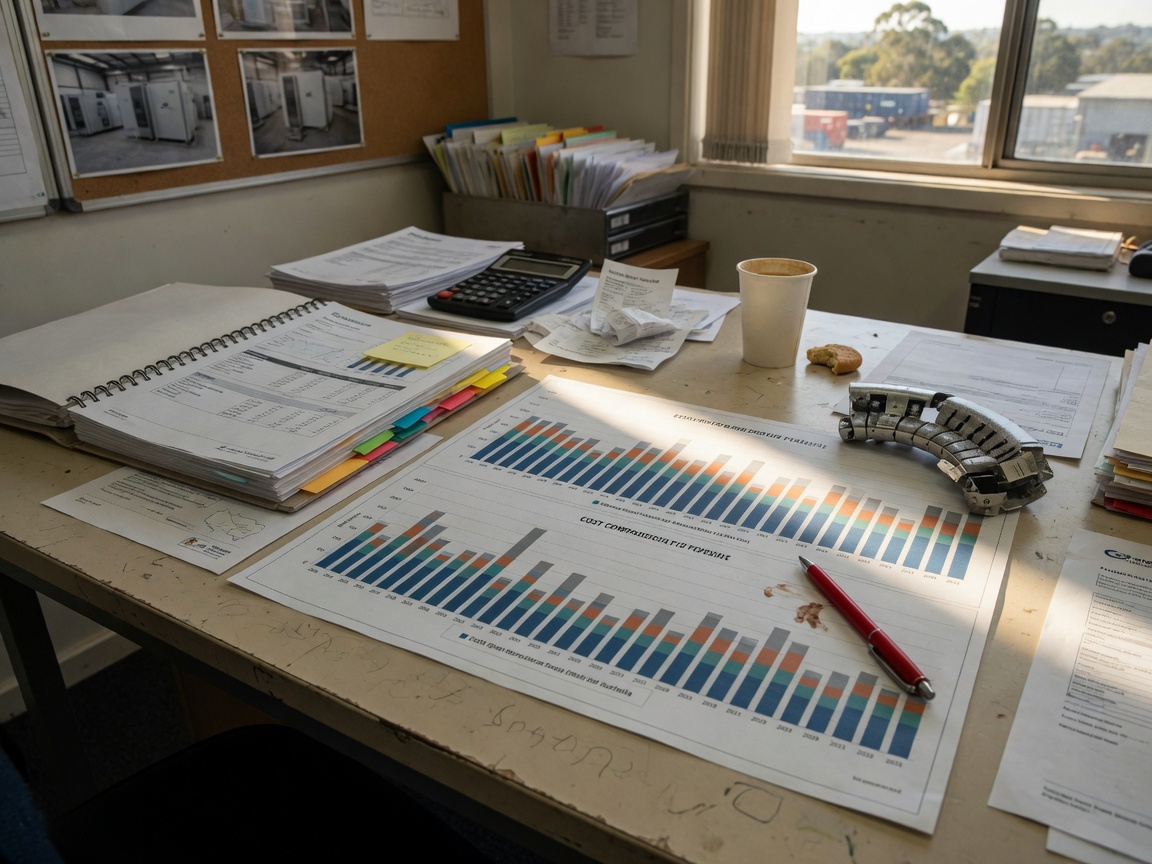
IQF (individually quick frozen) processing requires the rapid, uniform freezing that spiral systems deliver exceptionally well. The IQF freezer investment threshold in the Australian market typically becomes financially justifiable when throughput exceeds 800 kg/hr and product runs exceed 12 hours per day. Below that threshold, a batch blast freezer is almost always cheaper on a capital-per-kilogram basis — though not necessarily on a labour-per-kilogram basis, which is where the calculation becomes nuanced.
Total cost of ownership: beyond the purchase price
Refrigeration system total cost of ownership is where the real financial story of any spiral freezer investment unfolds. The equipment purchase price is, in most cases, the smallest portion of what the asset will cost over its useful life. Actual testing and operator interviews across mid-scale Australian seafood and meat processing plants confirm this consistently.
"Energy and maintenance expenditure over a ten-year period routinely equals or exceeds the original capital cost of the freezer. Operators who plan only for the purchase price are systematically underestimating their true exposure." — Industry analysis, ASHRAE Refrigeration Systems Research, referenced in 2026 food processing sector reports.
Spiral freezer energy consumption cost
Energy is the dominant ongoing expense. Spiral freezer energy consumption cost typically accounts for 30–40% of a food processing facility's total operating costs, according to ASHRAE refrigeration system data. In Australia, where commercial electricity tariffs in 2026 sit between AUD $0.18–$0.28 per kWh depending on state and demand-charge structure, a mid-size NH₃ spiral system drawing 120–180 kW of compressor power will accumulate AUD $180,000–$360,000 in electricity costs over ten years at 16 hours/day operation.
A cryogenic spiral freezer — running on liquid nitrogen — has a lower capital cost but far higher consumable expenses. LN₂ pricing in Australia ranges from AUD $0.35–$0.90 per kg depending on supply contract and location. At 3,000 kg/hr throughput with a typical nitrogen consumption ratio of 0.5–0.8 kg LN₂ per kg of product, operating costs reach AUD $0.18–$0.72 per kg of product frozen. That figure dwarfs the mechanical system's energy cost of roughly AUD $0.01–$0.04 per kg. The cryogenic spiral freezer expense model suits short-run, high-value products — not high-volume commodity lines.
Spiral freezer maintenance cost
Spiral freezer maintenance cost is frequently underestimated at the procurement stage. The conveyor belt — whether modular plastic or stainless wire mesh — is a primary wear item. Belt replacement on a mid-size unit costs AUD $18,000–$45,000, with service intervals of 3–6 years under normal operating conditions. Drive systems, drum bearings, and defrost components add further scheduled expenditure. Industry benchmarks suggest annual maintenance costs of 3–8% of original equipment value is a realistic planning figure. For a $300,000 unit, that means AUD $9,000–$24,000 per year in maintenance spend, or AUD $90,000–$240,000 across a ten-year asset life.
Ten-year TCO modelling example
The table below models a realistic ten-year total cost of ownership for a mid-size mechanical spiral freezer (AUD $280,000 purchase, NH₃ refrigeration, 2,500 kg/hr capacity, operating 16 hr/day) at a Queensland seafood processing facility.
| Cost category | Year 1 (AUD) | 10-year total (AUD) |
|---|---|---|
| Equipment purchase + installation | $340,000 | $340,000 |
| Energy (electricity, compressors) | $28,000 | $310,000 |
| Preventive maintenance + belts | $16,000 | $165,000 |
| Refrigerant compliance + audits | $4,500 | $48,000 |
| Total TCO | $388,500 | $863,000 |
Modelled figures based on 2026 Australian energy tariffs and industry maintenance benchmarks. Individual outcomes will vary.
Blast freezer vs spiral freezer: which costs less over time?
The blast freezer vs spiral freezer cost debate is one of the most common questions procurement managers raise — and the answer is not as straightforward as many suppliers suggest. It depends entirely on throughput volume, operating hours, and the value placed on floor space and labour.
Capital cost comparison
A commercial blast freezer of equivalent capacity to a mid-size spiral unit typically costs AUD $40,000–$120,000 — substantially less upfront. That gap is real and material for businesses with constrained capital. The spiral freezer's higher initial commercial freezer capital expenditure is, however, recovered through lower labour intensity (continuous automated operation versus manual batch loading), higher throughput consistency, and — where floor space is at a premium — the savings on refrigerated facility footprint.
Where spiral systems win on ROI
Spiral freezer ROI becomes compelling at scale. According to recent operator surveys across Australian processing plants, the spiral freezer's higher capital outlay is typically recovered within 2.5–3.5 years through energy savings relative to batch blast systems, reduced labour costs, and product quality improvements that reduce rework and waste. Think of it this way: a blast freezer is like a taxi — cheap per trip, but expensive if you need one constantly. A spiral freezer is the company vehicle — costly to buy, but far cheaper per kilometre once utilisation is high.
Of course, there are situations where a blast freezer remains the sensible choice — low-volume operations, highly variable product mix, or facilities where capital preservation takes priority over operational efficiency. Acknowledging that keeps the evaluation honest.
How to reduce spiral freezer running costs
Industrial freezer running costs are manageable — but only if you build the reduction strategy into operations before the equipment is commissioned, not after the first energy bill arrives. Here are the approaches that have proven most effective based on real-world case data from Australian processing facilities in 2026.
Optimise refrigeration system efficiency
The compressor set accounts for 60–75% of total electrical consumption in a mechanical spiral system. Matching compressor staging to actual load — rather than running at fixed capacity — is the single highest-impact efficiency lever available. IoT-based load optimisation, now integrated as standard by manufacturers including JBT and Starfrost, delivers documented energy reductions of 15–25% compared to fixed-speed compressor operation. For a facility spending AUD $28,000 per year on compressor electricity, that translates to AUD $4,200–$7,000 in annual savings — with a payback period on the monitoring hardware of under two years.
Transition to CO₂ or NH₃ refrigerant systems
In 2026, CO₂ natural refrigerant systems are becoming the mainstream choice for new spiral freezer installations globally, driven by tightening F-Gas regulations and improving system efficiency. CO₂ systems achieve competitive energy efficiency ratios and eliminate the ongoing synthetic refrigerant replacement costs associated with HFC systems. The initial installation cost is 10–20% higher than an equivalent HFC system, but operational savings and regulatory risk reduction improve the net TCO position over a seven-to-ten-year horizon. NH₃ (ammonia) systems remain the lowest operating cost option for large-scale plants where the compliance infrastructure is already in place.
Proactive maintenance scheduling
Reactive maintenance is far more expensive than scheduled servicing. A belt failure during a peak production run can result in AUD $30,000–$80,000 in lost production, emergency labour, and expedited parts costs — far exceeding the cost of a disciplined annual inspection programme. Establishing a predictive maintenance schedule aligned with OEM recommendations, and keeping critical spare parts (drive sprockets, belt sections, defrost valves) in on-site inventory, materially reduces the financial exposure from unplanned downtime. Food processing equipment guidelines from regulatory bodies such as the FDA reinforce that scheduled maintenance is also a food safety requirement, not merely a cost management strategy — as detailed in food processing equipment guidelines.
Buying second-hand spiral freezers in Australia
The second-hand spiral freezer Australia market has matured significantly. Procurement managers who previously dismissed used equipment as high-risk are increasingly finding that refurbished units from reputable dealers — or direct from plant closures and upgrades — offer a viable path to capability without the full capital outlay of new equipment.
What to expect on price and condition
Second-hand spiral freezer Australia pricing ranges from AUD $35,000 for an older, high-hour unit requiring belt replacement and controls upgrades, through to AUD $150,000 for a late-model, professionally refurbished system with warranty support. The key due diligence steps when evaluating used helix freezer pricing are: confirm belt condition and remaining service life, verify refrigerant type and compliance with current Australian regulations, inspect drum and drive integrity, and request full operating hour records. A pre-purchase inspection by an independent refrigeration engineer (AUD $1,500–$3,500) is money well spent on any unit above AUD $60,000.
Hidden costs in second-hand purchases
Freezing tunnel equipment value can erode rapidly if refurbishment needs are not scoped before purchase. Common hidden costs include: belt replacement (AUD $18,000–$45,000), controls system upgrades to meet current food safety and electrical compliance (AUD $8,000–$20,000), refrigerant transition where the unit uses a phased-out HFC (AUD $10,000–$25,000 for retrofit), and freight and rigging within Australia (AUD $5,000–$18,000 depending on size and distance). Budget an additional 25–40% above the purchase price to cover these eventualities, and the total cost of a used unit becomes clearer — and often still competitive against new equipment for budget-constrained buyers.
Frequently asked questions about spiral freezer cost
Common questions answered
Q: What is the average spiral freezer cost for a mid-size food processing plant in Australia?
A: For a mid-size plant processing 1,500–4,000 kg/hr, expect to budget AUD $180,000–$380,000 for the equipment, plus AUD $60,000–$120,000 for installation and refrigeration plant. Total landed and commissioned cost typically falls in the AUD $250,000–$500,000 range for a mechanical system with NH₃ or CO₂ refrigerant.
Q: Is a cryogenic spiral freezer cheaper to buy than a mechanical spiral freezer?
A: Yes — cryogenic spiral freezer capital cost is typically 30–50% lower than an equivalent mechanical system. However, cryogenic spiral freezer expense in operation (liquid nitrogen consumption) is substantially higher, making it cost-effective only for short runs, high-value products, or applications requiring extremely rapid freezing. For continuous high-volume production, mechanical systems almost always deliver better long-term economics.
Q: How much does spiral freezer maintenance cost annually?
A: Annual spiral freezer maintenance cost typically ranges from 3–8% of the original equipment purchase price. For a $280,000 unit, that equates to approximately AUD $8,400–$22,400 per year, covering scheduled servicing, belt inspection, refrigeration system checks, and minor component replacements. Major belt replacements occur every 3–6 years and should be budgeted separately.
Q: What is the typical spiral freezer ROI period?
A: Based on 2026 Australian operator data, spiral freezer ROI is typically achieved within 2.5–3.5 years when replacing batch blast freezing in a high-throughput application. The primary drivers are reduced labour, lower energy cost per kilogram of product frozen, and floor space savings. Operations running below 12 hours per day or 800 kg/hr may find the payback period extends beyond five years.
Q: Are second-hand spiral freezers worth buying in Australia?
A: Second-hand spiral freezers can offer genuine value, with prices ranging from AUD $35,000–$150,000. The key is thorough pre-purchase due diligence — belt condition, refrigerant compliance, and control system assessment. Budget an additional 25–40% above purchase price for refurbishment and compliance upgrades. When those costs are factored in, a well-selected used unit can deliver 40–60% savings against the new equivalent price.
Final thoughts on budgeting for spiral freezer cost in 2026
The spiral freezer cost conversation has evolved. In 2026, Australian food processing buyers are better equipped — and better advised — to look past the purchase price and evaluate the full refrigeration system total cost of ownership before committing capital. The data is clear: energy and maintenance expenditure will, in most cases, exceed the initial equipment cost within seven to ten years. Planning for that reality from day one is not pessimism — it is sound financial management.
Whether you are evaluating a new CO₂ mechanical system, a cryogenic unit for a niche product line, or a refurbished helix freezer to extend production capacity on a constrained budget, the decision framework is the same: calculate TCO, model your throughput ROI, and benchmark against current Australian market pricing before signing any purchase agreement. The figures in this guide give you a credible starting point for those conversations with suppliers and internal stakeholders alike.
Keywords:
Inquiry
If you are interested in our products, please leave your email to receive a free product quote, thank you!
More information




Tel:
Sales E-mail: