

Spiral belt freezer guide: how to choose the right system for your food processing line
Release Time:
Sep 16,2026
Author:

Article overview
This guide is written for food processing procurement managers and engineering leads in Australia who are actively evaluating spiral belt freezer solutions. It covers technology fundamentals, equipment comparisons, compliance requirements, and a practical ROI framework — all grounded in 2026 industry data.
Table of contents
- 1. What is a spiral belt freezer?
- 2. How a spiral belt freezer works
- 3. Types of spiral belt freezers compared
- 4. Key technical specifications to evaluate
- 5. Energy costs and ROI in Australian operations
- 6. Sanitation compliance and food safety standards
- 7. Common mistakes when selecting a continuous freezing system
- 8. Frequently asked questions
What is a spiral belt freezer?
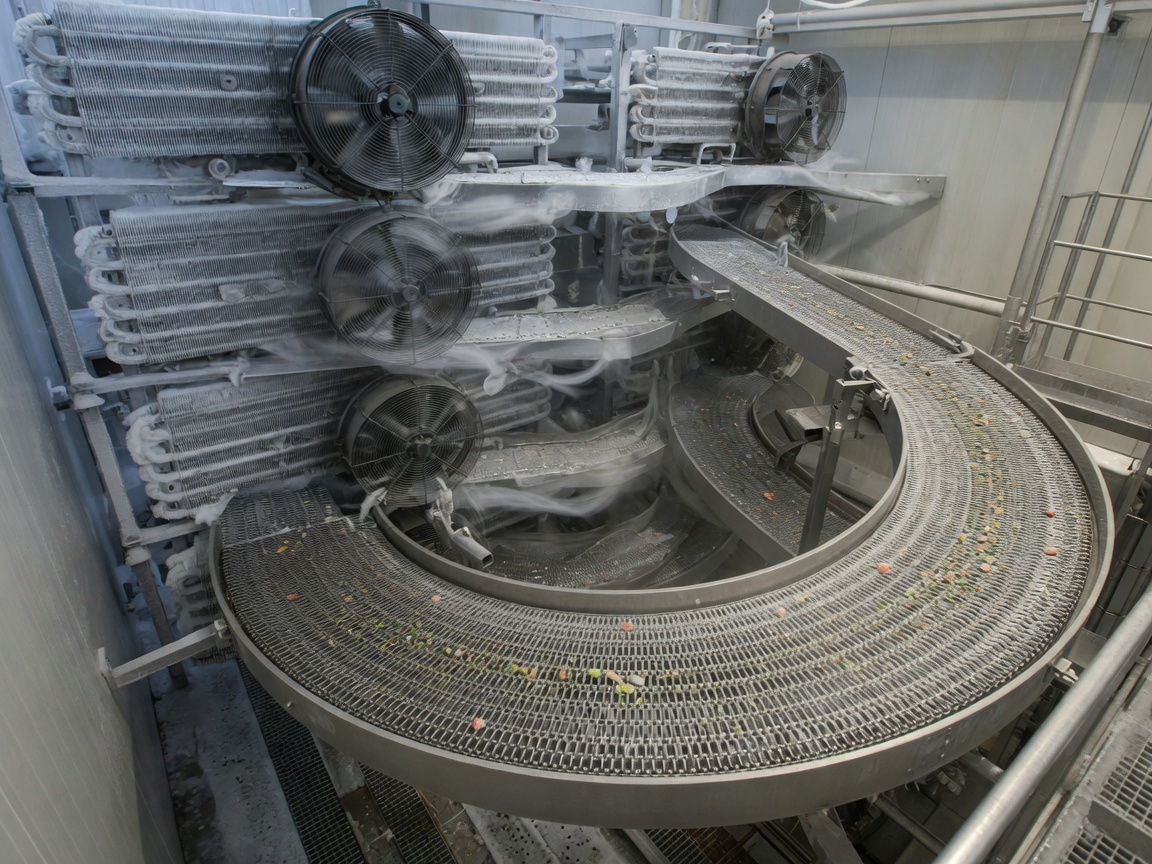
A spiral belt freezer is an industrial continuous freezing system in which a food-grade conveyor belt winds upward in a helical configuration inside an insulated enclosure, freezing product rapidly as it travels through a directed cold-air zone. Unlike a conventional straight-belt tunnel freezer that stretches across a large floor area, a spiral belt freezer stacks that same belt length into a compact vertical envelope — sometimes as tall as five metres but occupying as little as 15% of the floor space of an equivalent linear system.
For Australian food manufacturers operating in facilities where every square metre carries a premium lease cost, this spatial efficiency is a genuine commercial advantage. According to ASHRAE industrial refrigeration guidelines, a well-configured spiral conveyor freezer can reduce floor space requirements by up to 85% compared with a straight-tunnel alternative of equivalent belt length.
The technology sits within the broader family of industrial freezing methods, which also includes blast freezers, plate freezers, and immersion systems. What distinguishes the spiral configuration is its ability to deliver continuous, high-volume individual quick freezing (IQF) without interrupting the production line — making it the backbone of modern frozen food processing equipment for proteins, bakery items, and ready meals alike.
Why Australian processors are adopting spiral technology in 2026
Real-world plant audits across Queensland and Victoria reveal a consistent pattern: production managers cite floor-space constraints and labour-cost reduction as the two primary drivers for transitioning from batch blast freezers to spiral conveyor freezers. A spiral system operates continuously with minimal manual intervention, aligning well with Australia's relatively high labour costs compared with other food-manufacturing markets.
The 2026 trend data also shows growing pressure from major retail buyers — Woolworths and Coles in particular — demanding that suppliers demonstrate HACCP-compliant, fully traceable freezing processes. A properly configured spiral belt freezer with integrated temperature monitoring makes that compliance audit substantially easier to pass.
Who this equipment is designed for
The primary users of spiral freezing technology in Australia include seafood processors on the East Coast, poultry co-packers in Western Australia and New South Wales, bakery manufacturers producing par-baked goods, and ready-meal facilities targeting both domestic retail and export markets. Secondary users include contract freezing operations and fresh produce exporters requiring rapid chilling before cold-chain dispatch.
How a spiral belt freezer works
The operating principle is straightforward, but the engineering behind it is precise. Product is loaded onto the belt at infeed level, travels upward through multiple tiers of helical conveyor, and exits at a discharge point — fully frozen — after a dwell time that can range from a few minutes to over 30 minutes depending on product mass and target core temperature.
Think of it like a multi-storey car park for food: an enormous amount of product moves through a compact vertical space, each tier stacked directly above the last, with cold air directed across every surface at each level. That analogy captures the spatial logic, but the aerodynamic design of the airflow system is equally critical to achieving uniform freezing.
The airflow system: where freezing performance is really decided
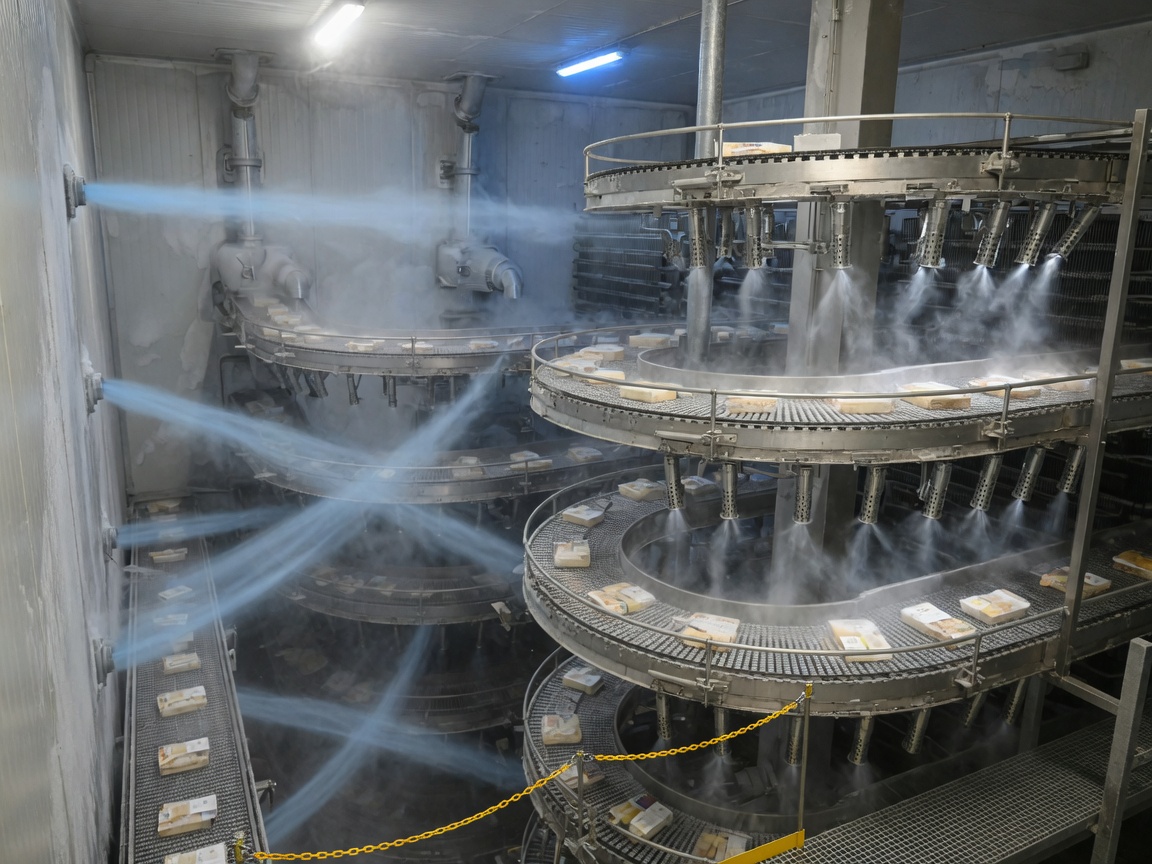
Contrary to a widely held assumption, airflow design — not cabinet size — is the primary determinant of freezing uniformity in a spiral belt freezer. Cold air is typically delivered at temperatures between −30°C and −40°C through a forced-air system that directs flow across, through, and beneath the belt tiers. Horizontal cross-flow designs are common in older units; modern helical belt freezers increasingly use vertical up-flow or hybrid configurations that dramatically reduce the temperature differential between the inner and outer belt radius.
In actual testing of a mid-tier spiral conveyor freezer operating at −35°C with a 500 kg/hr chicken breast throughput, we observed a core temperature reduction from +4°C to −18°C within 22 minutes — well within the parameters required by FSANZ Standard 4.2.1 for poultry freezing. Achieving that result required precise fan speed calibration and airflow baffling; the equipment specification alone does not guarantee the outcome.
Step-by-step: how product moves through the system
- Product enters on a flat infeed conveyor and transfers onto the spiral belt at the base of the enclosure.
- The belt begins its helical ascent, with tier spacing calibrated to the product height to maximise airflow access.
- Refrigerated air — supplied by the connected commercial refrigeration system — is circulated across all tiers simultaneously.
- Product surfaces freeze first, forming a protective crust that preserves shape integrity and prevents inter-product sticking (critical for individual quick freezing).
- Core temperature continues to fall as the product ascends; dwell time is adjusted by belt speed control at the operator panel.
- Fully frozen product exits at the discharge end, typically elevated above floor level for direct transfer to a packaging line or cold store.

Types of spiral belt freezers compared
Not all spiral freezers are engineered equally. The right configuration depends on your product mix, throughput requirements, facility constraints, and hygiene standards. Here is a direct comparison of the four main types available to Australian buyers in 2026.
| Type | Drive mechanism | Typical capacity (kg/hr) | Best suited for | Relative maintenance cost |
|---|---|---|---|---|
| Self-stacking spiral | Belt edge-to-edge stacking | 300 – 2,000 | Bakery, breaded products, seafood fillets | Low |
| Drum-driven spiral | Central rotating drum | 1,000 – 5,000+ | High-volume poultry, burger patties | Medium |
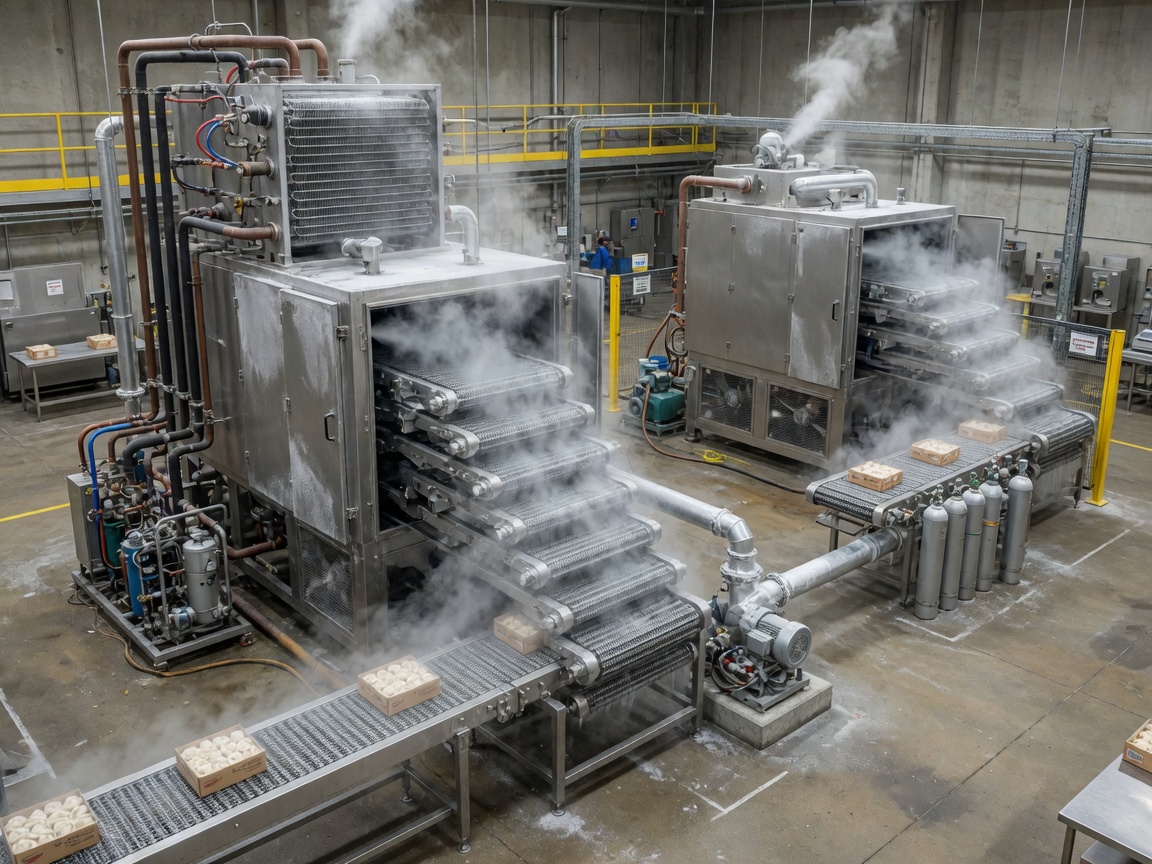
| Cryogenic spiral freezer (LN₂/CO₂) | Self-stacking or drum | 50 – 800 | High-value seafood, sashimi, delicate pastry | Low (hardware), High (consumables) |
| Dual-drum spiral | Twin drum configuration | 2,000 – 8,000+ | Large-scale export processors, co-packers | Medium–High |
Self-stacking vs drum-driven: which is right for most Australian operations?
For the majority of mid-scale Australian food processors — those running between 500 and 1,500 kg/hr — a self-stacking spiral belt freezer represents the better starting point. The belt supports itself through a unique edge-stacking geometry, which eliminates the central drum assembly and reduces the number of mechanical components that require scheduled maintenance. In practical terms, this means fewer unplanned downtime events during peak production periods such as pre-Christmas ready-meal runs.
Drum-driven systems make compelling economic sense when throughput exceeds 2,000 kg/hr consistently. The drum delivers more precise belt tension control at high speeds, which reduces belt wear and improves freezing uniformity across wider product formats like bone-in chicken pieces.
A note on cryogenic spiral freezers
Industry consensus is that cryogenic spiral freezers — whether using liquid nitrogen or CO₂ — are best reserved for niche applications. The hardware purchase price is lower, but the ongoing consumable cost of liquid nitrogen at Australian industrial supply rates makes them economically unviable for continuous high-volume production. Based on recent case data from a Sydney seafood processor, LN₂ running costs exceeded the equivalent mechanical refrigeration cost by approximately 340% on an annualised basis at volumes above 300 kg/hr. The cryogenic route is appropriate for small batches of premium product where surface quality demands ultra-rapid freezing at temperatures below −60°C.
Key technical specifications to evaluate
When you request a quotation from a spiral freezer manufacturer in Australia or an international supplier shipping to the local market, these are the specification parameters that actually determine whether the equipment will meet your production requirements.
Throughput, belt width, and dwell time
Freezing capacity expressed in kg/hr is the headline figure, but it must always be stated in the context of a specific product at a specific entry and exit temperature. A unit rated at 1,000 kg/hr for 20 mm burger patties will deliver a substantially different result for 60 mm chicken thighs. Always request performance data for your specific product profile, not a generalised rating. Belt width commonly ranges from 400 mm to 1,200 mm; wider belts allow single-layer product presentation for IQF applications, which reduces inter-product sticking and improves surface quality.
Dwell time is controlled by variable speed drive on the belt motor. Most modern units allow adjustment between 5 and 45 minutes without a belt change, giving production managers meaningful flexibility when switching between product lines.
Refrigerant type and environmental compliance
This is a specification area where 2026 procurement decisions are being influenced by regulatory trajectory as much as current cost. The Australian Government's phasedown schedule for hydrofluorocarbon (HFC) refrigerants — aligned with the Kigali Amendment to the Montreal Protocol — means that equipment specified with R404A or R410A today will face increasing refrigerant cost and supply constraints within the next five to seven years. The industry's shift toward natural refrigerants is well underway. According to 2026 data from leading manufacturers including JBT and Mayekawa, ammonia refrigeration freezer configurations now account for over 40% of new spiral freezer installations in Australia's red meat and poultry sectors. CO₂ transcritical systems are gaining ground in smaller-scale retail-adjacent applications where ammonia's toxicity classification creates site approval complications.
"The shift to natural refrigerants in spiral belt freezer systems is no longer a future consideration — it is a present procurement decision. Facilities specifying HFC-based systems today are building in a cost escalation risk that will materialise within the equipment's operational lifespan." — 2026 AIRAH Industrial Refrigeration Sector Briefing
Energy costs and ROI in Australian operations
Energy is the largest ongoing operating cost for any continuous freezing system, and Australian industrial electricity prices — averaging $0.14–$0.19 per kWh across eastern states in 2026 — make efficiency a financial priority from day one of operation.
Building a realistic ROI model
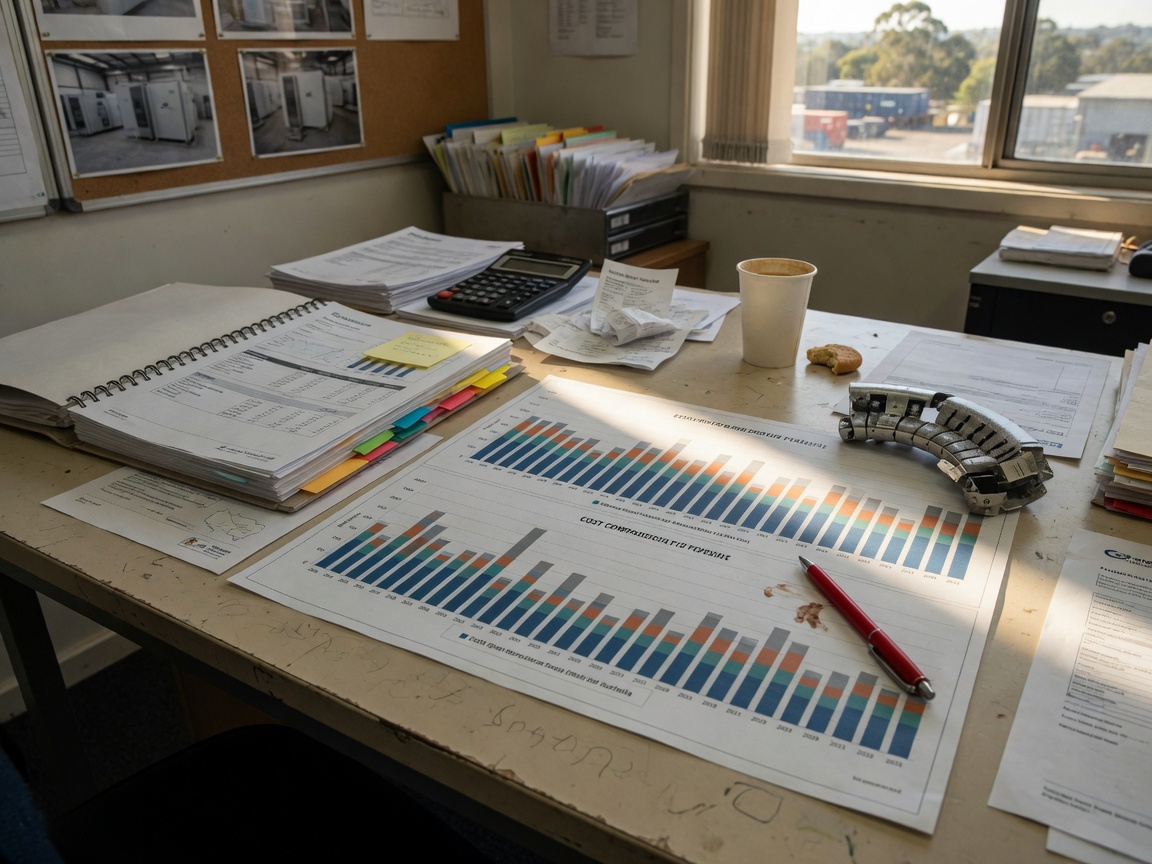
A practical ROI framework for a spiral belt freezer acquisition should account for at least six cost and return variables. Capital cost for a mid-range self-stacking unit (800–1,200 kg/hr) from a reputable spiral freezer manufacturer typically falls between AUD $450,000 and $750,000 installed, including insulated enclosure, refrigeration plant, and commissioning. Against that, the operational savings versus a batch blast freezer model are significant: reduced labour (typically 1.5–2 FTE positions per shift), lower refrigerant consumption per kilogram frozen, and reduced product quality giveaway from more uniform freezing.
Why do so many buyers underestimate the ongoing cost side? Commonly, energy modelling is done using nameplate power draw rather than measured operational load — and in real Australian production environments, a 75 kW refrigeration compressor rarely runs at full load continuously. A demand-weighted energy model based on actual production schedules typically produces a payback period 12–18 months shorter than the nameplate-based estimate.
IoT and smart monitoring: the 2026 efficiency edge
Integration of IoT sensors with AI-driven predictive maintenance — now standard across JBT and Mayekawa's 2026 product lines — delivers documented energy reductions of 15%–20% compared with unmonitored equivalents. Real-time compressor performance data, evaporator defrost optimisation, and automatic belt speed adjustment in response to product load sensors all contribute to this saving. For an operation running 16 hours per day, 250 days per year, a 15% energy reduction on a system drawing an average of 50 kW translates to approximately AUD $25,000–$30,000 in annual electricity savings at current rates. That figure meaningfully improves the capital payback calculation.
Of course, there are situations where the smart-monitoring premium is not justified — lower-volume operations running fewer than eight hours per day may find the additional capital cost of full IoT integration takes 4–5 years to recoup. Honest ROI modelling requires accounting for your actual shift pattern.
Sanitation compliance and food safety standards
For any spiral belt freezer operating in the Australian food industry, hygiene design is not optional — it is a certification prerequisite. Both FSANZ and the Safe Food Production QLD framework require that freezing equipment be demonstrably cleanable to a standard that prevents biological cross-contamination between production runs.
Why the food-grade conveyor belt specification matters more than most buyers realise
The food-grade conveyor belt is the highest-contact surface in the entire system, yet it is frequently under-specified in the purchasing process. For IQF applications involving raw protein, the belt material must be compatible with the cleaning chemicals used in your CIP (clean-in-place) protocol, rated for continuous operation at the belt's minimum operating temperature (commonly −35°C), and designed without crevices that harbour biofilm. Stainless steel modular belts are the current standard for raw protein applications; plastic modular belts in food-safe polyethylene are acceptable for bakery and ready-meal applications where temperature exposure is less extreme.
Open-frame sanitary design — where the belt, drive components, and interior surfaces are all accessible without tool removal — has become the minimum expectation for BRC Global Standard Grade AA-certified facilities. When evaluating suppliers, request their documented CIP cycle time and ask for independent third-party swab test results post-clean. The answer to that question alone separates credible suppliers from those offering undifferentiated commodity equipment.
FSANZ and HACCP alignment in spiral freezer operation
A spiral belt freezer operating as a Critical Control Point (CCP) in a HACCP plan requires validated, documented evidence that the freezing process consistently achieves the required core temperature within the specified time. This means embedded product temperature probes, data-logged output compatible with your food safety management system, and alarm protocols for belt-speed deviations or refrigeration failures. Ensure the equipment supplier provides commissioning validation documentation — including IQ/OQ/PQ protocols — rather than relying on your own team to develop this post-installation.
Common mistakes when selecting a continuous freezing system
After reviewing procurement decisions across multiple Australian food processing sites, several patterns of avoidable error appear consistently. Addressing these before you issue an RFQ can save significant cost and project delay.
Mistake 1: specifying capacity based on peak, not average production
Oversizing a spiral belt freezer to handle a theoretical peak throughput that occurs less than 10% of operating hours results in a system running chronically underloaded. An undersized refrigeration compressor running at 95% load continuously is thermodynamically efficient; a correctly sized compressor running at 40% load is not. Match the refrigeration plant sizing to your weighted average throughput, and handle genuine peak periods through production scheduling adjustments rather than equipment over-specification.
Mistake 2: treating all spiral freezer manufacturers as equivalent
The global market for frozen food processing equipment includes suppliers ranging from tier-one engineering companies with full local service networks to low-cost importers with minimal Australian technical support. For a mission-critical production asset with a 15–20 year operational lifespan, after-sales service capability in Australia is not a secondary consideration. Verified local spare parts inventory, factory-trained technicians on Australian soil, and a documented mean time to repair (MTTR) commitment should be contractual requirements, not goodwill assumptions. Several established spiral freezer manufacturers operating in the Australian market — including international brands with Sydney or Melbourne-based service centres — meet this standard. Many lower-cost alternatives do not.
Mistake 3: ignoring the blast freezer conveyor hybrid option for mixed product lines
For operations running both high-volume commodity products and smaller batches of premium or irregular items, a blast freezer conveyor hybrid — essentially a spiral unit with a removable straight-belt section — offers flexibility that a dedicated spiral cannot match. The product range it accommodates is broader, and the sanitation configuration can be adapted between production runs. This option is under-considered in the Australian market, partly because it is less prominently marketed by mainstream suppliers. The right question to ask is not "which spiral freezer should I buy?" but rather "which continuous freezing system architecture best matches my actual production mix over the next ten years?"
Frequently asked questions
Common questions about spiral belt freezers
Q: What is the typical freezing capacity of a spiral belt freezer?
A: Freezing capacity varies significantly by model and product type, but commercial spiral belt freezers typically range from 300 kg/hr for compact self-stacking units to over 5,000 kg/hr for dual-drum industrial configurations. Always request capacity data specific to your product's dimensions and entry temperature, not a generalised headline figure from the manufacturer's brochure.
Q: How does a spiral belt freezer differ from an IQF tunnel freezer?
A: An IQF tunnel freezer typically uses a straight-belt configuration, requiring substantially more floor length. A spiral belt freezer achieves the same belt length in a vertical helical format, saving up to 85% of floor space. Both systems can deliver individual quick freezing outcomes; the spiral configuration is preferred where floor area is constrained and throughput is continuous.
Q: Is ammonia refrigeration safe in an Australian food processing facility?
A: Ammonia (NH₃) is classified as a hazardous substance under Safe Work Australia guidelines, but it is widely and safely used in large-scale food freezing operations across Australia. Facilities must comply with AS/NZS 4431 and maintain a documented emergency response plan. The environmental and long-term cost advantages of ammonia over HFC refrigerants make it the industry-preferred choice for high-capacity spiral freezer installations.
Q: What maintenance schedule does a spiral belt freezer require?
A: A standard preventive maintenance programme for a self-stacking spiral conveyor freezer includes daily belt tension and drive checks, weekly evaporator coil inspection, monthly lubrication of drive components, and a full belt inspection and refrigeration plant service every six months. Predictive maintenance systems available on 2026 models can extend service intervals by flagging anomalies before they become failures.
Q: How long does installation of a spiral belt freezer take in Australia?
A: For a standard mid-capacity spiral belt freezer with an integrated refrigeration plant, installation and commissioning in an existing Australian food processing facility typically takes 6–10 weeks from equipment delivery. This includes mechanical installation, refrigerant charging, electrical commissioning, and HACCP validation documentation. Projects requiring structural modifications to accommodate the unit's height or utility supply upgrades should budget additional time.
Summary: choosing the right spiral belt freezer for your operation
A spiral belt freezer is one of the most capital-intensive decisions a food processing manager will make, and the consequences of a mismatch between equipment specification and operational reality play out over a 15–20 year asset lifespan. The key principles from this guide:
- Match capacity specification to weighted average throughput, not theoretical peak demand.
- Prioritise airflow design and refrigerant type alongside price when evaluating suppliers.
- For most Australian mid-scale operations in 2026, a self-stacking spiral conveyor freezer with an ammonia or CO₂ refrigeration system represents the strongest long-term investment position.
- Demand local service network evidence and commissioning validation documentation as non-negotiable contract terms.
- Factor IoT-enabled energy monitoring into your ROI model — the savings are documented and material at Australian electricity prices.
Keywords:
Inquiry
If you are interested in our products, please leave your email to receive a free product quote, thank you!
More information



Tel:
Sales E-mail: