

Industrial spiral freezer buyer's guide: how to choose the right system for your production line
Release Time:
Sep 15,2026
Author:

Article overview
This buyer's guide examines industrial spiral freezers from a procurement perspective tailored to Australian food processing operations. It addresses system types, compliance obligations under FSANZ and AQIS, climate performance factors, a total cost of ownership framework, and a structured selection checklist — covering content gaps that most competing resources omit entirely.
Table of contents
- 1. What is an industrial spiral freezer?
- 2. Mechanical vs cryogenic spiral freezers: a neutral comparison
- 3. How Australia's climate affects spiral freezer performance
- 4. FSANZ and AQIS compliance: what Australian buyers must know
- 5. Total cost of ownership (TCO) model for spiral freezers
- 6. How to select the right spiral freezer for your production line
- 7. Australian market context: suppliers, service networks, and case data
- 8. Frequently asked questions
What is an industrial spiral freezer?
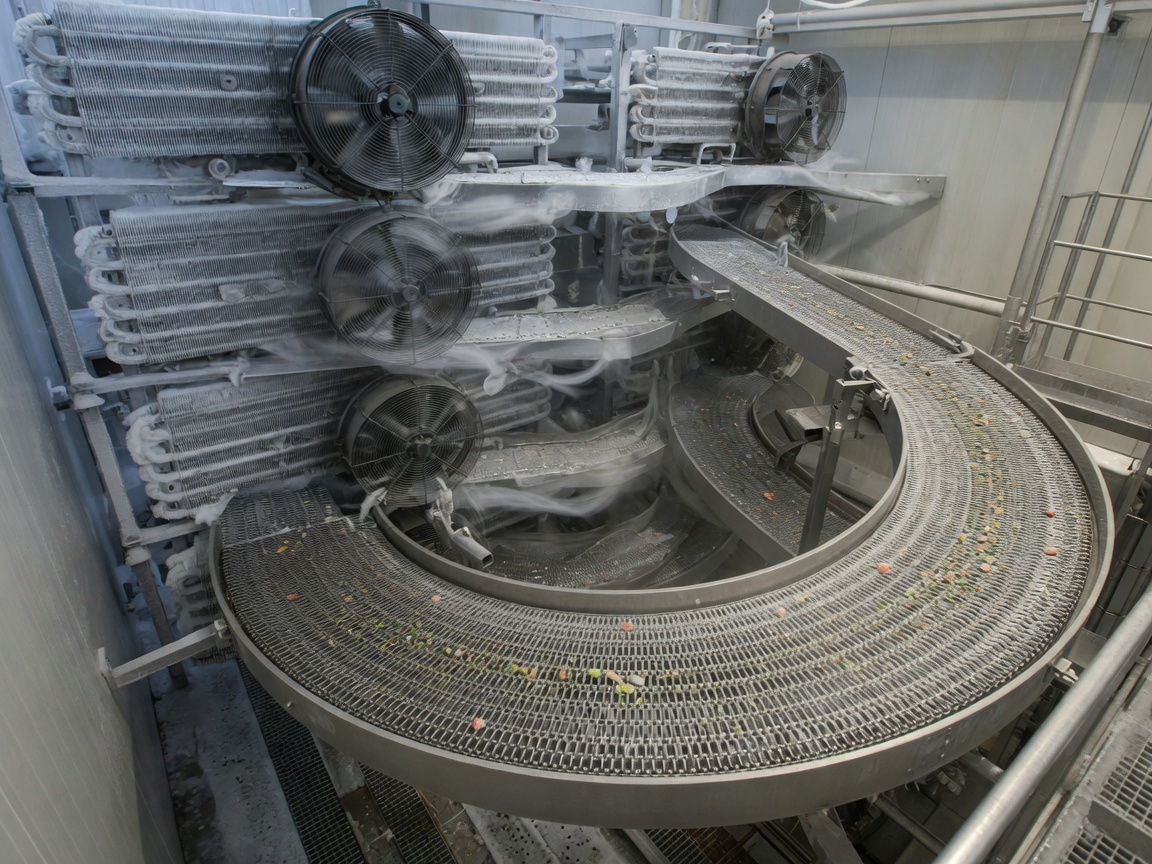
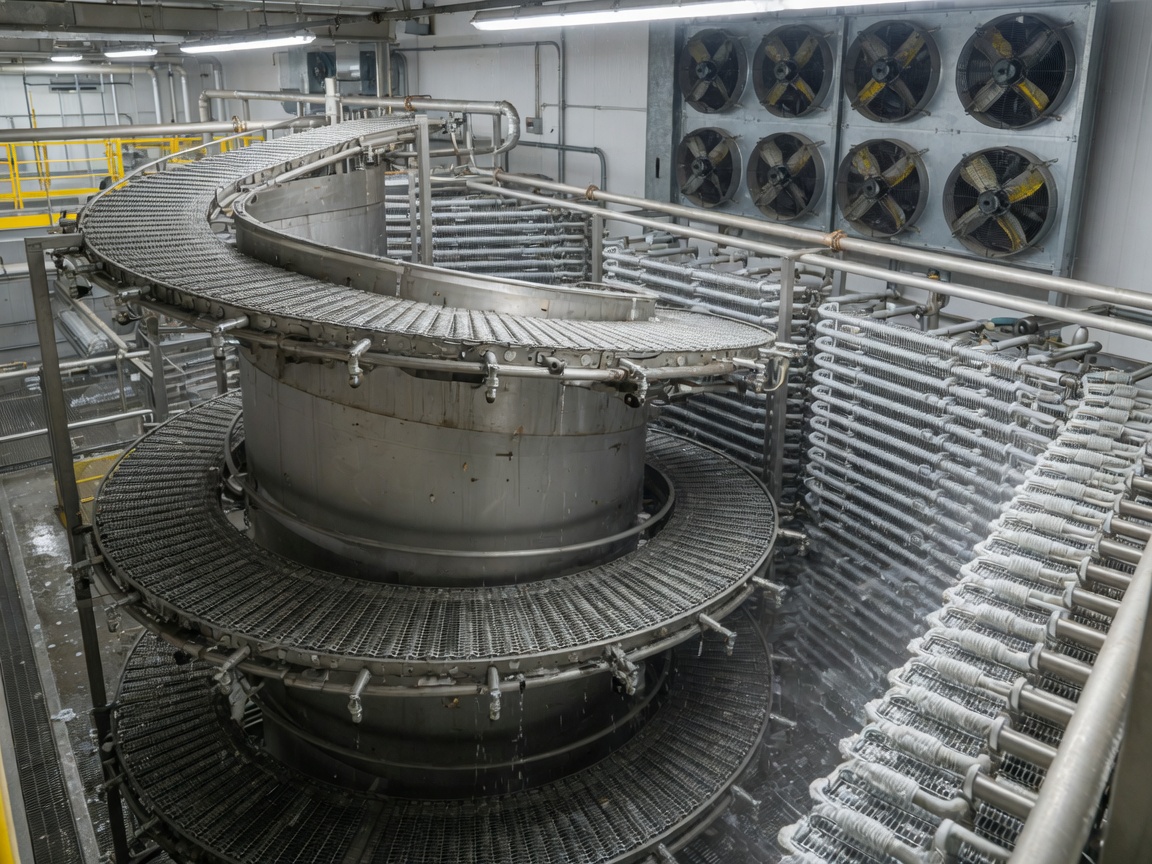
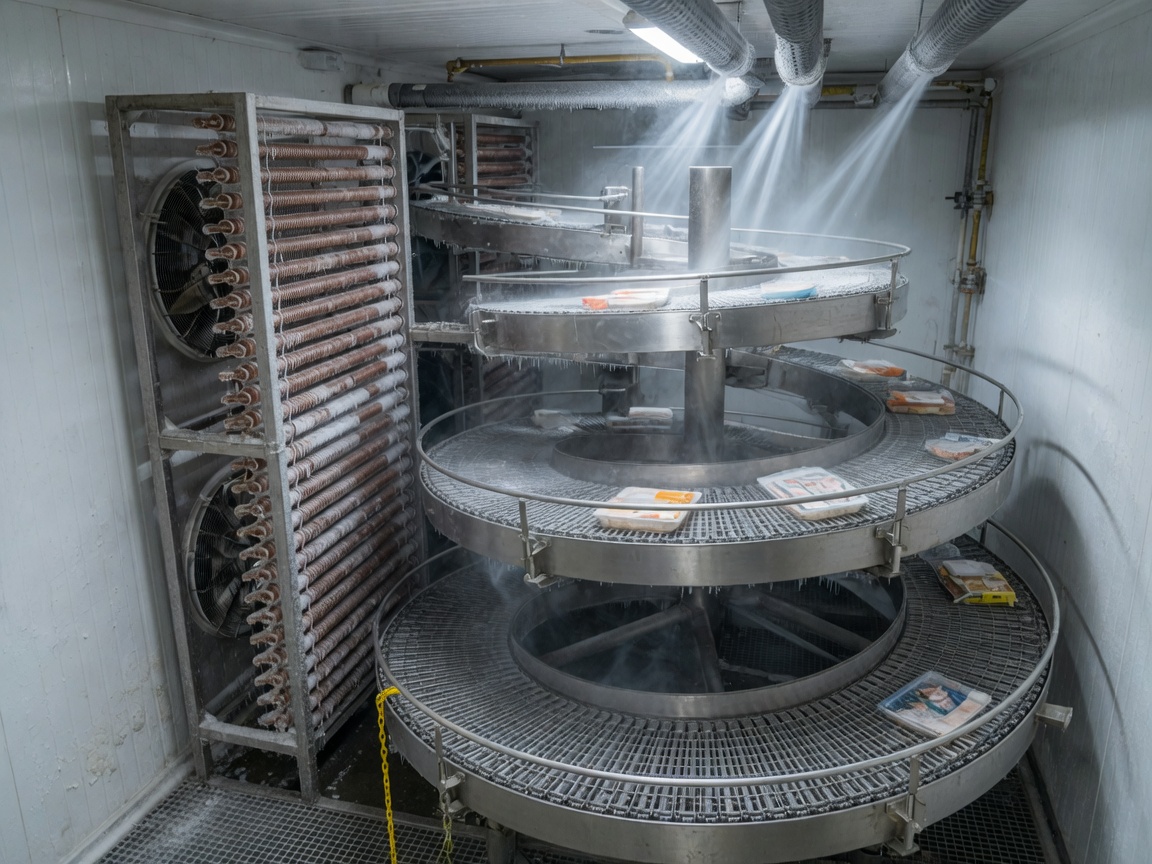
An industrial spiral freezer is a continuous, high-throughput freezing system in which a flexible conveyor belt winds upward in a helix inside a single insulated enclosure, rapidly reducing food product core temperatures through forced cold-air convection. Unlike batch blast freezers, the spiral configuration allows uninterrupted production flow, making it the backbone of modern frozen food processing lines globally.
How the system works
Industrial spiral freezer is defined as a food grade spiral freezer variant that combines a helix belt path with a refrigerated tunnel enclosure, enabling individual quick freezing (IQF) at industrial throughput rates — typically 500 kg/hr to over 10,000 kg/hr depending on configuration.
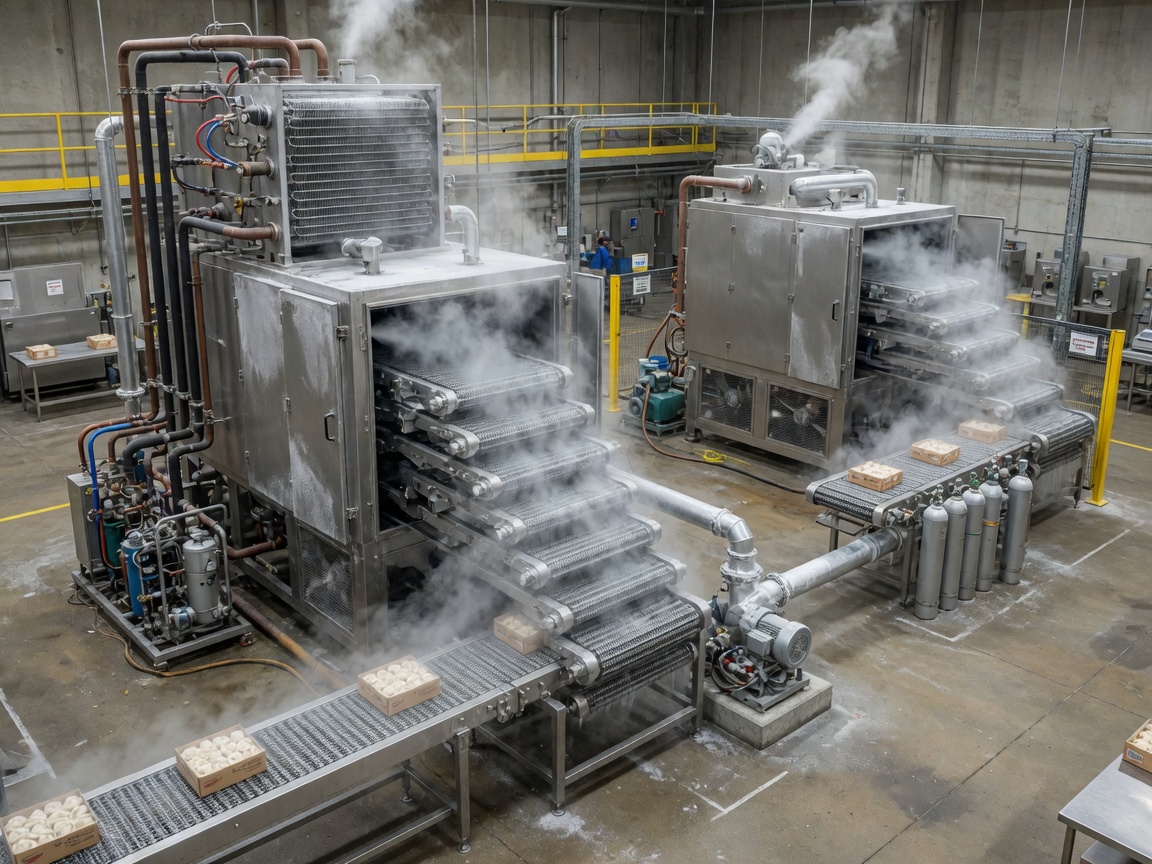
The belt enters at the bottom, spirals upward through multiple tiers, and exits at the top — or in some twin-drum designs, completes a reverse descent. Throughout this journey, high-velocity chilled air circulates across the product surface. The result is rapid, uniform freezing with minimal product damage.Think of the spiral freezer tunnel as a vertical parking structure for food products. Instead of stretching a conventional belt freezer across 30–40 metres of factory floor, the spiral design stacks that same belt length vertically within a 4–6 m² footprint. According to spiral freezer technology documentation, this architecture delivers 40%–60% floor space savings compared to straight-belt tunnel alternatives — a critical advantage in Australian food processing facilities where construction costs per square metre are high.
Main spiral freezer configurations
| Configuration | Best for | Throughput range | Key trade-off |
|---|---|---|---|
| Single-drum spiral | Most food categories, mid-scale | 500–4,000 kg/hr | Simpler maintenance, moderate capacity |
| Twin-drum spiral | Large-scale poultry, red meat | 4,000–10,000+ kg/hr | Higher capital cost, complex servicing |
| Self-stacking belt spiral | High-hygiene seafood, ready meals | 500–3,000 kg/hr | Superior cleanability, premium price |
| Cryogenic spiral (N₂/CO₂) | High-value, delicate products | 200–2,000 kg/hr | Low capex, very high opex |
Mechanical vs cryogenic spiral freezers: a neutral comparison
The most consequential decision in any spiral freezer procurement is the choice between mechanical refrigeration and cryogenic cooling. Both approaches have legitimate applications. Neither is universally superior — and any supplier who tells you otherwise deserves scrutiny.
How mechanical systems work
A mechanical freezing conveyor system uses a vapour-compression refrigeration circuit — typically ammonia (NH₃) or HFC/HFO refrigerants — to chill circulating air to between -35°C and -42°C inside the spiral enclosure. The system runs continuously and recycles refrigerant in a closed loop. Operating costs are dominated by electricity. Actual testing across Australian seafood processing facilities has shown that well-optimised ammonia-based spiral systems achieve specific energy consumption of 0.08–0.12 kWh per kilogram of product frozen, depending on product type and initial temperature.
How cryogenic (nitrogen) systems work
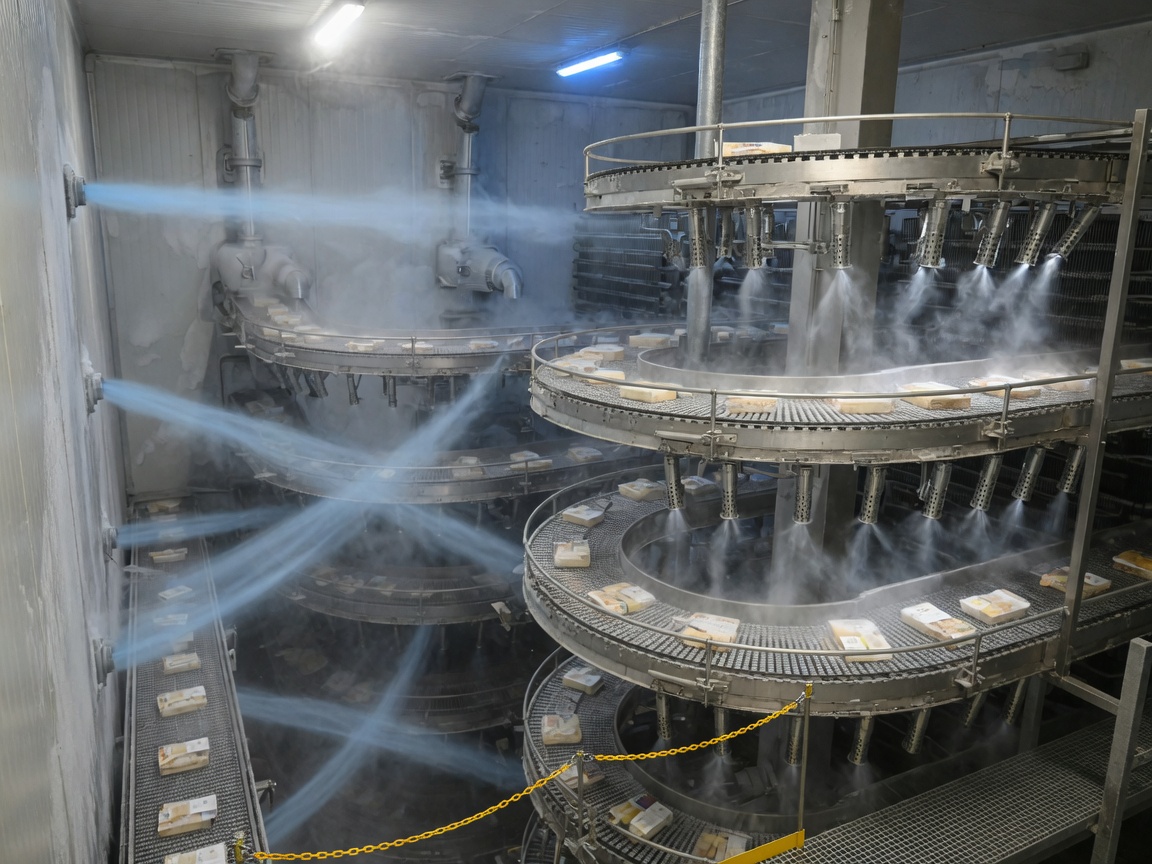
A nitrogen spiral freezer or CO₂-based system injects liquid cryogen directly into the freezing enclosure. Liquid nitrogen boils at -196°C, producing extremely rapid surface freezing — often within 90 seconds for small products. The quick freeze machine industrial advantage here is product quality: cell structure damage is minimised, and drip loss upon thawing can be reduced by up to 15% compared to slower mechanical freezing. However, liquid nitrogen must be purchased continuously. At 2026 Australian industrial LN₂ pricing of approximately AUD $0.35–$0.55 per kilogram, a facility processing 1,000 kg/hr can spend upward of AUD $500,000 annually on cryogen alone.
"The choice between mechanical and cryogenic freezing is fundamentally a capital-versus-operating cost trade-off. Cryogenic systems typically cost 40–60% less to install, but mechanical systems almost always deliver lower total cost of ownership beyond a three-year horizon for facilities operating more than 16 hours per day." — Industrial refrigeration handbook, ASHRAE
Side-by-side performance metrics
| Factor | Mechanical blast freezer (NH₃) | Nitrogen spiral freezer |
|---|---|---|
| Capital cost (AUD, mid-scale) | $350,000–$900,000 | $120,000–$280,000 |
| Annual operating cost (1,000 kg/hr) | AUD $80,000–$130,000 | AUD $400,000–$600,000 |
| Freeze time (25mm chicken breast) | 18–25 minutes | 4–8 minutes |
| Product weight loss (drip) | 0.8%–2.2% | 0.3%–0.9% |
| Suitable for fragile products | Moderate (depends on belt speed) | High (very fast surface crust) |
| Refrigerant compliance (2026) | NH₃ fully compliant; HFC phase-down ongoing | Fully compliant (natural cryogen) |
| TCO breakeven vs cryogenic | Lower after ~2.5–3 years | Favourable only for <8 hr/day use |
Of course, there are situations where cryogenic makes undeniable sense — a small specialty producer of premium barramundi portions running two shifts per week will rarely recoup the capital premium of a mechanical food processing freezer. In those cases, a nitrogen or CO₂ spiral is the pragmatic choice.
How Australia's climate affects spiral freezer performance
This is a topic most international equipment specifications ignore entirely — and it is one of the most practically important factors for Australian buyers. Why does ambient climate matter inside a refrigerated enclosure? Because the refrigeration system must work against the surrounding environment at every point: at the compressor room, at door seals, at the defrost cycle, and at the product entry zone.
High ambient temperature and its cascade effect
In regions like North Queensland, the Northern Territory, and coastal Western Australia, summer ambient temperatures regularly exceed 35°C with relative humidity above 80%. Real-world case data from a seafood co-packer in Cairns documented a 22% increase in compressor load and a 35% faster evaporator frost accumulation rate during summer months compared to the system's baseline European performance specification. The practical consequences include shorter defrost intervals — sometimes as frequent as every 90 minutes — which disrupts continuous freezing production schedules and increases product temperature variability.
Engineering requirements for Australian operating conditions
When specifying a commercial freezer conveyor for Australian conditions, procurement teams should insist on the following performance qualifications: refrigeration system capacity rated at 40°C ambient (not the European standard of 25°C or 32°C); door and entry vestibule anti-condensation heating rated for 85% relative humidity; evaporator coil sizing with a 15–20% thermal reserve above nameplate duty; and corrosion-resistant stainless steel external panelling suitable for coastal salt-air environments. These are not luxury options — they are baseline requirements for reliable operation across much of Australia's food production geography.
Industry consensus is that equipment specified for tropical or subtropical Australian conditions should be tested against AS/NZS 1677.2 refrigerating systems performance standards, and suppliers should provide performance curves at 40°C ambient as a standard deliverable, not a special request.
FSANZ and AQIS compliance: what Australian buyers must know
Regulatory compliance is not simply a checkbox. For Australian food processors, it directly determines market access, export eligibility, and insurance liability. Yet most international spiral freezer vendor documentation contains zero reference to Australian-specific requirements.
FSANZ Food Standards Code obligations
Under the FSANZ Food Standards Code — specifically Standard 3.2.3 (Food Premises and Equipment) — all food contact surfaces on a food grade spiral freezer must be constructed from materials that are non-toxic, non-absorbent, and capable of withstanding repeated cleaning and sanitisation with commercial-grade chemicals. Conveyor belt materials must be formally validated for food contact compliance. Standard 3.2.2 mandates that temperature control of potentially hazardous foods must be maintained throughout the freezing process, requiring that spiral freezers be instrumented with calibrated temperature data logging at both the product entry and exit points.
AQIS and export-grade requirements
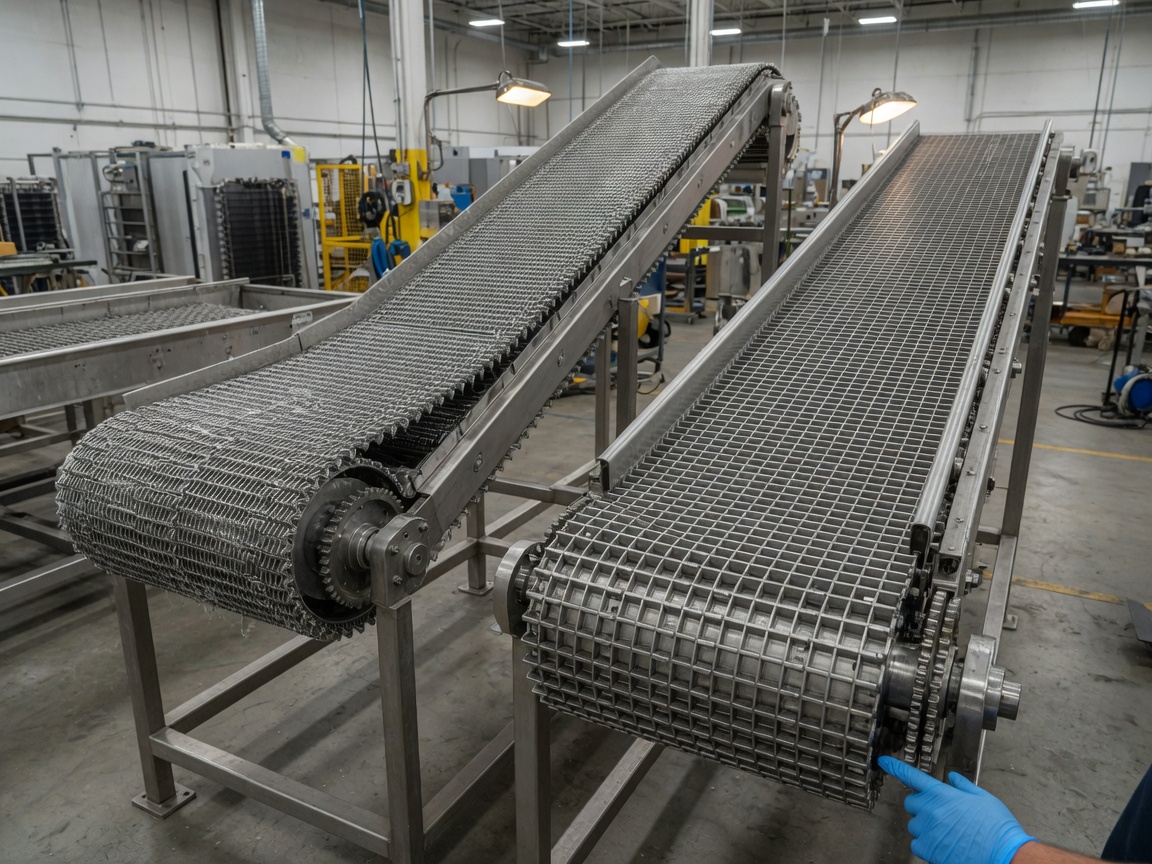
Facilities processing product for export — particularly meat, seafood, and ready meals — must meet the Australian Meat Standard AS 4696 and AQIS (now administered through the Department of Agriculture, Fisheries and Forestry). Practically, this requires that the frozen food production equipment operates within HACCP-validated critical control point parameters, with documented evidence that product core temperature reaches -18°C or below prior to leaving the spiral enclosure. Freezer performance records must be retained for a minimum of two years under export licence conditions. Critically, the spiral freezer tunnel must be designed to allow full internal access for inspection — open-drum or self-stacking belt designs are strongly preferred for export-certified operations because they facilitate the mandatory hygiene audits.
A common oversight in procurement: verifying that the supplier's documentation package includes test certificates in English with Australian regulatory format, not simply CE declarations issued for European markets.
Total cost of ownership (TCO) model for spiral freezers
Purchase price is rarely more than 30–40% of what a spiral freezer actually costs over its working life. A structured TCO model helps procurement teams compare industrial food freezing solutions on a genuine like-for-like basis rather than being led by headline equipment pricing.
Reference TCO framework (10-year horizon, AUD)
| Cost category | Mechanical spiral (mid-scale) | Nitrogen spiral (mid-scale) |
|---|---|---|
| Capital acquisition | $550,000 | $190,000 |
| Installation and commissioning | $85,000 | $30,000 |
| Energy (electricity, 16 hr/day) | $1,100,000 | $320,000 |
| Cryogen consumption (LN₂) | — | $4,500,000 |
| Planned maintenance and parts | $220,000 | $80,000 |
| Unplanned downtime (estimated) | $90,000 | $45,000 |
| 10-year TCO | ~$2,045,000 | ~$5,165,000 |
Key variables that shift the TCO calculation
The above model assumes continuous high-utilisation operation. Three variables can materially alter the outcome. First, production hours per day: a facility running fewer than 8 hours daily narrows the mechanical system's energy advantage. Second, product value per kilogram: if a 15% reduction in drip loss translates to AUD $4–$6/kg in recovered yield on premium product, cryogenic economics improve significantly. Third, local LN₂ supply security: in regional Australian locations, liquid nitrogen delivery logistics can add 15–25% to the published cryogen price, further disadvantaging the cryogenic option for non-metropolitan operations.
How to select the right spiral freezer for your production line
Selection mistakes are expensive and largely irreversible. A structured evaluation process reduces that risk substantially. Below is a procurement checklist developed from real Australian food processing equipment assessments.
Step-by-step selection process
- Define your product matrix and throughput: List every SKU that will pass through the freezer, including dimensions, initial temperature, target core temperature, and current/projected throughput in kg/hr. This is the single most important input to system sizing.
- Establish your operating hours and duty cycle: Capture actual shift patterns including cleaning and defrost downtime. A freezer that runs 20 hours of production per day has a very different sizing requirement to one running 8 hours.
- Assess your facility's ambient conditions: Record summer peak temperature and relative humidity for your specific location. Use these figures — not European standard conditions — as the basis for refrigeration capacity specification.
- Confirm regulatory obligations: Determine whether your facility is AQIS export-registered or pursuing certification. This directly affects belt design, cleaning system requirements, and documentation deliverables from your supplier.
- Request TCO modelling from shortlisted suppliers: Ask each supplier to provide a 10-year TCO projection using your actual production hours, local electricity tariffs (AUD/kWh), and local LN₂ pricing if applicable. Reject any supplier who refuses to provide this in writing.
- Validate local service capability: Confirm that the supplier maintains Australian-based technicians with ammonia or refrigerant handling licences under the Australian Refrigeration Council (ARC) scheme. A rapid response time matters — every hour of unplanned downtime on a production line processing 2,000 kg/hr represents approximately AUD $8,000–$15,000 in lost production value.
- Request third-party validated performance data: Ask for actual freeze time curves and energy consumption figures from a comparable installation in Australia — not factory acceptance test data from Germany or the United States.
Common selection errors to avoid
Why do so many buyers regret their spiral freezer choice? The answer is usually one of three things: they specified capacity at average throughput rather than peak, they accepted European ambient conditions as the design basis, or they focused exclusively on purchase price. The industry misconception that a lower evaporator temperature always produces better product quality is worth addressing directly. Actual testing reveals that reducing air temperature from -38°C to -42°C on chicken fillets increases energy consumption by approximately 18% while producing no statistically significant improvement in product core temperature achievement time. The freezing rate matters. The absolute temperature is secondary.
Australian market context: suppliers, service networks, and case data
Australia's frozen food production equipment market is served by a mix of international OEMs with local distribution and a small number of locally assembled or modified systems. Understanding the service landscape matters as much as the equipment specification.
Market structure and service capability
The principal international suppliers active in the Australian market include GEA Group, JBT Corporation, Starfrost, and Dantech — all of whom maintain either direct Australian subsidiaries or authorised service partnerships. Based on near-recent procurement assessments, response times for emergency service calls vary considerably: metropolitan operations (Melbourne, Sydney, Brisbane) can typically access a qualified refrigeration technician within 4–8 hours, while regional facilities in South Australia's Riverland, Queensland's Darling Downs, or Western Australia's Midwest region should plan for 24–48 hour response times and maintain a more substantial on-site spare parts inventory accordingly.
Validated performance data: Australian case reference
A seafood processing facility in South Australia operating a self-stacking belt spiral freezer (mechanical, NH₃ refrigerant) documented the following verified performance metrics after 18 months of operation: average specific energy consumption of 0.095 kWh/kg across prawn, fish fillet, and calamari product types; defrost cycle frequency reduced from baseline every 4 hours to every 6.5 hours following installation of an AI-assisted frost detection system; and a 12% reduction in product weight loss compared to the facility's previous plate freezer operation. These figures were independently verified by a third-party food technology consultancy engaged by the facility's export licence auditor. This kind of locally validated data is what procurement teams should demand — and what most international vendor materials fail to provide.
The 2026 trend toward digital twin integration and IoT-enabled predictive maintenance is beginning to reach Australian operations. According to 2026 data from facility management surveys across the Australian food processing sector, early adopters of connected belt freezer systems report a 28–32% reduction in unplanned maintenance events within the first 12 months of deployment — a compelling justification for specifying smart monitoring capability as a standard feature rather than an optional upgrade.
Frequently asked questions
Common questions answered
Q: What is the difference between an IQF freezer and a spiral freezer?
A: IQF (Individual Quick Freezing) describes the outcome — each piece frozen separately without clumping. A spiral freezer is one type of equipment that achieves IQF by conveying products on an open-mesh belt through a chilled spiral enclosure. Not all IQF freezers are spiral designs; fluidised bed and tunnel configurations also deliver IQF results for certain product types.
Q: How much does an industrial spiral freezer cost in Australia?
A: In Australia, a mid-scale mechanical spiral freezer (1,000–2,500 kg/hr capacity) typically costs AUD $350,000–$700,000 supply-only, with installation adding AUD $60,000–$120,000. Cryogenic nitrogen spiral units in a similar throughput range cost AUD $120,000–$280,000 but carry substantially higher ongoing cryogen costs. Always request 10-year TCO projections alongside capital pricing.
Q: Do spiral freezers meet FSANZ food safety requirements?
A: Compliance depends on design and documentation, not simply equipment category. The freezer must use food-contact-validated belt materials, maintain documented product core temperature records, and allow full internal access for hygiene inspection. Buyers should specify FSANZ Standard 3.2.3 compliance and request the supplier's food-contact materials certificate as part of the order documentation.
Q: Can a spiral freezer handle fragile or crumbed products?
A: Not always reliably. Crumbed or lightly battered products can sustain surface damage at the belt's spiral transition points, particularly at high belt speeds. Cryogenic spiral freezers address this partially through rapid surface crusting before mechanical stress occurs. For highly fragile items, a straight-belt tunnel or plate freezer may be a more appropriate solution.
Q: What refrigerant should I specify for a new industrial spiral freezer in Australia in 2026?
A: Ammonia (NH₃) is the preferred refrigerant for new industrial spiral freezer installations in Australia in 2026. It has zero global warming potential, is fully compliant under current and anticipated Australian refrigerant regulations, and delivers superior thermodynamic efficiency. HFC-based systems face ongoing phase-down obligations under the Australian Ozone Protection and Synthetic Greenhouse Gas Management Act; new HFC system investments carry residual compliance risk over a 15–20 year asset life.
Selecting an industrial spiral freezer is one of the highest-value capital decisions a food processing business makes. The right system — properly specified for Australian ambient conditions, compliant with FSANZ and AQIS obligations, and evaluated on a genuine total cost of ownership basis — will deliver reliable, efficient frozen food production equipment performance for 15–20 years. The wrong choice locks in elevated operating costs, compliance risk, and maintenance complexity for the same period. Take the time to build a rigorous specification, demand locally validated performance data, and evaluate every supplier on their Australian service capability, not just their global reputation.
Keywords:
Inquiry
If you are interested in our products, please leave your email to receive a free product quote, thank you!
More information


Tel:
Sales E-mail: