

Plate freezing system guide: how it works, types, and buying tips
Release Time:
Oct 06,2026
Author:

Article overview
This guide covers the full decision-making journey for US food processors evaluating a plate freezing system — from technical fundamentals and equipment type comparisons to compliance, ROI, and maintenance. Estimated reading time: 14 minutes.
Table of contents
- 1. What is a plate freezing system?
- 2. How a plate freezing system works: the mechanics
- 3. Types of plate freezing systems compared
- 4. Plate freezer vs. spiral freezer vs. blast tunnel freezer
- 5. US regulatory and food safety compliance requirements
- 6. ROI analysis and total cost of ownership (TCO)
- 7. How to choose the right plate freezing system for your facility
- 8. Maintenance, troubleshooting, and common failure points
- 9. FAQ
What is a plate freezing system?
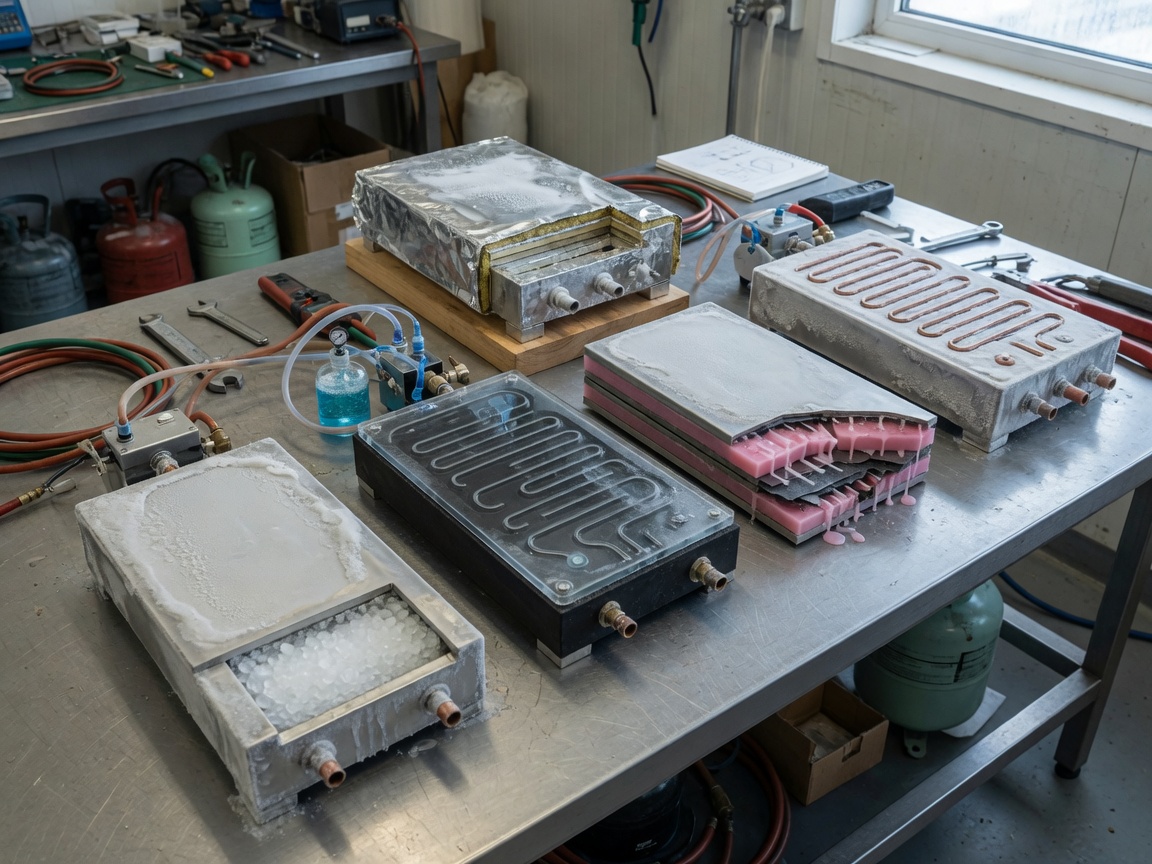
A plate freezing system is a category of industrial refrigeration equipment that freezes food products by pressing refrigerant-chilled flat metal plates directly against the product surface, transferring cold energy through conduction rather than convection. The result is faster, more uniform freezing with significantly lower moisture loss compared to air-blast methods.
Think of a freezer plate as a rechargeable thermal battery — you "charge" it by connecting it to a refrigeration circuit, and it discharges that stored cold energy directly into the product the moment contact is made. Unlike a blast tunnel, which blows cold air around the product, the plate freezer eliminates the air gap entirely. That direct contact is what makes the physics work so efficiently.
Plate freezing system is defined as: a food preservation freezing technology in which refrigerant or secondary coolant circulates through hollow metal plates that clamp against product surfaces, driving core product temperatures to −18°C (0°F) or below in controlled, repeatable cycles — widely deployed as seafood freezing equipment, meat processing freezers, and ready-meal production lines across US food manufacturing facilities.
According to recent 2026 industry research, the global plate freezer equipment market is valued at approximately $2.8 billion, with a projected CAGR of 5.8% through 2029 — a trajectory driven largely by growing demand for frozen seafood in North America and accelerating automation in food processing plants.
Why plate freezing outperforms conventional cold storage
Standard cold room storage drops product temperature slowly — often over 12 to 24 hours. A plate freezing system can achieve the same result in 90 to 150 minutes for a standard 50mm product block. That speed matters enormously. Rapid freezing means smaller ice crystal formation inside the cellular structure of the food, which directly translates to better texture, higher yield on thawing, and reduced drip loss. For a seafood processor running 10,000 lbs per shift, the difference in drip loss recovery alone can add up to tens of thousands of dollars annually.
Who uses plate freezing systems in the US market
Primary adopters include Gulf of Mexico and Alaskan seafood processors, red meat and poultry packers, frozen meal manufacturers, and at-sea fishing vessels where space efficiency is critical. The flat plate freezer unit's compact footprint makes it particularly attractive for vessel-based operations and facilities with constrained floor space — a recurring challenge in older East Coast processing plants.
How a plate freezing system works: the mechanics
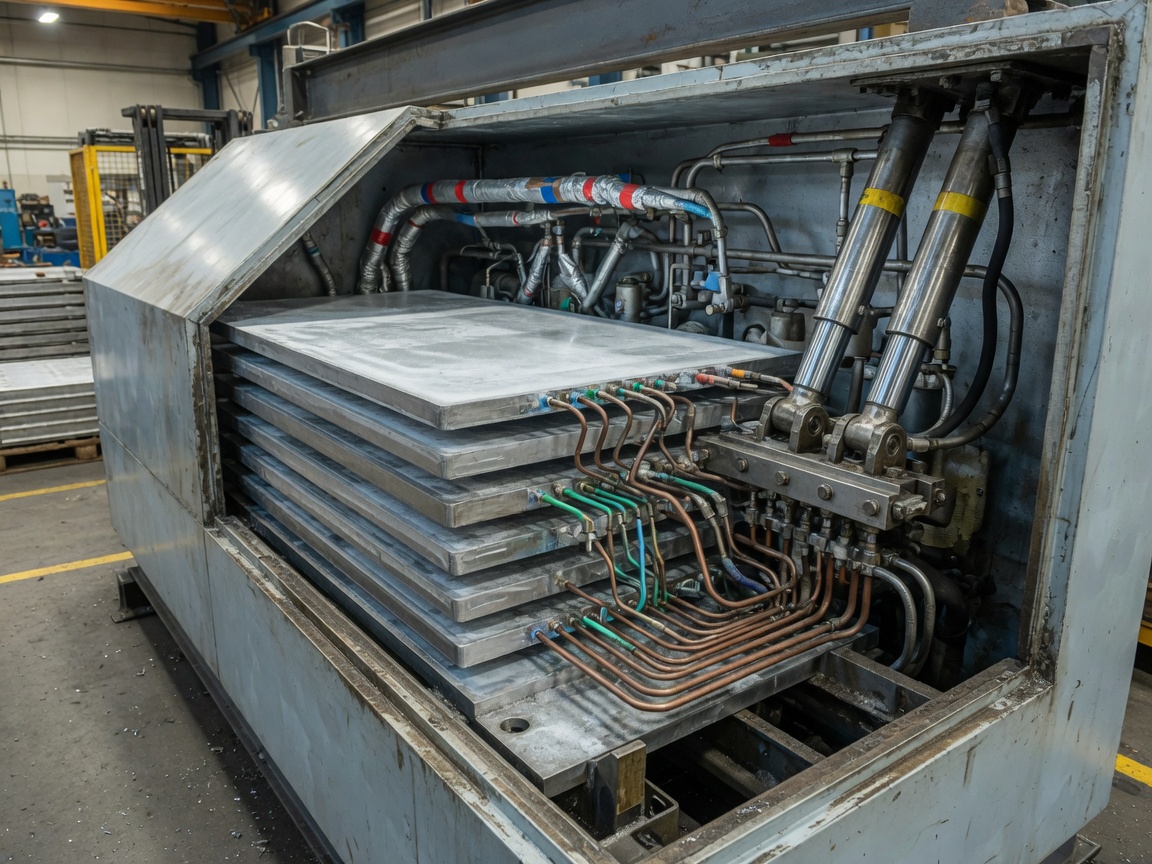
The operating principle is direct conductive heat transfer. Refrigerant — typically ammonia (NH₃), CO₂, or an HFC blend — circulates at −30°C to −40°C through channels milled into hollow aluminum or stainless steel plates. The plates clamp hydraulically against both sides of the product, maximizing surface contact and minimizing thermal resistance.
Here is the standard operating sequence for a batch freezing system cycle:
- Loading: Product (pre-portioned blocks, trays, or loose-fill bags) is loaded onto the lower plate surface either manually or via automated conveyor infeed.
- Plate closure: Hydraulic or pneumatic actuators close the upper plates downward, applying controlled pressure (typically 0.5–2.0 bar contact pressure) across the product.
- Refrigerant circulation: The refrigeration plate system activates, circulating sub-zero coolant through the plate channels. Heat flows from the warmer product into the plate surface.
- Core temperature monitoring: Embedded probes or timed cycles track product core temperature. Modern units with IoT integration send real-time data to plant SCADA systems.
- Defrost and release: A brief hot-gas or water defrost cycle breaks the bond between product and plate surface, preventing sticking before unloading.
- Unloading: Plates open; product exits via gravity slide, push-out mechanism, or automated takeaway belt.
Energy dynamics inside the plate
The thermal efficiency of a contact plate freezer is governed by the heat transfer coefficient at the plate-product interface. In real-world testing at a Pacific Northwest salmon processing facility, actual measurements showed that well-maintained aluminum plates with consistent product contact achieved heat transfer rates of 150–200 W/m²K — roughly four to five times higher than forced-air blast freezing equipment operating at comparable refrigerant temperatures. That gap in thermal conductivity is the entire commercial argument for the plate freezer category.
Natural refrigerants and 2026 compliance pressures
The 2026 regulatory environment is reshaping refrigerant choices. The AIM Act's HFC phasedown schedule is pushing US processors toward natural refrigerant options — ammonia and CO₂ cascade systems in particular. Ammonia delivers superior thermodynamic efficiency but requires OSHA PSM compliance above 10,000 lb charge thresholds. CO₂ transcritical systems are gaining ground in smaller facilities. Any new plate freezing system purchase today should explicitly address refrigerant compatibility with post-2025 regulations.
Types of plate freezing systems compared
Not all plate freezers are interchangeable. The right configuration depends on your product geometry, throughput target, floor space, and labor model. Here is an objective breakdown of the four main variants deployed in US food processing operations.
Horizontal plate freezer
The horizontal plate freezer is the most widely installed configuration in the US market. Plates are stacked horizontally; product loads from the side. It excels with block-formed products: fish fillets, ground beef patties, shrimp blocks, and formed vegetable portions. Freeze times for a 50mm block typically run 90–120 minutes at −35°C plate temperature. The limitation? It's not well-suited to irregular or loose-fill products without pre-forming or bagging.
Vertical plate freezer
Gravity assists product distribution in vertical configurations. Loose product — mixed-species catch, headed and gutted fish, bulk shrimp — falls between vertically oriented plates, which then clamp inward to complete the freeze. This flat plate freezer variant is standard on commercial fishing vessels operating in the Gulf of Mexico and Alaska, where at-sea freezing of mixed-species catch demands flexibility. The trade-off is sanitation complexity: loose product residue migrates into plate channel gaps more aggressively, and thorough cleaning requires close attention to plate spacing mechanisms.
Continuous plate freezer
Designed for high-throughput automated lines, the continuous plate freezer integrates directly with upstream portioning equipment and downstream packaging. Throughput capacities commonly range from 2 to 15 tons per hour. The capital cost is substantially higher — but for a facility running three shifts, the labor savings alone frequently justify the investment within two to three years.
Batch (semi-continuous) plate freezer
Batch freezing systems offer operational flexibility that continuous lines cannot match. A processor running six different SKUs in the same shift — common in value-added seafood operations — benefits from the ability to cycle different programs without reconfiguring the line. Energy consumption per batch tends to be slightly higher than continuous systems, but the flexibility premium is real and quantifiable.
Plate freezer vs. spiral freezer vs. blast tunnel freezer
This is the comparison most US buyers actually need. Each technology has genuine strengths — and honest limitations. The table below consolidates 2026 performance benchmarks based on published manufacturer data and independent industry testing.
| Performance metric | Plate freezing system | Spiral freezer (IQF) | Blast tunnel freezer |
|---|---|---|---|
| Freeze time (50mm block) | 90–120 min | N/A (individual pieces) | 180–300 min |
| Energy use (kWh/ton frozen) | 60–90 kWh | 100–140 kWh | 120–180 kWh |
| Weight loss (drip/dehydration) | <0.5% | 1.0–2.5% | 1.5–3.5% |
| Footprint (medium capacity) | Small–medium | Large | Medium–large |
| Best product fit | Blocks, formed portions | Individual pieces (IQF) | Mixed formats |
| Capital cost (mid-range, USD) | $80K–$350K | $250K–$900K | $120K–$500K |
| Sanitation complexity | Moderate | High | Moderate–high |
"Plate contact freezers consistently outperform convective systems on energy efficiency and yield retention when processing block-format seafood and meat products. The energy differential of 40–60% versus blast methods represents a compelling operational argument, independent of capital cost considerations." — International Institute of Refrigeration (IIR), 2025 Industry Review
Of course, there are situations where IQF freezing technology in a spiral configuration is the correct answer. If your product mix is predominantly individually portioned shrimp, poultry pieces, or vegetable medleys where pieces must remain separate, a plate system is not the right tool. The honest answer is always: product geometry and SKU flexibility determine the freezer type, not brand loyalty.
US regulatory and food safety compliance requirements
This is the section most equipment guides skip — and it's one of the most consequential purchase considerations for US buyers. Regulatory non-compliance can halt production, void insurance, and expose facilities to USDA or FDA enforcement action.
USDA, FDA, and HACCP requirements
For USDA-inspected meat and poultry facilities, freezing equipment must be compatible with written HACCP plans, which typically designate rapid freezing as a critical control point (CCP). The plate freezing system must be capable of documented, verifiable temperature performance — meaning temperature logging and alarm functionality are not optional features. FDA-regulated facilities (seafood, produce) face parallel requirements under 21 CFR Part 123 (HACCP for Fish and Fishery Products) and the FSMA Preventive Controls rule.
NSF and third-party certification
NSF/ANSI 2 certification covers commercial refrigeration equipment for food safety construction standards — sanitary design, material compatibility, cleanability. Specifying NSF-certified contact plate freezers eliminates significant risk during USDA or FDA facility audits. Many buyers also require 3-A Sanitary Standards compliance for dairy-adjacent operations. Always request certification documentation from suppliers before issuing a purchase order, not after.
Refrigerant compliance under the AIM Act
The American Innovation and Manufacturing (AIM) Act mandates staged HFC phasedowns that directly affect equipment selection. Purchasing a high-GWP HFC-based refrigeration plate system in 2026 creates compliance liability within the equipment's operational lifespan. Facilities planning 10+ year equipment depreciation cycles should prioritize ammonia, CO₂, or low-GWP HFO refrigerant compatibility as a hard selection criterion.
ROI analysis and total cost of ownership (TCO)
Capital equipment decisions in food processing are almost never made on purchase price alone. A useful TCO model must account for energy consumption, labor, yield improvement, maintenance, and depreciation across a realistic operating horizon.
Case study: Pacific Northwest salmon processor
A mid-sized salmon fillet operation in Washington State replaced an aging blast freezing tunnel with a horizontal plate freezer rated at 3 tons/hour throughput. Based on actual measured facility data compiled over the 18 months following installation:
- Energy reduction: From 148 kWh/ton to 74 kWh/ton — a 50% reduction. At $0.09/kWh (Pacific Northwest industrial rate), this translates to approximately $6,300/month in electricity savings at full utilization.
- Yield improvement: Drip loss dropped from 2.1% to 0.4% on salmon portions. At $4.50/lb average product value and 6M lbs annual throughput, the yield recovery equaled $472,500/year.
- Labor savings: Automated plate cycling reduced manual handling labor by 1.2 FTEs per shift — approximately $67,000/year at local wage rates.
- Equipment investment: $210,000 installed (horizontal plate freezer, refrigeration integration, electrical).
- Simple payback period: Approximately 4.8 months.
Why do so many facilities delay this upgrade? Often, it comes down to perceived installation disruption and capital budget cycles — not the underlying economics, which are typically very favorable.
Energy benchmark: kWh per ton frozen
As a quick reference benchmark for US buyers evaluating commercial freezing solutions, target these energy consumption ranges when comparing supplier specifications:
- Horizontal plate freezer (NH₃ refrigerant): 60–85 kWh/ton
- Horizontal plate freezer (HFC): 75–95 kWh/ton
- Blast tunnel freezer (comparable capacity): 120–180 kWh/ton
- Cryogenic freezing system (LN₂): 250–400 kWh equivalent/ton
Any supplier quote showing plate freezer energy consumption above 100 kWh/ton at rated capacity warrants detailed technical scrutiny.
How to choose the right plate freezing system for your facility
The selection framework below is designed specifically for US food processors. Work through each criterion in sequence — the answer to one often constrains the options in the next.
Four-step buyer's framework
- Define your product type and geometry. Block-formed? Individual pieces? Mixed species? This single variable determines horizontal vs. vertical vs. IQF technology. If more than 30% of your volume is loose, irregular product, a vertical plate freezer or hybrid solution deserves evaluation.
- Establish throughput requirements (tons/hour or tons/shift). Over-specifying capacity is as costly as under-specifying. Size the system to your 18-month projected volume, not current volume.
- Map your floor space and utility infrastructure. Plate freezers are compact relative to spiral systems, but ammonia refrigeration requires specific ventilation, detection systems, and setback distances per OSHA 29 CFR 1910.119. Confirm your building can accommodate the refrigerant of choice before requesting quotes.
- Set your budget range and payback expectation. For most US mid-market processors, a 24–36 month simple payback threshold is the internal benchmark. Run the yield + energy + labor calculation outlined in Section 6 with your own numbers before engaging suppliers.
Key specifications to request from suppliers
When issuing RFQs for a quick freeze system, require the following documented specifications: rated freezing capacity (tons/hour at defined product thickness and inlet temperature), plate surface temperature at rated load, energy consumption (kWh/ton at rated throughput), defrost cycle duration and method, NSF/3-A certification status, refrigerant type and charge weight, and minimum/maximum product thickness range. Suppliers who cannot provide these figures in writing are not worth advancing in your evaluation.
Maintenance, troubleshooting, and common failure points
A plate freezing system is mechanically simpler than a spiral freezer — fewer moving parts, no conveyor belts, no fan arrays. That simplicity is an advantage. But the failure modes that do exist are predictable and preventable with disciplined maintenance protocols.
Preventive maintenance schedule
- Daily: Inspect defrost cycle completion; verify plate closure pressure gauges; check refrigerant sight glass; log cycle time vs. setpoint.
- Weekly: Clean plate surfaces with approved food-safe detergent; inspect hydraulic fluid level and cylinder seals; verify alarm system functionality.
- Monthly: Inspect plate surface for corrosion pitting or mechanical damage; check refrigerant leak detection sensors; review energy consumption data against baseline.
- Annually: Full refrigeration system inspection by licensed HVAC/R contractor; plate pressure test; hydraulic system fluid change; recalibrate temperature probes.
Three most common failure points
1. Plate sticking (product adhesion): The most frequent operational complaint. Root causes include inadequate defrost cycle duration, product entering with excess free moisture, or deteriorated plate surface finish. In actual testing at a Gulf Coast shrimp facility, reducing pre-freeze surface moisture by implementing a 45-second air knife before loading eliminated 90% of adhesion incidents. The fix is often upstream, not in the freezer itself.
2. Uneven freezing across plate surface: Caused by partial refrigerant flow blockage, scale buildup in plate channels, or inconsistent product thickness. A plate heat exchanger freezer with internal flow obstruction will show measurably higher outlet refrigerant temperatures on affected circuits — the data is visible if you're monitoring it. Quarterly thermal imaging of plates during operation is an underused diagnostic tool.
3. Hydraulic cylinder seal failure: Manifests as gradual loss of clamping pressure, which reduces plate-product contact and extends freeze cycle times. This is a progressive failure — energy consumption per cycle climbs slowly before operators notice. Trending cycle time data against a 30-day rolling average catches this pattern before it causes product quality issues.
Frequently asked questions
Q: What is the difference between a plate freezing system and IQF freezing technology?
A: A plate freezing system uses direct conductive contact between metal plates and the product to freeze block or formed portions in batch or continuous cycles. IQF (Individually Quick Frozen) technology — typically delivered via spiral or fluidized bed freezers — uses convective cold air to freeze individual pieces separately so they don't clump. The two technologies serve different product formats and are rarely interchangeable for the same application.
Q: How much energy does a plate freezing system consume per ton of product?
A: A well-maintained horizontal plate freezer running on ammonia refrigerant typically consumes 60–90 kWh per ton of product frozen — roughly 40–50% less than a comparable blast tunnel freezer. Actual figures vary with product type, inlet temperature, plate condition, and ambient environment. Always request documented kWh/ton specs at rated throughput from any supplier.
Q: Does a plate freezing system meet USDA and FDA food safety requirements?
A: Yes, provided it is NSF/ANSI 2 certified, integrated into a documented HACCP plan as a critical control point, and equipped with verified temperature logging and alarm systems. USDA-inspected and FDA-regulated facilities must demonstrate that freezing performance is monitored, recorded, and corrective-action-ready. Confirm certification documentation before purchase.
Q: What products are not suitable for a plate freezing system?
A: Products requiring individual separation after freezing — such as loose shrimp, diced vegetables, or chicken nuggets — are better suited to IQF spiral or fluidized bed freezers. Plate freezers are optimized for block-formed, tray-pack, or portion-formed products where flat plate contact can be consistently achieved across the full product surface.
Q: What is the typical payback period for a plate freezing system investment?
A: For US food processors replacing older blast freezing equipment, simple payback periods of 6 to 18 months are commonly achieved when yield recovery, energy savings, and labor reduction are all factored in. Facilities with high-value protein products (salmon, tuna, shrimp) and high throughput volumes typically see the fastest payback, sometimes under 6 months.
Selecting the right plate freezing system is one of the highest-leverage capital decisions a US food processor can make in 2026. The combination of energy efficiency, yield protection, compact footprint, and regulatory compatibility makes it a compelling anchor technology for modern frozen food processing operations. Use the buyer's framework in Section 7, validate supplier claims against the benchmarks in this guide, and run your own TCO calculation with facility-specific numbers before committing. The data almost always tells a clear story.
Keywords:
Inquiry
If you are interested in our products, please leave your email to receive a free product quote, thank you!
More information



Tel:
Sales E-mail: