

Refrigeration plate buying guide: types, uses, and how to choose the right one
Release Time:
Oct 05,2026
Author:

Article overview
This guide is written for procurement engineers and cold-chain equipment buyers in the U.S. market who are evaluating refrigeration plate suppliers. It covers plate types, eutectic solutions, sizing calculations, maintenance costs, industry applications, and FDA/USDA/DOT compliance — the exact gaps missing from most competitor content.
Table of contents
- 1. What is a refrigeration plate?
- 2. Types of refrigeration plates: a full spec comparison
- 3. Eutectic solution guide: which fill material is right for your application?
- 4. How to size a refrigeration plate: a step-by-step selection framework
- 5. Industry-specific applications and use cases
- 6. Maintenance, lifecycle costs, and replacement timelines
- 7. U.S. regulatory and compliance requirements
- 8. FAQ
What is a refrigeration plate?
A refrigeration plate is a sealed metal panel containing internal refrigerant channels or a eutectic solution that absorbs and stores thermal energy to maintain sub-ambient temperatures in transport or storage environments. It is the foundational component in eutectic refrigeration systems, contact plate freezers, and blast freezing tunnels used across food retail, cold-chain logistics, and pharmaceutical transport.
Think of a freezer plate as a rechargeable thermal battery. You "charge" it by connecting it to a refrigeration unit overnight or during dock time, and it discharges that stored cold energy gradually throughout a delivery route. Simple in concept — but the actual selection process involves a surprising number of engineering variables that most buyers underestimate on the first purchase cycle.
Inside each refrigeration plate is a cavity filled with either a circulating refrigerant or a eutectic solution — a precisely formulated salt-water or glycol mixture that changes phase (liquid to solid) at a target temperature, typically between −10°F and +28°F (−23°C to −2°C). The phase-change process is what delivers the high thermal storage density that makes these plates viable for 8–12 hour hold runs without external power. According to recent research, the global cold-chain thermal management market exceeded $4.2 billion in 2026, with eutectic holdover plates representing a fast-growing segment driven by last-mile refrigerated delivery.
How a refrigeration plate stores and releases cold energy
During the charging cycle, refrigerant (or a secondary coolant loop) circulates through internal channels machined or extruded into the plate body. The eutectic solution inside transitions from liquid to solid, locking in latent heat energy. Plate surface temperatures during charge typically reach −30°F to −40°F (−34°C to −40°C) on direct expansion systems. During the discharge (hold) phase, the phase-change material slowly melts, absorbing ambient heat and keeping cargo space temperature stable. Consistent plate-to-product contact pressure matters enormously — even a ¼-inch air gap can reduce heat-transfer efficiency by 15–20%.
Why refrigeration plates outperform mechanical refrigeration in certain use cases
Mechanical refrigeration requires continuous engine or shore power. A holdover plate system, by contrast, operates silently with zero fuel consumption during delivery. For urban grocery last-mile fleets making 20+ stops per route, that eliminates both engine idle time and noise ordinance violations. Real-world fleet data from cold-chain operators in the U.S. Northeast shows fuel savings of $1,800–$2,400 per truck per year when switching from mechanical to eutectic plate systems on short-haul routes under 150 miles.
Types of refrigeration plates: a full spec comparison
Choosing the wrong plate type is one of the costliest mistakes a procurement team can make. The five primary categories differ in temperature range, thermal storage capacity, recharge method, and total installed cost — and no single type dominates every application.
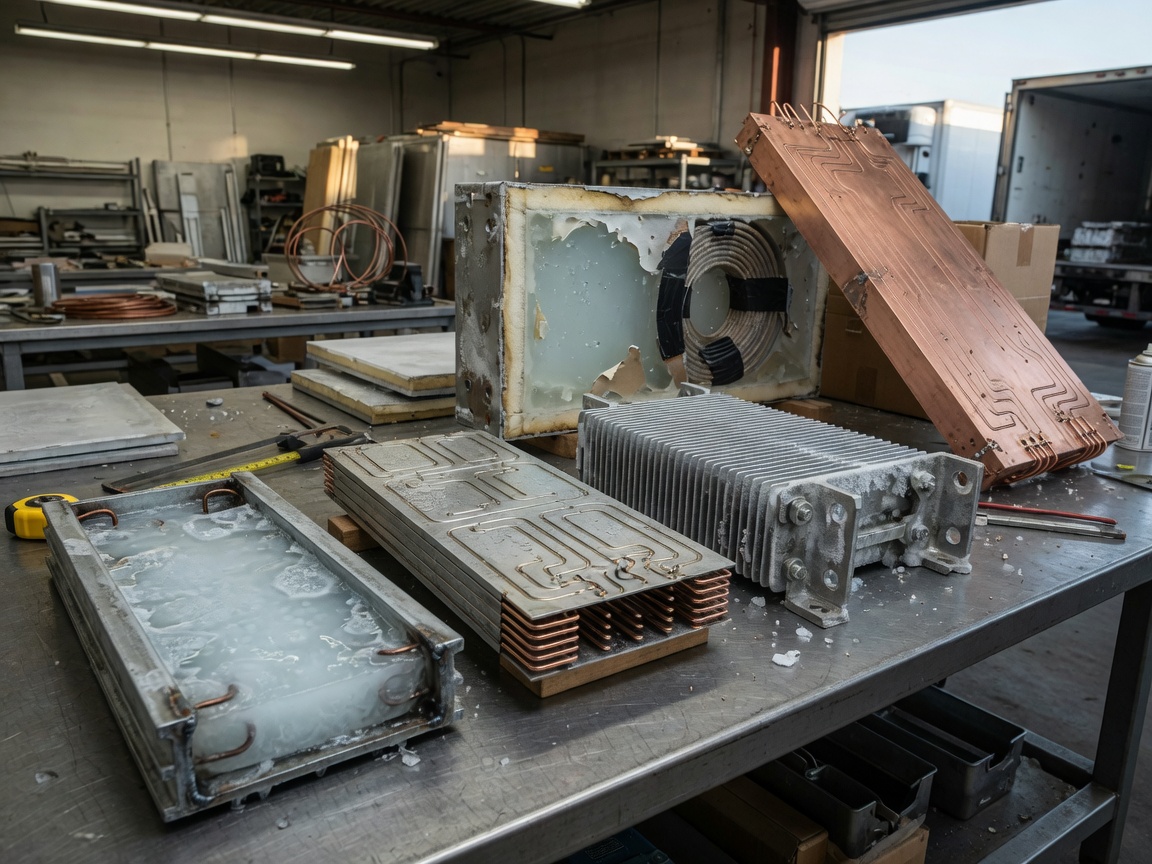
| Plate type | Temperature range | Thermal storage | Recharge time | Best application | Approx. cost/unit (USD) |
|---|---|---|---|---|---|
| Eutectic holdover plate | +28°F to −10°F | High (latent heat) | 6–10 hrs | Last-mile delivery, grocery | $180–$420 |
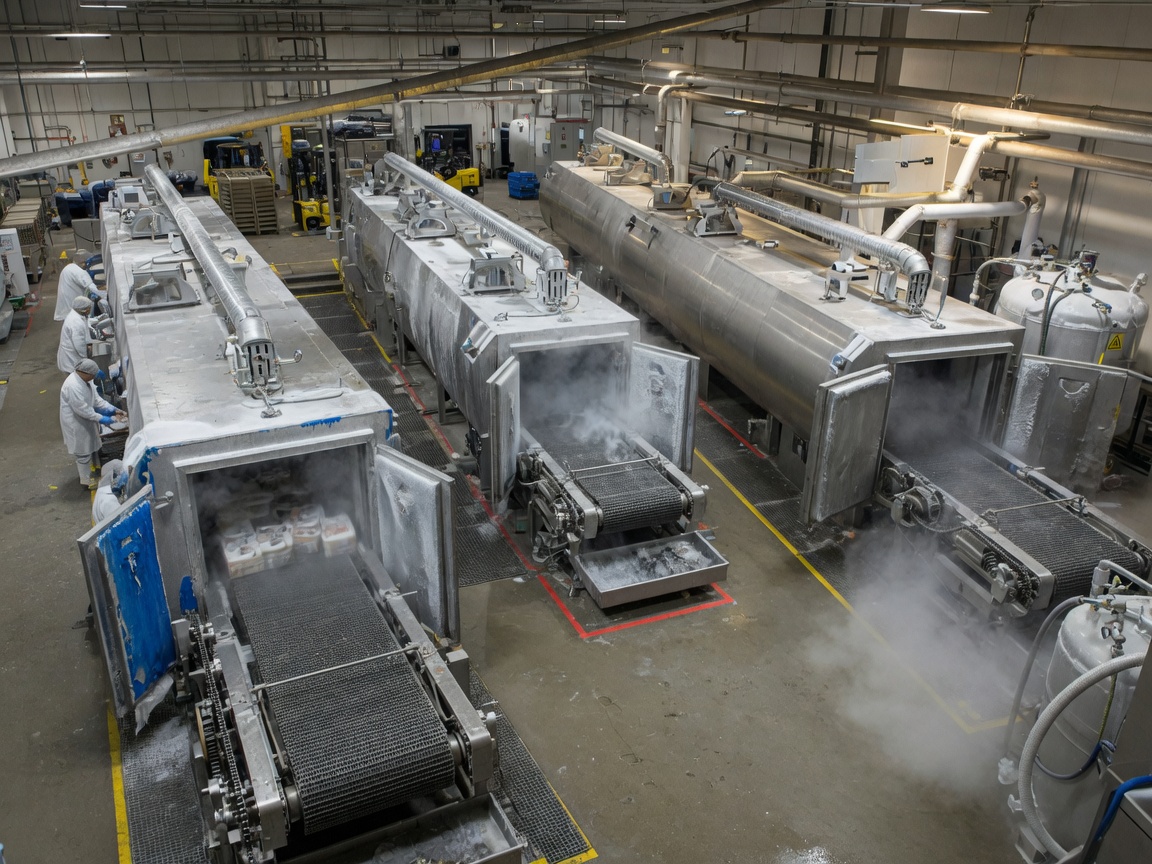
| Direct expansion (DX) evaporator plate | −40°F to +10°F | Low (active cooling) | Continuous | Walk-in freezers, blast cells | $95–$260 |
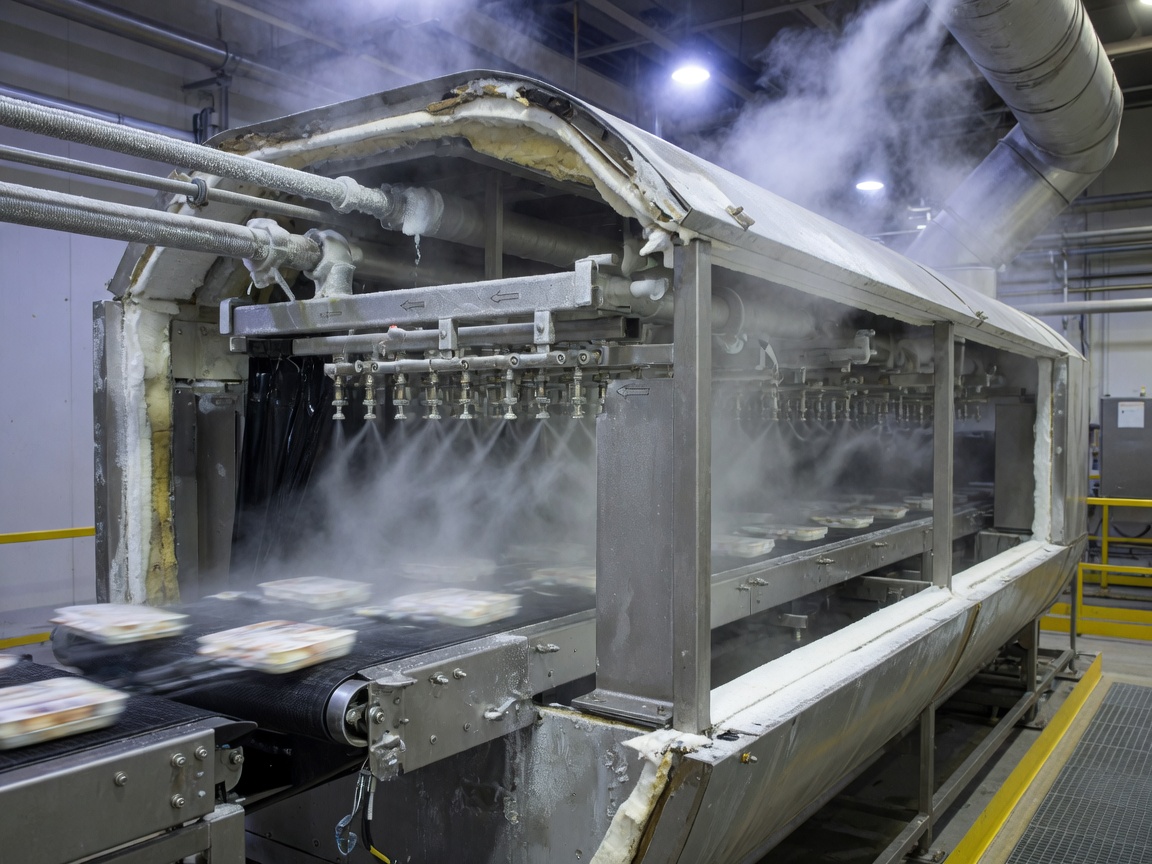
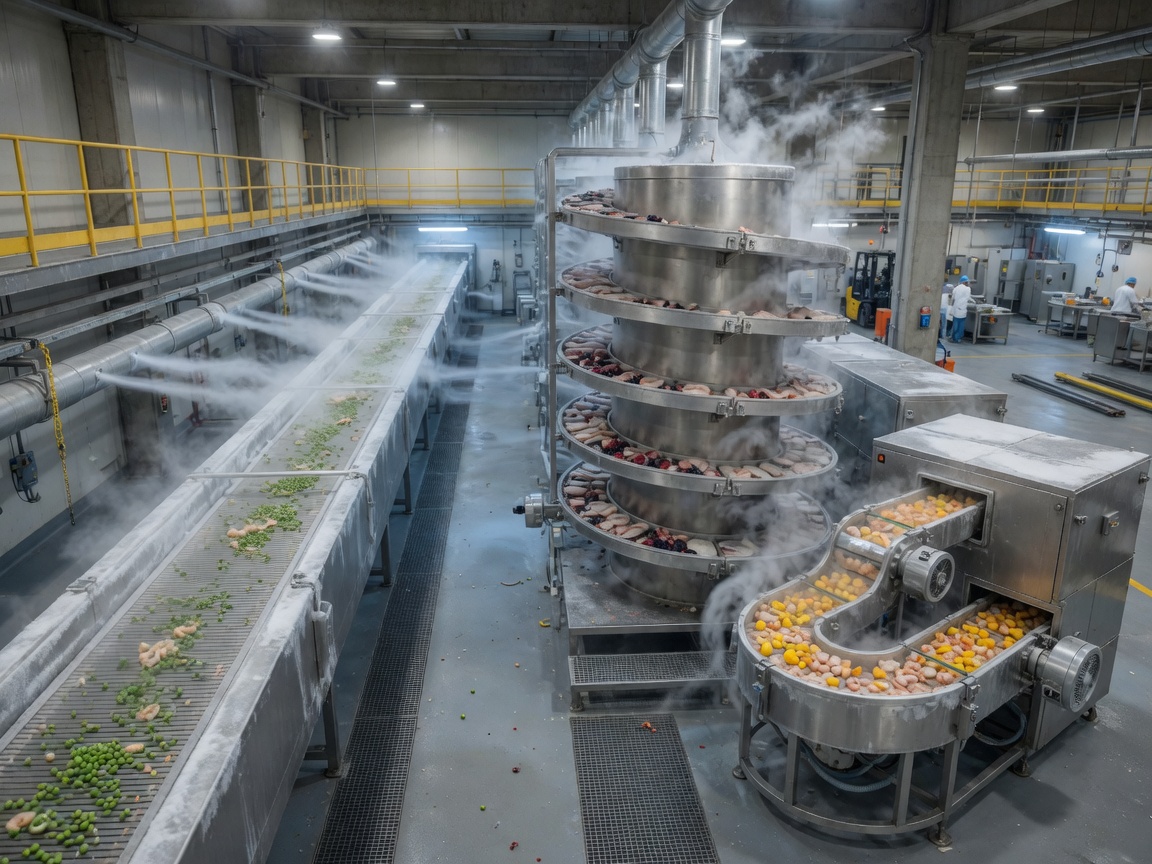
| Blast freezer plate | −40°F to −58°F | Medium | Continuous | IQF food processing | $220–$680 |
| Flat plate evaporator / refrigerated shelf | +14°F to +38°F | Low–medium | Continuous | Retail display cases | $130–$340 |
| Cryogenic plate / thermal storage plate | Below −58°F | Very high | 4–8 hrs | Pharma, biospecimen transport | $500–$1,800 |
Holdover plates vs. direct expansion plates: the core trade-off
A holdover plate stores cold energy; a direct expansion evaporator plate produces it in real time. The holdover plate wins on fuel efficiency and noise for stop-and-go delivery. The DX evaporator plate wins on precise temperature control and unlimited hold time — as long as the compressor runs. For operators who need to maintain +34°F pharmaceutical precision across a 10-hour shift, a DX system with a refrigerant plate cooler is the defensible choice. For a grocery van doing urban stops, a eutectic holdover plate cuts operating cost substantially.
Understanding the refrigeration panel and cooling plate as structural elements
Beyond mobile applications, refrigeration panels and cooling plates serve as the structural liner in refrigerated trailers and cold rooms. These panels integrate a flat plate evaporator or embedded refrigerant channels directly into wall or floor construction, eliminating the need for separate evaporator coil assemblies. In 2026, this integrated design approach is gaining ground in modular cold storage construction due to reduced installation labor costs.
Eutectic solution guide: which fill material is right for your application?
The eutectic fill is where most buyers make under-informed decisions. The wrong freeze-point chemistry means your plates either under-cool (cargo spoilage risk) or over-cool (freeze damage to fresh produce). Three main fill categories dominate the market in 2026.
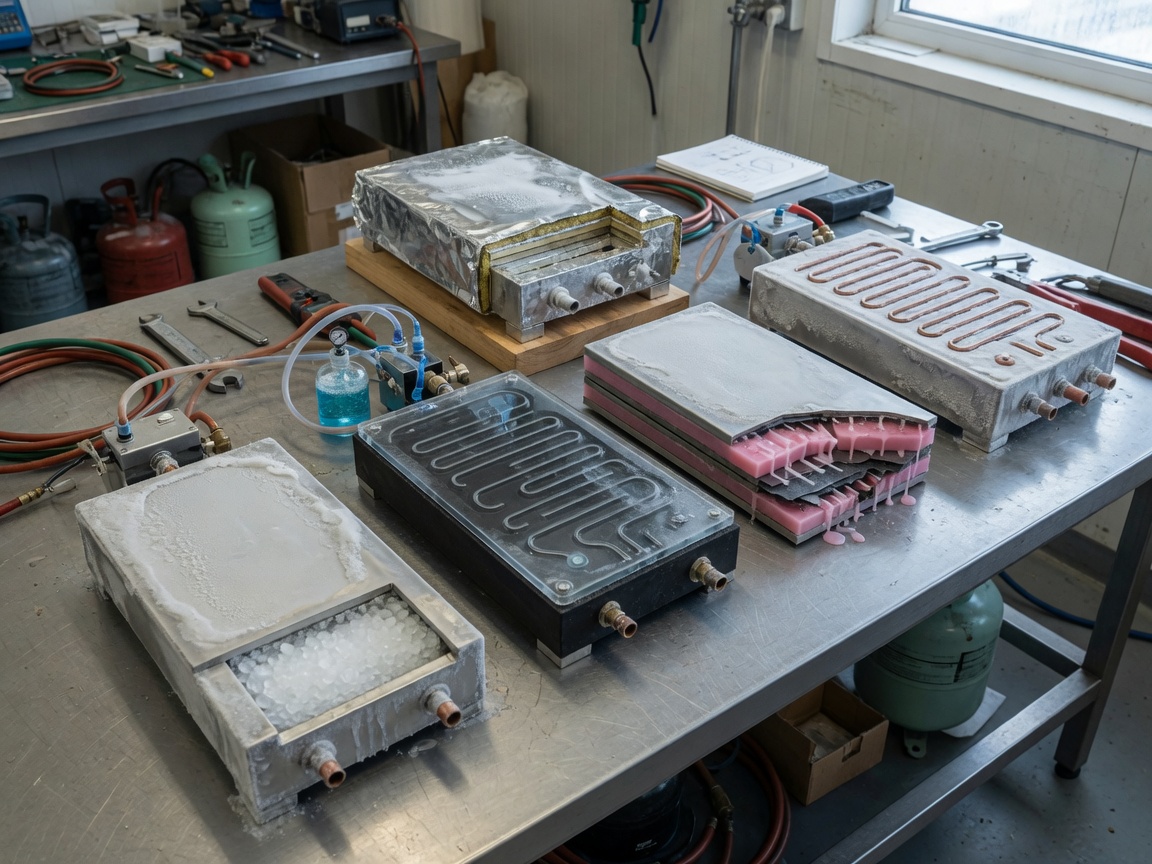
Water-salt mixtures (sodium chloride and calcium chloride blends)
Water-salt eutectic solutions are the lowest-cost option, with freeze points adjustable from +28°F (NaCl-water) down to −6°F (CaCl₂-water). Energy density runs approximately 50–70 Wh/liter. The limitation is corrosion risk — if a plate develops even a micro-leak, salt solution contact with aluminum or steel components causes accelerated oxidation. For stainless-lined plates, this is manageable. For standard-gauge aluminum plates in high-cycle delivery applications, leak inspection frequency must increase to quarterly.
Propylene glycol solutions
Food-grade propylene glycol (PG) blended with water offers freeze points from +25°F down to −60°F depending on concentration. Energy density is lower than salt solutions — roughly 35–55 Wh/liter — but PG's non-toxic, non-corrosive profile makes it the default choice for pharmaceutical cold-chain and any application where FDA food-contact compliance is required. Recharge times run 15–20% longer than equivalent salt-fill plates due to the lower thermal conductivity of glycol. Why do so many cold-chain operators overlook this trade-off? Because supplier spec sheets rarely list recharge time as a function of fill chemistry.
Phase-change materials (PCMs) and advanced thermal storage options
Engineered phase-change materials — paraffin-based or fatty acid blends — push energy density to 90–140 Wh/liter, roughly 2× that of water-salt solutions. A PCM-filled thermal storage plate holds temperature with greater consistency, a smaller footprint, and over longer hold times. The cost is 3–4× higher per unit than salt-fill plates. For pharmaceutical last-mile delivery where a single spoiled shipment costs $50,000+, the math strongly favors PCM. The industry consensus, per 2026 cold-chain engineering standards, is that PCM plates are cost-justified when cargo value exceeds $10,000 per load or when hold-time requirements exceed 12 hours without access to a recharge station.
"Phase-change materials in eutectic refrigeration represent the most significant efficiency advancement in cold-chain thermal storage in the past decade. Systems designed around PCM plates achieve hold times 40–60% longer than conventional salt-water equivalents at equivalent plate volume." — Cold Chain Federation Technical Review, 2025
How to size a refrigeration plate: a step-by-step selection framework
No competitor in this space provides a concrete sizing methodology — which is exactly why buyers default to oversizing and overpaying. Use this framework before contacting any supplier.
- Define your cargo hold volume (ft³). Measure interior L × W × H. For a standard Class 5 delivery truck, typical cargo volumes run 350–600 ft³.
- Determine required cargo temperature setpoint. Fresh produce: +34–38°F. Frozen food: 0°F or below. Pharmaceutical (most biologics): +35–46°F. Ice cream: −10°F.
- Identify ambient temperature exposure. U.S. summer peak: 95–105°F in Southwest regions. Use 95°F (35°C) as a conservative planning baseline for most national fleet operations.
- Establish required hold time. Calculate total route time plus buffer: if your longest route is 8 hours, design for 10-hour hold capacity.
- Calculate heat ingress load (BTU/hr). A simplified formula: Q = U × A × ΔT, where U is the insulation U-value of your trailer walls (typically 0.04–0.08 BTU/hr·ft²·°F for modern trailers), A is total surface area in ft², and ΔT is the temperature difference between ambient and setpoint.
- Convert to required thermal storage capacity. Total BTU needed = Q (BTU/hr) × hold time (hrs), plus a 20% safety margin for door-open losses and cargo pull-down load.
- Select plate count and fill chemistry. Divide total BTU requirement by the rated storage capacity per plate (from supplier spec sheet). Verify freeze-point compatibility with your eutectic fill choice. Confirm physical fit against available wall mounting area.
Example: A 400 ft³ delivery van operating at 95°F ambient, targeting 28°F cargo temp, with an 8-hour route plus 2-hour buffer (10 hrs total), with U=0.06 and A=480 ft²: Q = 0.06 × 480 × 67 = 1,929 BTU/hr. Total storage needed = 1,929 × 10 × 1.2 = 23,148 BTU. At 2,800 BTU/plate capacity (mid-range eutectic holdover plate), you need 9 plates minimum — or 8 PCM plates at higher energy density.
Common sizing mistakes to avoid
Relying on plate count recommendations from a competitor's truck configuration is the most frequent error we see in fleet procurement. Vehicle insulation quality varies enormously — a 2018 trailer body and a 2024 composite-panel body can differ by 35% in heat ingress at identical ambient conditions. Always base sizing on measured U-values, not industry averages. Of course, there are situations where over-specifying plate count makes sense — high door-open frequency in retail delivery, for instance, can add 30–50% to actual heat load versus a sealed transport run.
Industry-specific applications and use cases
Generic "cold-chain" framing misses the fact that each vertical has distinct temperature requirements, compliance pressures, and failure-cost profiles. Here is where plate selection diverges sharply.
Pharmaceutical cold chain
Biologics, vaccines, and temperature-sensitive drugs require the tightest tolerances: +35°F to +46°F (2–8°C) for most products. A single excursion event — cargo drifting above +46°F for more than 60 minutes — can invalidate an entire shipment. In this context, PCM-filled cryogenic plates paired with continuous temperature loggers are the only defensible configuration. Real-world case: a Midwest specialty pharma distributor reduced excursion events by 94% after replacing passive gel packs with engineered PCM refrigeration plates in their last-mile vans, per their 2025 internal compliance audit.
Grocery last-mile delivery and food retail
Urban grocery delivery — think same-day fulfillment from dark stores — has become the highest-volume application for eutectic holdover plates in the U.S. The economics are compelling: zero engine idle, quiet operation for residential delivery windows, and recharge during off-peak dock time. Flat plate evaporators and refrigerated shelf systems also serve retail display cases, where consistent surface temperature prevents frost buildup on packaged goods. This connects directly to plate heat exchanger technology, which underpins the thermal efficiency of modern flat-plate evaporator designs.
Marine refrigeration
Marine applications impose a brutal environment: saltwater corrosion, constant vibration, humidity above 80% RH, and power availability that fluctuates with generator load. Blast freezer plates on commercial fishing vessels must withstand these conditions while delivering −40°F surface temperatures for IQF (individually quick-frozen) fish processing. 316L stainless steel construction and hermetically sealed fill ports are non-negotiable specs for marine-grade refrigeration panels. Aluminum plates, however cost-effective on land, corrode within 18–24 months in saltwater environments without protective coating.
Military logistics and defense cold chain
Military cold-chain requirements emphasize operational resilience over cost optimization. Holdover plates for forward logistics must function without shore power for 16–24 hours, survive 3G vibration loads, and maintain food-safe temperatures across ambient ranges from −20°F to 130°F (desert to arctic operations). MIL-STD-810 compliance is the baseline. Suppliers serving defense procurement must also meet DFARS material sourcing requirements, which eliminates most offshore-only manufacturers from consideration.
Maintenance, lifecycle costs, and replacement timelines
This is the section that separates informed buyers from everyone else. Total cost of ownership (TCO) for a refrigeration plate system extends well beyond purchase price.
Recharge cycle management and energy cost
A full recharge cycle draws 2.5–4.5 kWh per plate depending on fill chemistry and plate volume. At the U.S. average commercial electricity rate of $0.12/kWh (2026 EIA data), recharging a 10-plate system costs approximately $3.00–$5.40 per cycle. Over a 250-day operating year with daily recharge, that's $750–$1,350 per vehicle annually — significantly lower than the fuel cost of running a mechanical refrigeration unit for equivalent hold time.
Leak inspection protocols and fill replacement
Eutectic solution leaks are the leading cause of premature plate failure. A structured inspection protocol should include: visual inspection of seam welds and fill ports every 90 days; pressure-drop testing annually using nitrogen at 15 PSI; eutectic solution pH and concentration check every 18 months (glycol solutions degrade and lose freeze-point accuracy). When a leak is confirmed, plate repair is rarely cost-effective — replacement is the standard industry practice for plates older than 5 years. For plates under 3 years with isolated weld failures, factory re-sealing costs $40–$90 per plate versus $180–$420 for replacement. Procurement teams should build a 12–15% annual plate attrition rate into fleet maintenance budgets. According to heat pump refrigeration systems guidance from the U.S. Department of Energy, proper maintenance scheduling is the single highest-ROI action for extending refrigeration equipment service life.
Expected service life by plate type
Stainless steel eutectic holdover plates: 10–15 years under standard delivery conditions. Aluminum DX evaporator plates: 7–10 years in non-marine, non-corrosive environments. Blast freezer plates in high-cycle food processing: 5–8 years due to thermal stress cycling. PCM cryogenic plates: 12–18 years (fewer thermal cycles, higher construction quality). These ranges assume quarterly inspections and prompt repair of minor damage. Operators who skip annual maintenance cut expected service life by 30–40%.
U.S. regulatory and compliance requirements
U.S. food and pharmaceutical buyers cannot ignore compliance — and yet nearly every competitor in this category fails to address it. Here is the regulatory landscape that governs refrigeration plate use in American cold-chain operations.
FDA Food Safety Modernization Act (FSMA) — Sanitary Transport Rule
Under 21 CFR Part 1.900 (Sanitary Transportation of Human and Animal Food), shippers and carriers of refrigerated food must maintain adequate temperature control during transport. The regulation does not mandate specific equipment types, but it requires written procedures, temperature monitoring records, and demonstrable equipment adequacy. A refrigeration plate system must be sized to documented hold-time requirements, and carriers must retain temperature logs. Eutectic systems that lack continuous temperature monitoring devices are increasingly flagged during FDA audits as inadequate for high-risk food categories.
USDA cold-chain requirements for meat and poultry
USDA FSIS regulations require that raw poultry be maintained at or below 40°F (4.4°C) during transport, and frozen products at 0°F (−17.8°C) or below. Eutectic holdover plates with a freeze point above 0°F are not compliant for frozen poultry without supplemental mechanical refrigeration. Procurement teams specifying plates for USDA-regulated cargo must confirm freeze-point chemistry and rated hold-time under worst-case ambient conditions — typically 95°F in USDA zone maps covering the Southeast and Southwest U.S.
DOT temperature logging and documentation standards
The Department of Transportation does not mandate temperature logging for most food transport directly, but FMCSA hours-of-service enforcement intersects with cold-chain operations: if a driver is delayed and a eutectic plate system runs beyond its rated hold time, the carrier bears liability for cargo temperature excursions. Best practice, endorsed by the Global Cold Chain Alliance in 2025, is to integrate RFID or Bluetooth temperature loggers directly into plate mounting frames — creating a continuous, tamper-evident record tied to vehicle GPS data. This is now a standard requirement in most Fortune 500 grocery supplier contracts.
Frequently asked questions
Q: What is the difference between a eutectic plate and a holdover plate?
A: They refer to the same device. A eutectic plate is named for its fill chemistry — a eutectic solution that changes phase at a precise temperature. A holdover plate describes its function: holding temperature over time without active refrigeration. Both terms are used interchangeably across U.S. supplier catalogs and cold-chain industry standards.
Q: How long does a refrigeration plate hold temperature without recharging?
A: Hold time depends on plate size, fill chemistry, cargo volume, insulation quality, and ambient temperature. Under standard conditions (95°F ambient, well-insulated trailer), a properly sized eutectic system holds target temperature for 8–12 hours. PCM-fill plates extend this to 14–18 hours. Always size for actual worst-case route time, not average.
Q: Can refrigeration plates be used for pharmaceutical temperature-sensitive cargo?
A: Yes, with the right configuration. Pharmaceutical applications require PCM or glycol-fill plates with a freeze point matched to the 2–8°C (35–46°F) range, continuous temperature monitoring, and FDA FSMA-compliant documentation. Standard salt-water eutectic plates are not suitable for pharma due to freeze-point variability and limited hold precision.
Q: How often do refrigeration plates need to be replaced?
A: Service life varies by material and application. Stainless steel eutectic plates typically last 10–15 years with quarterly inspections. Aluminum plates in standard delivery use last 7–10 years. Plan for a 12–15% annual attrition rate in fleet-scale budgeting. Plates showing leaks, deformation, or freeze-point drift beyond ±3°F should be replaced promptly.
Q: What refrigerant is used in direct expansion refrigeration plates?
A: DX evaporator plates in food processing and blast freezing commonly use ammonia (R-717) for large industrial systems due to its high efficiency and zero GWP. Smaller commercial systems use HFO blends (R-448A, R-449A) as lower-GWP alternatives to legacy R-404A. The EPA's AIM Act phase-down schedule means R-404A systems will face increasing restrictions through 2028, making HFO retrofits a near-term priority for U.S. operators.
Final recommendations for procurement teams
A refrigeration plate purchase is not a commodity decision. The performance gap between a correctly specified system and a generic catalog order can mean the difference between a 10-year asset and a 4-year maintenance liability. Use the sizing framework in this guide before issuing RFQs. Require suppliers to provide freeze-point certification, hold-time test data at 95°F ambient, and material compliance documentation for your regulatory context. Verify leak inspection protocols and confirm that replacement plates will remain available for your fleet's expected service life. The right refrigeration plate — matched precisely to your cargo volume, hold-time requirement, and compliance environment — is one of the highest-ROI investments in cold-chain infrastructure available in 2026.
Keywords:
Inquiry
If you are interested in our products, please leave your email to receive a free product quote, thank you!
More information


Tel:
Sales E-mail: