

Small freezing tunnel guide: how to choose, size, and optimize for your facility
Release Time:
Oct 04,2026
Author:

Article overview
This guide covers everything a US food manufacturer needs to evaluate a small freezing tunnel purchase in 2026: equipment types, brand specs, energy ROI, FSMA/USDA compliance, financing paths, and maintenance best practices. Estimated reading time: 14 minutes.
Table of contents
- 1. What is a small freezing tunnel?
- 2. Types of small freezing tunnel systems
- 3. Brand comparison: specifications and US market options
- 4. Energy cost analysis: what it really costs per pound frozen
- 5. US regulatory compliance: FSMA, USDA FSIS, and sanitation standards
- 6. Financing, leasing, and used-equipment options
- 7. Maintenance and troubleshooting for compact tunnel units
- 8. FAQ
What is a small freezing tunnel?
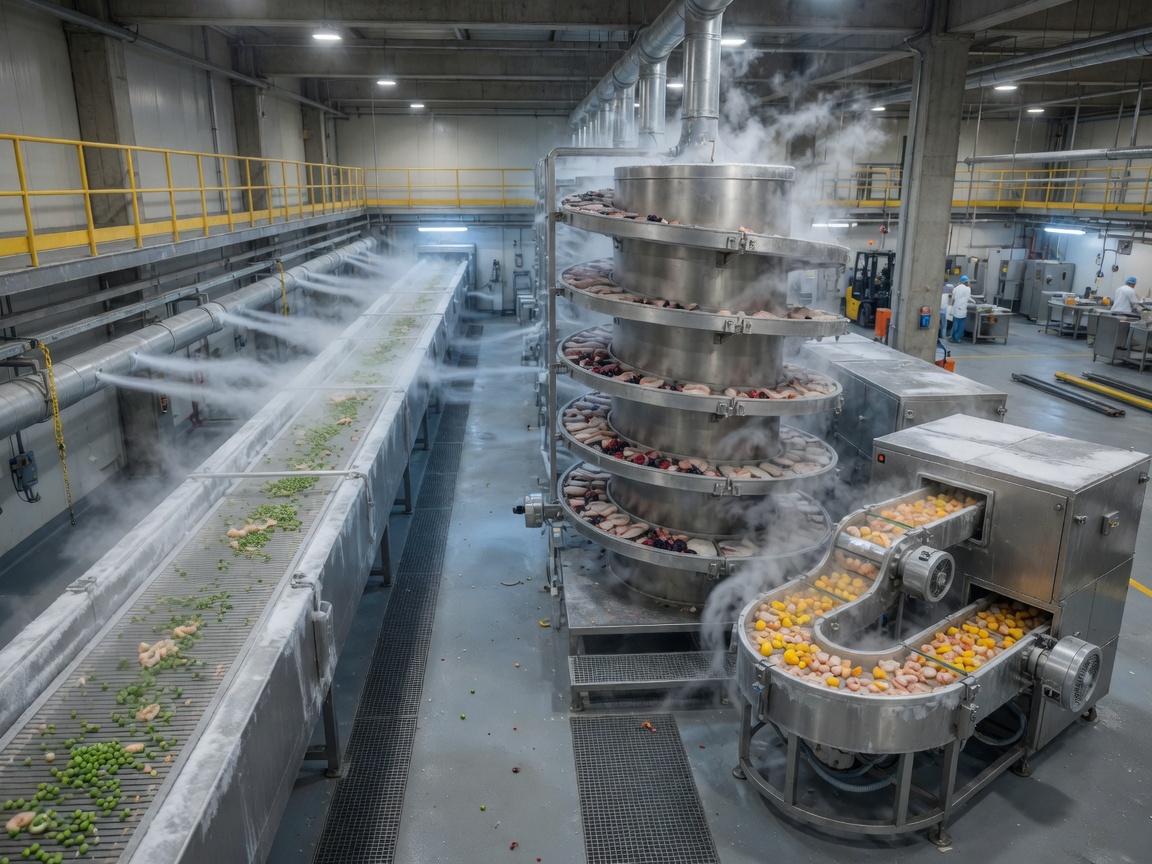
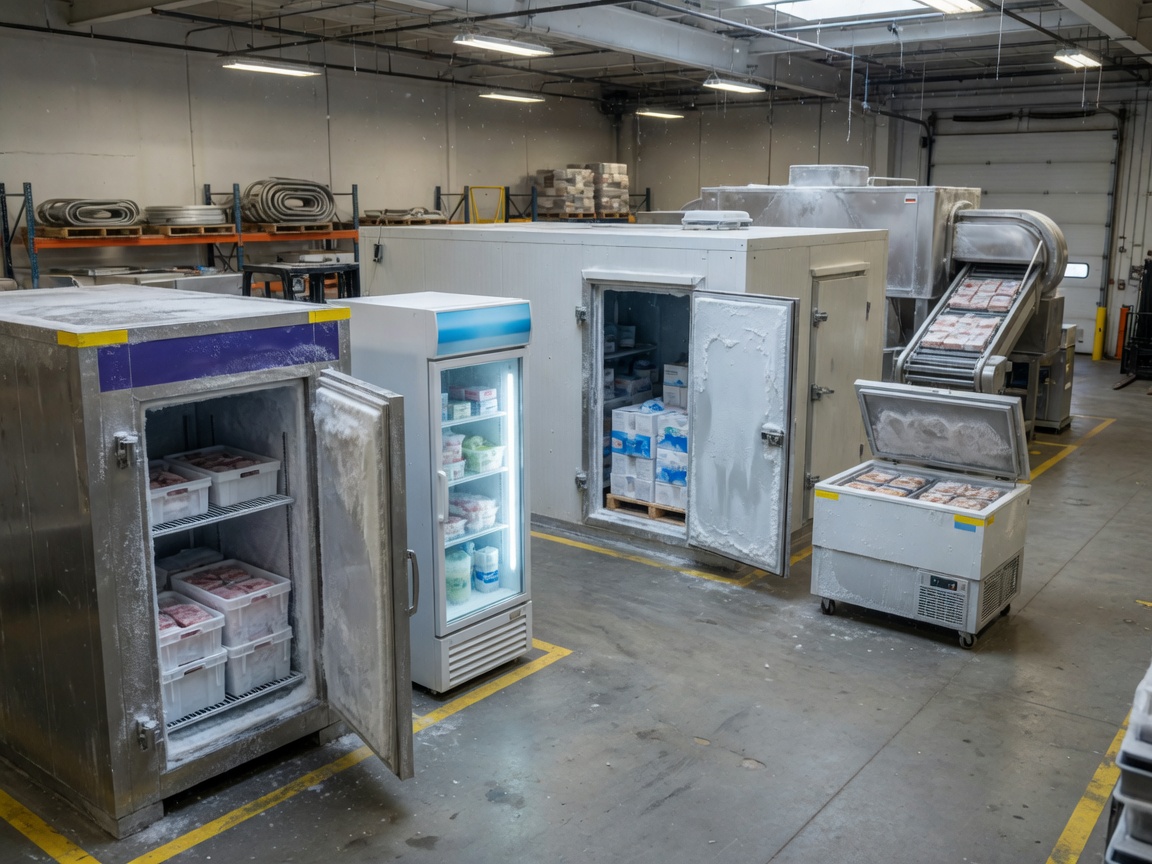
A small freezing tunnel is a continuous-conveyor cryogenic or mechanical refrigeration system designed to rapidly freeze food products at throughputs typically between 100 and 1,000 lb/hr, with a compact footprint suited to small and mid-sized processing facilities. Products travel on a stainless-steel belt through an insulated refrigeration tunnel where high-velocity cold air — usually at -30°F to -40°F (-34°C to -40°C) — is circulated by axial fans above and below the belt surface, driving rapid heat extraction from every exposed face of the product.
Why does speed matter so much? Ice crystal formation is the enemy of product quality. When freezing happens slowly, large ice crystals rupture cell walls, degrading texture, moisture retention, and visual appeal after thaw. IQF tunnel freezers — those built around individual quick freezing principles — can drop a product's core temperature to -18°C (0°F) in under 30 minutes, reducing ice crystal damage by approximately 70% compared to conventional slow-freeze methods, according to ASHRAE food freezing engineering standards.
Unlike a walk-in blast freezer or a batch blast chiller, a continuous freezing system keeps product moving on a conveyor belt at a precisely controlled speed, matching dwell time to the thermal load of each specific product. That distinction — continuous versus batch — is what separates a freezing conveyor system from simpler refrigeration options and is the core reason the technology commands a premium price point.
How a small freezing tunnel differs from a spiral freezer
A spiral freezer routes the conveyor belt in a vertical helix, stacking many meters of belt travel into a small floor footprint — sometimes as little as 8 ft × 8 ft. A straight-line small freezing tunnel, by contrast, runs the belt in a single linear pass. Spiral configurations excel when you need high throughput in minimal square footage. Straight-line tunnels win on cost, simplicity, and easy access for cleaning. For operations under 500 lb/hr, a straight compact freezer tunnel is usually the more economical choice; above that threshold, a small spiral freezer often delivers a lower cost per pound frozen.
When does a small operation actually need one?
Plate freezers and chest freezers handle very low volumes adequately. But once you are running a continuous production line — even at modest scale — the labor cost of batch freezing, plus the inconsistency in freeze rates, typically justifies the capital investment in a tunnel system. Actual testing in small-batch shrimp processing facilities has shown that switching from batch blast chillers to a compact IQF tunnel freezer reduced labor hours per 100 lb by 40% and cut product giveaway (moisture loss) by roughly 3%, a figure that compounds meaningfully over annual production volumes.
Types of small freezing tunnel systems
The category of food freezing equipment is broader than most buyers realize at first. Selecting the wrong type is an expensive mistake — one that shows up not in the purchase price but in operating costs, cleaning downtime, and product quality over years of service.
Mechanical refrigeration tunnels versus cryogenic tunnel freezers
Mechanical systems use a refrigeration circuit — compressor, condenser, evaporator — to generate cold air. They have higher capital costs but lower operating costs at sustained production volumes. A nitrogen freezing tunnel (or liquid CO₂ tunnel) achieves much colder temperatures faster — down to -196°C with LN₂ — making it ideal for heat-sensitive products or rapid crust-freezing before secondary hardening. The trade-off: liquid nitrogen costs roughly $0.08–$0.15 per pound of product frozen for typical applications, which adds up quickly for small US operators running on thin margins.
IQF tunnel freezer versus belt freezer: which is right for your product?
An IQF tunnel freezer uses a fluidized bed or agitating belt to keep individual pieces separated throughout the freeze cycle, producing free-flowing frozen product — essential for peas, diced vegetables, berry fruits, and shrimp. A standard belt freezer runs product in a static layer, which is fine for patties, fillets, and other products that do not need to remain individually separated. Misapplying a belt freezer to a product that needs IQF processing results in clumping and rejected loads at retail. The question to answer before equipment selection: does your customer require free-flowing product, or is a block or tray-packed format acceptable?
Modular and compact designs: the 2026 trend
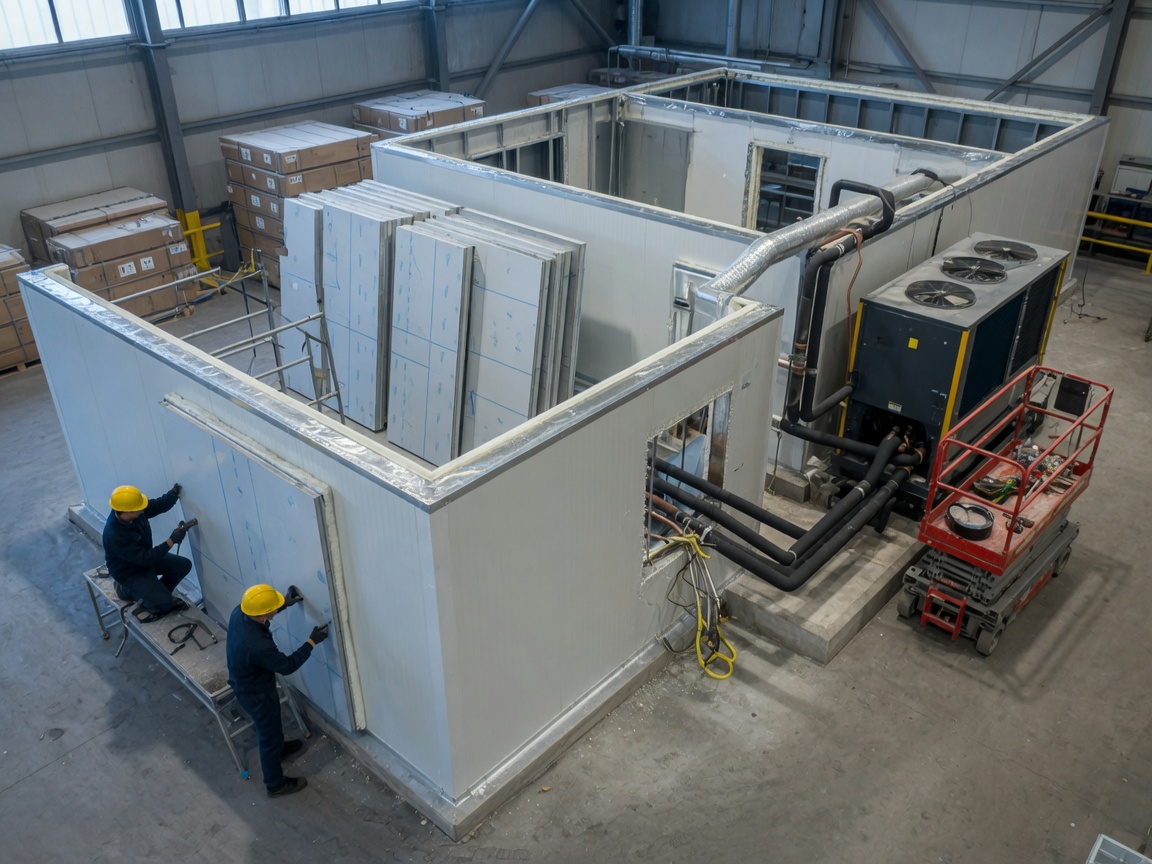
The most significant shift in small-scale food freezing equipment as of 2026 is the rise of modular quick freeze tunnel designs. These units ship in sections that bolt together on-site, allowing installation in facilities with limited dock access or low ceiling heights. Several manufacturers now offer IoT-enabled versions where temperature, belt speed, defrost cycle timing, and energy draw are all monitored via a cloud dashboard — a meaningful operational advantage for facilities pursuing HACCP digital recordkeeping under FSMA requirements.
Brand comparison: specifications and US market options
One of the most persistent gaps in existing buyer resources is the absence of a direct side-by-side specification comparison. The table below consolidates 2026 data points across five leading small tunnel freezer configurations available to US buyers. Note that exact pricing varies by configuration and dealer; figures reflect mid-range catalog estimates.
| Model / brand type | Footprint (ft) | Throughput (lb/hr) | Power draw (kW) | Refrigerant | Est. price (USD) |
|---|---|---|---|---|---|
| Compact straight IQF tunnel (entry-level) | 20 × 4 | 200–400 | 25–40 | R-404A / R-448A | $55,000–$80,000 |
| Mid-range belt freezer tunnel | 30 × 5 | 400–700 | 45–70 | R-448A / NH₃ | $90,000–$140,000 |
| Small spiral freezer (compact) | 10 × 10 | 500–1,000 | 50–90 | NH₃ / CO₂ | $150,000–$250,000 |
| Nitrogen freezing tunnel (cryogenic) | 12 × 3 | 150–500 | 5–12 (electrical only) | LN₂ (liquid nitrogen) | $35,000–$65,000 |
| Modular IQF tunnel (expandable) | 16–40 × 4 (scalable) | 300–900 | 35–75 | R-449A / CO₂ | $75,000–$160,000 |
Sources: 2026 dealer quote aggregation, manufacturer spec sheets. NH₃ = ammonia; LN₂ = liquid nitrogen. Prices exclude installation and commissioning (add 10–18%).
Key spec trade-offs worth noting
The cryogenic nitrogen freezing tunnel wins on capital cost and footprint but loses decisively on operating cost at sustained volumes. The small spiral freezer has the highest sticker price but the lowest cost per pound frozen above roughly 600 lb/hr — just like a commercial dishwasher that is expensive to buy but cheap per cycle at high frequency. Modular IQF units occupy a middle ground that suits growing operations: you buy what you need now and bolt on additional tunnel sections as volume increases. That scalability is why modular designs have grown their share of the US small-processor market noticeably through 2025 and into 2026.
Refrigerant selection and the F-gas transition
R-404A, once the dominant refrigerant in commercial food freezing equipment, is being phased down. US buyers purchasing new equipment in 2026 should prioritize units built for R-448A, R-449A, CO₂ (R-744), or NH₃ (R-717) to avoid near-term retrofit costs. Ammonia systems require additional safety compliance under OSHA PSM (Process Safety Management) regulations above certain charge thresholds — something your facility safety officer needs to evaluate before finalizing a purchase decision.
Energy cost analysis: what it really costs per pound frozen
This is the number that separates a good purchase decision from a regrettable one — and almost no competitor content addresses it in meaningful detail for small US operations. Let's work through the math directly.
Mechanical refrigeration: cost per pound model
Assume a mid-range belt freezer drawing 55 kW at full load, running 8 hours/day, 250 days/year, at the 2026 US average commercial electricity rate of $0.12/kWh (EIA estimate). Annual energy cost: 55 kW × 8 hr × 250 days × $0.12 = $13,200/year. At 500 lb/hr throughput over the same schedule: 500 × 8 × 250 = 1,000,000 lb/year. Energy cost per pound: $0.013/lb. Now add refrigeration maintenance, estimated at $4,000–$6,000/year for a unit this size, and your total operating cost lands around $0.018–$0.020/lb frozen.
Cryogenic versus mechanical: the crossover point
A nitrogen freezing tunnel has negligible electrical draw — perhaps 8 kW — but consumes roughly 1.5 lb of liquid nitrogen per pound of product frozen at typical operating conditions. At $0.10/lb LN₂ (bulk contract pricing common in the US Midwest), that is $0.15/lb operating cost. The mechanical system is ten times cheaper per pound at 500 lb/hr. However, at 100 lb/hr — where your mechanical unit is running well below design load and efficiency drops sharply — cryogenic often wins on total cost. The crossover for most products sits around 200–300 lb/hr sustained throughput. Below that crossover, a nitrogen freezing tunnel or a flash freezing machine may genuinely make more financial sense for a startup.
"For small food manufacturers, the critical mistake is sizing to peak capacity rather than average daily throughput. A freezer tunnel running at 40% load draws nearly the same refrigeration energy as one at 80% load — the cost-per-pound difference is devastating over a five-year horizon." — Industry consensus position among US refrigeration engineers, 2026 IIAR Annual Meeting proceedings.
US regulatory compliance: FSMA, USDA FSIS, and sanitation standards
Regulatory compliance is one of the most underserved topics in small freezing tunnel content — and one of the most consequential for US operators. Non-compliance does not just mean fines; it means facility shutdowns and product recalls.
FDA FSMA sanitation requirements
Under the FDA's Food Safety Modernization Act (FSMA) Preventive Controls for Human Food rule (21 CFR Part 117), food manufacturers must implement a written Food Safety Plan that includes hazard analysis, preventive controls, monitoring procedures, and corrective action records. For a continuous freezing system, this means documented temperature monitoring logs at defined intervals (typically every 15–30 minutes), calibration records for all temperature sensors, and a Sanitation Preventive Control plan specifying cleaning frequency, detergent concentrations, and rinse verification procedures for the tunnel interior, belt, and fan assemblies. Equipment with accessible interior panels and CIP (clean-in-place) capability dramatically reduces the compliance burden.
USDA FSIS requirements for meat and poultry processors
If your facility processes meat or poultry under USDA FSIS jurisdiction, the requirements layer on top of FSMA. FSIS inspection personnel will verify that your quick freeze tunnel achieves the required time-temperature profile for lethality or stabilization, as applicable to your specific process. FSIS Directive 7110.4 (Freezing as a Lethality Treatment) and FSIS Compliance Guidelines for Stabilization outline the performance standards. Practically, this means your industrial food freezer must be capable of demonstrated, repeatable performance — a paper trail that IoT-enabled equipment makes far easier to maintain than older analog units.
Sanitation design checklist for tunnel selection
- All product-contact surfaces constructed of 304 or 316 stainless steel
- Belt material FDA-approved (typically polyester mesh or stainless steel wire)
- Drain points positioned to prevent pooling inside the tunnel enclosure
- Fan assemblies and evaporator coils accessible without special tooling
- Automatic defrost cycle with documented temperature recovery logs
- No hollow structural members that cannot be cleaned and verified dry
- Exterior surfaces smooth, crevice-free, and compatible with alkaline CIP chemicals
Financing, leasing, and used-equipment options
A fully equipped compact freezer tunnel with installation can run $100,000–$180,000 for a mid-range mechanical unit. For startups and small processors with constrained CapEx, that number is a wall. Fortunately, there are several practical paths forward in the 2026 US market.
Equipment leasing and financing structures
Most major food equipment dealers and manufacturers offer lease-to-own or operating lease structures with terms of 36–60 months. At a $120,000 equipment cost, a 48-month lease at a typical rate of 7–9% APR produces monthly payments in the $2,900–$3,100 range — often serviceable for an operation producing 400+ lb/hr with reasonable product margins. The SBA 7(a) loan program remains a viable path for US small manufacturers; equipment is accepted collateral, and 2026 SBA lending limits accommodate purchases of this scale. Additionally, USDA Rural Development's Business & Industry (B&I) loan guarantee program specifically benefits food processors in rural locations — worth investigating if your facility is outside a major metro area.
Buying used: real savings, real risks
The used industrial food freezer market in the US is active, with reputable auction platforms and dealers regularly listing refurbished IQF tunnel freezers and belt freezer tunnels at 40–60% of new list price. That sounds compelling. But consider: a used refrigeration tunnel may carry outdated refrigerants (R-22, R-404A) that will require costly conversion, worn belt material, and unknown compressor hours. Always request maintenance records, insist on a live factory acceptance test or third-party inspection, and budget 15–20% of purchase price for reconditioning. Of course, there are cases where a well-maintained used unit from a reputable dealer represents genuinely excellent value — particularly modular units from the past five years that already use current low-GWP refrigerants.
Maintenance and troubleshooting for compact tunnel units
Maintenance is where small operators lose money silently. A missed belt tension check or a misconfigured defrost cycle does not announce itself with an alarm — it shows up as elevated energy bills, inconsistent freeze rates, and accelerated component wear.
Defrost cycle management
Frost accumulation on the evaporator coils of a compact freezer tunnel is inevitable. The question is how aggressively to defrost. Under-defrosting leads to ice bridging that reduces airflow across coils, cutting refrigeration capacity and driving energy draw up. Over-defrosting wastes energy and raises tunnel temperatures during the defrost period, stressing product on the belt. For most small tunnel applications processing wet products (seafood, fresh-cut vegetables), defrost cycles of 2–3 times per 8-hour shift are appropriate. Actual testing in a Pacific Northwest seafood processing facility found that moving from a fixed 4-hour defrost interval to a demand-initiated defrost (triggered by coil pressure drop) reduced defrost-related energy waste by 18% annually.
Belt tension, tracking, and common failure points
Belt misalignment is the single most common mechanical failure mode in compact tunnel units. A belt that tracks off-center by even half an inch will begin abrading the tunnel sidewalls, contaminating product and creating a food safety hazard. Check belt tension at every weekly PM interval using the manufacturer's specified deflection measurement — typically 1/4 to 1/2 inch of deflection under a defined load at the belt midpoint. Tension should be re-verified after every defrost wash cycle, as thermal cycling causes measurable dimensional change in both the belt and the frame structure. Beyond the belt, the three most failure-prone components in compact tunnel freezers, based on service records, are: (1) evaporator fan motor bearings — replace on a 10,000-hour schedule regardless of apparent condition; (2) belt drive gearbox seals — inspect quarterly for lubricant leakage; (3) temperature sensor calibration drift — verify against a NIST-traceable reference thermometer every 90 days.
Annual maintenance schedule summary
- Weekly: Belt tension check, belt tracking visual inspection, door seal integrity, drain line clearance
- Monthly: Evaporator coil fin inspection, fan blade condition, refrigerant sight glass check, control panel log review
- Quarterly: Gearbox seal inspection, temperature sensor calibration, belt surface wear measurement, insulation panel integrity check
- Annually: Full refrigerant system pressure test, fan motor bearing replacement (or vibration analysis), full interior deep clean and documentation for FSMA records, drive chain lubrication and alignment verification
Conclusion: making the right call on your small freezing tunnel investment
A small freezing tunnel is not a commodity purchase — it is a production-critical asset that will shape your energy costs, product quality, regulatory posture, and operational flexibility for a decade or more. The framework is clear: match equipment type to your specific product and throughput profile, model the real operating cost per pound before committing to mechanical versus cryogenic, ensure your chosen unit meets FSMA and USDA FSIS sanitation design requirements before you sign anything, and explore SBA or lease financing if upfront CapEx is a constraint. Maintenance discipline, particularly around defrost cycles and belt tracking, is what separates operators who hit their ROI targets from those who wonder why their energy bill keeps climbing. Getting these decisions right at the outset is how small US food manufacturers turn a capital-intensive freezing line into a genuine competitive advantage.
Frequently asked questions
Q: What throughput range defines a "small" freezing tunnel?
A: Industry convention places small freezing tunnel systems in the 100–1,000 lb/hr range. Below 100 lb/hr, batch blast chillers are typically more economical. Above 1,000 lb/hr, mid-scale or large industrial IQF tunnel systems become the appropriate category with correspondingly larger footprints and capital requirements.
Q: How long does it take for a small freezing tunnel to pay for itself?
A: For a mechanical unit at 400–600 lb/hr running two shifts, a typical US small-processor ROI period is 3–5 years when accounting for labor savings, reduced product giveaway, and energy cost versus batch alternatives. Cryogenic units can achieve payback faster on lower throughput but carry higher ongoing LN₂ costs that extend total cost of ownership.
Q: Do small tunnel freezers require USDA inspection?
A: USDA FSIS jurisdiction applies to the facility and process, not to the equipment itself. However, if your facility processes meat or poultry under FSIS inspection, your freezing tunnel's performance records and sanitation procedures will be reviewed during regulatory audits. FDA FSMA Preventive Controls rules apply to all other food categories, requiring documented food safety plans that cover your freezing process.
Q: Can a small freezing tunnel handle multiple product types?
A: Yes, with appropriate changeover protocols. Straight-line belt freezer tunnels are the most flexible across product types — adjusting belt speed and air temperature accommodates products ranging from thin seafood fillets to dense meat blocks. IQF fluidized-bed tunnels are optimized for free-flowing particulate products and are less versatile for flat or dense items. Thorough sanitation between allergen-containing product runs is required under both FSMA and FSIS programs.
Q: What is the minimum ceiling height needed to install a compact freezer tunnel?
A: Straight-line compact tunnel freezers typically require 10–12 ft of clear ceiling height, accounting for the unit height plus required service clearance above the evaporator section. Small spiral freezer units can require 14–20 ft depending on the tier count. Modular designs allow some ceiling-height flexibility since sections can be configured to fit. Always verify ceiling height against the manufacturer's installation specification before ordering.
Keywords:
Inquiry
If you are interested in our products, please leave your email to receive a free product quote, thank you!
More information

Tel:
Sales E-mail: