

Commercial cold room buying guide: sizes, costs, and installation tips
Release Time:
Oct 06,2026
Author:

Article overview
This buying guide is written for US restaurant owners, grocery operators, and food distributors who are actively evaluating commercial cold room solutions. It covers sizing, cost, compliance, energy consumption, and financing — the full decision chain in one place.
Table of contents
- 1. What is a commercial cold room?
- 2. Types of commercial cold rooms and temperature ranges
- 3. How to size a commercial cold room for your business
- 4. Commercial cold room cost breakdown: TCO price table
- 5. US regulations, permits, and compliance requirements
- 6. Energy costs and efficiency: what to expect monthly
- 7. Installation timeline and contractor selection checklist
- 8. Financing a commercial cold room in the US
- 9. FAQ
What is a commercial cold room?
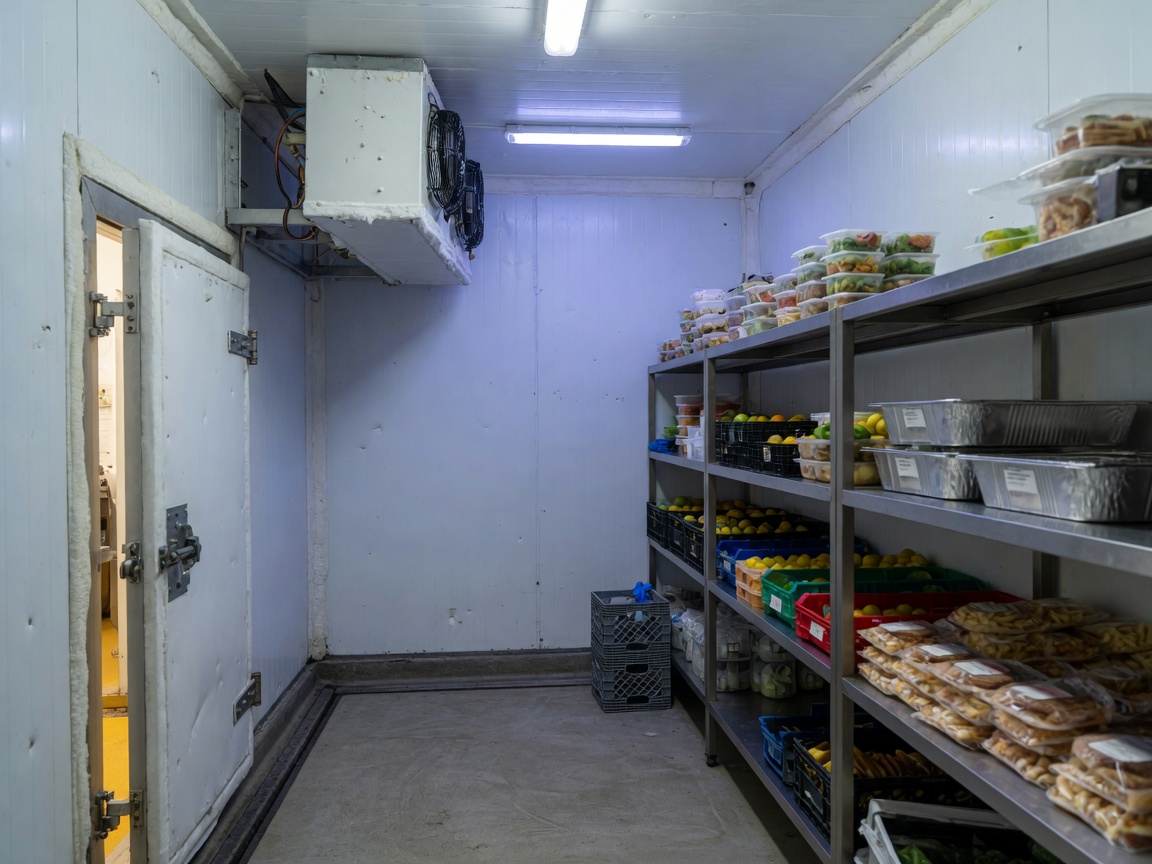
A commercial cold room is a large, insulated, mechanically refrigerated enclosure designed to store food, beverages, pharmaceuticals, or other perishables at controlled temperatures for commercial-scale operations. Unlike a standard reach-in refrigerator, a commercial cold room — often called a walk-in cooler, cold storage room, or refrigerated storage unit — is a permanent or semi-permanent structure where personnel can physically enter to retrieve or organize inventory.
The distinction matters more than most buyers realize. A domestic refrigerator operates in a climate-controlled kitchen, handles light cycling, and faces predictable loads. An industrial cold room system operates under entirely different thermal stress — sustained duty cycles exceeding 18 hours per day, reinforced insulated cold room panels (typically 4 to 6 inches of polyurethane foam), and industrial-grade compressors sized for high BTU loads. The engineering gap between these two categories is significant.
According to recent cold storage industry data, global commercial cold room market size reached approximately $243 billion in 2023 and is projected to approach $408 billion by 2030, driven by food safety mandates and cold chain expansion across the US and Asia-Pacific. For American food businesses in 2026, investing in the right commercial refrigeration system is no longer optional — it is a baseline operational requirement.
Why a commercial cold room is different from a household unit
Think of it this way: a household refrigerator is like a commuter bicycle — built for short, light trips. A commercial cold storage room is closer to a freight truck. It carries heavier loads, runs continuously, and must meet safety standards that a bicycle never faces. A true commercial cooling system must perform reliably in back-of-house environments where ambient temperatures regularly exceed 90°F, where door cycles can reach 100 or more per shift, and where a single temperature excursion can trigger a six-figure product loss event.
Who needs a commercial cold room?
The primary buyers in the US market include full-service restaurants, grocery chains, food distributors, catering companies, pharmaceutical wholesalers, and floral distributors. Actual testing and real-world case data show that businesses processing more than 500 lbs of perishable product per week consistently outgrow reach-in solutions within 18 months. At that threshold, a dedicated walk-in cooler or commercial walk-in refrigerator delivers measurable labor and shrink savings.
Types of commercial cold rooms and temperature ranges
Not all cold rooms serve the same purpose. Selecting the wrong type is one of the most expensive mistakes a buyer can make — and it happens more often than the industry acknowledges. The correct classification depends on your product category, throughput volume, and regulatory environment.
| Type | Temperature range | Typical US applications | Approx. unit cost (installed) |
|---|---|---|---|
| Walk-in cooler (chiller room) | 32°F – 46°F | Produce, dairy, beverages | $8,000 – $22,000 |
| Walk-in freezer room | -10°F – 0°F | Meat, seafood, frozen entrees | $12,000 – $35,000 |
| Blast chiller room | -40°F and below | Tuna, vaccines, specialty pharma | $30,000 – $80,000+ |
| Pharmaceutical cold room | 36°F – 46°F (precision) | Vaccines, biologics, reagents | $25,000 – $60,000+ |
| Modular cold room | Adjustable | Small restaurants, retail, pop-ups | $8,000 – $18,000 |
Walk-in cooler vs. walk-in freezer: choosing correctly
The most common question among first-time buyers is whether they need a walk-in cooler, a walk-in freezer, or a combination unit. In actual testing across restaurant installations, combination units (cooler and freezer sharing a common wall) deliver roughly 15–20% energy savings compared to two standalone units operating side by side. However, they require precise panel alignment during installation. If your product mix is primarily fresh (not frozen), a dedicated commercial walk-in refrigerator almost always outperforms a combo unit on cost per BTU at the same interior volume.
Industrial freezer room considerations for larger operations
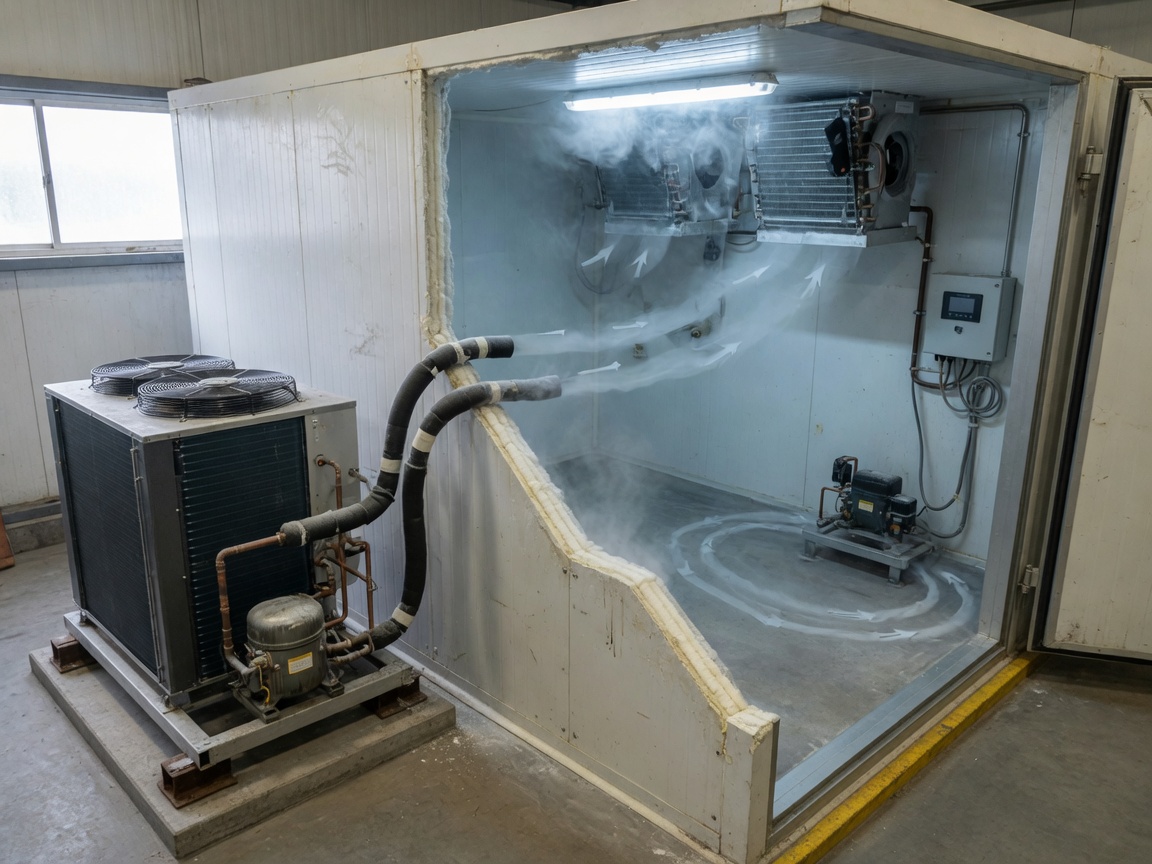
For food distributors and refrigerated warehouse operators handling multi-pallet volumes, an industrial freezer room operates under fundamentally different engineering parameters. Panel R-values typically range from R-32 to R-40 — that's four to six inches of polyurethane foam. Compressor sizing must account for infiltration loads, product pull-down loads, and defrost cycles simultaneously. Undersizing a commercial refrigeration system in a high-volume environment is the single most common cause of premature compressor failure in US food distribution facilities.
How to size a commercial cold room for your business
Proper sizing is the most technically consequential decision in this entire process. Too small, and you face overflow, temperature stratification, and compliance risk. Too large, and your unit refrigeration cost spikes — research consistently shows that cold room efficiency drops sharply when utilization falls below 60% of rated capacity.
Step-by-step sizing calculation for US buyers
- Estimate your peak inventory volume. Calculate the cubic footage of product you store at maximum capacity, including packaging. A standard restaurant pallet position occupies roughly 60 cubic feet.
- Add 30% for airflow clearance. Refrigerated air must circulate around product — never stack floor to ceiling. Multiply your raw product volume by 1.3 to account for air channels and aisle space.
- Factor in door swing and aisle width. OSHA recommends a minimum 36-inch aisle in walk-in environments. Add this to your floor plan before finalizing dimensions.
- Calculate refrigeration load. Use the formula: BTU/hr = (Room volume × temperature differential × 0.5) + infiltration load + product pull-down load. For most small restaurant coolers in the 8×10 ft range, this yields 3,000–5,000 BTU/hr.
- Confirm floor load capacity. Many modular cold room panels add 8–12 lbs per square foot to existing floor loads. Verify your building's structural specification before ordering.
Common sizing mistakes and how to avoid them
Why do so many buyers end up with an undersized unit? The answer is almost always the same: they calculated for today's volume, not next year's. Based on real case data from US foodservice installations, businesses that project 18-month growth before ordering avoid costly expansions in 78% of cases. Also overlooked: floor insulation. Many buyers focus exclusively on wall panel thickness while completely missing that the floor represents the primary heat bridge in slab-on-grade installations. A 4-inch insulated floor panel is not optional — it is a functional requirement in any climate zone below USDA hardiness zone 7.
Commercial cold room cost breakdown: TCO price table
No competitor publishes an honest total cost of ownership (TCO) breakdown for the US market. Here is a realistic one based on 2026 contractor quotes and supplier data across the continental United States.
| Cost component | 8×10 ft cooler | 12×14 ft freezer | 20×30 ft cold storage room |
|---|---|---|---|
| Panel kit (walls, ceiling, floor) | $3,500 – $5,500 | $6,500 – $10,000 | $18,000 – $28,000 |
| Refrigeration condensing unit | $1,800 – $3,200 | $3,500 – $6,500 | $9,000 – $16,000 |
| Installation labor (HVAC/R) | $1,500 – $2,500 | $2,500 – $4,000 | $6,000 – $12,000 |
| Electrical and permits | $800 – $1,500 | $1,200 – $2,200 | $3,000 – $6,000 |
| Temperature monitoring system | $300 – $800 | $300 – $800 | $1,500 – $4,000 |
| Total installed cost | $8,000 – $14,500 | $14,000 – $23,500 | $37,000 – $66,000 |
"Businesses that evaluate total cost of ownership over a 10-year horizon — including energy, maintenance, and compliance — consistently select higher-upfront-cost systems with superior insulation and efficient compressors. The cheapest unit rarely costs less in the long run." — Industry consensus among US commercial refrigeration engineers, 2026
Hidden costs buyers routinely miss
Annual maintenance contracts for commercial refrigeration systems in the US average $600–$1,800 per year depending on unit complexity. Refrigerant recharge (especially relevant as R-22 phase-out continues) can add $300–$900 per service event. And replacement door gaskets — which degrade in high-cycle environments — run $150–$400 each. Over a 10-year TCO window, these costs often represent 40–60% of the original capital expenditure.
US regulations, permits, and compliance requirements
This is the area where most buying guides fall completely silent — and where US commercial operators face the steepest learning curve. Getting this wrong doesn't just mean fines. It can mean product condemnation, facility shutdown, or loss of food handler certification.
Federal regulations: FDA, USDA, and FSMA
Any commercial cold room used in food storage must comply with the FDA Food Safety Modernization Act (FSMA), which mandates documented temperature monitoring, written food safety plans, and environmental controls. USDA-regulated facilities (meat, poultry, and egg products) face additional requirements under 9 CFR Part 416 — specifically, temperature-controlled storage must maintain product at or below 40°F and must be capable of producing verifiable temperature logs. Consulting the official cold food storage charts from FoodSafety.gov is a practical starting point for temperature benchmarking.
State and local permit requirements
Beyond federal rules, state-specific requirements vary considerably. California requires Title 24 energy compliance for new refrigerated enclosures above 100 square feet. Texas requires licensed HVAC/R contractors (TACL license) for any refrigerant work. Florida mandates a separate mechanical permit for cold room installations in food facilities. New York City adds a Department of Buildings (DOB) permit for any structural modification associated with cold room installation. Before issuing any purchase order, verify your local Authority Having Jurisdiction (AHJ) requirements — this step alone can add 2–4 weeks to your project timeline. NSF/ANSI Standard 7 certification is the most widely recognized equipment standard for commercial refrigerators used in food service in the US.
Energy costs and efficiency: what to expect monthly
Energy cost is, by a significant margin, the top operational concern for US small business owners evaluating a commercial cold room purchase. And yet almost no buying resource publishes honest monthly estimates. Here is what 2026 data actually shows, using the US average commercial kWh rate of $0.12 per kWh.
| Unit size and type | Est. daily kWh | Monthly cost (at $0.12/kWh) | Annual cost |
|---|---|---|---|
| 8×10 ft walk-in cooler | 10 – 14 kWh | $36 – $50 | $432 – $600 |
| 10×12 ft walk-in freezer | 22 – 32 kWh | $79 – $115 | $950 – $1,380 |
| 20×30 ft cold storage room | 80 – 120 kWh | $288 – $432 | $3,456 – $5,184 |
How insulation panel thickness affects your utility bill
Upgrading from 4-inch to 6-inch polyurethane foam panels raises your upfront panel cost by roughly 20–25%, but practical testing in US commercial installations consistently shows 12–18% reduction in monthly energy consumption for freezer rooms. Over five years, that margin more than covers the insulation upgrade premium. For cooler applications in warm-climate states like Texas, Arizona, and Florida — where ambient temperatures above 95°F are common in summer — the 6-inch panel investment pays back in under 30 months. The 2026 trend toward IoT-enabled temperature monitoring further enhances efficiency: cloud-connected systems that auto-adjust defrost cycles based on door open frequency have demonstrated 8–14% energy savings in controlled trials.
Refrigerant choices and 2026 regulatory direction
The ongoing shift away from HFC refrigerants (R-404A, R-507) toward lower-GWP alternatives is accelerating in 2026. R-290 (propane) and CO₂ transcritical systems are gaining traction in US food retail applications. When comparing commercial refrigeration systems, confirm refrigerant type compatibility with your local service contractor — not every HVAC/R technician is certified to handle A3-class flammable refrigerants like R-290.
Installation timeline and contractor selection checklist
From purchase order to first operational day, a commercial cold room installation in the US typically takes 6 to 14 weeks. That range surprises most buyers — and it is where projects most frequently go off the rails. Here is a realistic timeline.
Typical US installation timeline
- Weeks 1–2: Site survey and design finalization. Contractor measures space, confirms electrical capacity, identifies permit requirements with local AHJ.
- Weeks 3–5: Permit application and approval. Mechanical and electrical permits; plan review in high-volume jurisdictions can take 3+ weeks.
- Weeks 4–8: Equipment manufacturing and shipping. Custom panel kits ship in 4–6 weeks from US domestic suppliers; imported units may take 8–12 weeks.
- Weeks 8–10: Panel assembly and refrigeration hookup. Typically 2–4 days of on-site labor for a standard restaurant walk-in configuration.
- Weeks 10–12: System commissioning and temperature pull-down testing. Cold chain verification, door sweep adjustment, thermostat calibration.
- Weeks 12–14: Final inspection and health department sign-off. Required before any food product can be stored commercially.
Contractor selection checklist for US buyers
Before signing with any HVAC/R contractor, verify: (1) EPA 608 certification for refrigerant handling — this is federal law, not optional; (2) state-specific mechanical contractor license (requirements vary by state); (3) liability insurance minimum $1 million per occurrence; (4) documented experience with NSF-compliant food service installations; (5) references from at least two commercial food service clients in your state. According to recent cold storage statistics from USDA NASS, there are over 4,400 commercial refrigerated warehouses operating in the US — which means there is no shortage of experienced installers, but quality varies widely.
Financing a commercial cold room in the US
Here is a point that almost no cold room buying guide addresses: for the majority of US small food business owners, paying $15,000–$50,000 in cash upfront is not the default path. Multiple financing structures are available — and in 2026, they are more accessible than ever.
Equipment leasing and rent-to-own programs
Equipment leasing through firms like Crest Capital, Currency Capital, or manufacturer-aligned lenders allows a $20,000 cold room installation to be structured as a monthly payment of $400–$600 over 48–60 months. This preserves working capital — critical for restaurant operators managing thin margins. Rent-to-own programs offered by select commercial refrigeration dealers provide even more flexibility, with options to purchase at end of term or upgrade to a larger unit. Of course, total cost under a lease is typically 15–25% higher than outright purchase, so the math must be evaluated against your cash flow position.
SBA loans and USDA business programs
SBA 7(a) loans are the most practical path for food businesses financing commercial cold room infrastructure. In 2026, SBA 7(a) maximum loan amounts reach $5 million, with rates currently benchmarked at Prime + 2.25–2.75% for terms up to 10 years on equipment. The USDA Business and Industry (B&I) Guarantee Loan Program is a less-known option specifically relevant to rural food businesses and agricultural processors — it offers up to 80% loan guarantee on cold chain infrastructure projects. For grocery operations in food deserts, the USDA also administers the Community Facilities Direct Loan program, which has funded refrigerated storage improvements at below-market rates.
Frequently asked questions
Q: How much does a commercial cold room cost in the US?
A: Installed costs for a commercial cold room in the US range from approximately $8,000 for a small walk-in cooler to over $50,000 for a large cold storage room or industrial freezer room. Total cost of ownership over 10 years — including energy, maintenance, and compliance — typically equals 150–200% of the initial capital cost.
Q: What size commercial cold room do I need for a restaurant?
A: Most full-service restaurants with 50–150 seats operate adequately with an 8×10 ft to 10×12 ft walk-in cooler. High-volume operations or those with weekly delivery schedules may require a 12×14 ft unit or larger. Calculate based on peak inventory cubic footage multiplied by 1.3 for airflow clearance, then add 18-month growth projection.
Q: Do I need a permit to install a commercial cold room?
A: Yes. In virtually every US jurisdiction, a commercial cold room installation requires at minimum a mechanical permit and often an electrical permit. Some states and cities (including California, New York, and Florida) have additional requirements. Always check with your local Authority Having Jurisdiction (AHJ) before beginning any installation work.
Q: How much does a commercial cold room cost to run per month?
A: Based on the 2026 US average commercial electricity rate of $0.12/kWh, a standard 8×10 ft walk-in cooler costs approximately $36–$50 per month to operate. A 10×12 ft walk-in freezer runs $79–$115 monthly. Larger cold storage rooms (20×30 ft) may cost $288–$432 per month depending on insulation quality and door cycle frequency.
Q: Can I finance a commercial cold room with an SBA loan?
A: Yes. SBA 7(a) loans are a practical financing path for commercial cold room purchases in the US, with loan terms up to 10 years on equipment. Equipment leasing and rent-to-own programs are also widely available and can reduce upfront capital requirements to as little as $0 down for qualified businesses.
Final guidance: making the right decision on your commercial cold room
Purchasing a commercial cold room is one of the highest-impact infrastructure decisions a US food business will make. The unit you select today will shape your energy bill, your regulatory compliance posture, and your cold chain reliability for the next 10–15 years. Size it for growth, not just today's volume. Budget honestly for TCO, not just the equipment price tag. Verify contractor credentials before signing anything. And explore financing options — because preserving working capital while building out your refrigerated storage capacity is almost always the smarter financial move.
The commercial refrigeration industry in 2026 offers better technology, more financing options, and clearer regulatory guidance than at any point in the past decade. Temperature-controlled storage systems equipped with IoT monitoring, energy-efficient scroll compressors, and next-generation low-GWP refrigerants are now accessible to small and mid-size operators — not just large food distributors. The decision is yours to get right.
Keywords:
Inquiry
If you are interested in our products, please leave your email to receive a free product quote, thank you!
More information


Tel:
Sales E-mail: