

Industrial cold rooms: a complete buying guide for warehouses and food storage
Release Time:
Oct 11,2026
Author:

Article overview
This buying guide is written for US-based procurement managers and food storage operators evaluating industrial cold rooms in 2026. It covers construction types, insulation standards, regulatory compliance, 10-year TCO, and smart automation — all in one place.
Table of contents
What are industrial cold rooms?
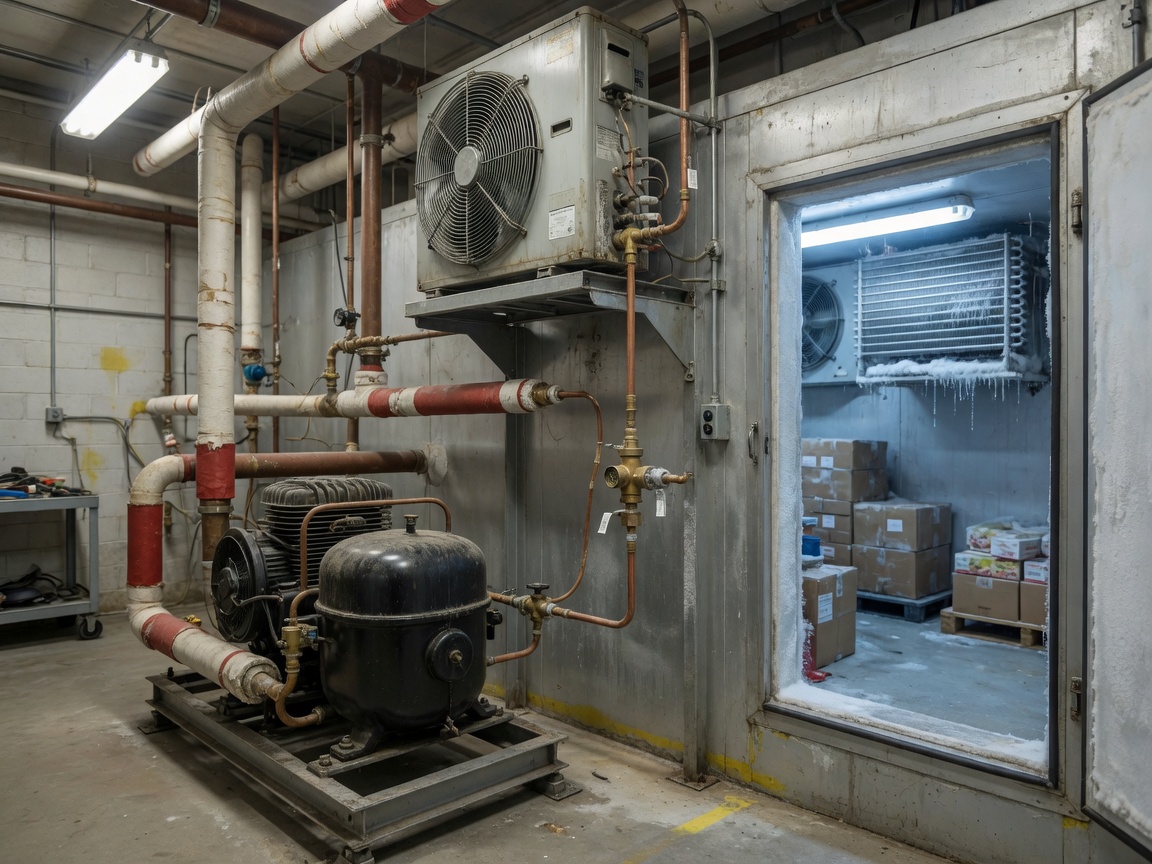
Industrial cold rooms are large-scale, mechanically refrigerated enclosures engineered to maintain precise temperature ranges for commercial or industrial storage of perishable goods. Unlike a household refrigerator, these systems are purpose-built for sustained duty cycles, high BTU loads, and strict regulatory compliance across food, pharmaceutical, and chemical applications.
Think of an industrial refrigeration system as an industrial-grade thermos — but one that actively pumps heat out rather than passively retaining it. The insulated enclosure resists heat ingress from the environment; the mechanical refrigeration unit continuously removes any heat that penetrates the structure. The result is a stable, controlled internal environment that can be held anywhere from 32°F (0°C) for fresh produce down to -40°F (-40°C) or below for ultra-low-temperature pharmaceutical cold storage.
According to 2026 data from Allied Market Research, the global cold chain market is projected to reach $447 billion with a CAGR of approximately 13.5%. Industrial cold rooms form the backbone of that infrastructure. Cold storage facilities range from walk-in cooler installations inside grocery distribution centers to frozen food storage warehouses spanning hundreds of thousands of square feet. The diversity of use cases — dairy, meat processing, vaccines, chemicals — means that no single configuration fits all buyers.
Industrial cold rooms is a broad term that encompasses several distinct product types. To understand the full landscape, consider these standard categories:
Industrial cold rooms are defined as mechanically refrigerated, insulated enclosures designed to maintain specific temperature ranges — typically 32°F to -40°F — for commercial or industrial use in food, pharmaceutical, or chemical storage.
Temperature classifications you need to know
| Room type | Temperature range (°F) | Typical applications |
|---|---|---|
| Walk-in cooler | 32°F – 50°F | Fresh produce, dairy, beverages |
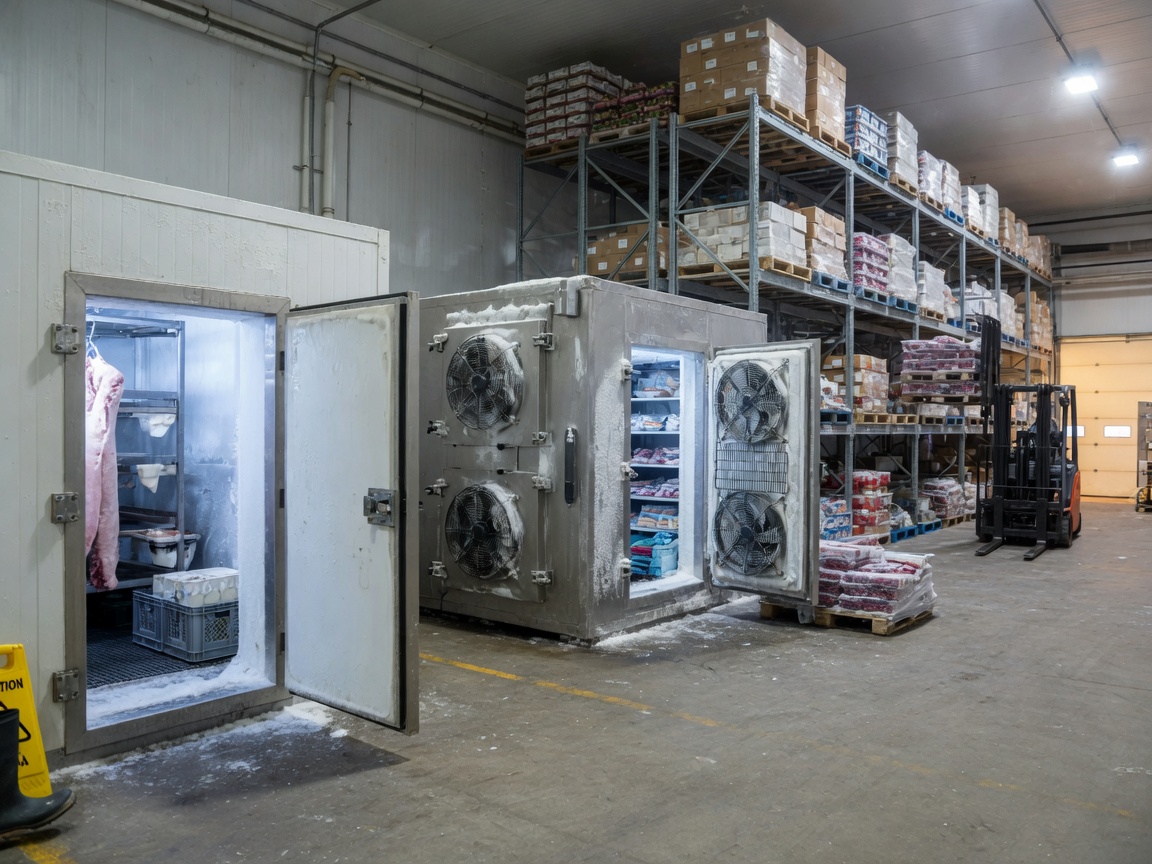
| Walk-in freezer room | 0°F – -10°F | Frozen foods, ice cream, seafood |
| Blast freezer unit | -20°F – -40°F | Rapid product freezing, food processing |
| Pharmaceutical cold storage | 35°F – 46°F (or custom) | Vaccines, biologics, controlled substances |
| Ultra-low / deep freeze | Below -40°F | Tuna, research samples, specialty pharma |
Why the wrong temperature range is an expensive mistake
A common misconception worth addressing directly: colder is not always safer. Many buyers over-specify temperature — ordering a blast freezer unit when a standard walk-in freezer room would suffice. The result? Energy bills 30–50% higher than necessary, and in some cases, product degradation caused by freeze damage to items not rated for ultra-low temperatures. Actual project experience confirms this pattern repeatedly. Matching the temperature classification precisely to product requirements is the single most impactful specification decision you will make.
Cold room construction types compared
The best construction type depends on your site constraints, timeline, budget, and regulatory environment. Three primary methods dominate the US market for commercial cold storage systems: modular panel, prefab fiberglass, and site-built. Each has distinct trade-offs that are frequently overlooked in generic vendor brochures.
Modular panel systems
Modular cold room panels and insulation systems use interlocking, factory-fabricated panels — typically polyurethane or PIR foam cores clad with steel or aluminum skins. Installation is fast (often 3–7 days for a mid-size room), the panels are food grade refrigeration rooms-compliant, and the system is fully relocatable. Drawbacks include panel joint vulnerability over time and a practical upper size limit of roughly 10,000 sq ft before site-built becomes more economical.
Prefab fiberglass units
Prefabricated fiberglass cold rooms arrive as complete, factory-tested units. They are particularly popular for pharmaceutical cold storage and laboratory applications where surface cleanability, chemical resistance, and documentation of manufacturing quality are non-negotiable. Lead times can be 8–14 weeks, and the fixed dimensions limit customization — but for regulated environments, the audit trail that comes with factory fabrication is a genuine advantage.
Site-built construction
Site-built refrigerated warehouse solutions are constructed in place using conventional building methods with added insulation layers and vapor barriers. They support very large footprints (100,000+ sq ft), allow complete architectural customization, and integrate more easily with existing building infrastructure. The trade-off is higher upfront cost, longer construction timelines (3–9 months), and the requirement for experienced cold-room contractors familiar with thermal bridging, floor heating systems, and ASHRAE compliance.
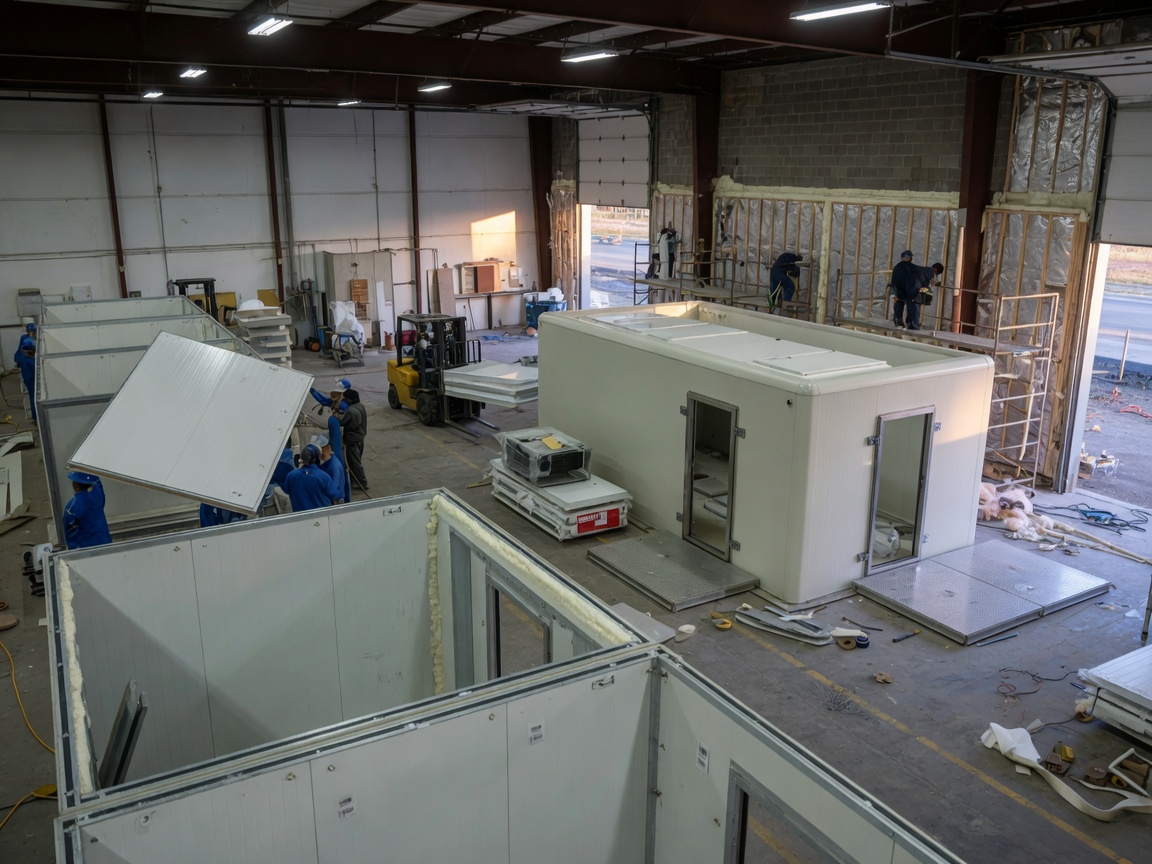
| Factor | Modular panel | Prefab fiberglass | Site-built |
|---|---|---|---|
| Install time | 3–7 days | 8–14 weeks (lead) | 3–9 months |
| Max practical size | ~10,000 sq ft | Small–medium | Unlimited |
| Relocatable? | Yes | Partially | No |
| Best for | Food distribution, retail | Pharma, labs | Large warehouses |
| Upfront cost | $$ | $$$ | $$$–$$$$ |
US climate zones and insulation requirements
ASHRAE climate zones — numbered 1 through 8 across the US — directly determine the insulation R-value your cold room panels and enclosure structure must achieve to operate efficiently. This is a dimension that many national vendors gloss over, yet it meaningfully affects both upfront material costs and long-term energy spend.
How ASHRAE climate zones affect your cold room design
In Zone 1 (Miami, FL), ambient conditions can exceed 90°F and 90% relative humidity for months at a time. The thermal load on an industrial cold room is enormous — vapor retarder design becomes as critical as the R-value itself. Contrast that with Zone 7 (International Falls, MN), where winter ambient temperatures drop so low that the refrigeration system runs in partial economizer mode, dramatically reducing compressor runtime. A walk-in freezer room designed for Miami with the same insulation spec as one in Minnesota will hemorrhage energy costs.
As a practical reference, according to ASHRAE guidelines and real installation data across US markets:
- Zones 1–2 (Hot-Humid, Southeast): Wall R-value ≥ R-32; vapor barriers on all six sides are mandatory
- Zones 3–4 (Mixed, Mid-Atlantic/Pacific): R-25 to R-32; humidity management critical in coastal areas
- Zones 5–6 (Cool, Midwest/Northeast): R-25 standard; floor heating systems required for freezer rooms
- Zones 7–8 (Very Cold, Upper Plains/Alaska): R-20 may suffice in some cooler applications; freeze protection for outdoor refrigeration piping is the primary design concern
Floor insulation and frost heave: a risk most buyers ignore
For walk-in freezer rooms operating at 0°F or below, sub-floor temperatures can drop low enough to freeze the ground beneath the slab. Frost heave — the expansion of frozen soil — can crack concrete floors, damage refrigeration piping, and compromise structural integrity within 2–3 years if floor heating systems are omitted. This is particularly acute in Zones 5–7. The added cost of floor heating is typically $8–$15 per sq ft. Skipping it to reduce upfront spend is a false economy that experienced operators consistently regret.
Compliance: FDA, USDA, and NSF standards
Regulatory compliance is non-negotiable for US operators in food and pharmaceutical sectors. Failure to meet applicable standards does not just create legal liability — it can result in facility shutdown, product condemnation, and supply chain disruptions worth millions. The key frameworks for US buyers are FDA food safety regulations, USDA requirements for meat and poultry, and NSF certification for materials in contact with food.
FDA and FSMA requirements
Under the Food Safety Modernization Act (FSMA), cold storage facilities handling human food must implement HACCP-aligned temperature monitoring, maintain documented records of temperature excursions, and demonstrate that temperature-controlled storage rooms are designed to prevent contamination. Refer to the FDA's food storage temperature guidelines for the official HACCP framework that underpins these requirements. In practice, this means continuous data logging (not just manual checks), calibrated sensors with documented traceability, and alert protocols for temperature deviations exceeding ±2°F in critical zones.
NSF/ANSI 2 and materials compliance
NSF/ANSI Standard 2 governs food equipment, including cold room panels, shelving, and flooring that may contact food or food packaging. Insulation cores must be fully encapsulated; exposed foam is a violation. Panel surfaces must be smooth, cleanable, and non-porous. Why do so many operators discover NSF compliance gaps only during inspection? Because many vendors sell panels that meet structural specs but were not independently certified under NSF/ANSI 2. Always request the certification documentation — not just a vendor claim.
For pharmaceutical cold storage, 21 CFR Part 211 (current Good Manufacturing Practice) requires temperature mapping studies to validate uniformity across the entire storage volume — not just at a single sensor point. This is a far more rigorous standard than food FSMA requirements and typically demands professional validation services before the room is put into productive use.
"Facilities that integrate temperature monitoring with their quality management systems from day one experience significantly fewer FDA 483 observations related to cold storage than those that retrofit compliance measures after construction." — Industry consensus among US cold chain compliance consultants, 2026
Total cost of ownership over 10 years
Purchase price is the most visible number, but it is rarely the most important one. Industrial refrigeration equipment carrying a lower sticker price can cost 40–60% more over a 10-year ownership period when energy, maintenance, and replacement parts are factored in. The TCO framework below reflects real installation and operational data from US cold storage facilities in the 2,000–20,000 sq ft range.
10-year TCO breakdown for a 5,000 sq ft walk-in freezer room
| Cost category | Low-efficiency system | High-efficiency system |
|---|---|---|
| Capital installation | $180,000 | $240,000 |
| Energy (10 yr, $0.12/kWh avg) | $310,000 | $190,000 |
| Scheduled maintenance | $62,000 | $45,000 |
| Unplanned repairs | $38,000 | $18,000 |
| Panel/seal replacement | $22,000 | $14,000 |
| 10-year TCO | $612,000 | $507,000 |
Energy cost: the dominant variable
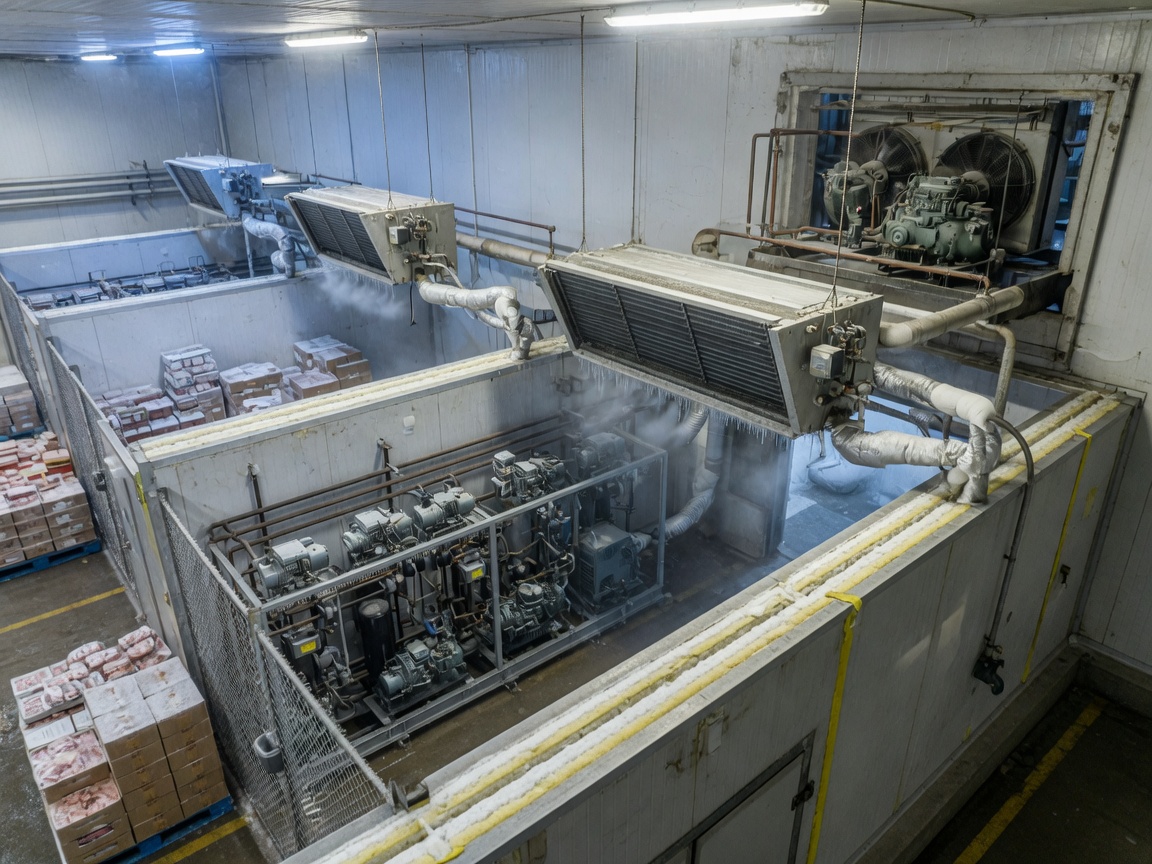
According to near-term IEA data, industrial freezer storage accounts for roughly 40% of global commercial refrigeration energy consumption. For US operators, energy is typically the largest single line item in the 10-year TCO — often exceeding the initial capital cost. Industrial chiller systems with variable-speed compressors, EC fan motors, and high-side floating head pressure controls can reduce energy consumption by 25–35% versus fixed-speed baseline equipment. The refrigerant selection also matters: natural refrigerants such as CO₂ (R744) and ammonia (R717) — accelerated by the Kigali Amendment's HFC phase-down — are increasingly competitive on efficiency and carry no future regulatory risk on refrigerant supply. Of course, ammonia systems require additional safety infrastructure (detection systems, ventilation, training), so they are most practical for larger refrigerated warehouse solutions above 20,000 sq ft.
Automation and IoT integration
In 2026, connecting industrial cold rooms to warehouse management systems (WMS) and IoT monitoring platforms is no longer a premium add-on — it is rapidly becoming a baseline expectation for operators at scale. Real-time temperature sensor networks, automated alerts, and AI-driven energy optimization have measurable ROI that is difficult to ignore.
IoT temperature monitoring: what a modern system looks like
A properly implemented IoT architecture for commercial cold storage systems includes wireless temperature and humidity sensors placed at multiple heights and locations within the room (per FDA temperature mapping guidance), a cloud-connected gateway that aggregates sensor data at 1–5 minute intervals, and an alert engine that notifies operations staff and quality managers via SMS or email the moment a threshold is breached. Systems from US-market providers like Monnit, Sensitech, and Onset HOBO provide NIST-traceable calibration documentation — critical for FSMA and pharma compliance. Based on actual facility deployments, IoT monitoring reduces product loss from undetected temperature excursions by an estimated 60–80% compared to manual log-based monitoring.
WMS integration and warehouse automation
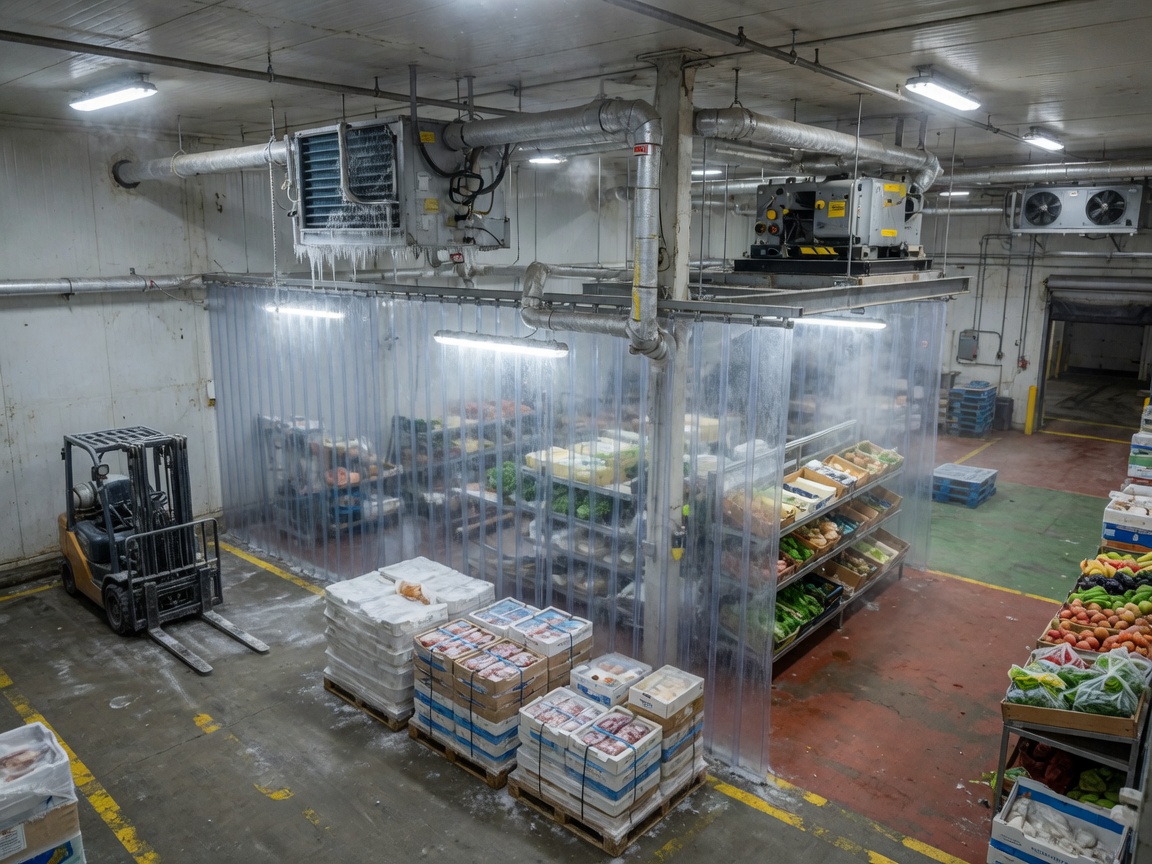
Beyond temperature monitoring, integration with WMS platforms allows cold room access events (door open/close duration, personnel entry logs) to be correlated with temperature data — providing root-cause analysis when excursions occur. For high-throughput frozen food storage warehouses, automated door systems (air curtains, high-speed insulated roll-up doors) reduce thermal load per access cycle by up to 40%, with payback periods of 18–30 months. The broader principle of cold storage principles increasingly encompasses digital infrastructure as a core engineering element, not an afterthought. This integration of physical refrigeration with digital operations defines the most competitive cold chain facilities in the US market today.
Choosing the right system for your operation
Pulling it all together: how do you move from the information above to an actual specification and vendor shortlist? The evaluation process for industrial cold rooms follows a logical sequence, but many buyers jump to requesting quotes before completing the foundational steps — which leads to misaligned proposals and wasted procurement cycles.
Step-by-step evaluation process
- Define your product profile: Document the temperature range, humidity sensitivity, and turnover rate of every SKU the room will hold. This drives everything from insulation specification to refrigerant selection.
- Assess your site and climate zone: Confirm your ASHRAE climate zone, available electrical capacity (3-phase power requirements for industrial refrigeration equipment), floor load ratings, and ceiling height constraints.
- Map your compliance obligations: Determine which regulatory framework applies — FSMA, USDA, NSF, 21 CFR Part 211 — before any construction type decision is made. Compliance requirements may dictate construction type.
- Select construction type: Use the comparison table in Section 2 as a starting framework, weighted against your timeline, budget, and size requirements.
- Build a 10-year TCO model: Request energy consumption data (kWh/year at design conditions) from every vendor. Do not accept estimates — ask for performance data from comparable installed systems.
- Plan IoT and automation from day one: Specify sensor conduit runs, data gateway locations, and door automation infrastructure during construction, not after. Retrofit costs are typically 3–5× higher than built-in design.
PAA: common questions buyers ask
How much does a commercial industrial cold room cost to install in the US? For a modular panel walk-in cooler installation in the 500–2,000 sq ft range, US market pricing in 2026 runs approximately $50–$120 per sq ft installed, inclusive of panels, refrigeration equipment, electrical, and flooring. Blast freezer units and pharmaceutical cold storage rooms command 30–60% premiums due to performance and compliance requirements. Site-built refrigerated warehouse solutions at scale (50,000+ sq ft) are typically quoted on a design-build basis and range from $80 to $200+ per sq ft depending on specification depth and regional labor markets.
What refrigeration system is best for a large walk-in freezer room? For rooms above 5,000 sq ft operating at 0°F or below, industrial chiller systems using semi-hermetic or screw compressors with EC condenser fans and electronic expansion valves offer the best balance of efficiency and serviceability. CO₂ transcritical systems are gaining adoption in US food retail and distribution, particularly in warmer climate zones where HFC phase-out timelines create refrigerant cost uncertainty. For full guidance on refrigeration terminology and system selection, the refrigeration terminology standards published by ASHRAE provide a rigorous reference framework.
How often do industrial cold rooms require maintenance? A properly specified system should be on a quarterly preventive maintenance schedule at minimum: coil cleaning, refrigerant charge verification, door gasket inspection, and calibration checks on temperature sensors. The most commonly deferred maintenance item — and the most consequential — is door gasket replacement. A degraded gasket on a walk-in freezer room door can increase compressor runtime by 15–25%, adding thousands of dollars annually in energy cost while accelerating compressor wear.
Industrial cold rooms that are properly specified, compliantly built, and actively managed with modern IoT monitoring tools represent one of the highest-ROI infrastructure investments a food or pharmaceutical operator can make. The variability in long-term cost and compliance risk between a well-specified system and a poorly-specified one is not marginal — it is transformative over a 10-year ownership horizon. Approach the procurement process with the same rigor you would apply to any major capital equipment decision.
Frequently asked questions
Common questions answered
Q: What is the difference between a walk-in cooler and an industrial cold room?
A: A walk-in cooler is one type of industrial cold room, typically operating between 32°F and 50°F. The term "industrial cold rooms" is broader and encompasses coolers, freezer rooms, blast freezer units, and pharmaceutical cold storage — any temperature-controlled enclosure built for commercial or industrial use.
Q: Do industrial cold rooms need to meet FDA requirements?
A: Yes, for food applications under FSMA. Requirements include continuous temperature monitoring, documented records of excursions, and HACCP-aligned operational procedures. Pharmaceutical cold storage facilities face additional requirements under 21 CFR Part 211, including temperature mapping validation studies.
Q: How long do industrial cold rooms last?
A: With proper maintenance, a well-built modular panel or site-built cold room enclosure can last 20–25 years. Refrigeration equipment typically has a 15–20 year lifespan with regular servicing. Door hardware and gaskets are the highest-wear components and require replacement every 3–7 years depending on traffic volume and temperature.
Q: What is the most energy-efficient refrigerant for industrial cold rooms in 2026?
A: CO₂ (R744) and ammonia (R717) lead on efficiency and have zero HFC phase-down risk. For smaller commercial refrigeration units below 25 tons, CO₂ heat pump systems are increasingly cost-competitive. Ammonia systems offer superior efficiency at large scale but require additional safety infrastructure per IIAR and OSHA standards.
Q: Can industrial cold rooms be expanded after installation?
A: Modular panel systems are the most expandable — panels can be added to increase footprint, and refrigeration equipment can be upsized if initially over-specified. Site-built rooms can be expanded with proper structural planning but at significant cost. Prefab fiberglass units have the most limited expansion options and are best suited to fixed-size applications.
Keywords:
Inquiry
If you are interested in our products, please leave your email to receive a free product quote, thank you!
More information


Tel:
Sales E-mail: