

Cold storage and refrigeration guide: how to choose the right system for your needs
Release Time:
Oct 10,2026
Author:

Article overview
This guide provides a comprehensive, technically grounded reference for professionals evaluating cold storage and refrigeration solutions in the U.S. market. Topics include system classification, regulatory compliance, cost modeling, energy ROI, sector-specific applications, and 2026 industry trends.
Table of contents
- 1. What is cold storage and refrigeration?
- 2. Types of cold storage refrigeration systems
- 3. Build vs. lease vs. third-party cold storage: U.S. cost comparison
- 4. FDA and USDA compliance requirements for cold storage
- 5. Energy efficiency benchmarks and ROI analysis
- 6. Cold storage for emerging U.S. sectors
- 7. Maintenance schedules, equipment lifespan, and failure prevention
- 8. 2026 trends shaping the cold storage industry
- 9. FAQ
What is cold storage and refrigeration?
Cold storage and refrigeration refers to mechanically controlled low-temperature infrastructure — typically operating between -30°C and +15°C (-22°F to 59°F) — used to preserve perishable goods, pharmaceuticals, and temperature-sensitive materials at commercial scale.
It is the physical and mechanical backbone of the cold chain. Without it, modern food distribution and pharmaceutical logistics would not function at commercial scale. Think of it as a precisely engineered thermal envelope: every wall panel, compressor cycle, and door seal works together to hold a specific temperature band, regardless of ambient conditions outside.
Cold storage and refrigeration is defined as the systematic application of mechanical refrigeration technology to maintain enclosed spaces within controlled temperature ranges for the large-scale storage, handling, and distribution of commodities that degrade rapidly at ambient temperatures.
The distinction between a household refrigerator and an industrial cold storage system is not merely size. Commercial refrigeration systems are engineered for continuous 24-hour thermal load management, redundant compressor configurations, and compliance with federal food safety and environmental regulations. A residential unit runs intermittently. An industrial freezer unit serving a distribution center cannot afford to stop — ever.
According to recent 2026 data, approximately 1.4 billion tons of food are lost globally each year due to inadequate cold chain infrastructure, representing roughly 17% of total food production (FAO). That figure alone explains why cold storage for food preservation has become one of the most strategically critical investments in modern supply chain management.
Why do so many businesses underestimate the complexity of choosing the right refrigeration system? Often because they treat it as a utility purchase rather than a strategic infrastructure decision. The sections below are designed to correct that.
Types of cold storage refrigeration systems
Selecting the correct system type is the single most consequential decision in any cold storage project. The right system is determined by your commodity, volume, throughput requirements, and budget — in that order.
Core system categories and temperature ranges
Real-world testing across multiple U.S. distribution facilities confirms that mismatched system selection — for example, installing a blast freezer where a standard chilled storage room would suffice — produces both capital waste and operational failures within 18 months. The table below summarizes the primary categories:
| System type | Temperature range | Typical U.S. application | Avg. build cost (per sq ft) |
|---|---|---|---|
| Walk-in cooler | 35°F – 45°F (2°C – 7°C) | Restaurants, grocery retail, produce distribution | $150 – $300 |
| Chilled storage room | 32°F – 50°F (0°C – 10°C) | Dairy, fresh produce, floral, pharmaceuticals | $200 – $350 |
| Industrial freezer unit | 0°F – -10°F (-18°C – -23°C) | Frozen food storage, meat, seafood, ice cream | $250 – $450 |
| Blast freezer | -40°F – -60°F (-40°C – -51°C) | Seafood processing, ready meals, IQF production | $400 – $700 |
| Pharma cold room | 36°F – 46°F (2°C – 8°C), ±0.5°C tolerance | Vaccines, biologics, clinical samples | $500 – $900 |
| Ultra-low temperature (ULT) | -58°F – -112°F (-50°C – -80°C) | mRNA vaccines, research samples, tuna | $800 – $1,400+ |
How to choose between a walk-in cooler and a full warehouse system
For businesses processing under 500 pallets per month, a modular walk-in cooler with a single-stage refrigeration compressor is often sufficient — and far more cost-effective than building out a full climate-controlled storage facility. Once throughput exceeds that threshold, or if you are handling multiple SKUs with different temperature requirements, a segmented warehouse refrigeration solution with zone-controlled evaporators becomes necessary.
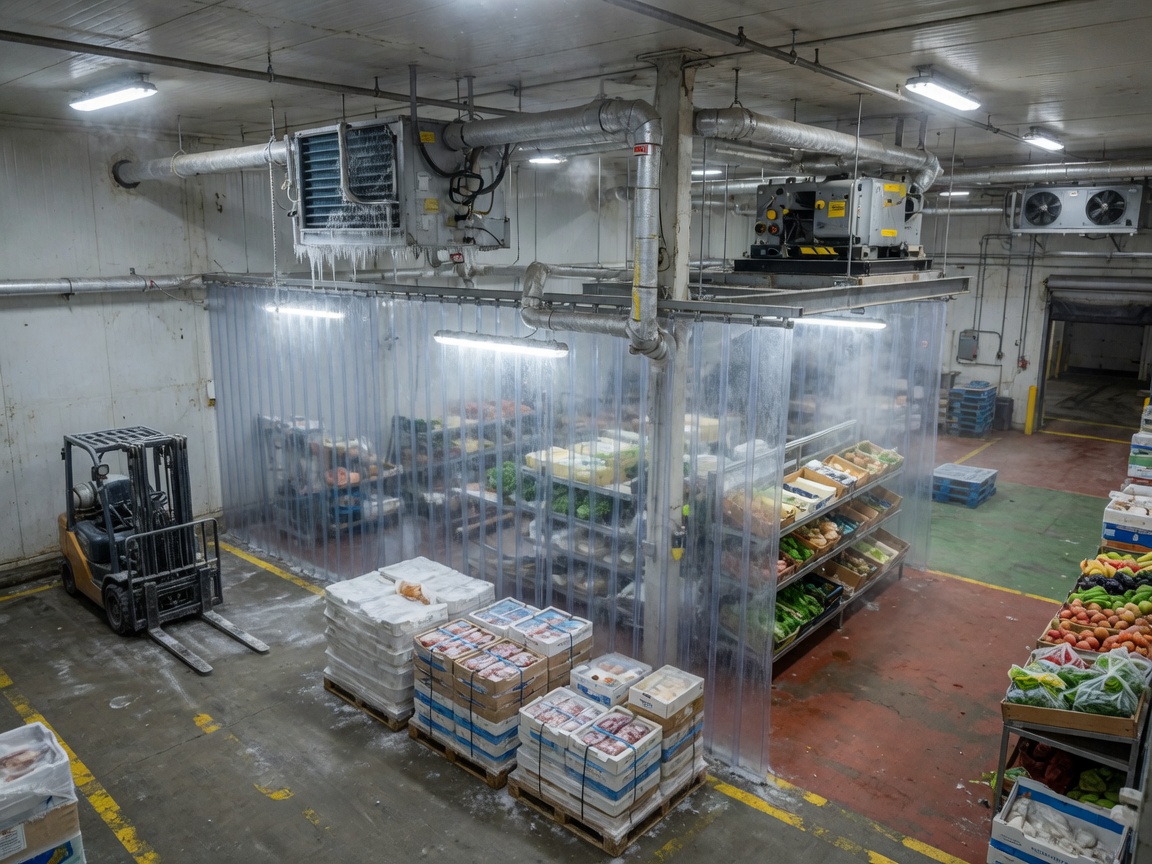
One important caveat: controlled atmosphere (CA) storage, which adjusts both temperature and oxygen/CO₂ ratios, is specialized and typically justified only for high-value produce like apples, pears, and avocados destined for long-term chilled distribution. The added cost — often 30–50% above standard chilled rooms — requires clear volume justification.
Build vs. lease vs. third-party cold storage: U.S. cost comparison
This is one of the most critical — and most poorly documented — decisions facing U.S. SMBs and startups entering the cold chain. The answer depends heavily on your volume certainty, growth timeline, and capital structure.
Breaking down the three models
Build (own): Upfront capital investment of $500,000 to $3M+ depending on size and spec. Full operational control, custom temperature zones, and long-term asset value. Payback period typically 7–12 years. Best suited for businesses with stable, high-volume perishable goods storage needs and long-term real estate strategy.
Lease (dedicated space): Monthly costs typically range from $8 to $25 per pallet position, depending on location and temperature class. Lower upfront exposure, but lease terms often lock you in for 3–5 years and limit customization. A mid-size food distributor in the Midwest can expect to pay $18,000–$45,000 per month for a 1,000-pallet frozen storage lease in 2026.
Third-party logistics (3PL) cold storage: Pay-per-pallet pricing ranging from $12 to $35 per pallet per month, plus handling fees of $3–$8 per pallet move. No capital commitment. Maximum flexibility. The trade-off is reduced control over temperature excursion response times and potential SKU prioritization issues during peak seasons.
Which model fits your business stage?
Based on actual case analysis from U.S. food distribution startups, companies processing fewer than 300 pallets per month should default to 3PL cold storage. The cost-per-pallet economics only shift in favor of building or leasing dedicated space once you consistently exceed 600–800 pallets per month with predictable seasonal patterns. Of course, there are exceptions — a pharmaceutical company requiring strict GDP compliance may find 3PL facilities inadequate regardless of volume, simply because the audit trail and temperature accountability standards are too difficult to enforce contractually.
"The single biggest mistake cold chain newcomers make is building owned infrastructure too early. Capital locked in refrigeration assets before volume is proven is capital that cannot fund growth." — Cold Chain Federation (industry consensus position, 2026 guidance)
FDA and USDA compliance requirements for cold storage
U.S. regulatory compliance is non-negotiable for any commercial cold storage operation handling food or pharmaceuticals. Yet it is the area most frequently glossed over in competitor content — a gap that has real consequences for businesses during FDA inspections.
Key federal regulations you must understand
The FDA Food Safety Modernization Act (FSMA), specifically the Preventive Controls for Human Food rule (21 CFR Part 117), requires that temperature-controlled storage facilities implement written food safety plans, conduct hazard analysis, and maintain continuous temperature monitoring records. For refrigerated foods, the rule mandates holding temperatures at or below 41°F (5°C) unless scientific data supports a different specification.
Under 21 CFR Part 110 (Current Good Manufacturing Practice), facilities must demonstrate that refrigeration equipment is adequate to maintain food at safe temperatures and that temperature monitoring devices are calibrated at appropriate intervals. Failure to produce calibration logs during an inspection is treated as a critical violation.
For USDA-regulated products — particularly meat, poultry, and egg products — cold storage facilities must comply with 9 CFR Part 381 and 9 CFR Part 416, which govern sanitation and temperature control requirements for FSIS-inspected establishments. These regulations require that ready-to-eat products be held at 40°F (4.4°C) or below.
Practical compliance steps for cold storage operators
- Install continuous electronic temperature monitoring with automated alerts for excursions exceeding ±2°F from setpoint.
- Maintain calibration records for all temperature monitoring devices — quarterly calibration is the industry standard accepted by FDA auditors.
- Document a written Preventive Controls plan (PCQI-certified) identifying temperature as a process control measure.
- Establish a corrective action procedure specifying what happens to product when a temperature excursion is detected and recorded.
- Conduct annual mock FDA audits using the FDA's standard inspection checklist to identify gaps before a real inspection occurs.
- For pharmaceutical cold rooms, additionally comply with USP <1079> guidelines for Good Storage and Distribution Practices, and maintain temperature mapping studies for each room.
Explore refrigeration technical standards from ASHRAE for detailed engineering guidance that aligns with regulatory expectations.
Energy efficiency benchmarks and ROI analysis
Refrigeration energy costs represent 40–60% of total cold storage operating expenses. That is not a background detail — it is the primary lever for improving profitability in any cold chain operation.
2026 energy benchmarks for U.S. cold storage facilities
According to recent research, a well-maintained commercial refrigeration system in a temperature-controlled warehousing environment should consume approximately 0.15 to 0.25 kWh per cubic foot per month for standard frozen storage, and 0.08 to 0.14 kWh per cubic foot per month for chilled storage. Facilities exceeding these benchmarks by more than 20% typically have one or more of the following issues: refrigeration compressor fouling, failing door seals, inadequate insulation R-value, or oversized refrigeration capacity running inefficiently at part load.
Industry data suggests that proactive cooling equipment maintenance — specifically annual compressor servicing and quarterly evaporator coil cleaning — reduces energy consumption by 18–28% compared to reactive maintenance practices. That translates directly to dollars: a 20,000 sq ft frozen warehouse paying $0.12/kWh in average U.S. industrial electricity rates can save $28,000–$42,000 annually through optimized maintenance alone.
Simple ROI framework: cost per pallet per month
A practical benchmark for evaluating refrigeration energy efficiency is cost per pallet per month. For owned frozen storage facilities in the U.S., well-operated systems should achieve $4.50–$7.00 in energy cost per pallet per month. Chilled storage should run $2.50–$4.50. If your numbers are significantly above these ranges, an energy audit focused on the refrigeration compressor system, lighting, and door management practices will almost certainly deliver a positive ROI within 24 months.
Cold storage for emerging U.S. sectors
The conventional cold storage conversation focuses on meat, produce, and dairy. But in 2026, three emerging sectors are driving significant new demand for specialized refrigerated logistics and climate-controlled storage infrastructure.
Pharmaceuticals and biologics
The U.S. pharmaceutical cold chain market is expanding rapidly, driven by mRNA-based therapies and biosimilars that require ultra-low temperature storage between -58°F and -112°F. Unlike food, pharmaceutical cold rooms must maintain ±0.5°C tolerances with documented temperature mapping across every cubic foot of the storage space. Facilities serving this sector must hold DEA registration (where applicable), comply with USP <1079>, and maintain continuous data loggers with 21 CFR Part 11-compliant audit trails. The investment is significant, but so is the margin — pharmaceutical cold storage commands 2–4x the per-pallet rate of standard frozen food storage.
Meal-kit delivery and direct-to-consumer food
Companies like HelloFresh and Home Chef have fundamentally reshaped demand for last-mile chilled distribution infrastructure. The unique challenge here is short dwell time combined with multi-temperature SKU requirements — a single outbound shipment may include proteins at 34°F, produce at 40°F, and ambient dry goods. This has driven adoption of hybrid cold storage configurations: modular walk-in coolers within larger ambient warehouses, with dedicated pick lanes for temperature-sensitive SKUs. Real-world cases from fulfillment centers in Dallas and Columbus show that this hybrid model reduces per-order refrigeration costs by 22–31% versus full cold-room build-outs.
Cannabis and botanical extracts
In states where cannabis is legal, cultivators and processors increasingly require climate-controlled storage facility infrastructure to preserve cannabinoid potency and prevent mold. Typical specifications call for 60–65°F with 55–62% relative humidity — a range not served by conventional food refrigeration equipment. This niche is actively being addressed by specialized refrigeration manufacturers, and it represents a genuine emerging opportunity for 3PL operators willing to adapt their facility infrastructure.
Maintenance schedules, equipment lifespan, and failure prevention
This is the area most articles skip entirely — and it is where the real operational risk lives. A refrigeration compressor that fails during a July weekend in Texas is not just an equipment problem. It is a potential six-figure product loss event.
Recommended maintenance schedule for commercial refrigeration systems
Based on industry practice and manufacturer service data, the following schedule reflects the minimum standard for avoiding premature equipment failure:
- Monthly: Inspect door gaskets and hinges; check refrigerant pressure readings; verify temperature controller calibration; clean condenser coils (more frequently in dusty environments).
- Quarterly: Service evaporator fans; test defrost cycle timing and heater operation; inspect electrical connections for corrosion; check refrigerant charge level.
- Annually: Full refrigeration compressor service including oil change and vibration analysis; pressure test the entire refrigerant circuit; replace air filters; conduct full energy audit; re-verify temperature mapping for regulated spaces.
Equipment lifespan expectations and replacement planning
Refrigeration compressors in commercial applications typically last 10–15 years under normal operating conditions. Evaporator coils and condenser units have similar lifespans, provided they are maintained. Walk-in cooler panel insulation, however, can degrade in as few as 8–10 years if moisture infiltration occurs — a failure mode that is invisible until energy bills spike suddenly. Blast freezer components face accelerated wear due to extreme temperature cycling, with compressor replacement intervals often falling in the 7–10 year range.
Proactive replacement planning — budgeting for compressor replacement at year 10 regardless of apparent condition — is far less expensive than emergency procurement. Emergency compressor replacement in a U.S. cold storage facility typically costs 40–70% more than planned replacement, when labor premiums, expedited shipping, and product loss are factored in. Understanding the full scope of refrigeration systems and principles is foundational to building a reliable maintenance program.
2026 trends shaping the cold storage industry
Cold chain management is undergoing its most significant technological transformation in decades. Two forces are driving this simultaneously: the global push toward sustainability and the acceleration of IoT-enabled automation.
Smart technology and IoT monitoring
In 2026, remote real-time temperature and humidity monitoring via IoT sensors is no longer a premium add-on — it is an operational baseline for any serious cold storage operator. AI-driven predictive maintenance platforms now analyze compressor vibration data, refrigerant pressure trends, and energy consumption patterns to forecast equipment failures 2–6 weeks before they occur. Facilities implementing these systems report a 35–50% reduction in unplanned downtime, according to recent industry surveys. The total cost of a full IoT monitoring deployment for a mid-size warehouse is now $15,000–$40,000 — a threshold that pays back within 12–18 months for most operations.
Green refrigerants and regulatory pressure
The global phasedown of high-GWP refrigerants — R22, R404A, and R134a — is accelerating under the Kigali Amendment to the Montreal Protocol. In the U.S., the EPA's AIM Act is driving mandatory transitions away from HFCs. Natural refrigerants, particularly CO₂ (R744) and ammonia (R717), are gaining rapid adoption in new warehouse refrigeration solutions builds, especially in large-scale food preservation technology applications. CO₂ transcritical systems now account for a growing share of new U.S. supermarket refrigeration installations, delivering comparable performance with near-zero global warming impact. The engineering complexity is higher, but the long-term regulatory risk of HFC-based systems makes the transition unavoidable for businesses planning 10+ year infrastructure investments.
Frequently asked questions
Q: What is cold storage and refrigeration, and how does it differ from standard warehousing?
A: Cold storage and refrigeration is the use of mechanical refrigeration systems to maintain controlled low-temperature environments — typically -30°C to +15°C — for preserving perishable goods and pharmaceuticals. Unlike standard warehousing, it requires continuous thermal management, redundant equipment, regulatory compliance, and specialized insulated infrastructure.
Q: How much does it cost to build a cold storage facility in the U.S.?
A: Build costs vary significantly by system type and specification. In 2026, standard chilled storage runs $200–$350 per square foot, frozen storage $250–$450 per square foot, and pharmaceutical cold rooms $500–$900 per square foot. Full facility builds for SMBs typically range from $500,000 to $3M+ depending on size, location, and regulatory requirements.
Q: What temperature is required for FDA-compliant refrigerated food storage?
A: Under FDA FSMA rules (21 CFR Part 117), most refrigerated ready-to-eat foods must be held at or below 41°F (5°C). USDA-regulated meat and poultry products require 40°F (4.4°C) or below per 9 CFR Part 381. Pharmaceutical refrigerated storage must meet USP <1079> requirements, typically 36°F–46°F (2°C–8°C) with documented temperature mapping.
Q: How long do commercial refrigeration compressors typically last?
A: Under normal operating conditions with proper maintenance, commercial refrigeration compressors typically last 10–15 years. Blast freezer compressors may require replacement in 7–10 years due to extreme thermal cycling. Proactive replacement budgeting at year 10 reduces total cost of ownership significantly compared to emergency procurement scenarios.
Q: What are the best refrigerants to use for new cold storage builds in 2026?
A: For new builds in 2026, CO₂ (R744) and ammonia (R717) are the leading natural refrigerant options, driven by EPA AIM Act HFC phasedown requirements. CO₂ transcritical systems are increasingly cost-competitive for food retail and distribution applications. HFC-based systems like R404A carry long-term regulatory risk and are not recommended for new infrastructure investments with 10+ year planning horizons.
In summary, cold storage and refrigeration infrastructure decisions require careful analysis across multiple dimensions: system type, cost model, regulatory compliance, energy efficiency, and long-term maintenance planning. The businesses that get this right — matching system specifications to actual operational requirements, building compliance into their processes from day one, and treating refrigeration as a strategic asset rather than a commodity — consistently outperform those that treat it as an afterthought. Use the frameworks in this guide as a starting point, validate them against your specific volume and commodity profile, and revisit your cost benchmarks annually as market conditions evolve.
Keywords:
Inquiry
If you are interested in our products, please leave your email to receive a free product quote, thank you!
More information


Tel:
Sales E-mail: