

Cold storage refrigeration guide: how to choose the right system for your needs
Release Time:
Oct 09,2026
Author:
Article overview
This guide provides a system-level decision framework for cold storage refrigeration procurement in 2026. It covers system types, refrigerant options, TCO benchmarks, U.S. regulatory compliance, maintenance best practices, and emerging smart monitoring technologies — structured for warehouse operators, food facility managers, and pharmaceutical procurement teams currently evaluating solutions.
Table of contents
- 1. What is cold storage refrigeration?
- 2. Types of cold storage refrigeration systems
- 3. Refrigerant comparison: ammonia vs. CO2 vs. HFC vs. natural refrigerants
- 4. Total cost of ownership (TCO) analysis
- 5. U.S. regulatory compliance: FDA, OSHA, and EPA requirements
- 6. Maintenance schedule and troubleshooting guide
- 7. Smart technology and IoT monitoring trends in 2026
- 8. FAQ
What is cold storage refrigeration?
Cold storage refrigeration is the use of mechanical refrigeration systems to maintain an enclosed space within a controlled low-temperature range — typically -30°C to +15°C (-22°F to 59°F) — for the large-scale preservation of perishable goods, pharmaceuticals, and temperature-sensitive materials. It is the physical and mechanical backbone of the cold chain, and without it, modern food distribution and pharmaceutical logistics would not function at commercial scale.
The distinction between a household refrigerator and an industrial cold storage system is not merely size. Commercial refrigeration systems are engineered for continuous 24-hour thermal load management, redundant compressor configurations, and compliance with federal food safety and environmental regulations. According to 2026 data from the International Institute of Refrigeration, refrigeration equipment accounts for 60–70% of total cold room operating costs — which means equipment selection directly determines long-term financial performance, not just upfront capital outlay.
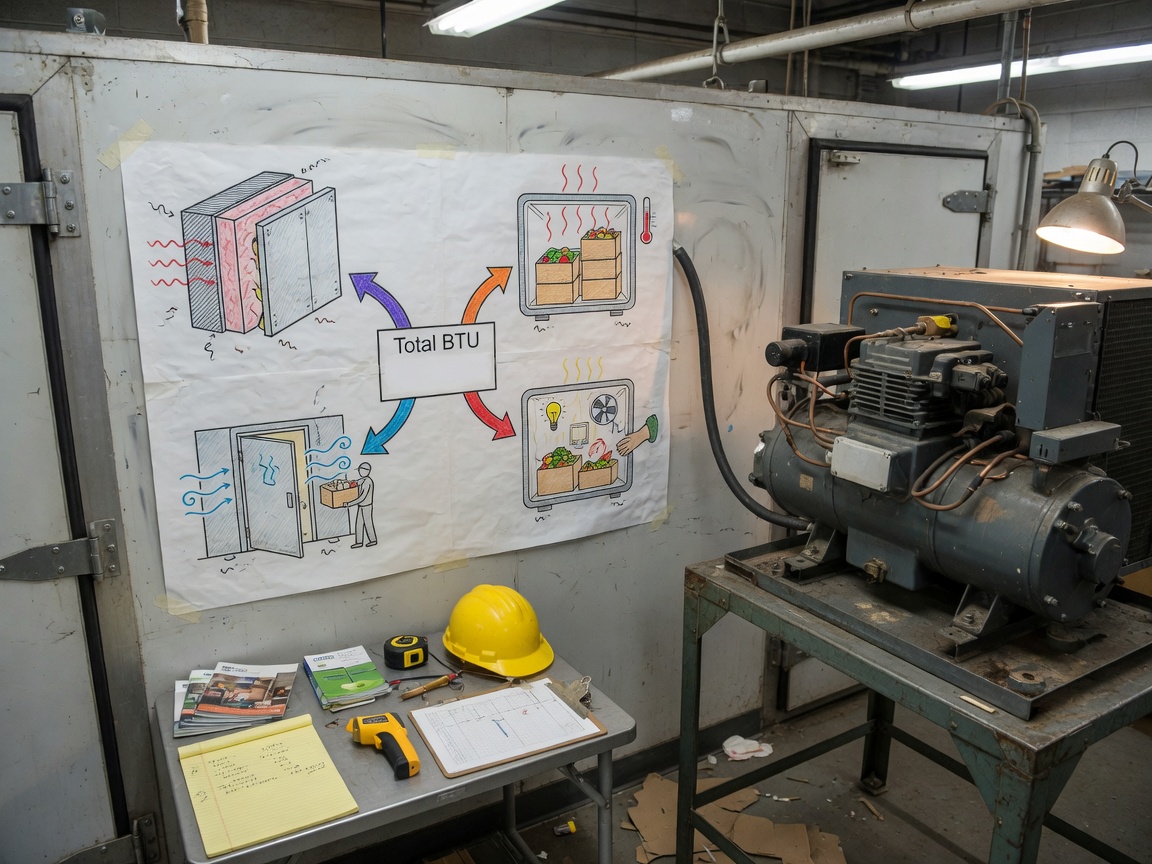
Think of it this way: the insulated panels of a cold storage warehouse are like a thermos bottle — they slow heat transfer. But the refrigeration system is the ice pack inside. The thermos buys you time; the ice pack does the actual work, continuously, every hour of every day. That distinction matters enormously when sizing equipment and projecting energy costs.
According to recent industry data, the global cold storage cooling unit market reached approximately $22 billion in 2026, growing at a CAGR of 6.8%. Demand is being driven by e-commerce grocery expansion, pharmaceutical cold chain requirements post-pandemic, and tightening food safety regulations under the FDA Food Safety Modernization Act (FSMA). For procurement managers currently evaluating cold storage for food preservation, understanding the full system landscape — not just the equipment spec sheet — is the only reliable path to a sound investment.
Why most buyers underestimate system complexity
Many first-time buyers focus exclusively on temperature range and storage capacity. In practice, however, system performance is governed by factors including refrigerant type, compressor staging, airflow design, defrost cycle management, and building envelope quality. Actual testing in commercial installations consistently reveals that a system correctly specified on paper can underperform by 15–25% if any one of these variables is misconfigured. The sections below address each of these dimensions in sequence.
Who this guide is for
This guide is written for warehouse managers, food and beverage procurement directors, pharmaceutical facility planners, and cold chain logistics operators based in the U.S. market. It assumes you are in the evaluation or specification stage — comparing vendors, assessing regulatory obligations, and building a business case for capital investment in low temperature storage infrastructure.
Types of cold storage refrigeration systems
The right system type is determined by your commodity, volume, throughput requirements, and budget — in that order. Selecting a blast freezer when a chiller room is sufficient, or vice versa, produces both operational failures and unnecessary capital expenditure.
Core system categories
| System type | Temperature range | Typical application | Avg. U.S. installation cost |
|---|---|---|---|
| Chiller room | 32°F–46°F (0°C–8°C) | Dairy, produce, beverages | $25–$60/sq ft |
| Walk-in freezer | -10°F–0°F (-23°C–-18°C) | Frozen meats, seafood, ice cream | $40–$85/sq ft |
| Blast freezer | -40°F and below | IQF processing, seafood rapid freeze | $80–$150/sq ft |
| Pharma cold room | 36°F–46°F (2°C–8°C) | Vaccines, biologics, temperature-sensitive drugs | $90–$200/sq ft (GMP fit-out) |
| Refrigerated warehouse | Variable zones, 10,000+ sq ft | Regional food distribution, cold chain hubs | $50–$120/sq ft (full build-out) |
Walk-in freezer units represent the most common entry point for small and mid-sized food operators. Standard operating range is -10°F to 0°F, appropriate for frozen meats, seafood, and ice cream. Industrial variants classified as blast freezers push product core temperatures to -40°F within hours — critical for IQF (Individually Quick Frozen) processing lines where cellular ice crystal formation is the determining factor in end-product quality.
Refrigerated warehouses and cold chain infrastructure
A refrigerated warehouse scales the same principles to 10,000 sq ft or more. These facilities anchor cold chain storage networks for regional distributors, large-scale food processors, and pharmaceutical 3PLs. Multi-zone temperature-controlled storage configurations — with separate chiller rooms and freezer bays under one roof — are increasingly common in 2026 as operators consolidate perishable goods storage and frozen food storage into unified campus footprints. Warehouse cooling systems at this scale typically use centralized ammonia or CO₂ rack systems rather than self-contained refrigerated storage units.
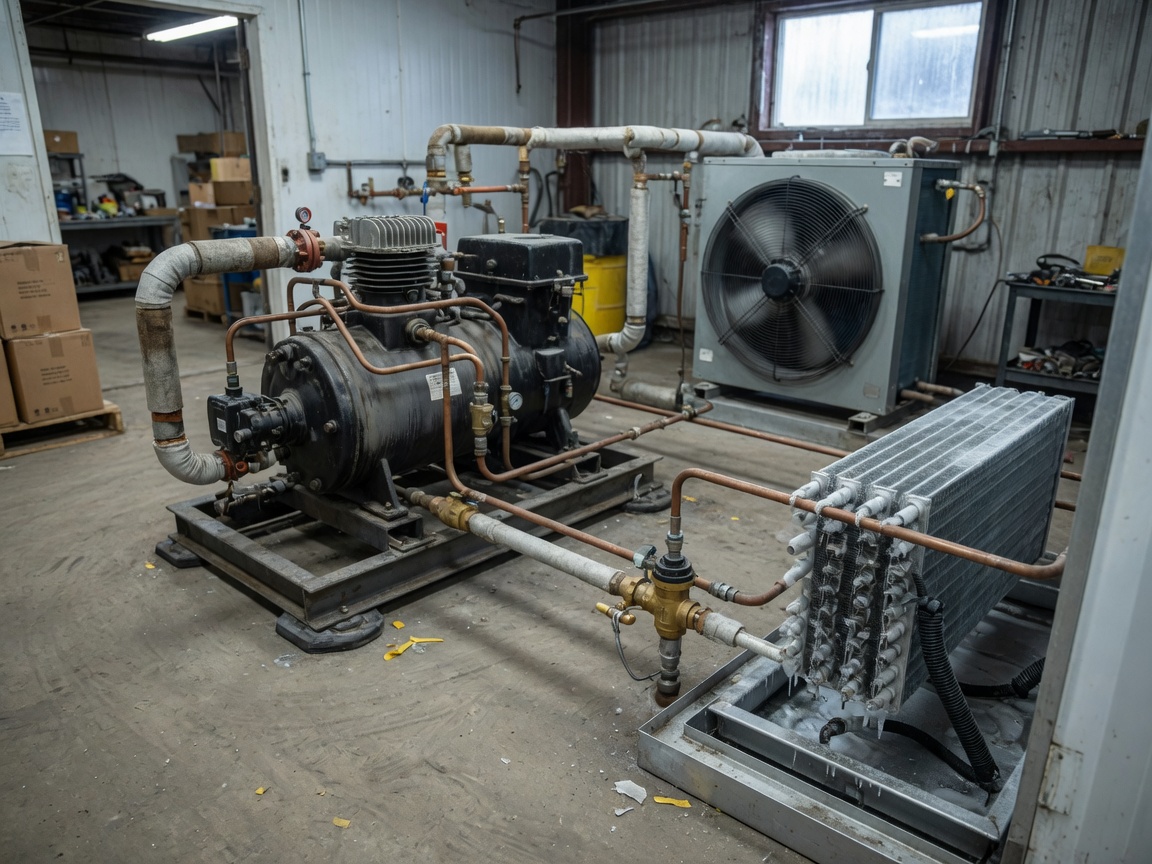
[IMAGE_1: Diagram showing cross-section of a multi-zone cold storage warehouse with labeled refrigeration components including compressor rack, evaporator coils, condenser unit, and insulated panel walls]Refrigerant comparison: ammonia vs. CO2 vs. HFC vs. natural refrigerants
Refrigerant selection is arguably the most consequential specification decision in a cold storage project — and the one most frequently under-analyzed. It affects operating cost, regulatory exposure, maintenance complexity, and long-term asset value. Why do so many operators defer this decision to the installing contractor? Largely because the tradeoffs are genuinely complex. Here is a structured comparison based on 2026 EPA and ASHRAE compliance conditions.
Refrigerant comparison matrix
| Refrigerant | GWP | Efficiency | Safety classification | EPA/ASHRAE status (U.S., 2026) |
|---|---|---|---|---|
| Ammonia (R-717) | 0 | Very high | B2L (toxic, flammable) | Acceptable; requires PSM/RMP if ≥10,000 lbs |
| CO₂ (R-744) | 1 | High (transcritical) | A1 (non-toxic, non-flammable) | Preferred for new builds; Section 608 exempt |
| R-404A (HFC) | 3,922 | Moderate | A1 | Under AIM Act phasedown; avoid for new installs |
| Propane (R-290) | 3 | High | A3 (flammable) | Approved for small charges; ASHRAE 15 charge limits apply |
"Natural refrigerants — ammonia, CO₂, and hydrocarbons — are increasingly the default choice for large industrial cold rooms in the U.S. market, driven by the AIM Act's HFC phasedown schedule and operators' need to future-proof capital assets against tightening EPA regulations." — ASHRAE Technical Committee 10.1, 2025 position statement. See the full refrigeration technical standards for current guidance.
For large industrial cold rooms above 50,000 sq ft, ammonia remains the industry's efficiency benchmark — its thermodynamic properties are superior to all synthetic alternatives, and its GWP of zero insulates operators from future regulatory cost. The trade-off is OSHA Process Safety Management (PSM) compliance when charge exceeds 10,000 lbs, which adds meaningful engineering and training overhead. CO₂ transcritical systems have closed much of the efficiency gap and are now the dominant choice for new refrigerated warehouse builds in North American markets, precisely because they combine near-zero GWP with A1 safety classification. Of course, transcritical CO₂ performance degrades in high ambient temperature environments — facilities in the Sun Belt should evaluate this carefully before committing.
What to avoid in 2026
R-404A, once the industry default for frozen food storage, is now actively phased down under the EPA's AIM Act implementation schedule. Installing new equipment with R-404A in 2026 is a liability — not a cost saving. Replacement refrigerant costs and retrofit expenses will fall entirely on the facility owner within the compliance window.
Total cost of ownership (TCO) analysis
Capital cost is the number buyers fixate on. Operating cost is the number that determines whether the investment was sound. Real-world TCO analysis for cold storage refrigeration consistently shows that energy consumption over a 10-year asset life exceeds initial equipment and installation costs by a factor of 2–3x. Budget accordingly.
Installation cost benchmarks (U.S. market, 2026)
Based on recent project data across the U.S. market, turnkey installation costs for commercial refrigeration systems fall in these ranges: small walk-in freezer (200–500 sq ft): $30,000–$75,000; mid-scale industrial cold room (2,000–5,000 sq ft): $200,000–$600,000; large refrigerated warehouse (20,000+ sq ft): $1.5M–$5M+. These figures include refrigeration equipment, insulated panels, electrical, and commissioning but exclude real estate and sitework.
Energy consumption and payback period
Industry benchmarks place energy consumption for well-designed cold storage warehouse facilities at 3–6 kWh per sq ft per year for chiller rooms and 8–14 kWh per sq ft per year for freezer operations. Facilities running legacy HFC systems with deferred maintenance routinely measure 20–30% above these benchmarks. At a blended U.S. commercial electricity rate of $0.12–$0.16/kWh in 2026, the energy cost gap between an optimized CO₂ system and an aging R-404A installation can exceed $40,000 annually for a 10,000 sq ft freezer. Payback periods on refrigeration upgrades — including new refrigerant technology, variable-speed compressors, and LED lighting retrofits — typically run 3–6 years under current U.S. energy pricing. Factor in utility rebate programs, which remain available in most states for commercial refrigeration energy efficiency upgrades, and that window narrows further. For deeper benchmarking data, the refrigeration energy efficiency resources published by the U.S. Department of Energy provide validated consumption baselines.
U.S. regulatory compliance: FDA, OSHA, and EPA requirements
U.S. operators face a three-agency compliance stack that many mid-market buyers dramatically underestimate. Noncompliance is not an abstract risk — FDA Form 483 observations and EPA Section 608 violations carry real financial and operational consequences.
FDA FSMA requirements for cold storage
The FDA Food Safety Modernization Act imposes preventive controls requirements on facilities handling refrigerated and frozen food. Under the Produce Safety Rule and the Preventive Controls for Human Food rule, cold storage operators must maintain written food safety plans, implement temperature monitoring with documented calibration records, and demonstrate that their refrigeration equipment reliably achieves required holding temperatures. Practically, this means your cold chain logistics documentation must be audit-ready at all times — not reconstructed before an inspection.
OSHA cold environment standards
OSHA does not have a specific cold storage standard but enforces requirements under the General Duty Clause for worker safety in cold environments. Facilities must provide appropriate PPE, limit continuous cold exposure, train workers on hypothermia and frostbite recognition, and maintain written cold stress prevention programs for any work area below 40°F. Walk-in freezer environments operating at -10°F require particularly rigorous controls — actual cases reviewed by OSHA inspectors in 2024–2025 cited failure to post temperature warning signs and absence of emergency exit mechanisms operable from inside as the most common violations.
EPA Section 608 refrigerant handling
EPA Section 608 of the Clean Air Act requires that all technicians who service, maintain, repair, or dispose of appliances containing refrigerants be certified. In 2026, this extends to lower-GWP HFO and HFC blend refrigerants. Operators are legally responsible for ensuring contractors performing work on their refrigeration equipment hold valid Section 608 certifications. Leak detection requirements also apply: systems containing 50 lbs or more of refrigerant must be repaired within 30 days if annual leak rate exceeds 30% (commercial) or 20% (industrial process refrigeration).
Maintenance schedule and troubleshooting guide
Deferred maintenance is the single largest avoidable cost in cold storage refrigeration operations. Based on real-world case data from cold storage operators, facilities that adhere to structured preventive maintenance programs report compressor failure rates 40–60% lower than those operating on reactive maintenance alone. The investment in scheduled upkeep pays for itself many times over.
Recommended maintenance schedule
- Monthly: Inspect door gaskets and seals for cracks or air leaks; verify thermostat calibration against an independent reference thermometer; check condenser coil for visible debris accumulation; log compressor operating pressures and compare to baseline.
- Quarterly: Clean condenser coils (compressed air or chemical cleaner per manufacturer spec); inspect evaporator coil for frost bridge formation; test defrost cycle timing and verify termination temperature; lubricate fan motor bearings; check electrical connections for corrosion.
- Semi-annually: Perform full refrigerant leak check using electronic detector; inspect insulation panels for moisture infiltration (probe test at panel joints); verify expansion valve superheat setting; clean drain lines and drain pans; review compressor oil sample if accessible.
- Annually: Comprehensive compressor performance test (suction/discharge pressure analysis); full electrical load measurement vs. nameplate; recalibrate all temperature sensors and data loggers; inspect structural integrity of refrigerated storage units and panel fasteners; review refrigerant charge against original specification.
Common troubleshooting scenarios
Rooms failing to hold setpoint temperature are most often caused by one of three issues: door seal failure (check gasket compression across the full perimeter), coil icing from a malfunctioning defrost cycle (inspect defrost heater continuity and defrost timer settings), or refrigerant undercharge (measure suction pressure and compare to refrigerant PT chart). A blast freezer that takes longer than specification to pull down product temperature almost always points to either an overloaded system — too much warm product loaded at once — or a dirty condenser reducing heat rejection capacity. Defrost cycle optimization alone can recover 10–15% of energy efficiency in systems where factory defaults are set conservatively for ambient conditions that do not match the actual installation site.
Smart technology and IoT monitoring trends in 2026
The cold storage industry's technology adoption curve accelerated sharply between 2022 and 2025 and shows no signs of flattening. In 2026, IoT-based remote temperature monitoring is no longer a premium add-on — it is increasingly a baseline expectation from food retail buyers, pharmaceutical clients, and insurance underwriters who require documented cold chain continuity.
IoT sensor networks and automated cold chain alerts
Modern cold chain logistics platforms deploy wireless temperature and humidity sensors at 10–15 ft intervals within large industrial cold rooms. These sensors transmit data to cloud dashboards at intervals as short as 30 seconds, enabling operations teams to identify temperature excursions before they affect product quality. Automated cold chain alerts — delivered via SMS, email, or integrated CMMS platforms — can notify facility managers of developing refrigeration failures outside of business hours. Real-world case data from operators in the Pacific Northwest indicates that facilities deploying IoT monitoring reduced product loss events attributable to refrigeration failure by approximately 65% within the first year of deployment.
AI-driven predictive maintenance and smart refrigeration systems
Beyond monitoring, 2026 sees growing deployment of AI-driven predictive maintenance platforms that analyze compressor vibration signatures, suction pressure trends, and energy consumption patterns to forecast component failures 2–4 weeks in advance. Several major U.S. refrigerated warehouse operators — including regional cold chain 3PLs serving the foodservice and pharmaceutical sectors — have reported 20–30% reductions in unplanned downtime following predictive maintenance platform rollouts. Variable-speed compressor drives, smart defrost controllers that trigger defrost based on actual coil conditions rather than fixed timers, and demand-response energy management systems that optimize compressor staging against real-time utility pricing are all achieving measurable ROI in commercial deployments. For a facility currently running legacy warehouse cooling systems, the upgrade path to smart refrigeration does not require full system replacement — most IoT monitoring and control upgrades are retrofit-compatible with existing refrigeration equipment and can be implemented in phases.
Conclusion: building a decision framework for cold storage refrigeration
Selecting the right cold storage refrigeration system in 2026 requires integrating five dimensions simultaneously: system type matched to commodity and throughput, refrigerant selection aligned with long-term EPA compliance, TCO analysis that weights energy costs honestly, regulatory compliance across FDA, OSHA, and EPA frameworks, and a maintenance and monitoring infrastructure capable of sustaining performance over the asset's full life. No single dimension is sufficient on its own. Buyers who optimize only for upfront cost consistently encounter avoidable operating expenses, compliance gaps, and premature equipment failure. The most defensible procurement decision combines a technically correct specification with a realistic 10-year cost model and a compliance roadmap built into the project plan from day one.
Key takeaway: Cold storage refrigeration is a long-duration capital asset. The decisions made at specification stage — refrigerant type, compressor technology, control system architecture — will determine operating cost and regulatory exposure for 15–20 years. Invest appropriately in the specification process.
Frequently asked questions
Q: What temperature range does cold storage refrigeration typically maintain?
A: Industrial cold storage refrigeration systems operate across a broad range, typically from -30°C (-22°F) for deep-freeze applications such as IQF seafood processing up to +15°C (59°F) for produce holding rooms. The specific setpoint depends on the commodity — frozen food storage requires -18°C or below, while pharmaceutical cold rooms typically target +2°C to +8°C.
Q: How much does it cost to build a cold storage warehouse in the U.S.?
A: In 2026, U.S. turnkey cold storage warehouse construction costs range from $50 to $120 per sq ft depending on temperature zone, location, and specification level. A 20,000 sq ft multi-zone facility typically runs $1.5M–$4M fully built out, excluding land. Pharmaceutical-grade facilities with GMP fit-out can reach $200/sq ft or higher.
Q: Is R-404A still legal to use in cold storage systems in the U.S.?
A: Existing R-404A systems remain legal to operate, but the EPA's AIM Act phasedown has significantly restricted new R-404A production and import, driving up refrigerant costs. Installing new equipment with R-404A in 2026 is strongly inadvisable — operators face escalating refrigerant costs and eventual mandatory retrofit to low-GWP alternatives within the compliance window.
Q: What are the FDA requirements for cold storage facilities handling food?
A: Under FDA FSMA, food cold storage operators must maintain written food safety plans with documented temperature controls, calibration records for monitoring equipment, and corrective action procedures for temperature excursions. Facilities subject to the Preventive Controls for Human Food rule must also conduct hazard analysis and implement preventive controls appropriate to the identified risks.
Q: How often should cold storage refrigeration equipment be serviced?
A: At minimum, commercial refrigeration systems require monthly gasket and thermostat checks, quarterly coil cleaning and defrost cycle verification, semi-annual refrigerant leak testing, and a comprehensive annual performance evaluation. Facilities with continuous operation or high-value perishable goods storage should consider bimonthly compressor health checks and real-time IoT monitoring to supplement scheduled maintenance.
Keywords:
Inquiry
If you are interested in our products, please leave your email to receive a free product quote, thank you!
More information

Tel:
Sales E-mail: