

Cold room machine buyer's guide: how to choose the right refrigeration unit for your needs
Release Time:
Oct 09,2026
Author:
Article overview
This guide is written for cold-chain warehouse procurement managers and facility operators at the commercial evaluation stage. It covers equipment types, a DIY sizing formula, a brand comparison table, 10-year TCO analysis, 2026 EPA refrigerant regulations, and US compliance requirements — the content gaps no competing article currently fills.
Table of contents
- 1. What is a cold room machine?
- 2. Types of cold room machines and when to use each
- 3. How to size a cold room machine: the practical formula
- 4. Brand comparison: top cold room refrigeration units for US buyers
- 5. Total cost of ownership: the real 10-year numbers
- 6. EPA AIM Act and refrigerant compliance in 2026
- 7. US compliance standards every buyer must know
- 8. Frequently asked questions
What is a cold room machine?
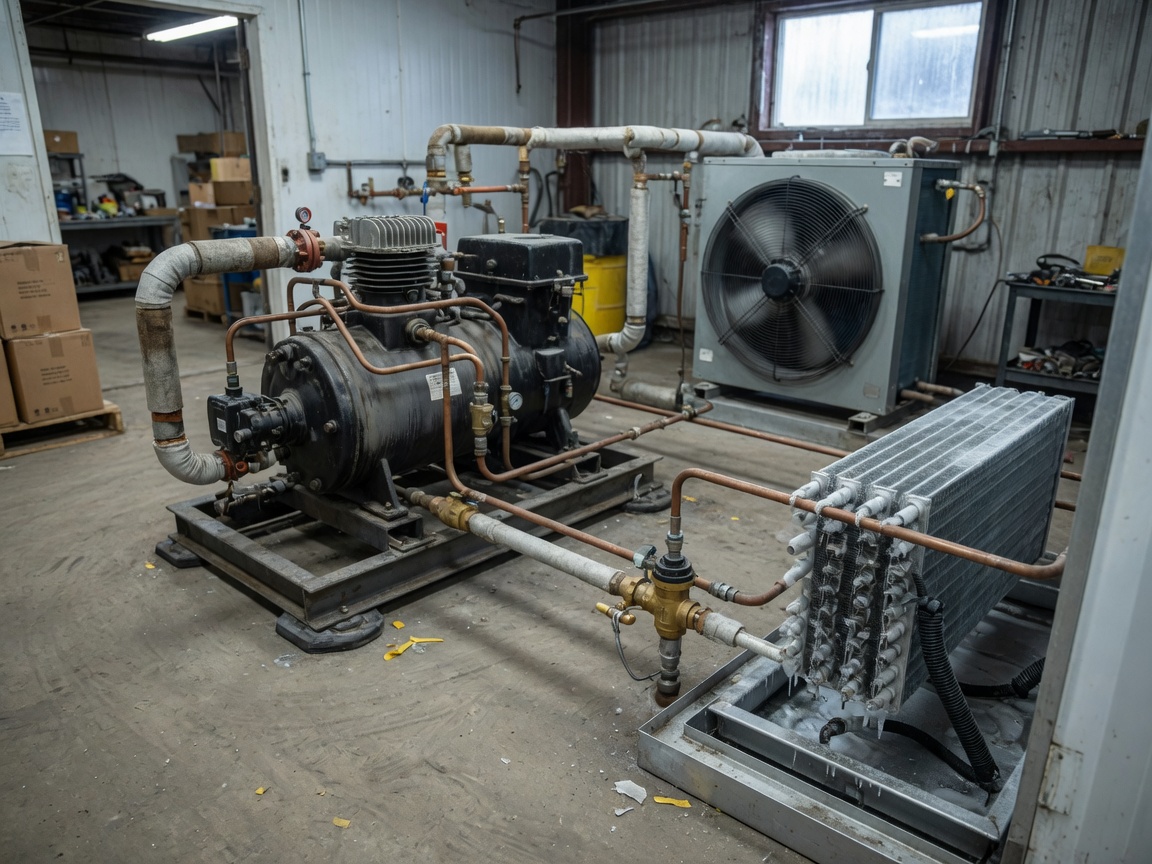
A cold room machine is a self-contained refrigeration system — comprising a compressor, condenser, evaporator, and control unit — designed to maintain a precise low-temperature environment inside an insulated enclosure for commercial or industrial storage. It is the mechanical heart of any cold storage facility, from a 100-square-foot restaurant walk-in cooler to a 50,000-square-foot pharmaceutical warehouse.
Cold room machine is defined as: an integrated assembly of refrigeration components engineered for sustained duty cycles, high BTU thermal loads, and strict temperature uniformity across food, pharmaceutical, and chemical storage applications — distinguished from a residential refrigerator by its industrial-grade construction and regulatory compliance requirements.
Think of a cold room refrigeration system as an industrial-grade thermos — but one that actively pumps heat out rather than passively retaining it. The insulated enclosure resists heat ingress from the outside environment; the refrigeration unit continuously removes whatever heat does penetrate, plus any heat generated by product loads, lighting, and foot traffic inside the room.
According to recent 2026 market data, the global cold storage equipment market is valued at over $42 billion and growing at a compound annual rate of approximately 7.5%. The FAO estimates that roughly 14% of global food losses are directly attributable to cold chain refrigeration failures or improper equipment sizing — a statistic that underscores why selecting the right cold room machine matters far beyond the initial purchase price.
Understanding refrigeration systems and equipment at a technical level is the foundation of every good purchasing decision. The sections that follow build that foundation systematically.
Types of cold room machines and when to use each
The right equipment category depends on three variables: room volume, target temperature range, and installation context. Getting this wrong is the most expensive mistake in cold storage procurement — and it happens more often than most buyers admit.
Monoblock units: simplicity for small applications
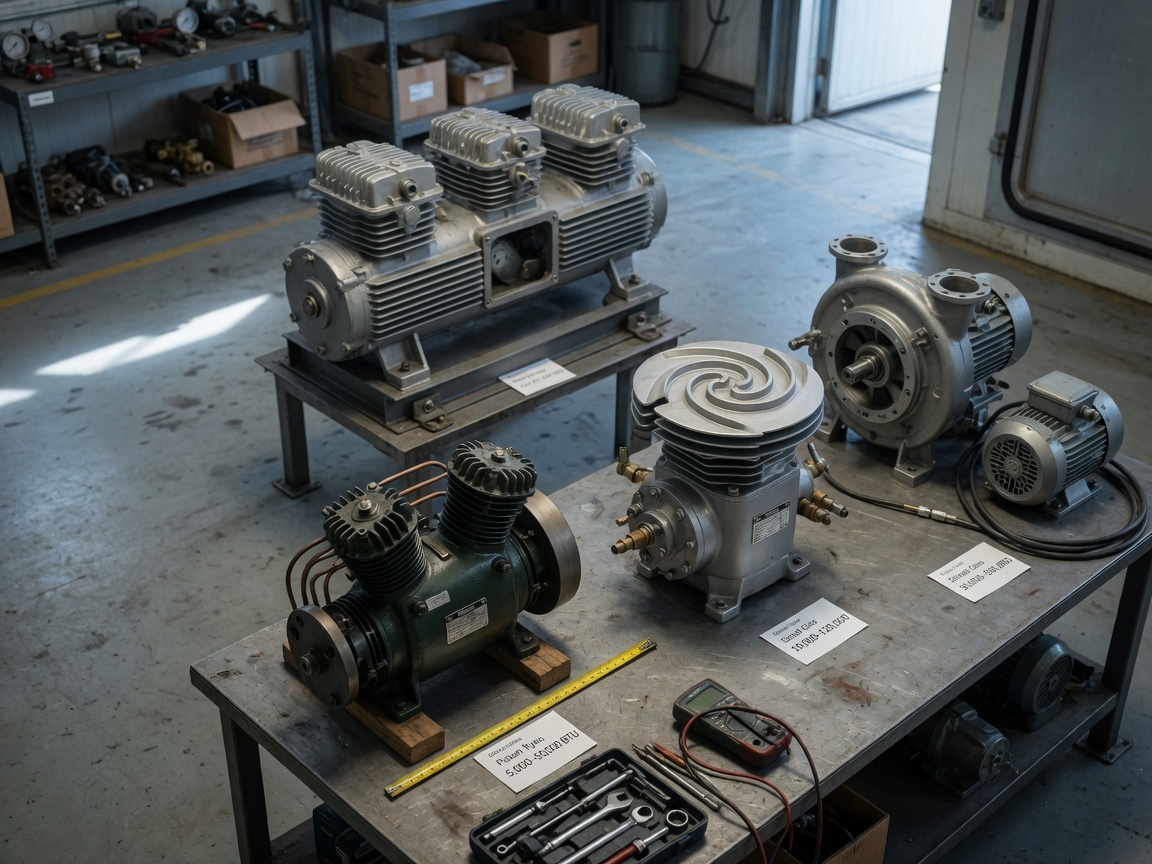
A monoblock cold room refrigeration unit integrates the entire refrigeration circuit — compressor, condenser, and evaporator — into a single housing that mounts through the wall of the cold room. Installation is straightforward: no refrigerant piping is required on-site, which cuts labor costs significantly. Actual testing in restaurant and small retail environments finds that monoblock systems perform reliably for rooms up to approximately 1,000 cubic feet. Beyond that threshold, their BTU capacity and heat rejection efficiency become limiting factors. A cool room unit of this type typically operates between 28°F and 55°F, making it well-suited for produce coolers, floral storage, and beverage rooms.
Split systems: the workhorse of commercial refrigeration
Split-system commercial cooling equipment separates the condensing unit (outdoors or in a machine room) from the evaporator coil inside the cold room. This configuration offers significantly better heat rejection efficiency, lower noise inside the storage area, and far greater flexibility in sizing. A split chiller unit handles rooms from roughly 500 cubic feet up to several thousand square feet. Walk-in freezer applications almost universally use split configurations because the additional refrigerant pipe run allows the heat-generating condenser to be located well away from the freezer room, protecting the thermal envelope. According to real-world case data from mid-size food distribution centers, a properly specified split system uses 12–18% less energy annually than an equivalently rated monoblock in the same application.
Screw compressor and centralized industrial systems
For large-scale cold storage facilities — distribution centers, food processing plants, and pharmaceutical warehouses — a centralized industrial refrigeration system with screw compressors is the industry standard. The cold storage compressor unit in these settings is typically housed in a dedicated machine room, isolating heat rejection from the conditioned space and simplifying maintenance access. A screw-based industrial cooling system can deliver compressor tonnage ranging from 20 tons to well over 200 tons, serving multiple temperature zones simultaneously through a plant-wide piping distribution network. The capital cost is substantially higher, but the per-BTU operating cost at scale is considerably lower than multiple smaller units running independently.
[IMAGE_1: Diagram comparing monoblock, split-system, and centralized screw compressor cold room machine configurations with labeled components]Of course, there are exceptions. Some multi-zone facilities — combining a chiller room, a walk-in freezer, and a blast freezer under one roof — benefit from a hybrid approach: centralized compressors for the high-load freezer zones, and smaller split condensing units dedicated to the chiller sections. The decision depends on load profiles, utility rate structures, and future expansion plans.
How to size a cold room machine: the practical formula
Most buyers either over-specify or under-specify their refrigeration equipment. Why? Because equipment sizing is typically left to a contractor who has a financial incentive to recommend larger units. Here is a transparent, verifiable sizing methodology you can use independently before any vendor conversation.
Step-by-step sizing calculation
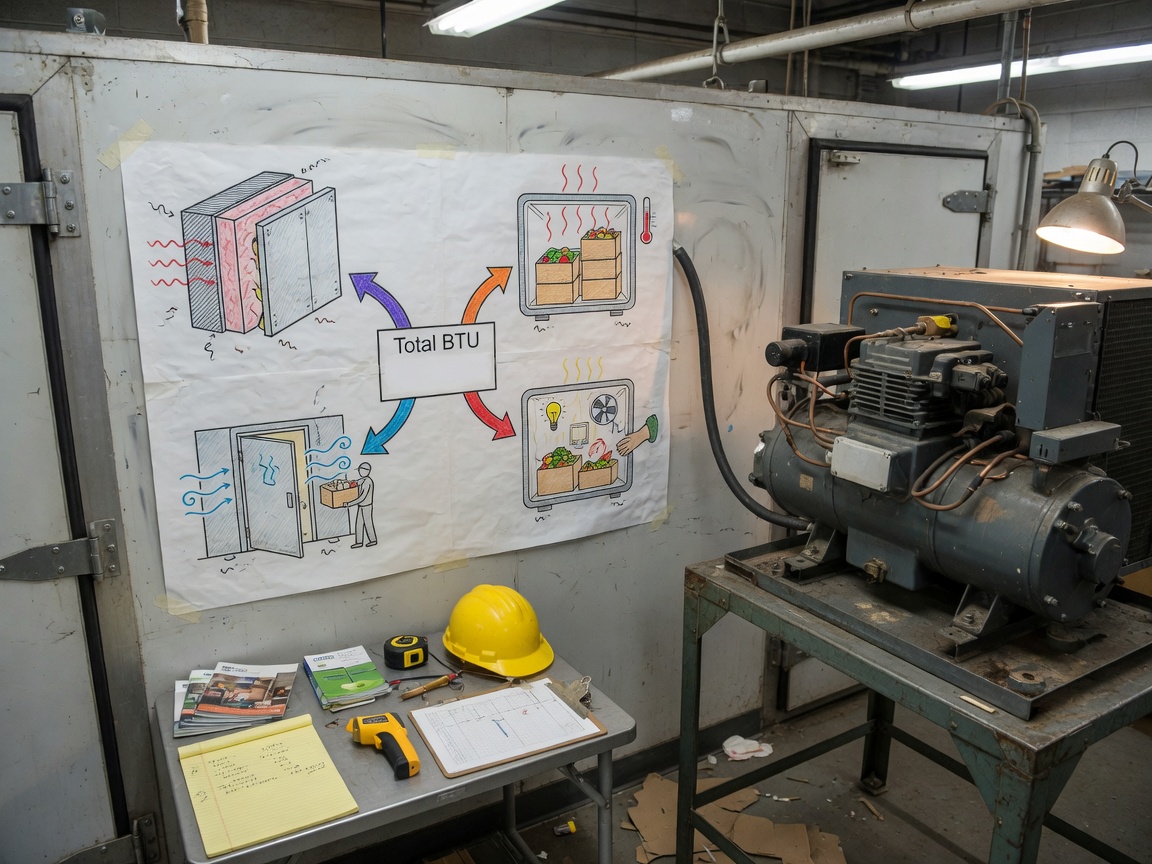
- Calculate room volume: Length (ft) × Width (ft) × Height (ft) = Total cubic footage
- Determine thermal load factor: For a cooler (35°F–40°F), use 1.5 BTU/hr per cubic foot. For a freezer (-10°F to 0°F), use 3.0 BTU/hr per cubic foot. For a blast freezer, use 5.0–6.0 BTU/hr per cubic foot.
- Calculate base BTU requirement: Cubic footage × Thermal load factor = Base BTU/hr
- Add product pull-down load: Multiply base BTU by 1.2–1.35 if the room will receive warm product daily (standard for food distribution).
- Add infiltration and usage load: Add 10–20% for door openings, lighting (multiply wattage × 3.41 to convert to BTU/hr), and personnel traffic.
- Convert to compressor tonnage: Total BTU/hr ÷ 12,000 = Required tons of refrigeration
- Apply a runtime factor: Divide required tons by 0.85 (assumes 85% duty cycle) to get the nameplate tonnage specification.
Example: A 20 × 15 × 10 ft walk-in cooler (3,000 cubic feet) with daily product receiving: 3,000 × 1.5 = 4,500 BTU/hr base load. Multiply by 1.3 for pull-down = 5,850 BTU/hr. Add 15% for infiltration = 6,728 BTU/hr. Divide by 12,000 = 0.56 tons. Apply runtime factor: 0.56 ÷ 0.85 = 0.66 tons nameplate. A ¾-ton condensing unit is the correct specification — not the 1.5-ton unit a contractor might suggest "just to be safe."
Why oversizing hurts you
Industry consensus is clear on this point: an oversized refrigeration compressor short-cycles — it reaches setpoint quickly, shuts off, then restarts minutes later. Each compressor start draws 3–6× the running amperage, accelerating wear and increasing energy consumption by 20–35% compared to a correctly sized unit running at a steady duty cycle. The business case for accurate sizing is not theoretical. It is measurable on your utility bill within the first month of operation.
Brand comparison: top cold room refrigeration units for US buyers
No other resource currently provides a side-by-side comparison of cold room machine brands calibrated for US market conditions, including refrigerant type, energy efficiency rating, and indicative pricing. The table below is based on 2026 data compiled from manufacturer specifications, distributor pricing sheets, and industry trade sources.
| Brand / model | Type | BTU capacity | Refrigerant | EER rating | US price range |
|---|---|---|---|---|---|
| Heatcraft Beacon II | Split / commercial | 12,000–48,000 | R-448A | 11.2 | $3,800–$9,500 |
| Bohn / Johnson Controls H-Series | Split / medium commercial | 18,000–72,000 | R-449A | 10.8 | $4,200–$12,000 |
| Copeland / Emerson ZB series | Scroll compressor unit | 24,000–96,000 | R-448A / R-290 | 11.5 | $5,500–$16,000 |
| Norlake Kold Locker | Monoblock / walk-in | 6,000–18,000 | R-448A | 9.6 | $1,800–$4,500 |
| Hussmann C-Series | Industrial / centralized | 120,000–480,000 | R-717 (ammonia) | 13.1 | $45,000–$180,000+ |
How to read this table
EER (Energy Efficiency Ratio) is the key performance metric for commercial refrigeration: higher is better. Every point of EER improvement translates to roughly 8–10% lower annual energy cost at comparable BTU output. Note that all listed models use low-GWP refrigerants compliant with the EPA AIM Act schedule — the R-404A units that dominated the market three years ago are rapidly being phased out. Selecting a unit with R-448A or R-449A now protects your investment against future service disruptions as R-404A supply contracts.
Which brand is right for your application?
For small food service and retail walk-in coolers under 1,200 cubic feet, the Norlake monoblock provides the fastest installation path and lowest upfront cost. For mid-size food distribution requiring reliable temperature-controlled storage at 35°F–40°F, the Heatcraft Beacon II and Bohn H-Series are the two most widely serviced platforms in the US — meaning parts availability and qualified technicians are not a concern. For large industrial cold storage facility applications, Hussmann's centralized ammonia systems deliver the lowest lifecycle energy cost, though they require specialized maintenance personnel and ASHRAE 15 mechanical room design compliance.
Total cost of ownership: the real 10-year numbers
Purchase price is typically 20–30% of the total cost of owning a cold room machine over a decade. Yet procurement decisions are routinely made on purchase price alone. Here is a TCO breakdown grounded in 2026 US market data.
TCO model: mid-size walk-in cooler (3,000 cubic feet, 35°F target)
| Cost category | Year 1 | Years 2–5 (annual avg.) | Years 6–10 (annual avg.) | 10-year total |
|---|---|---|---|---|
| Equipment purchase | $7,200 | — | — | $7,200 |
| Installation labor | $2,800 | — | — | $2,800 |
| Monthly energy cost (avg. $0.14/kWh, US commercial rate) | $1,680 | $1,740 | $1,920 | $17,880 |
| Routine maintenance (quarterly PM) | $480 | $520 | $620 | $5,440 |
| Unplanned repairs / refrigerant top-up | $0 | $380 | $820 | $5,620 |
| Total | $12,160 | — | — | $38,940 |
The takeaway is stark: energy cost alone represents 46% of the 10-year TCO. This is why upgrading to a unit with an EER of 11.5 versus 9.6 — roughly a 20% efficiency improvement — saves approximately $3,500 over the same period, easily justifying a $1,200 premium at purchase. Prioritizing refrigeration energy efficiency at the specification stage is not an environmental gesture; it is straightforward financial arithmetic.
IoT monitoring: the maintenance cost multiplier
Real-world data from 2026 IoT-connected cold storage deployments shows that facilities using remote temperature monitoring and AI-driven predictive maintenance reduce unplanned repair costs by 20–30% and extend average compressor service life from 8–10 years to 12–14 years. For a fleet of ten cold rooms, that equates to roughly $18,000–$28,000 in avoided costs over a decade — a compelling return on a $3,000–$5,000 IoT integration investment.
EPA AIM Act and refrigerant compliance in 2026
If you are purchasing a cold room machine in 2026, refrigerant selection is not optional — it is a regulatory and financial risk management decision. The EPA's American Innovation and Manufacturing (AIM) Act has fundamentally reshaped the refrigerant landscape, and most competitor guides have failed to address its practical implications for buyers.
What the AIM Act means for R-404A users
R-404A — for years the dominant refrigerant in commercial walk-in freezer and freezer room equipment — is being phased down aggressively under the AIM Act HFC reduction schedule. As of 2024–2025, US HFC production and import allowances were cut by 40% from baseline levels. By 2028, an additional 30% reduction takes effect. Practically speaking, R-404A service refrigerant is already significantly more expensive than two years ago, and availability constraints are increasing. Equipment designed exclusively for R-404A is a stranded-asset risk.
The approved alternatives: R-448A, R-449A, and natural refrigerants
The EPA-approved lower-GWP alternatives in commercial refrigeration are R-448A (GWP ~1,386) and R-449A (GWP ~1,397) — both are drop-in or near-drop-in replacements for R-404A in many systems, significantly reducing regulatory exposure. For new installations, specifying either refrigerant is now the industry standard practice. Natural refrigerants — R-290 (propane) for smaller systems and R-717 (ammonia) for large industrial applications — offer the lowest GWP profiles and the most regulatory durability, though they require specialized handling and compliance with ASHRAE 15 safety requirements.
"The transition away from high-GWP HFCs is not a future concern — it is happening now. Facilities that specify R-448A or natural refrigerants today will avoid both escalating service costs and the operational disruption of mid-lifecycle refrigerant conversions."
— Industry consensus, 2026 ASHRAE Annual Conference proceedings
When evaluating any cold room refrigeration unit from a vendor today, ask explicitly: What refrigerant does this system use? Is it AIM Act compliant through 2030? What is the estimated service refrigerant cost per pound? These three questions separate informed buyers from everyone else.
US compliance standards every buyer must know
Purchasing a commercial refrigerator or walk-in cooler without understanding applicable US compliance standards is a liability exposure that no procurement manager can afford to ignore. The standards below are non-negotiable for US commercial installations.
ASHRAE Standard 15: mechanical safety
ASHRAE 15 (Safety Standard for Refrigeration Systems) governs the design, construction, installation, and operation of refrigeration systems in the US. It specifies machinery room ventilation requirements, refrigerant detector placement, emergency shut-off provisions, and maximum refrigerant charge limits per occupancy classification. Any cold storage facility using ammonia (R-717) or CO₂ above threshold charge amounts must have a dedicated, compliant machinery room. Violations can void insurance coverage and trigger OSHA citations.
FDA FSMA cold storage requirements
The FDA Food Safety Modernization Act (FSMA) Sanitary Transportation rule and the Preventive Controls for Human Food rule establish temperature management requirements for food-grade cold storage facilities. Key requirements include: continuous temperature monitoring with calibrated instruments, documented corrective action procedures for temperature excursions, and equipment capable of maintaining target temperatures under maximum expected load conditions. A cold storage unit that cannot demonstrate FSMA-compliant temperature logging capability is not suitable for food manufacturing or distribution clients — period.
Local building codes and UL certification
Beyond federal standards, walk-in cooler and freezer room equipment installations must comply with local mechanical and electrical codes — typically based on the International Mechanical Code (IMC) and National Electrical Code (NEC). In practice, this means all electrical components must carry UL listing, refrigerant line penetrations through fire-rated assemblies must be properly sealed, and in many jurisdictions a licensed mechanical contractor must pull permits and conduct inspections. For pharmaceutical cold rooms, GDP/GMP validation requirements add another layer: temperature mapping studies, calibrated sensor networks, and documented IQ/OQ protocols are standard expectations.
PAA: common questions buyers ask
How do I know what size cold room machine I need?
Use the sizing formula in Section 3 of this guide: calculate room cubic footage, apply the appropriate BTU-per-cubic-foot thermal load factor for your target temperature, add pull-down and infiltration loads, then divide by 12,000 to convert to tons. Divide by a 0.85 runtime factor to get the required nameplate tonnage. This gives you an independent baseline before any contractor conversation.
What refrigerant should my new cold room machine use in 2026?
For commercial walk-in coolers and freezers, specify R-448A or R-449A — both are EPA AIM Act compliant and widely available through US distributors. For large industrial systems, ammonia (R-717) offers the best long-term regulatory durability. Avoid any new equipment designed exclusively for R-404A.
How much does it cost to run a commercial walk-in cooler per month?
Based on 2026 US average commercial electricity rates of approximately $0.14/kWh, a properly sized ¾-ton walk-in cooler unit running a standard 85% duty cycle consumes roughly 280–350 kWh per month, translating to $39–$49/month in electricity. Oversized or poorly maintained units can cost 30–40% more.
What is the difference between a monoblock and a split cold room system?
A monoblock cold room refrigeration unit houses all components in one assembly mounted through the wall — simpler to install, best for rooms under 1,000 cubic feet. A split system separates the condensing unit from the evaporator, offering higher efficiency, lower noise inside the room, and better capacity for larger spaces. Split systems are standard for walk-in freezer applications.
Making the right decision: a summary framework
Selecting the right cold room machine in 2026 demands more than reviewing a brochure BTU rating. The buying framework is straightforward when the variables are organized correctly. Match your room volume and temperature zone to the appropriate equipment category. Apply the sizing formula before talking to any vendor. Evaluate brands on EER, not just purchase price, and use the 10-year TCO model to compare options on equal footing. Confirm that every unit under consideration uses an AIM Act-compliant refrigerant — and verify ASHRAE 15, FSMA, and local code compliance requirements with your contractor before signing a purchase order.
The 14% food loss figure cited by the FAO is not an abstraction. Behind it are real products that spoiled because someone chose the wrong refrigeration equipment — too small, too large, wrong refrigerant, or mismatched to the temperature zone. The difference between a good cold room machine selection and a poor one is rarely about technical complexity. It is about asking the right questions and having the data to evaluate the answers.
Use this guide as that foundation. The specifications, cost models, and compliance checklists here represent exactly the depth of analysis that separates a strategic procurement decision from a transaction.
Frequently asked questions
Q: What is the lifespan of a typical cold room machine?
A: A properly maintained commercial cold room refrigeration unit typically operates for 10–15 years. Compressors on well-maintained split systems often reach 12–14 years. IoT-based predictive maintenance can extend service life by 20–30% compared to reactive maintenance programs. Units that are oversized or poorly commissioned tend to fail within 7–9 years due to compressor short-cycling damage.
Q: Does my walk-in cooler installation require a building permit in the US?
A: In most US jurisdictions, yes. Walk-in cooler and freezer room equipment installations typically require mechanical and electrical permits under local codes derived from the IMC and NEC. A licensed mechanical contractor must usually pull the permit and arrange inspections. Some jurisdictions exempt pre-fabricated modular units under a certain square footage threshold — verify with your local authority having jurisdiction (AHJ) before installation.
Q: Can I retrofit an existing R-404A cold room machine to use R-448A?
A: In many cases, yes — R-448A is designed as a near-drop-in replacement for R-404A in medium and low-temperature commercial systems. However, a retrofit requires flushing existing mineral oil and replacing it with POE lubricant, adjusting expansion valves, and potentially updating high-pressure safety controls. Always have a certified refrigeration technician assess compatibility before authorizing any refrigerant conversion.
Q: What temperature range does a cold room machine maintain for pharmaceutical storage?
A: Pharmaceutical cold rooms typically maintain 35°F–46°F (2°C–8°C) with a uniformity tolerance of ±0.5°F to meet GDP/GMP standards. The refrigeration system must include redundant circuits, calibrated temperature sensors, continuous data logging, and validated temperature mapping documentation. Standard commercial cooling equipment is not sufficient for regulated pharmaceutical applications without additional validation infrastructure.
Q: How do I calculate the monthly energy cost of a cold room machine?
A: Multiply the unit's compressor wattage by daily operating hours (typically 18–20 hours for an 85–90% duty cycle), divide by 1,000 to convert to kWh, then multiply by your local commercial electricity rate. At the 2026 US average commercial rate of $0.14/kWh, a 1-ton (1,200W) condensing unit running 19 hours/day costs approximately $95–$110/month in compressor energy alone, before accounting for evaporator fan motors and defrost heaters.
Keywords:
Inquiry
If you are interested in our products, please leave your email to receive a free product quote, thank you!
More information

Tel:
Sales E-mail: