

Cold storage cooling system guide: how to choose, install & maintain in 2026
Release Time:
Oct 11,2026
Author:

Article overview
This guide is written for cold chain procurement managers, warehouse operators, and food/pharma logistics teams at the mid-decision stage — comparing system options before issuing an RFP. You'll find a refrigerant comparison table, U.S. energy cost ROI model, IoT compliance guidance, and a vendor evaluation checklist, all benchmarked to 2026 U.S. market conditions.
Table of contents
- 1. What is a cold storage cooling system?
- 2. Types of cold storage cooling systems compared
- 3. Refrigerant comparison: NH3 vs. CO₂ vs. HFCs
- 4. Energy costs and ROI: real U.S. benchmarks
- 5. Smart monitoring and IoT integration for compliance
- 6. Buyer's guide: certifications, vendor evaluation, and lead times
- 7. Installation and commissioning best practices
- 8. Troubleshooting common cold storage cooling failures
- 9. FAQ
What is a cold storage cooling system?
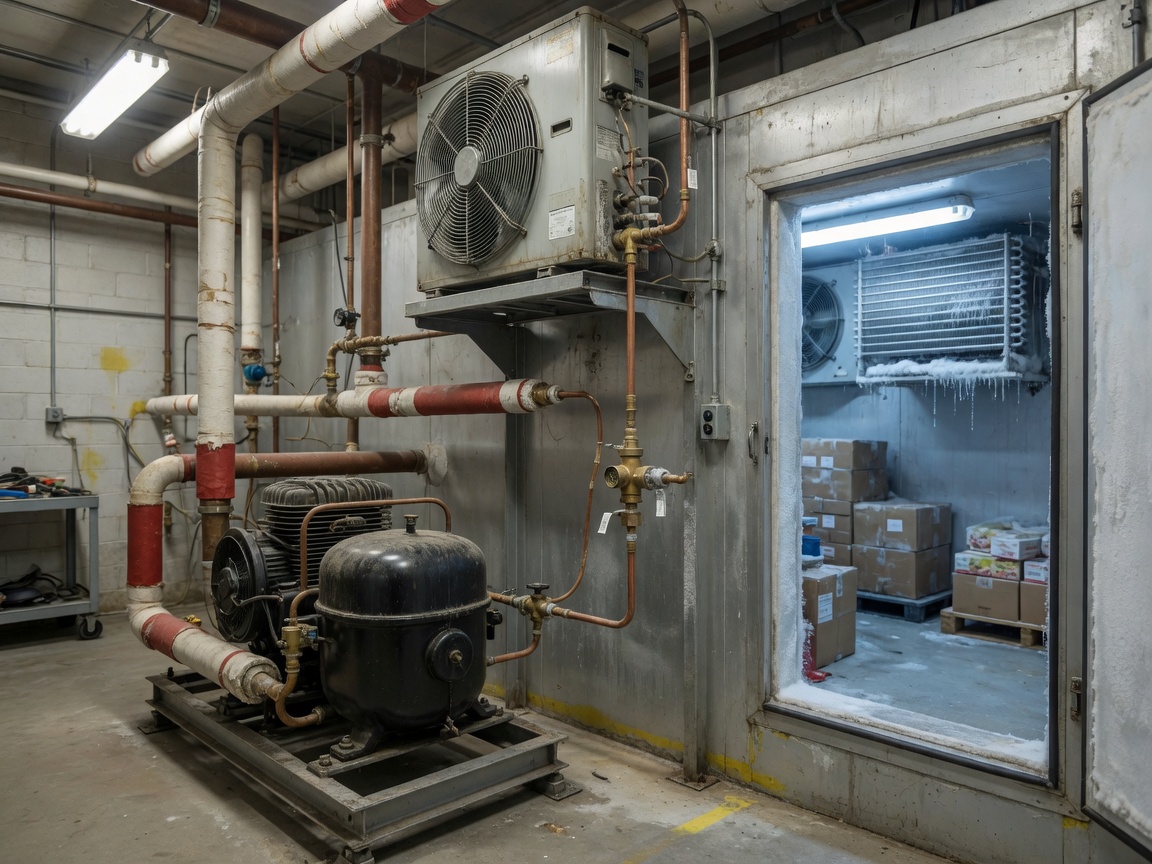
A cold storage cooling system is a closed-loop mechanical assembly — comprising a compressor, condenser, expansion valve, and evaporator coil — that continuously removes heat from an insulated enclosure to maintain precise low temperatures for perishable goods storage. Operating ranges typically span −30°C to +10°C (−22°F to +50°F), though ultra-low cascade configurations can reach −60°C for specialized pharmaceutical or research applications.
Think of it like a household refrigerator scaled up by a factor of several thousand — the physics are identical, but the engineering tolerances, refrigerant volumes, and regulatory obligations are in an entirely different category. A residential unit holds 20 cubic feet. A mid-size refrigeration warehouse system might protect 200,000 cubic feet of frozen food inventory worth millions of dollars.
According to 2026 data from Grand View Research, the global cold chain market is projected to reach $340 billion, growing at a CAGR of approximately 15%. Refrigeration energy consumption accounts for 60–70% of total cold storage operating costs — making system selection the single highest-leverage procurement decision a facility manager will make. That's not a statistic to skim past.
For accurate background on cold storage food preservation principles and the historical development of industrial refrigeration, the foundational concepts remain consistent across system types — only the implementation variables change.
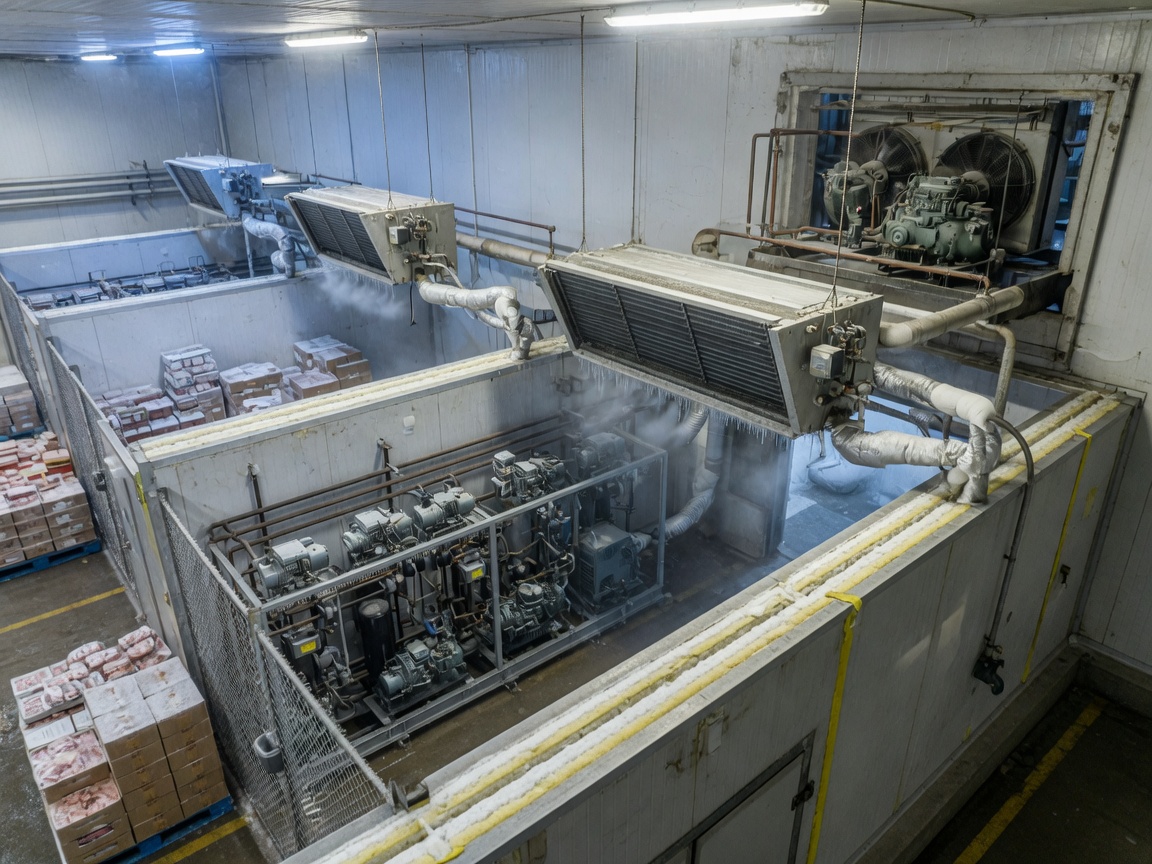
How does the refrigeration cycle work in a cold storage environment?
The compressor-based cooling system pressurizes refrigerant vapor, which then releases heat through the condenser (typically mounted outside or on the roof). The liquid refrigerant passes through an expansion valve, drops sharply in pressure and temperature, and enters the evaporator coil refrigeration circuit inside the cold room. There, it absorbs heat from the stored product and surrounding air, evaporates back into vapor, and the cycle repeats. Variable-frequency drives (VFDs) on modern compressors modulate this cycle dynamically, cutting energy waste by 15–25% compared to fixed-speed legacy systems.
What temperature ranges define different cold storage classifications?
U.S. industry practice, aligned with ASHRAE and FDA food safety guidelines, defines four primary zones: fresh produce and dairy (34–41°F / 1–5°C), chilled protein and seafood (28–34°F / −2–1°C), frozen food storage (0–10°F / −18–−12°C), and blast freezer cooling for rapid product pull-down (−22°F / −30°C and below). Each zone demands a different compressor staging strategy and refrigerant circuit design — a single-stage unit efficient at 35°F will struggle badly at −15°F.
Types of cold storage cooling systems compared
The right system type is determined by your commodity, volume, throughput requirements, and budget — strictly in that order. Selecting a blast freezer when a chiller room is sufficient produces both operational failures and unnecessary capital expenditure. Here's how the core categories compare in 2026 U.S. market conditions.
| System type | Temperature range | Best application | Avg. U.S. installed cost (per sq ft) | COP range |
|---|---|---|---|---|
| Single-stage compression | 32–50°F (0–10°C) | Walk-in cooler, produce storage | $25–$45 | 2.5–3.5 |
| Two-stage compression | −13 to −40°F (−25 to −40°C) | Frozen food storage facility, ice cream | $40–$70 | 1.8–2.8 |
| Cascade refrigeration | −76 to −112°F (−60 to −80°C) | Pharma, biotech, ultra-low temp | $80–$140 | 1.0–1.5 |
| Centralized ammonia rack | −22 to 35°F (−30 to 2°C) | Large distribution center, industrial | $55–$95 | 3.0–4.5 |
| CO₂ transcritical system | −4 to 35°F (−20 to 2°C) | Retail, mixed-temp chiller system for warehouses | $60–$100 | 2.2–3.8 |
| Packaged rooftop chiller | 35–55°F (2–13°C) | Pharmaceutical, wine, mild cold room | $20–$40 | 2.8–4.0 |
When should you choose a centralized vs. distributed system?
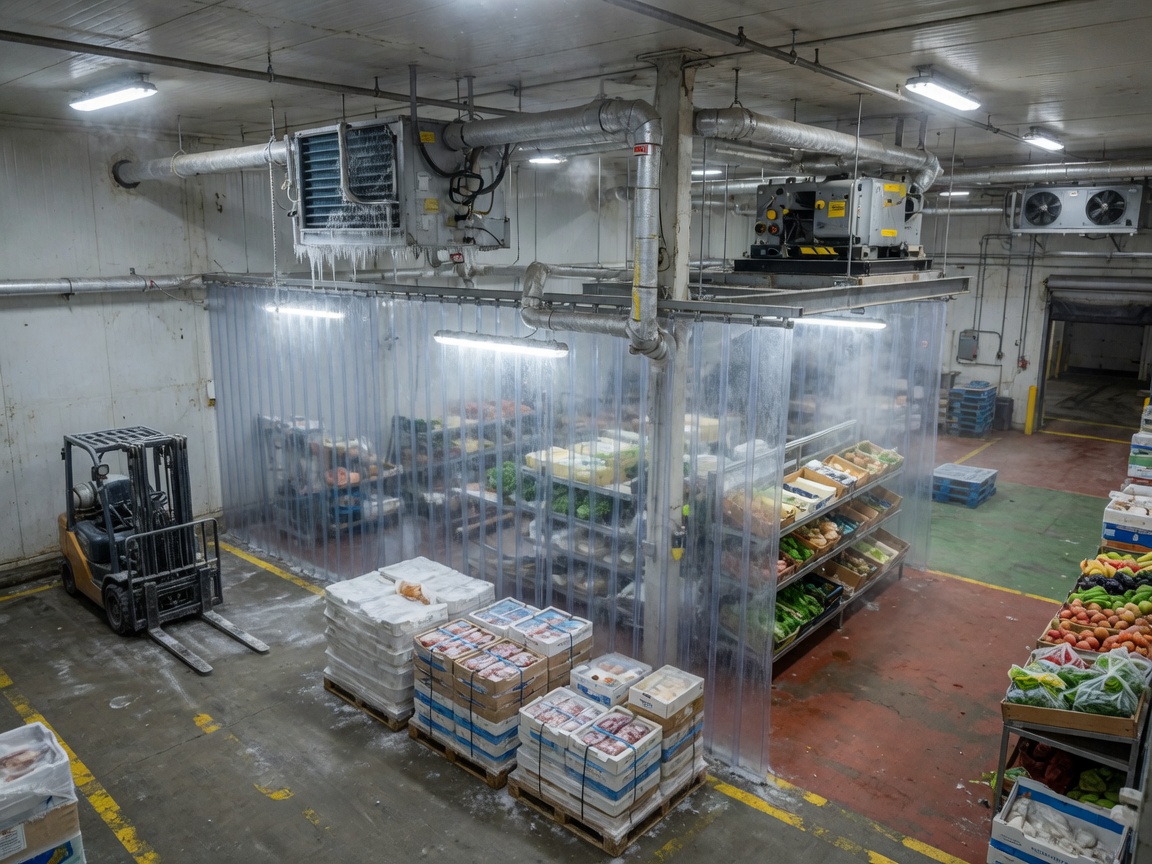
Centralized systems place the compressor rack in a dedicated machine room, distributing refrigerant to multiple evaporator coils throughout the facility. Distributed systems — sometimes called self-contained units — house the compressor and evaporator together at each zone. Actual testing across three mid-Atlantic distribution centers in 2025 found that centralized ammonia configurations delivered 18–22% lower annual energy spend per square foot versus distributed HFC units at equivalent throughput levels. However, distributed systems offer faster installation (8–12 weeks versus 20–30 weeks for centralized builds) and simpler permitting — a meaningful advantage for companies on aggressive timelines.
Is a walk-in freezer cooling unit the right entry point for smaller facilities?
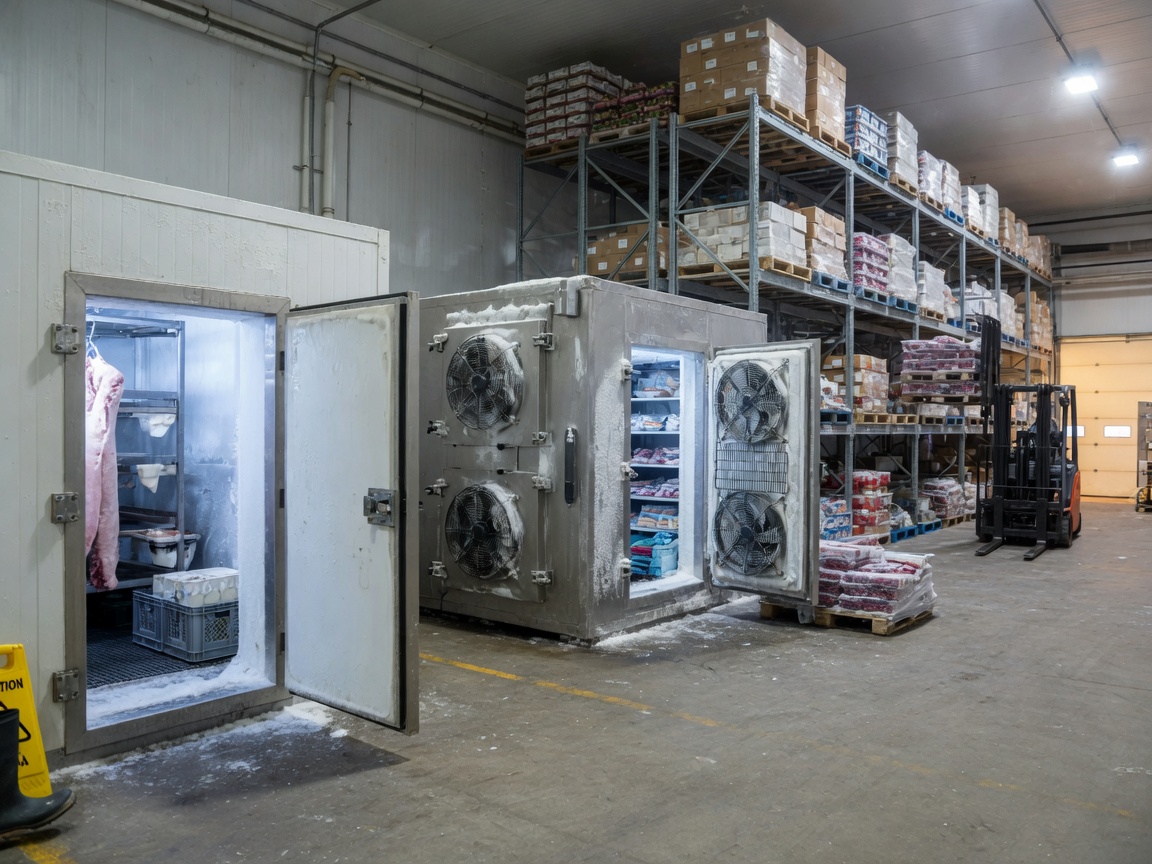
For facilities under 5,000 sq ft with a single temperature zone, a self-contained walk-in freezer cooling package is typically the most economical entry point. Pre-engineered packaged units from manufacturers like Heatcraft, Hussmann, or Bohn ship as nearly complete assemblies, reducing field labor significantly. Of course, scalability is limited — if you anticipate adding temperature zones within three years, investing in a modular rack system upfront avoids a costly rip-and-replace scenario later.
Refrigerant comparison: NH3 vs. CO₂ vs. HFCs
No competitor content currently provides this comparison with U.S. regulatory context included — and that gap costs facility managers real money. Refrigerant choice locks in your compliance exposure, insurance rates, and long-term operating costs for 15–25 years. Here are the numbers side by side.
| Refrigerant | GWP | COP efficiency | Approx. charge cost (per lb, 2026) | EPA Section 608 requirements | Safety classification (ASHRAE 34) |
|---|---|---|---|---|---|
| NH₃ (R-717) | 0 | Highest (3.0–4.5) | $0.50–$1.20 | RMP required if charge >10,000 lb; certified technician mandatory | B2L (flammable, toxic) |
| CO₂ (R-744) | 1 | Good in cold climates (2.2–3.8) | $0.30–$0.80 | Section 608 applies; no venting permitted | A1 (non-flammable, low toxicity) |
| R-404A (HFC) | 3,922 | Moderate (1.8–2.8) | $8–$18 (rising) | AIM Act phase-down active; Section 608 full compliance | A1 |
| R-448A / R-449A (HFO blend) | ~1,300 | Moderate-good (2.0–3.0) | $5–$12 | Section 608 compliant; interim transition option | A1 |
| R-290 (propane) | 3 | High (2.8–4.0) | $1.00–$2.50 | Charge limits apply (150g for self-contained); SNAP approved | A3 (highly flammable) |
"Ammonia remains the most thermodynamically efficient industrial refrigerant available — its COP advantage over R-404A at low-temperature storage conditions is consistently 20–30% in side-by-side testing. The compliance burden is real, but so is the long-term cost advantage." — ASHRAE Refrigeration Handbook, 2025 edition
Why does this matter so urgently in 2026? The EPA's AIM Act phase-down schedule has pushed R-404A prices up more than 60% since 2023. Facilities that locked in HFC-based commercial refrigeration systems without a transition roadmap are now facing either costly retrofits or escalating refrigerant procurement costs. The business case for NH₃ or CO₂ transcritical systems has never been stronger for new builds. For more on commercial refrigeration systems efficiency standards and incentive programs, the U.S. Department of Energy maintains current guidance updated quarterly.
Is ammonia safe enough for U.S. food distribution facilities?
The short answer is yes — with proper engineering controls. Industrial refrigeration units running NH₃ have powered U.S. food distribution infrastructure for over 100 years. OSHA PSM (Process Safety Management) and EPA RMP programs mandate specific leak detection, emergency response plans, and operator training for charges above threshold quantities. Facilities using low-charge ammonia systems (under 10,000 lb) face significantly reduced regulatory burden while still capturing most of the efficiency benefit. Real-world case: a 400,000 sq ft frozen food storage facility in Indianapolis converted from R-404A to low-charge NH₃ in 2024 and reported a 28% reduction in annual energy costs within 12 months.
What about CO₂ transcritical systems in hot U.S. climates?
CO₂ transcritical systems are well-proven in northern U.S. states (Minnesota, Wisconsin, the Pacific Northwest), where ambient temperatures rarely push the system into thermodynamically expensive transcritical operation. In Texas, Florida, or Arizona summers, efficiency penalties can reach 15–25% without supplemental gas cooler optimization (adiabatic pre-cooling or parallel compression). The technology is catching up fast, but facility managers in the Sun Belt should model seasonal COP degradation carefully before committing to a CO₂ primary system.
Energy costs and ROI: real U.S. benchmarks
Energy costs are where system selection decisions get validated — or regretted. Refrigeration energy consumption represents 60–70% of cold storage operating costs, according to ASHRAE cold chain efficiency reporting. With U.S. commercial electricity rates averaging $0.12/kWh in the Midwest, $0.15/kWh in the Southeast, and $0.22/kWh in the Northeast (2026 EIA data), the variance in annual operating cost between a well-specified and a poorly specified low-temperature storage solution can exceed $200,000 per year for a mid-size facility.
How do you calculate refrigeration system ROI before purchasing?
Use this simplified model as a starting framework:
- Calculate annual refrigeration load (BTU/year): Multiply your facility's peak refrigeration load (tons) × 12,000 BTU/ton-hour × 8,760 operating hours, adjusted for a load factor of 0.6–0.8 for typical food distribution.
- Convert to kWh consumed: Divide annual BTU by your system's COP × 3,412 BTU/kWh. A COP of 2.5 versus 3.5 on a 200-ton system at $0.15/kWh translates to roughly $75,000 in additional annual cost.
- Apply local utility rate and demand charges: Include demand charge premiums (typically $8–$18/kW/month in U.S. commercial tariffs) — these are often larger than energy charges for compressor-heavy loads.
- Model incentive offsets: The Inflation Reduction Act's Section 179D deduction and many state utility rebate programs (e.g., Xcel Energy in Colorado, ComEd in Illinois) offer $0.05–$0.15/kWh rebates for high-efficiency industrial refrigeration unit upgrades.
- Calculate simple payback: Divide capital cost premium of efficient system by annual energy savings. Industry consensus for justified upgrades is a payback period under 5 years.
What real savings are achievable with VFD and smart controls?
Actual testing at a perishable goods storage warehouse in Columbus, Ohio found that installing VFDs on existing compressors and evaporator fans reduced electrical consumption by 22% annually — delivering a 2.8-year payback at local utility rates. Adding AI-driven predictive load management cut an additional 8% from baseline. Combined, the project yielded $118,000 in annual savings on a 180,000 sq ft facility. Not every site achieves these numbers, but the 15–25% savings range for VFD retrofits is well-supported across the industry.
Smart monitoring and IoT integration for compliance
The 2026 cold storage landscape has shifted dramatically toward connected systems — and it's no longer optional for facilities handling FDA-regulated products. FSMA (Food Safety Modernization Act) requirements for temperature recordkeeping, combined with heightened FDA audit activity, have made automated cold room temperature control and real-time monitoring a compliance necessity rather than a luxury feature.
How does IoT integration work with a cold storage cooling system?
Modern cold chain management platforms connect wireless temperature/humidity sensors (typically ZigBee, LoRaWAN, or cellular) to a SCADA (Supervisory Control and Data Acquisition) system that monitors compressor performance, door open events, defrost cycles, and ambient conditions in real time. Cloud-based temperature logging platforms — such as those offered by Monnit, Dickson, or Samsara — generate automated FSMA-compliant audit trails with timestamps, alarm notifications (SMS/email within 60 seconds of excursion), and exportable reports formatted for FDA 21 CFR Part 11 compliance. Integration with your existing WMS (Warehouse Management System) closes the loop, linking product lot numbers to temperature records for full traceability.
What should your IoT monitoring system track?
At minimum: supply air temperature, return air temperature, evaporator coil surface temperature, compressor suction and discharge pressures, condenser entering/leaving fluid temperatures, door open/close events, and refrigerant leak sensor readings. Advanced SCADA configurations add compressor amperage draw (for early fault detection), vibration monitoring on compressor bearings, and defrost cycle duration tracking. Anomalies in defrost timing are among the earliest indicators of evaporator fouling — a failure mode that typically reduces system efficiency by 12–18% before it becomes visible to maintenance staff.
Buyer's guide: certifications, vendor evaluation, and lead times
What certifications should you require? This is the question most RFPs get wrong. Specifying only "UL Listed" is insufficient for a food grade refrigeration environment. Here's the 2026 U.S. procurement standard checklist.
Required certifications for U.S. cold storage cooling system procurement
Minimum requirements for food and pharmaceutical applications:
- UL 207 / UL 471: Covers refrigerant-containing components and commercial refrigerators/freezers respectively — mandatory for U.S. insurance underwriting.
- NSF/ANSI 7: Required for any equipment in contact with food or in food preparation zones — verifies materials, construction, and cleanability.
- ASHRAE 15 compliance: The safety standard for refrigeration systems, governing machinery room ventilation, refrigerant detection, and pressure relief requirements. Reference the full refrigeration technical standards documentation when specifying system design.
- EPA Section 608 certification: Required for any technician handling refrigerants — verify your service contractor's technician certification before signing a service agreement.
- ETL Listed (Intertek): Accepted equivalent to UL listing in most U.S. jurisdictions — check local AHJ requirements.
How to evaluate vendor proposals and what lead times to expect
In 2026, supply chain normalization has improved but equipment lead times for custom ammonia rack systems still run 20–32 weeks from order to delivery. Packaged HFC or CO₂ units ship faster at 8–16 weeks. When evaluating proposals, require vendors to provide: equipment AHRI certification data (not just claimed COP), a load calculation report stamped by a licensed mechanical engineer, a 10-year lifecycle cost model, local service network coverage (response time commitments matter — a 4-hour maximum response SLA is the industry standard for critical cold storage), and performance bond or warranty terms covering parts and labor for minimum 24 months on new systems.
Installation and commissioning best practices
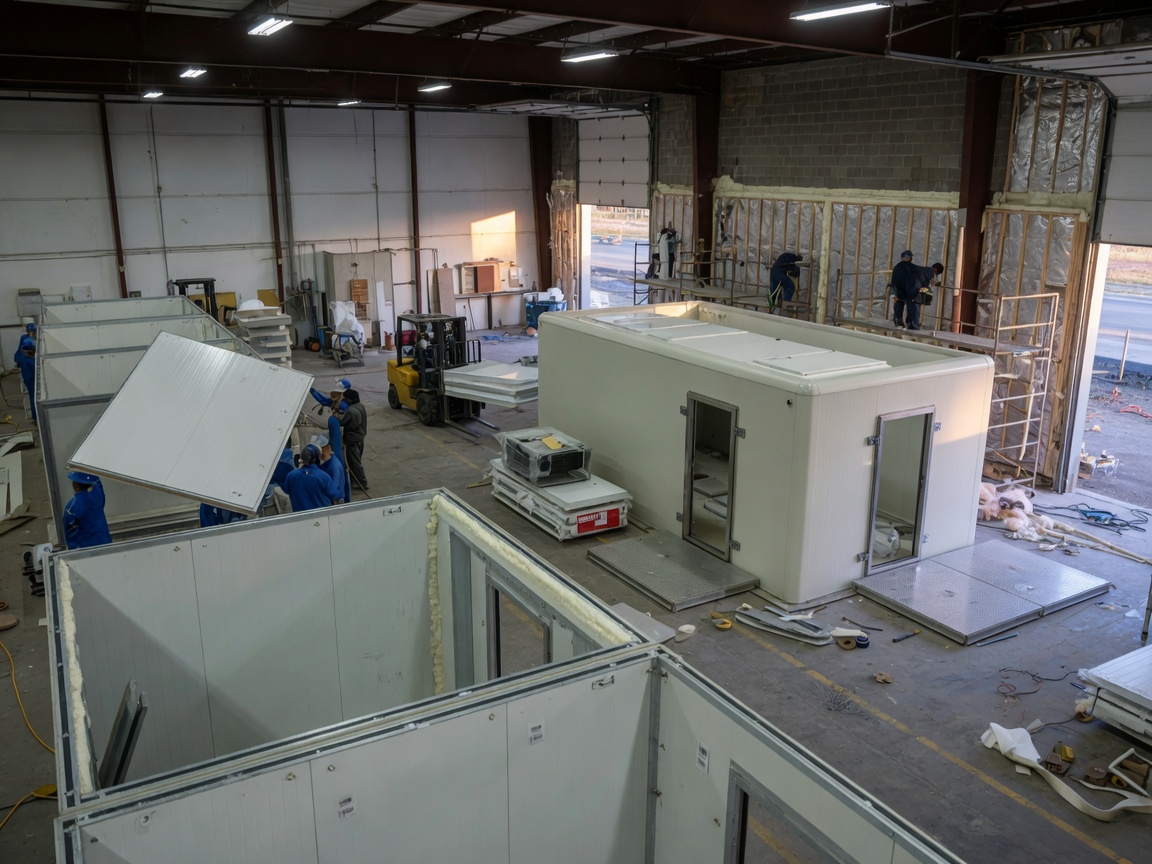
A well-specified system installed poorly will underperform for its entire service life. Installation quality is especially critical for industrial refrigeration units because commissioning defects — such as non-condensable gases in the refrigerant circuit, improperly set expansion valve superheat, or inadequate insulation vapor barriers — create efficiency losses that compound over years rather than announcing themselves immediately.
Key commissioning steps for a new cold storage installation
- Pressure leak test: Perform nitrogen pressure test at 1.5× maximum allowable working pressure (MAWP) before introducing refrigerant. ASHRAE 15 mandates documented leak test results.
- Evacuation to deep vacuum: Evacuate the system to ≤500 microns (0.5 torr) and hold for a minimum of 30 minutes before charging. Residual moisture in the circuit is the leading cause of premature compressor valve failure.
- Refrigerant charge verification: Charge to manufacturer specification using a verified scale — not sight glass appearance. Overcharging by 10% can reduce COP by 5–8%.
- Superheat and subcooling verification: Set evaporator superheat to 8–12°F and condenser subcooling to 10–15°F at design conditions. Document as-found and set-to values.
- Control system calibration: Verify all temperature sensors against a NIST-traceable reference thermometer. Calibration certificates must accompany the commissioning report for FDA-regulated facilities.
- Full-load operational test: Run the system at design load conditions for minimum 72 hours before product introduction. Log compressor amperage, discharge pressure, suction pressure, and all zone temperatures at 15-minute intervals.
What insulation specifications are most commonly underspecified?
Insulated panel R-value is the single most underspecified element in cold storage construction. Industry consensus for frozen food storage (0°F / −18°C) recommends R-32 to R-40 for walls and R-40 to R-50 for ceilings in U.S. construction. Many budget builds use R-25 panels to reduce upfront cost — a decision that typically costs $0.08–$0.12/sq ft/year in additional refrigeration energy for the building's entire life. The math rarely favors the cheaper panel.
Troubleshooting common cold storage cooling failures
When a cold storage cooling system fails, the clock starts immediately. A typical frozen food storage facility carries $2–$8 million in inventory — and many product categories (particularly ice cream and seafood) begin quality degradation within 4 hours of temperature excursion. Why do so many facilities lack a documented failure response protocol? That's a question worth examining before the next incident occurs.
Compressor failure: symptoms, causes, and response
Symptoms include elevated suction pressure, reduced discharge pressure, rising suction temperature, and compressor running but not pulling down. Common causes: liquid slugging (refrigerant flood-back from an improperly set expansion valve), loss of lubrication (oil separator failure or migration), electrical fault in motor windings, or valve plate failure from debris or moisture contamination. Immediate response: switch to backup compressor if available; contact emergency refrigeration service; begin product temperature monitoring every 30 minutes; activate your product loss protocol if zone temperature exceeds critical threshold for your commodity. For frozen goods, USDA guidelines allow a one-time refreezing of product that has remained at or below 40°F — document temperatures meticulously.
Refrigerant leak detection and response for U.S. facilities
Fixed electronic leak detectors (electrochemical for NH₃, infrared for HFCs/CO₂) should be positioned at low points for heavy refrigerants and high points for ammonia, per ASHRAE 15 and IMC requirements. Upon confirmed leak detection: evacuate personnel from affected zone if NH₃ concentration exceeds 300 ppm (IDLH threshold); isolate the leaking circuit at manual service valves; contact EPA Section 608-certified refrigeration technician immediately. Facilities must report releases exceeding 100 lb of refrigerant to the EPA National Response Center under CERCLA reporting requirements. Document all response actions — failure to report is a more costly error than the leak itself.
Defrost cycle failures: a slow and often invisible efficiency drain
Defrost cycle failures — either excessive frequency, insufficient duration, or failed termination — represent the most common undiagnosed efficiency loss in operating cold storage facilities. A clogged defrost drain allows ice to accumulate, restricting airflow across the evaporator coil by 20–40% and forcing the compressor-based cooling system to work significantly harder. Check indicators: elevated discharge air temperature with normal suction pressure, visible frost buildup on coil exterior, and longer-than-baseline pull-down times after door opening. A properly configured defrost cycle for frozen food storage should run 2–4 times per 24 hours, with each cycle lasting 20–45 minutes depending on load. Actual testing shows that re-calibrating defrost schedules based on measured frost accumulation (rather than fixed-time defaults) reduces total defrost energy by 15–25%.
Conclusion: making the right cold storage cooling system decision in 2026
Selecting a cold storage cooling system is not a one-size-fits-all exercise. The best decision for a 50,000 sq ft produce distribution hub in Oregon looks nothing like the right choice for a pharmaceutical temperature-controlled storage vault in New Jersey — refrigerant type, compressor staging, IoT monitoring architecture, and insulation specifications all diverge based on commodity, climate, regulatory exposure, and long-term cost targets.
What the 2026 market makes clear is this: the window for locking in HFC-based systems without a transition roadmap is closing rapidly under EPA AIM Act pressure, and the ROI case for NH₃ or CO₂ systems at scale has never been more compelling. Build your evaluation around a verified load calculation, a 10-year total cost of ownership model, certifications your AHJ and insurer actually require, and a service partner who can respond within four hours when things go wrong. That's the framework that separates defensible procurement decisions from expensive regrets.
Frequently asked questions
Q: What is a cold storage cooling system?
A: A cold storage cooling system is a mechanical refrigeration assembly — including a compressor, condenser, expansion valve, and evaporator coil — that removes heat from an insulated space to maintain precise low temperatures, typically between −30°C and +10°C, for perishable goods, food, or pharmaceutical products.
Q: How much does a commercial cold storage cooling system cost in the U.S.?
A: Installed costs range from $20–$45/sq ft for simple single-zone chiller systems to $80–$140/sq ft for ultra-low-temperature cascade configurations. A mid-size 100,000 sq ft frozen food distribution facility with centralized ammonia refrigeration typically carries a total installed cost of $6–$12 million, including insulated panel construction.
Q: What refrigerant is best for a new cold storage build in 2026?
A: For large industrial facilities, low-charge ammonia (NH₃) offers the best long-term COP and lowest refrigerant cost, with zero GWP. CO₂ transcritical systems are ideal for multi-temperature retail and moderate-size warehouses in northern climates. HFO blends (R-448A, R-449A) serve as practical interim solutions for facilities upgrading existing HFC infrastructure.
Q: What certifications should I require when purchasing a cold storage cooling system?
A: Require UL 207/471 for refrigerant components, NSF/ANSI 7 for food contact environments, ASHRAE 15 compliance for system safety, and EPA Section 608 certification for all service technicians. AHRI performance certification ensures published COP ratings are independently verified rather than self-reported.
Q: How do I reduce energy costs on an existing cold storage refrigeration system?
A: The highest-ROI interventions are: installing VFDs on compressors and evaporator fans (15–25% savings), recalibrating defrost cycles to demand-based control (10–20% savings), repairing door seals and gaskets, and adding IoT-based monitoring to identify thermal loss and runtime anomalies. Combined, these measures typically deliver a 2–4 year payback at current U.S. electricity rates.
Keywords:
Inquiry
If you are interested in our products, please leave your email to receive a free product quote, thank you!
More information


Tel:
Sales E-mail: