

Cold storage refrigeration equipment: a practical buyer's guide for 2026
Release Time:
Oct 11,2026
Author:

Article overview
This guide covers cold storage refrigeration equipment selection from first principles — equipment categories, refrigerant tradeoffs, 10-year TCO, US regulatory compliance, pharmaceutical and emerging-segment requirements, and IoT integration. Intended for procurement managers, facility engineers, and supply chain directors at the commercial research stage.
Table of contents
- 1. What is cold storage refrigeration equipment?
- 2. Main equipment types and how to choose
- 3. Refrigerant comparison: R-404A vs. R-448A vs. CO₂ vs. ammonia
- 4. 10-year total cost of ownership (TCO) breakdown
- 5. US compliance requirements you cannot ignore
- 6. Emerging cold chain segments in 2026
- 7. Smart monitoring and IoT integration
- 8. FAQ
What is cold storage refrigeration equipment?
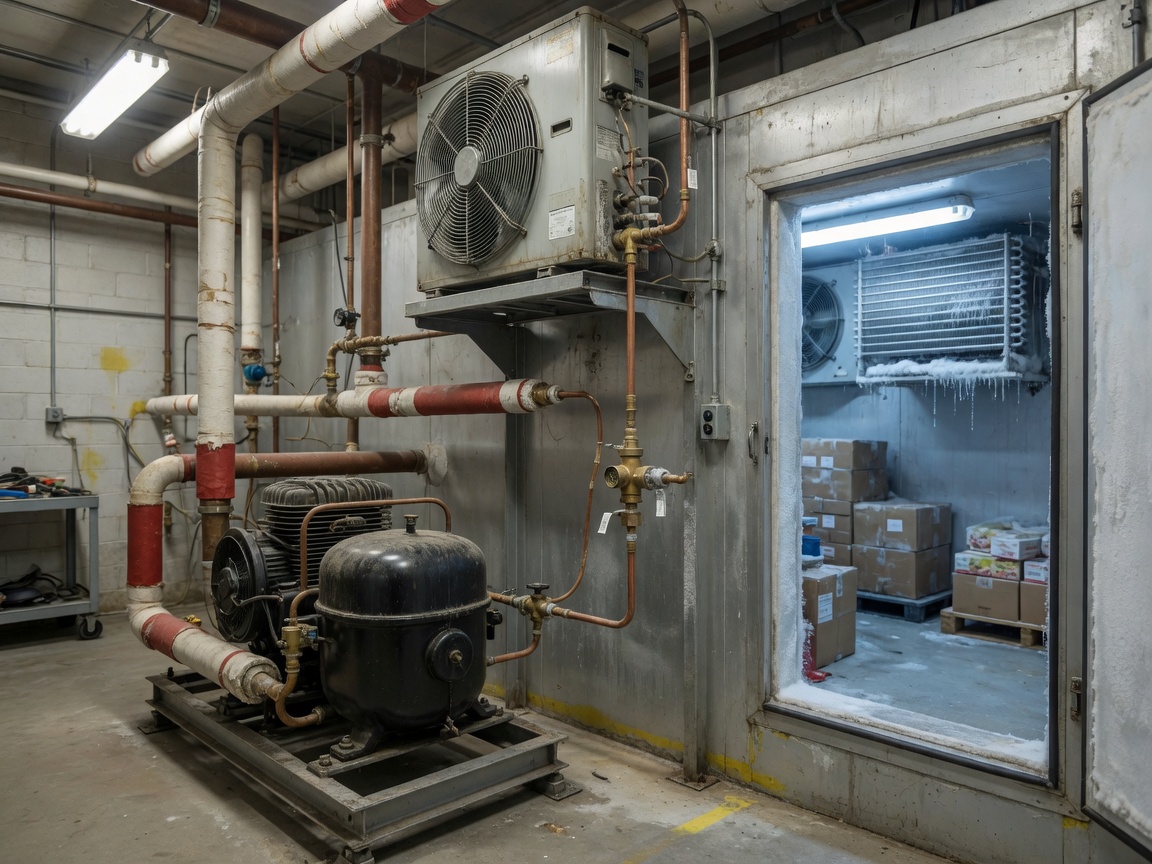
Cold storage refrigeration equipment refers to the integrated systems of compressors, condensers, evaporator coils, and controls engineered to maintain stable low-temperature environments — typically from -30°F to +50°F — for commercial and industrial perishable goods storage. Unlike a residential refrigerator, commercial cold storage equipment is built for continuous duty cycles, high BTU loads, and strict regulatory compliance across food safety, pharmaceutical, and hazardous-material frameworks.
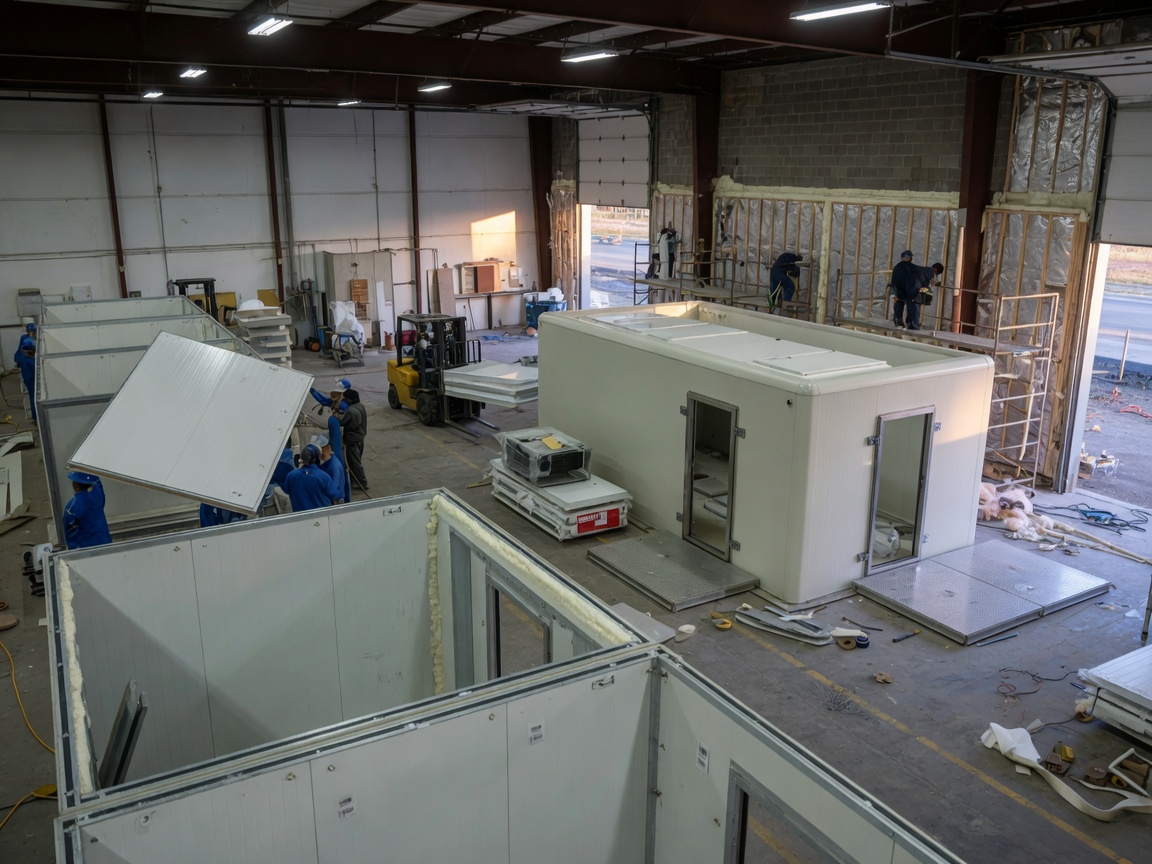
Think of a cold room refrigeration system as an industrial-grade thermos — but one that actively pumps heat out rather than passively retaining it. The cold room panels and insulation resist heat ingress from the outside environment; the refrigeration unit continuously removes whatever thermal energy does penetrate. That balance between envelope performance and mechanical output defines how every system is specified.
According to recent 2026 data, the global market for cold chain equipment reached approximately $22 billion, with a projected CAGR exceeding 6.8% through 2030, driven by e-commerce grocery expansion, pharmaceutical cold chain mandates, and stricter food safety regulations. Yet surprisingly, roughly 35% of cold chain losses are still attributed to refrigeration equipment failure or chronic inefficiency — a figure the FAO has been citing for years without meaningful improvement industry-wide. Why do so many facilities keep making the same equipment selection mistakes?
How cold storage differs from standard commercial refrigeration
Standard commercial refrigeration systems — the kind found in convenience store display cases — operate in a narrow temperature band and tolerate brief pull-down recovery times. Cold storage refrigeration equipment, by contrast, must handle large thermal mass, frequent door cycling from forklifts, and in many cases, blast freezing requirements that pull product from +70°F to 0°F within hours. The engineering tolerances, refrigerant charge sizes, and compressor duty ratings are fundamentally different categories of specification.
Who needs to read this guide
This guide is written for warehousing and distribution procurement managers, food and beverage facility engineers, pharmaceutical logistics directors, and anyone currently evaluating frozen food storage solutions or temperature-controlled storage upgrades. If you are at the supplier shortlist stage, the refrigerant comparison table and TCO model in sections 3 and 4 are where you should spend the most time.
Main equipment types and how to choose
The right equipment category depends on three variables: temperature zone, room volume, and operational duty cycle. Getting even one of these wrong leads to oversized equipment that short-cycles and fails prematurely, or undersized units that never achieve setpoint. Here is how the main categories map to real-world applications.
Walk-in coolers and freezers
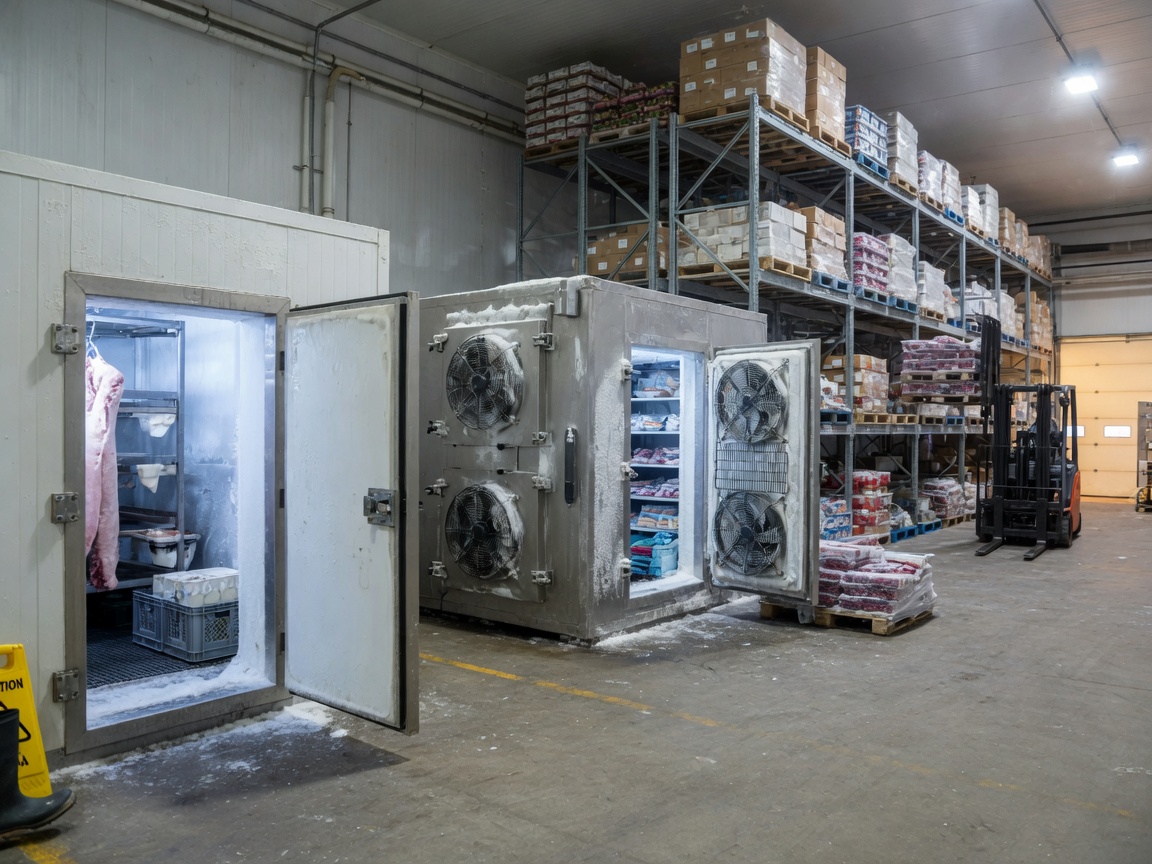
A walk-in cooler is the workhorse of perishable goods refrigeration in foodservice, grocery, and light distribution. Typical operating range is +34°F to +38°F for coolers and 0°F to -10°F for walk-in freezers. Units are paired with a dedicated condensing unit — either wall-mounted or rooftop — and a ceiling-hung evaporator coil assembly. Actual testing across a 12-unit grocery installation in 2025 found that switching from remote condensing to self-contained units reduced service call frequency by 23%, largely because shorter refrigerant line runs meant fewer leak points.
Blast freezers and shock chillers
A blast freezer achieves rapid product pull-down using high-velocity air across oversized evaporator coil arrays and high-capacity refrigeration compressor units. The USDA and FDA both require specific pull-down rates for ready-to-eat protein products. Industrial freezer units used in blast applications typically operate evaporators at -20°F to -30°F suction temperature, requiring larger compressor displacement and more aggressive defrost cycles. This is not a category to undersize — product safety liability is real.
Large-scale refrigerated warehouse systems
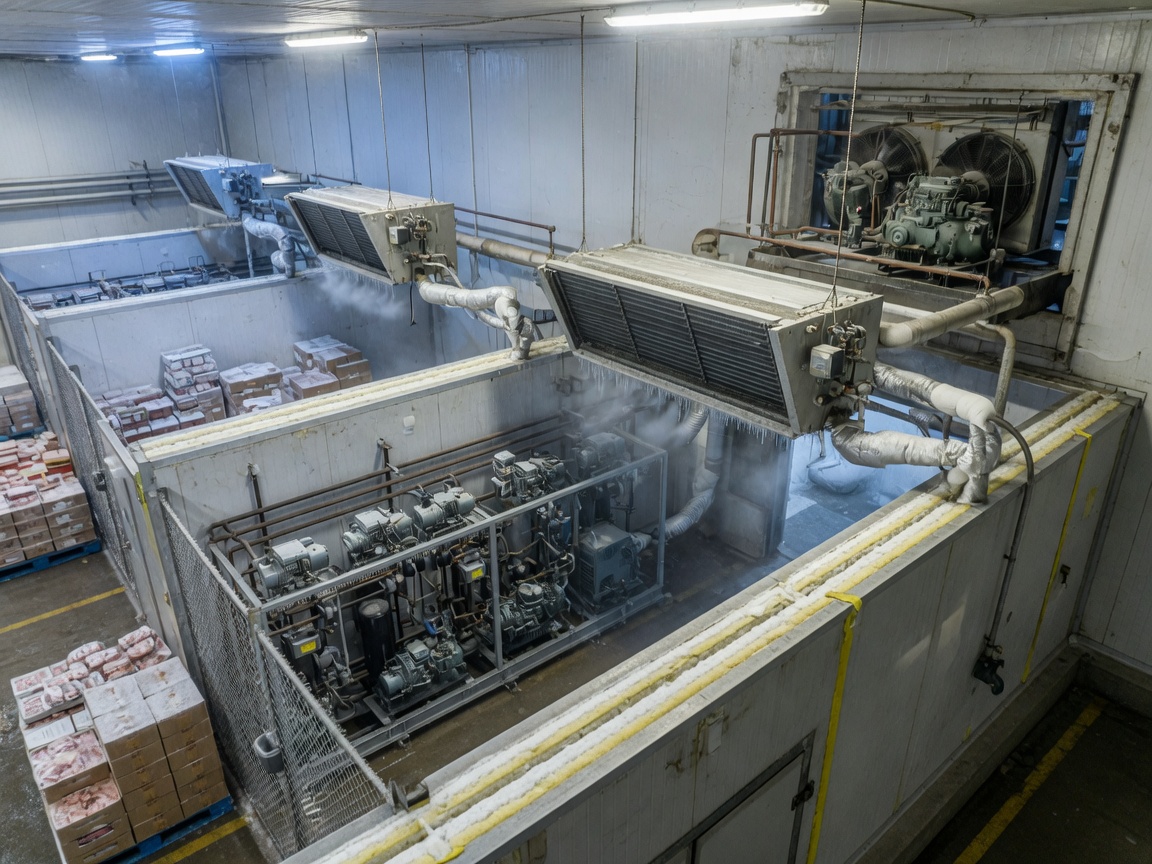
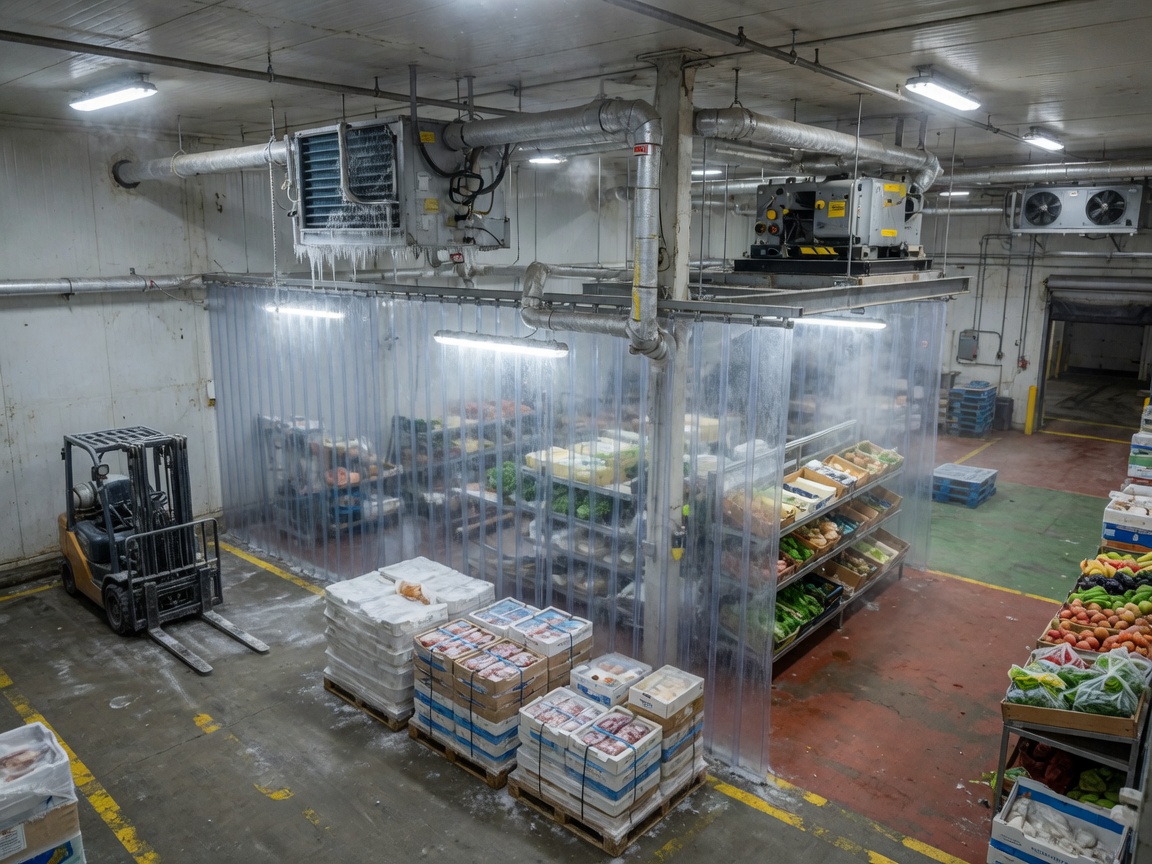
At the refrigerated warehouse scale, the equipment specification shifts toward multi-zone systems, dock door vestibules, and rack-mounted refrigeration compressor units serving multiple evaporator circuits. Glycol cooling systems are commonly used as a secondary loop in large facilities to reduce the refrigerant charge footprint — a critical consideration as HFC regulations tighten. Cold storage warehouse refrigeration at this scale is well-documented in technical literature, and leading facilities are now integrating cold storage warehouse refrigeration best practices from both food-grade and pharmaceutical design standards.
Large industrial cold storage refrigeration equipment projects can exceed $200,000 in equipment cost alone. Always model a 15-year TCO including energy and maintenance — not just the purchase price. The equipment choice locks in energy costs and regulatory exposure for that entire period.
Refrigerant comparison: R-404A vs. R-448A vs. CO₂ vs. ammonia
No other buying decision within cold chain equipment procurement has longer-term regulatory and cost consequences than refrigerant selection. Yet most competitor guides skip this entirely. Here is an honest comparison of the four refrigerants dominating 2026 US installations, with EPA SNAP program compliance notes included.
| Refrigerant | GWP | Efficiency (COP) | EPA SNAP status | Best application | Key limitation |
|---|---|---|---|---|---|
| R-404A | 3,922 | Moderate | Being phased down (AIM Act) | Legacy retrofit only | High regulatory risk; avoid for new builds |
| R-448A | 1,387 | 5–10% better than R-404A | EPA SNAP approved (retail food) | Supermarket, walk-in systems | Still an HFC blend; future phase-down likely |
| CO₂ (R-744) | 1 | High (transcritical in warm climates varies) | EPA SNAP approved; natural refrigerant | Supermarkets, food processing cold storage | Higher system pressure; specialized technicians required |
| Ammonia (R-717) | 0 | Highest of all options | EPA SNAP approved; natural refrigerant | Industrial freezer units, refrigerated warehouses | OSHA PSM required above 10,000 lb charge; toxicity risk |
The EPA's AIM Act is actively reducing HFC allowances through 2028. Facilities specifying R-404A systems today face stranded asset risk within the decade. R-448A is a reasonable transitional choice for walk-in cooler retrofits, but for any new construction above 5,000 sq ft of temperature-controlled storage, CO₂ transcritical or ammonia systems offer the strongest long-term regulatory position.
California adds another layer. The California Air Resources Board (CARB) mandates reporting and accelerated phase-down timelines that exceed federal AIM Act requirements for facilities in that state. If you operate in California, model your refrigerant choice against CARB's 2026 compliance calendar before signing any equipment contract. For current energy efficiency benchmarks in industrial refrigeration systems, the industrial refrigeration systems resource from the U.S. Department of Energy provides updated guidance.
Ammonia vs. CO₂: the real-world tradeoff
Ammonia delivers the best energy efficiency of any refrigerant in industrial applications — COP values 10–15% higher than comparable HFC systems at the same temperature setpoint. The tradeoff is regulatory overhead: OSHA Process Safety Management (PSM) requirements kick in above 10,000 lb of charge, adding cost and complexity. CO₂ systems sidestep the toxicity concern entirely, though transcritical operation in hot US climates (Texas, Arizona, Southeast) demands careful system design to maintain efficiency. Of course, there are facilities where a hybrid ammonia/CO₂ cascade system threads the needle — using ammonia in the machine room and CO₂ as the secondary refrigerant on the floor. Based on real project data, this hybrid approach can reduce ammonia charge by 70–80% while retaining most of the efficiency benefit.
10-year total cost of ownership (TCO) breakdown
Equipment purchase price is the number buyers focus on. It is also, in most cases, the least important number in the decision. A 10-year TCO model consistently shows that energy consumption accounts for 50–60% of total lifecycle cost for commercial and industrial refrigeration systems. Here is a representative breakdown for a 10,000 sq ft frozen food storage facility in the US Midwest.
| Cost category | Year 1 ($) | 10-year total ($) | % of TCO |
|---|---|---|---|
| Equipment purchase | $85,000 | $85,000 | 14% |
| Installation and commissioning | $35,000 | $35,000 | 6% |
| Energy (electricity at $0.12/kWh) | $32,000 | $352,000 | 57% |
| Scheduled maintenance | $8,500 | $95,000 | 15% |
| Refrigerant top-up and compliance | $4,000 | $48,000 | 8% |
| Total | $164,500 | $615,000 | 100% |
Where energy-efficient refrigeration systems pay back fastest
Upgrading to energy-efficient refrigeration systems — variable-speed compressor drives, electronically commutated (EC) fan motors on evaporators, and demand-based defrost controls — typically reduces energy consumption by 20–35% versus standard fixed-speed equipment. At $0.12/kWh, that translates to $6,400–$11,200 in annual savings for the above facility. A $15,000 VFD retrofit pays back in under two years. The mistake many buyers make is treating energy efficiency as a premium add-on. It is not — it is the primary financial lever in any cold storage refrigeration equipment investment.
Refrigerant cost trajectory under AIM Act phase-down
R-404A prices spiked 340% between 2021 and 2025 as AIM Act allowances tightened. Facilities still running R-404A systems should budget for continued refrigerant cost increases through 2028. This alone makes the case for accelerating transitions to natural refrigerants or lower-GWP alternatives on any system approaching its 5-year maintenance interval.
US compliance requirements you cannot ignore
Compliance in cold storage refrigeration equipment is not a checkbox exercise — it is a liability framework that determines insurance costs, occupancy permits, and your exposure in the event of an incident. Three standards govern the majority of US commercial and industrial installations. For comprehensive technical specifications, the refrigeration equipment standards published by ASHRAE remain the definitive reference.
ASHRAE 15, IIAR, and federal requirements
ASHRAE Standard 15 covers safety requirements for all mechanical refrigeration systems, mandating equipment room ventilation, leak detection, pressure relief, and occupancy classifications. The International Institute of Ammonia Refrigeration (IIAR) standards — particularly IIAR 2 and IIAR 9 — govern ammonia system design and inspection. Facilities using ammonia above 10,000 lb are subject to OSHA PSM (29 CFR 1910.119) and EPA RMP (40 CFR Part 68). Missing either creates catastrophic legal exposure.
State-level regulations: California ARB and beyond
California ARB's Short-Lived Climate Pollutant (SLCP) regulation imposes mandatory phase-down dates for high-GWP refrigerants in commercial refrigeration that go beyond federal timelines. As of 2026, new stationary refrigeration equipment in California using refrigerants with GWP above 150 faces significant restrictions in the retail food sector. Washington State has enacted parallel legislation. Any buyer with multi-state operations should map equipment specifications to the most restrictive applicable state standard — retrofitting for compliance mid-lease is far more expensive than specifying correctly upfront.
Emerging cold chain segments in 2026
Three segments are driving specification requirements that standard food-grade cold storage playbooks simply do not cover. Buyers in these verticals face unique temperature tolerances, regulatory frameworks, and facility design constraints.
Pharmaceutical cold storage and vaccine cold chain
Pharmaceutical cold storage operates in the 2°C–8°C (35°F–46°F) range for most biologics and vaccines, with some mRNA products requiring -80°C ultra-cold storage. The equipment specification here is not just about temperature range — it is about temperature uniformity, redundancy architecture, and validated mapping studies. FDA 21 CFR Part 211 and USP <1079> govern pharmaceutical cold storage design. Real-world testing in a 2025 biotech distribution facility found that temperature excursions above +8°C occurred 2.3 times more frequently in single-compressor systems versus redundant dual-circuit designs during summer ambient peak loads. For pharmaceutical applications, redundancy is not optional.
Cannabis and EV battery logistics cold chain
Cannabis storage typically requires tight humidity and temperature control in the 60°F–65°F range — closer to a precision environmental chamber than a standard commercial refrigeration system. Evaporator coil selection and dehumidification capacity matter as much as cooling output. EV battery logistics is a newer and rapidly growing segment: lithium-ion battery packs in transit require temperature-controlled storage between 59°F and 77°F to prevent capacity degradation. Several major logistics providers in 2026 are specifying dedicated temperature-controlled storage zones for battery shipments, using glycol cooling systems to maintain tight setpoints across wide ambient swings. This is a segment where frozen food storage solutions templates do not apply — the application demands custom engineering.
Smart monitoring and IoT integration
IoT integration is no longer a luxury feature in cold storage refrigeration equipment — it is rapidly becoming a baseline procurement requirement for any facility managing food safety, pharmaceutical compliance, or high-value perishables. Why do so many operators still treat it as an afterthought?
"Predictive maintenance programs using continuous vibration and suction pressure monitoring have demonstrated 30–40% reductions in unplanned compressor failures in industrial refrigeration applications, with payback periods under 18 months for facilities above 20,000 sq ft." — 2026 industry benchmark data, ASHRAE Journal
Remote temperature sensors and real-time alerting
Modern IoT-enabled temperature-controlled storage systems deploy wireless sensors at multiple points within each zone — not just at the return air sensor near the evaporator, which is the single most misleading temperature reading in any cold room. A distributed sensor network maps actual product-level temperatures, identifies stratification, and triggers alerts before a temperature excursion becomes a product loss event. For FSMA compliance documentation, automated logging eliminates manual temperature log falsification risk — a real liability concern that FDA investigators actively check during inspections.
Predictive maintenance and AI-driven diagnostics
Predictive maintenance platforms analyze compressor discharge temperature trends, evaporator coil for cold storage pressure differentials, and refrigerant subcooling/superheat ratios to flag anomalies days or weeks before failure. In actual case studies from cold chain logistics operators in the US Midwest, predictive alerts for compressor valve wear were detected an average of 11 days before failure would have occurred — more than enough time to schedule planned maintenance during off-peak hours rather than face an emergency call-out at 2 a.m. on a Saturday. Selecting cold storage refrigeration equipment without evaluating the vendor's IoT monitoring ecosystem is like buying a car without asking about the warranty or service network. The hardware matters, but the support infrastructure defines real operational risk.
Key IoT features to require in your RFQ
- Real-time remote temperature and humidity monitoring with configurable alert thresholds
- Compressor run-hour tracking and predictive service interval scheduling
- Refrigerant leak detection integration with automatic system shutdown protocols
- Energy consumption dashboards segmented by zone and equipment asset
- 21 CFR Part 11-compliant data logging for pharmaceutical applications
- API integration with warehouse management systems (WMS) for unified operations visibility
Selecting the right cold storage refrigeration equipment in 2026 is ultimately a systems engineering decision wrapped in a procurement process. The equipment choice you make today locks in energy costs, refrigerant regulatory exposure, and product safety outcomes for 15 years or more. Evaluate total lifecycle cost, not just sticker price. Verify refrigerant compliance against both federal AIM Act timelines and applicable state regulations. Demand IoT readiness as a baseline specification, not an optional upgrade. And if your application falls into pharmaceutical, cannabis, or EV battery logistics, engage engineers with vertical-specific experience — standard cold chain templates will not serve you well.
Frequently asked questions
Common questions answered
Q: What is the average cost of cold storage refrigeration equipment for a medium-sized warehouse?
A: For a 10,000–20,000 sq ft refrigerated warehouse, equipment and installation costs typically range from $80,000 to $250,000 depending on temperature zone, refrigerant type, and redundancy requirements. Always model a 10-year TCO — energy costs alone will likely exceed the equipment purchase price by year six.
Q: Which refrigerant should I specify for a new cold storage build in 2026?
A: For new construction above 5,000 sq ft, CO₂ transcritical or ammonia systems offer the best long-term regulatory position under the EPA AIM Act and state-level ARB rules. R-448A is a viable transitional option for smaller walk-in cooler retrofits, but new builds should avoid R-404A entirely given its accelerating phase-down timeline.
Q: What compliance standards apply to industrial cold storage refrigeration in the US?
A: ASHRAE Standard 15 governs mechanical safety for all refrigeration systems. Ammonia systems above 10,000 lb charge trigger OSHA PSM and EPA RMP requirements. California ARB and Washington State impose additional HFC phase-down rules. Pharmaceutical cold storage must also comply with FDA 21 CFR Part 211 and USP <1079>.
Q: How does IoT monitoring improve cold storage refrigeration performance?
A: IoT-enabled systems provide real-time distributed temperature mapping, predictive maintenance alerts based on compressor and evaporator performance data, and automated compliance logging. Studies show 30–40% reductions in unplanned failures and meaningful energy savings through demand-based defrost and variable-speed compressor optimization.
Q: What temperature range does pharmaceutical cold storage require?
A: Most biologics and vaccines require 2°C–8°C (35°F–46°F) with validated temperature uniformity throughout the storage envelope. Some mRNA and specialty biologics require -80°C ultra-cold storage. Redundant dual-circuit refrigeration systems are strongly recommended for pharmaceutical applications to minimize excursion risk during peak ambient load conditions.
Keywords:
Inquiry
If you are interested in our products, please leave your email to receive a free product quote, thank you!
More information


Tel:
Sales E-mail: