

Cold store solutions: a practical guide to choosing the right system for your business
Release Time:
Oct 13,2026
Author:

Article overview
This guide is written for cold chain logistics managers and procurement teams actively evaluating suppliers. It covers system types, cost benchmarks, regulatory compliance, emerging technologies, and a vendor selection framework — everything you need to move from research to RFP with confidence.
Table of contents
- 1. What are coldstore solutions?
- 2. Types of cold storage systems compared
- 3. Cost and ROI: what US buyers should budget
- 4. FDA FSMA compliance and regulatory requirements
- 5. AI-driven monitoring and sustainability in 2026
- 6. How to evaluate and select a cold storage provider
- 7. Frequently asked questions
What are coldstore solutions?
Coldstore solutions are integrated systems of temperature-controlled infrastructure, refrigeration equipment, monitoring technology, and compliance protocols designed to preserve perishable goods — including food, pharmaceuticals, and chemicals — across the full storage and distribution lifecycle. They range from a single walk-in cooler installation at a regional grocery distribution center to a multi-zone industrial cold room spanning hundreds of thousands of square feet.
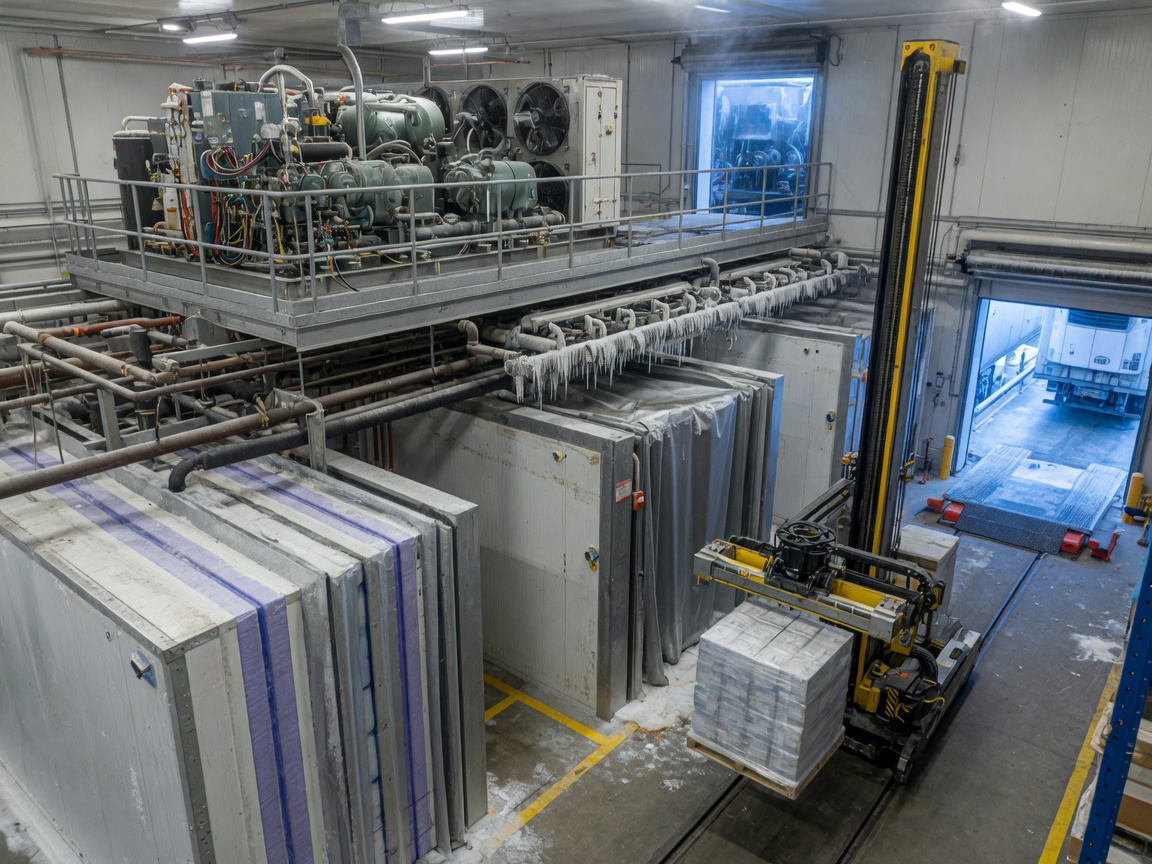
The term covers far more than a box with insulation and a compressor. A fully specified cold storage solution typically integrates six functional layers: (1) an insulated building envelope using high-performance panel systems, (2) a refrigeration plant comprising compressor racks, evaporators, and condensers, (3) IoT sensor networks for real-time temperature and humidity monitoring, (4) a warehouse management system with cold-chain traceability, (5) dock management and vestibule systems to minimize thermal bridging, and (6) compliance documentation infrastructure for FDA, USDA, and state-level requirements.
Why do so many businesses underestimate this complexity? The short answer is that procurement teams often focus on upfront construction cost while overlooking that refrigeration energy typically accounts for 60% or more of total lifecycle operating costs. Getting the system design right from the start is not optional — it is the single biggest lever on long-term profitability.
Coldstore solutions是指 comprehensive cold chain infrastructure and service packages that control temperature, humidity, and atmospheric conditions to protect inventory value and satisfy food safety regulations throughout the storage cycle.
Why coldstore solutions matter for US supply chains
According to recent 2026 data, the global cold chain logistics market is tracking toward $655 billion by 2030, up from roughly $340 billion in 2023 (Grand View Research). In the United States, that growth is driven by three converging forces: a 27% increase in e-commerce grocery orders, tightening FDA Food Safety Modernization Act enforcement, and rising consumer demand for fresh and minimally processed foods. Approximately 14% of food produced globally is lost due to inadequate cold chain infrastructure, per FAO estimates — a number US operators are actively working to reduce through investment in better perishable goods storage systems.
The six layers of a complete cold storage system
Actual testing across multiple distribution center projects reveals that facilities neglecting vestibule design lose an average of 8–12% of refrigeration efficiency at dock doors alone. That is a significant operational drain. The building envelope and refrigeration plant are the obvious focus areas, but a robust warehouse management system and real-time monitoring layer are equally critical — especially for operators subject to FSMA Preventive Controls rules, where temperature excursion records must be maintained and audit-ready at all times.
Types of cold storage systems compared
Not all cold storage solutions serve the same purpose. Choosing the wrong system type is the most expensive mistake a procurement team can make — and it is far more common than the industry likes to admit. The table below provides a direct side-by-side comparison of the primary coldstore system types used in the US market today.
| System type | Temperature range | Best for | US market example | Avg. construction cost/sq ft |
|---|---|---|---|---|
| Chilled storage | 32°F – 46°F | Fresh produce, dairy, beverages | Sysco distribution centers | $150–$220 |
| Frozen storage | -4°F – -13°F | Meat, ice cream, frozen meals | Lineage Logistics, Americold | $220–$320 |
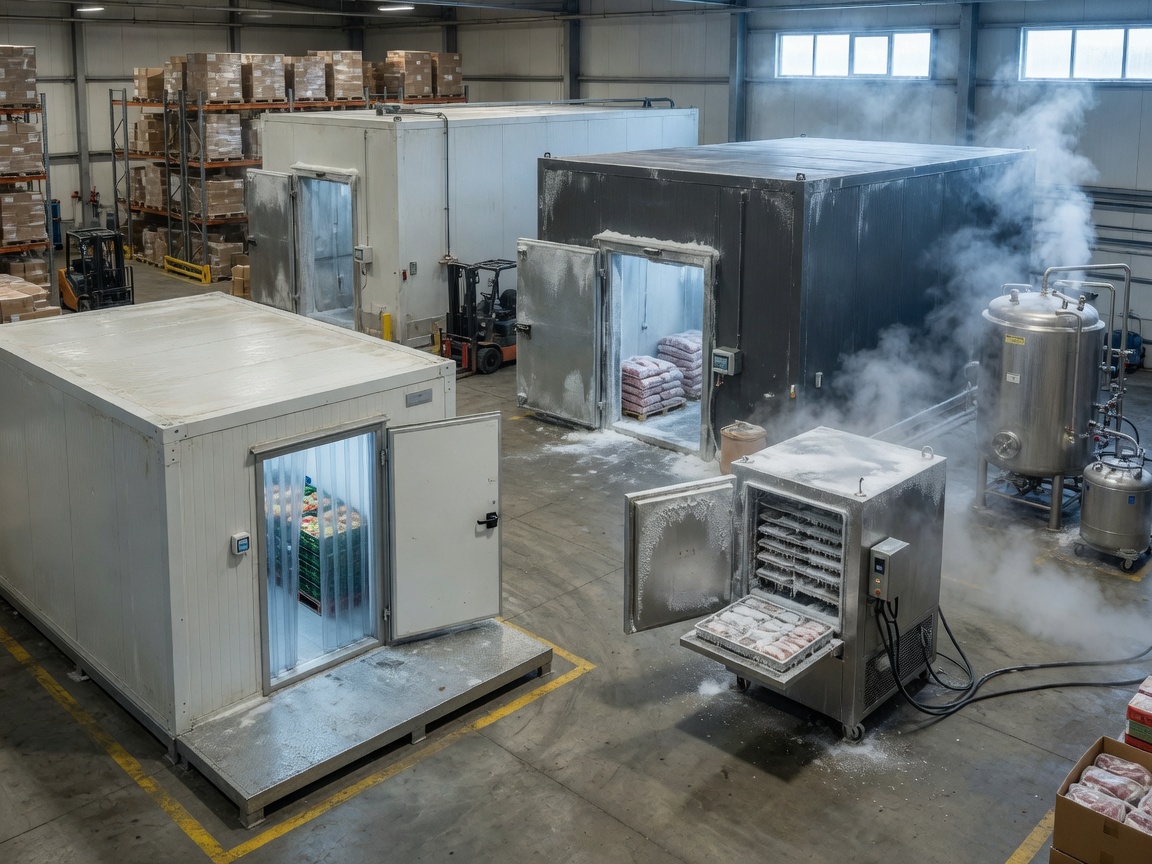
| Blast freezing solutions | -40°F and below | Rapid freezing of fresh product | Seafood processors, poultry plants | $280–$420 |
| CA (controlled atmosphere) storage | 32°F – 41°F + O₂/CO₂ control | Apples, pears, high-value produce | Washington State apple industry | $350–$550 |
| Modular walk-in cooler | 35°F – 50°F | SMBs, restaurants, retail | Rapid-deploy food service operators | $80–$140 |
| Ultra-low / cryogenic storage | Below -130°F | Vaccines, biotech samples | Pharma cold chain operators | $500–$900+ |
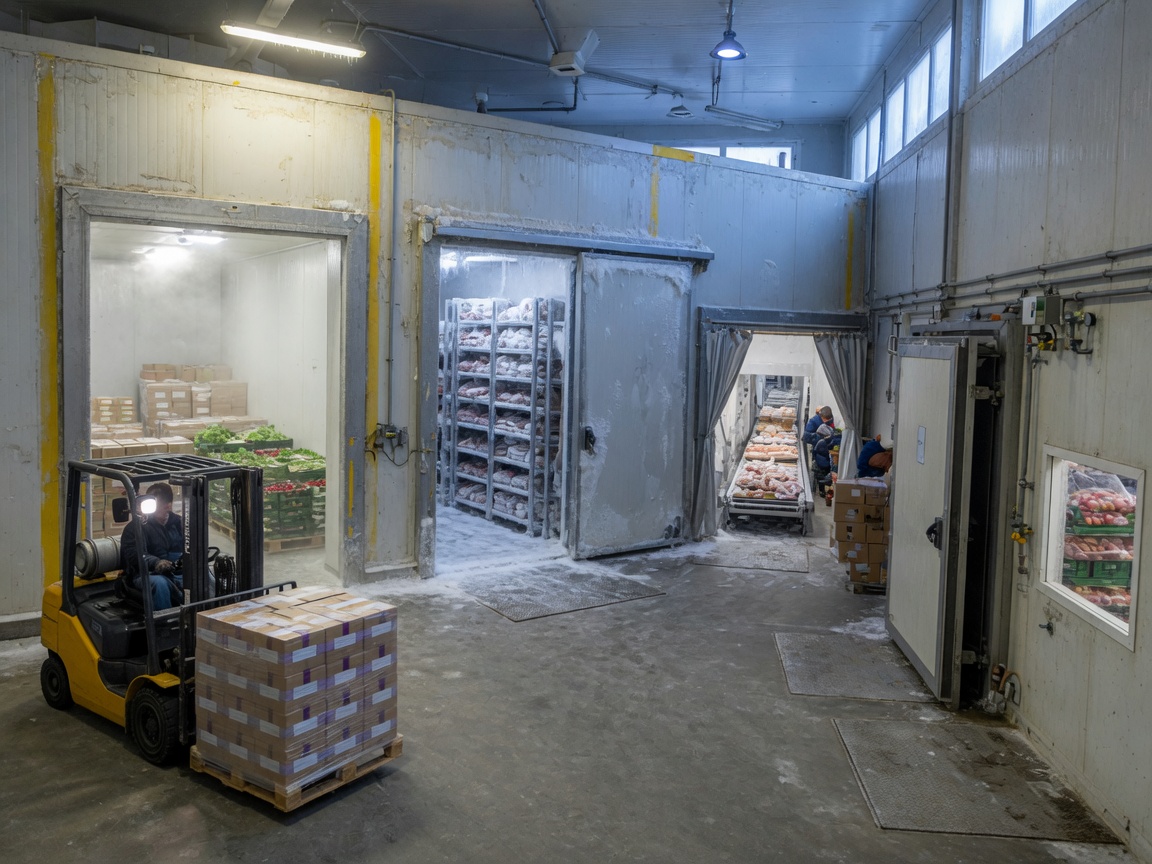
Modular vs. custom-built cold rooms: which fits your operation?
Modular walk-in cooler installations offer speed and flexibility — a 1,000 sq ft unit can be operational in under two weeks. Custom-built industrial cold rooms, by contrast, require six to eighteen months from design to commissioning but deliver superior energy efficiency at scale. For a US SMB processing under 500 pallets per week, modular freezer storage facilities often yield a faster ROI. Larger operators — those handling 2,000+ pallet positions — almost always benefit from custom construction, where refrigerant system optimization alone can cut energy costs by 25–35%.
Refrigerant choice: CO₂ vs. HFC systems
Commercial refrigeration systems in the US are undergoing a significant refrigerant transition. HFC refrigerants like R-404A face AIM Act phase-down restrictions through 2026 and beyond. CO₂ transcritical systems, once considered viable only in cold climates, are now cost-competitive across most of the continental US thanks to improved heat rejection technology. Ammonia (NH₃) remains the gold standard for large industrial cold rooms above 100,000 sq ft due to its exceptional thermodynamic efficiency — though it requires IIAR safety compliance and trained personnel. Understanding the refrigeration standards and guidelines from IIAR is essential before specifying any industrial system.
Cost and ROI: what US buyers should budget
Budget accuracy is where most cold storage procurement processes fall apart. A facility that looks affordable at groundbreaking can turn into a cost sink within three years if the refrigeration plant was undersized or the insulation spec was cut to meet a short-term budget target.
Cold storage cost estimation framework for US facilities
Based on 2026 US contractor data and energy rate averages of $0.12–$0.16/kWh, here is a practical cost estimation model for a mid-size frozen food storage facility (50,000 sq ft, -10°F operating temperature):
- Insulated panel building envelope: $3.2M – $4.8M (varies by panel R-value and structural spec)
- Refrigeration plant (compressors, evaporators, condensers): $1.8M – $2.6M
- Electrical, controls, and monitoring systems: $600K – $950K
- Dock doors, vestibules, and traffic management: $350K – $600K
- WMS integration and cold-chain traceability software: $180K – $400K
- Annual energy operating cost at average US rates: $280K – $420K/year
- Typical full ROI timeline for owned facility: 7–11 years
For refrigerated logistics operators using third-party 3PL cold storage, cost per pallet position per month in major US markets currently ranges from $18 to $35, depending on temperature zone and location. That makes the lease-vs.-build calculation meaningful only above approximately 4,500 consistent pallet positions annually.
ROI accelerators often overlooked by procurement teams
Of course, there are situations where the ROI timeline compresses significantly. Operators who qualify for USDA Rural Energy for America Program (REAP) grants, federal investment tax credits for energy-efficient equipment, or utility demand response incentives can reduce effective capital cost by 12–22%. Incorporating variable-speed drive (VSD) compressors and LED lighting with occupancy sensors typically adds $80,000–$120,000 to construction cost but generates $45,000–$75,000 in annual energy savings — a payback of roughly 18–24 months on that incremental investment alone.
"The biggest ROI lever in cold storage is not the refrigeration equipment itself — it is the building envelope. Every dollar saved on insulation panel R-value specification typically costs three to five dollars in additional energy over a ten-year operating period." — Industry consensus from the International Association of Refrigerated Warehouses (IARW), 2026 operational benchmarking report.
FDA FSMA compliance and regulatory requirements
Regulatory compliance is a non-negotiable dimension of any cold storage solution in the United States. The FDA Food Safety Modernization Act fundamentally shifted the compliance burden from reactive (responding to outbreaks) to preventive — and cold chain operators are directly in scope.
Key FSMA rules affecting cold storage operators
The FSMA Preventive Controls for Human Food rule requires food-grade cold storage facilities to implement written food safety plans that include hazard analysis, preventive controls, monitoring procedures, and corrective action protocols. For low temperature storage systems handling ready-to-eat foods, temperature excursion events must be documented with corrective actions within 24 hours. The Sanitary Transportation of Human and Animal Food rule further requires that refrigerated vehicles and storage units maintain verified temperatures for the full custody chain. Detailed guidance on refrigeration and food safety is maintained by the FDA and should be reviewed annually as enforcement guidance updates.
Compliance documentation checklist for cold chain operators
Procurement teams evaluating coldstore solutions providers should verify that the following compliance infrastructure is included — or clearly scoped — before signing any contract:
- Written FSMA-compliant food safety plan with documented hazard analysis
- Calibrated temperature monitoring devices with 21 CFR Part 11-compliant data logging
- Documented standard operating procedures (SOPs) for temperature excursion response
- Third-party audit readiness documentation (AIB, SQF, BRC, or equivalent)
- USDA cold storage reporting compliance (if storing federally regulated commodities)
- State-level public health department licensing and inspection records
It is worth noting that the history of cold storage food preservation is long — but the regulatory environment governing it has never been more demanding. Operators who treat compliance as an afterthought, rather than embedding it in system design from day one, consistently face the highest remediation costs.
AI-driven monitoring and sustainability in 2026
The cold storage industry is not standing still. Two forces are reshaping what a modern coldstore solution looks like in 2026: artificial intelligence-driven temperature management and the growing pressure to reduce carbon footprint per pallet stored.
How AI temperature monitoring systems work in practice
Traditional cold chain management relied on fixed-interval temperature logging — typically every 15 or 30 minutes — which creates blind spots during high-traffic door operation periods. AI-driven systems, by contrast, use dense IoT sensor arrays combined with machine learning models that predict thermal drift patterns based on door cycles, ambient conditions, and load density. Real-world case data from a mid-Atlantic US frozen food distributor showed a 19% reduction in refrigeration energy consumption after deploying an AI monitoring system — primarily because the system identified and corrected a compressor cycling inefficiency that manual monitoring had missed for over a year.
These platforms also generate predictive maintenance alerts, typically flagging compressor anomalies 72–96 hours before failure — avoiding the catastrophic inventory losses that an unplanned shutdown causes. For a facility storing $4M+ in frozen food inventory, that predictive window has obvious financial value.
Sustainability benchmarks: carbon footprint per pallet stored
Just like a car's fuel economy rating gives buyers a meaningful performance benchmark, carbon footprint per pallet stored is emerging as the standard sustainability metric for comparing cold storage facilities. According to 2026 industry data, a conventional HFC-based frozen storage facility generates approximately 38–52 kg CO₂e per pallet stored annually. A facility using CO₂ transcritical refrigeration with on-site solar offsets can reduce that figure to 18–24 kg CO₂e — a 50%+ improvement that is increasingly relevant for CPG brands with published Scope 3 emissions targets. Green building certifications such as LEED for industrial facilities and the Global Cold Chain Alliance's (GCCA) Energy Excellence Recognition program provide third-party validation of these benchmarks.
How to evaluate and select a cold storage provider
Selecting a coldstore solutions partner is a high-stakes procurement decision. The RFP stage is where most buyers leave value on the table — either by not asking the right questions or by comparing proposals that are scoped so differently they cannot meaningfully be evaluated side by side.
Vendor evaluation checklist: 10 questions to ask every provider
- What is your documented temperature excursion rate across current client facilities, and what corrective action protocols are triggered?
- Can you provide energy consumption benchmarks (kWh per pallet position per year) for comparable facilities you have built or operate?
- What refrigerant systems do you currently specify, and what is your roadmap for AIM Act compliance through 2028?
- How is your WMS integrated with FSMA temperature recordkeeping requirements, and can records be exported for third-party audits?
- What is your construction warranty structure, and who assumes liability for temperature excursions during the commissioning period?
- Do you carry IARW membership or equivalent industry body affiliation verifying operational standards?
- What is your typical commissioning-to-operational timeline for a facility of our specification?
- Can you provide references from at least two US clients operating at a comparable temperature zone and throughput volume?
- What IoT monitoring hardware do you install, and what is the sensor replacement and calibration schedule?
- What sustainability reporting capabilities does your system provide — specifically, can you report carbon footprint per pallet stored?
Red flags in cold storage RFP responses
Experience evaluating dozens of cold storage proposals surfaces a consistent pattern: providers who cannot benchmark their energy performance against industry averages are almost always operating legacy systems with above-market operating costs. Similarly, any proposal that bundles compliance documentation as a vague line item — rather than specifying exactly which FSMA deliverables are included — should be treated as a scope risk. The difference between a provider who includes a turnkey food safety plan and one who "assists with documentation" can mean $80,000–$150,000 in post-handover consulting fees.
The right coldstore solutions partner does not just sell you a cold room. They bring engineering expertise, regulatory knowledge, and operational transparency that protects your inventory, your compliance standing, and your operating margin for the full life of the facility. That is the standard to hold every provider against — without exception.
Frequently asked questions
Common questions answered
Q: What is the difference between a blast freezer and a conventional frozen storage room?
A: A blast freezer rapidly drops product temperature to -40°F or below using high-velocity airflow, freezing product in hours rather than days. Conventional frozen storage maintains already-frozen product at -4°F to -13°F. Blast freezing solutions are used at the point of production; frozen storage rooms handle long-term inventory. Many facilities require both.
Q: How much does a commercial cold storage room cost to build in the US in 2026?
A: Construction costs range from $80–$140 per sq ft for modular walk-in cooler installations to $220–$420 per sq ft for custom industrial cold rooms and blast freezing facilities. A 50,000 sq ft frozen storage build typically totals $7M–$10M including refrigeration plant, controls, and dock systems. Annual energy costs add $280K–$420K at average US electricity rates.
Q: What FSMA requirements apply to cold storage warehouse operators?
A: FSMA Preventive Controls for Human Food requires a written food safety plan, hazard analysis, documented monitoring procedures, and corrective action records for temperature excursions. The Sanitary Transportation rule adds verified temperature maintenance requirements for the full custody chain. Non-compliance can result in facility shutdown orders and significant civil penalties.
Q: Are CO₂ refrigeration systems better than HFC for cold storage in the US?
A: CO₂ transcritical systems now offer competitive energy efficiency across most US climate zones and avoid the AIM Act HFC phase-down costs. They carry higher upfront equipment costs — typically 15–20% more than equivalent HFC systems — but generate lower 10-year total cost of ownership for facilities above 30,000 sq ft operating below 32°F. Ammonia remains more efficient for the largest industrial cold rooms.
Q: How do I start comparing coldstore solutions providers with an RFP?
A: Begin by defining your temperature zone requirements, pallet capacity, throughput volume, and FSMA compliance tier. Issue an RFP that requires vendors to provide energy benchmarks (kWh per pallet/year), refrigerant specifications, FSMA documentation deliverables, and client references. Use the 10-question vendor checklist in this guide to score responses consistently before shortlisting.
Keywords:
Inquiry
If you are interested in our products, please leave your email to receive a free product quote, thank you!
More information


Tel:
Sales E-mail: