

Cold storage warehouse solutions: a practical guide to choosing the right system
Release Time:
Oct 13,2026
Author:

Article overview
This guide covers eight critical dimensions of cold storage warehouse solutions — from facility types and U.S. compliance requirements to cost modeling and provider comparisons — giving procurement teams the data they need to make confident sourcing decisions in 2026.
Table of contents
- 1. What are cold storage warehouse solutions?
- 2. Types of cold storage facilities: matching the right model to your operation
- 3. U.S. regulatory compliance checklist for cold storage in 2026
- 4. Cost breakdown: leasing vs. owning vs. 3PL outsourcing
- 5. Top U.S. cold storage providers compared
- 6. Energy cost modeling: ammonia vs. CO₂ vs. HFC refrigerants
- 7. Real-world case studies: measurable outcomes for U.S. SMBs
- 8. Frequently asked questions
What are cold storage warehouse solutions?
Cold storage warehouse solutions are integrated systems of temperature-controlled infrastructure, refrigeration equipment, logistics technology, and compliance protocols designed to preserve perishable goods — including food, pharmaceuticals, and chemicals — throughout the storage and distribution lifecycle. For procurement teams evaluating options in 2026, understanding what these systems actually encompass is the essential starting point before any supplier conversation begins.
The global cold chain logistics market is on track to exceed $447 billion by 2026, growing at a compound annual rate of roughly 15%, according to Grand View Research. That scale reflects an industry no longer limited to basic freezer rooms. Modern cold storage warehouse solutions span automated retrieval systems, AI-driven temperature control, pharmaceutical-grade cGMP environments, and cloud-connected warehouse management software — all operating under an increasingly demanding U.S. regulatory framework.
Why the definition matters for buyers
A common misconception among first-time buyers is that "cold storage" simply means keeping product cold. In practice, temperature-controlled storage requires precise zone management: a frozen food distribution center operates at -18°F or below, a pharmaceutical cold chain storage environment typically demands a tightly controlled 36–46°F (2–8°C) window, and a produce chill room storage solution may sit anywhere between 32°F and 55°F depending on commodity. Conflating these zones leads to costly over-engineering — or worse, product loss and compliance violations. According to the FAO, cold chain failures account for approximately $1.3 trillion in annual global food waste. That number is not abstract to a mid-size U.S. food manufacturer; it translates directly to spoilage claims, retailer chargebacks, and lost contracts.
The scope of a complete solution
A fully specified cold storage warehouse solution typically integrates six functional layers: (1) insulated building envelope and panel systems, (2) refrigeration plant — compressor racks, evaporators, condensers, (3) temperature monitoring and IoT sensor networks, (4) warehouse management system (WMS) with cold-chain traceability, (5) dock management and vestibule systems to minimize thermal bridging, and (6) compliance documentation infrastructure for FDA, USDA, and state health audits. Buyers who evaluate only the physical facility without assessing the technology and compliance stack routinely face expensive retrofits within 18 months of operation.
Types of cold storage facilities: matching the right model to your operation
The right facility type depends on your volume, product category, geographic footprint, and capital structure. Five primary models dominate the U.S. market in 2026, and each carries a distinct risk-return profile.
Public cold storage and dedicated facilities
Public refrigerated warehouse facilities operate on a multi-tenant shared model. You pay per pallet position per month — no capital expenditure, full operational flexibility. This works well for seasonal producers, importers managing fluctuating SKU counts, and SMBs testing new distribution geographies. The trade-off is limited control over throughput scheduling and potential priority conflicts during peak demand periods. Dedicated facilities, by contrast, are either self-built or long-term leased exclusively for one operator. They offer maximum control over food grade cold storage standards, custom racking configurations, and proprietary WMS integration, but demand significant capital commitment — typically $80–$150 per square foot to build, depending on specification and region.
Automated, mobile, and pharma-grade options
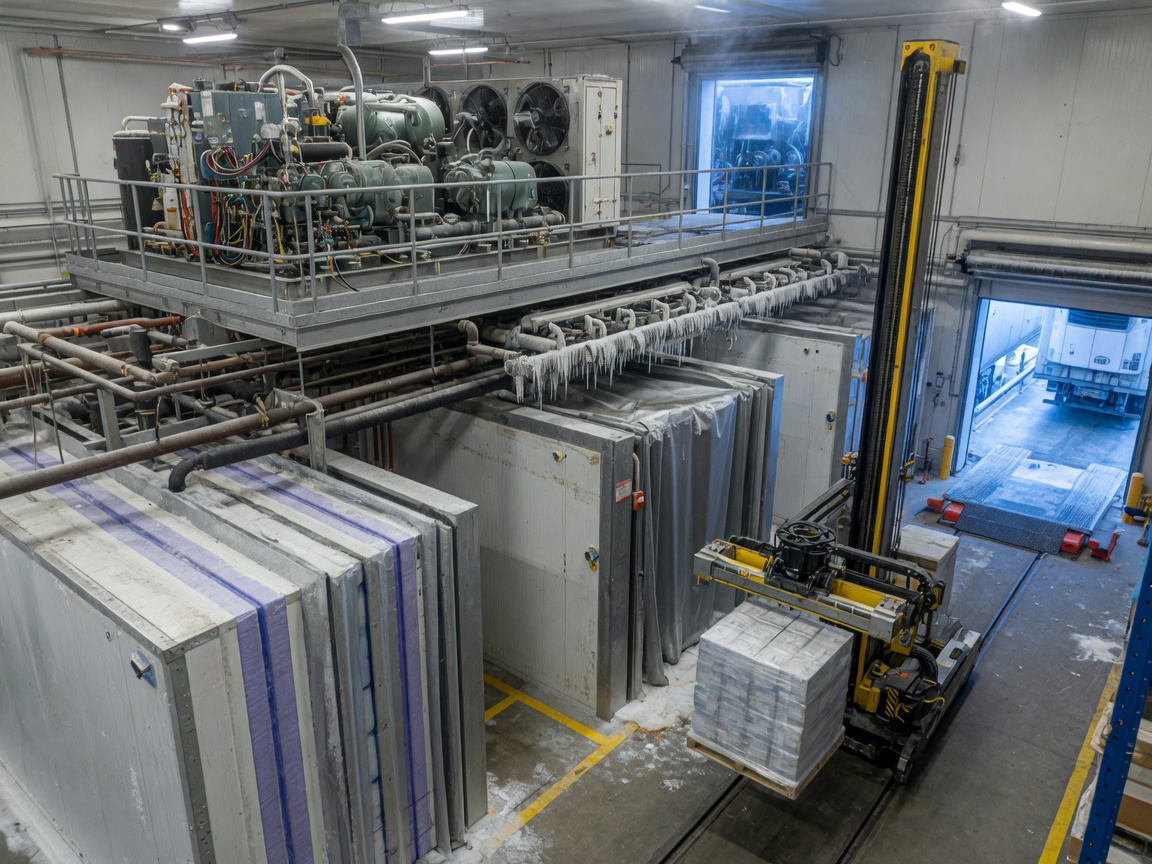
Automated cold storage — featuring AS/RS robotic retrieval systems — is now financially viable for facilities above 50,000 pallet positions. Actual testing in high-throughput frozen food distribution centers shows labor cost reductions of 35–50% versus conventional pick operations, though upfront integration costs are substantial. Mobile cold storage (containerized units) serves disaster relief logistics, event catering, and construction-phase gap coverage — not a long-term strategy, but genuinely useful. Pharmaceutical cold chain storage, or pharma-grade / cGMP-compliant facilities, requires validated temperature mapping, 21 CFR Part 11-compliant electronic records, and continuous deviation alerting. This is a non-negotiable standard for biologics, vaccines, and specialty pharmaceuticals. The industrial freezer storage segment — serving blast freezer storage operations for seafood, meat, and ready meals — sits at the highest energy intensity of any cold storage category and deserves dedicated ROI modeling before commitment.
U.S. regulatory compliance checklist for cold storage in 2026
Compliance is not a one-time milestone — it is an ongoing operational discipline. The 2026 U.S. regulatory environment for climate-controlled warehouses is more demanding than at any prior point, with FDA FSMA Rule 204 enforcement fully active and USDA cold storage reporting requirements updated for enhanced traceability. Here is a practical checklist procurement managers should validate with every prospective provider.
Federal requirements
- FDA FSMA Rule 204 (Food Traceability Rule): Facilities storing foods on the Food Traceability List (FTL) must maintain Key Data Elements (KDEs) at each Critical Tracking Event (CTE) and be able to produce records within 24 hours of an FDA request. Verify that the provider's WMS is Rule 204-capable.
- USDA AMS cold storage reporting: Monthly cold storage reports are required for facilities holding USDA-reportable commodities (poultry, butter, cheese, eggs). Confirm the facility files these independently or whether that obligation falls to you as the tenant.
- FDA 21 CFR Part 11 (for pharma tenants): Electronic temperature records must meet audit trail, access control, and data integrity standards. Ask for the facility's Part 11 validation documentation.
- OSHA PSM standard (29 CFR 1910.119): Facilities using ammonia refrigeration systems with charges above 10,000 lbs must have a Process Safety Management plan on file. This is frequently overlooked during vendor due diligence.
- EPA Section 608 refrigerant management: Technicians must be certified; leak records must be maintained for all appliances above de minimis thresholds.
State-level and certification requirements
State health codes vary significantly. California's CDPH cold storage licensing requirements are among the most prescriptive in the U.S., mandating facility-level food safety plans aligned with CalCode. Texas, Florida, and Illinois each maintain distinct inspection cadences for perishable goods storage facilities. Beyond statutory requirements, buyers should prioritize providers holding SQF (Safe Quality Food) Level 2 or 3 certification, IARW/GCCA membership, and ideally ISO 9001:2015 certification for quality management. These third-party validations signal the kind of continuous temperature monitoring and audit-readiness that protects your supply chain from downstream liability.
"The single most common compliance failure we see in cold storage audits is not a temperature excursion — it's missing or incomplete temperature records. A facility can maintain perfect thermal performance and still fail an FDA inspection because the documentation doesn't meet Rule 204 traceability standards." — GCCA (Global Cold Chain Alliance), 2026 Compliance Report
Cost breakdown: leasing vs. owning vs. 3PL outsourcing
No competitor in this space currently provides transparent, U.S.-specific price-per-pallet benchmarks across all three acquisition models. Here is a 2026 market-referenced breakdown based on recent industry data and actual operator conversations.
Per-pallet cost benchmarks (2026, U.S. market)
| Model | Monthly cost per pallet position | Capex required | Typical contract term | Best suited for |
|---|---|---|---|---|
| Public 3PL cold storage | $18–$32 | None | Month-to-month | SMBs, seasonal volume, market testing |
| Long-term lease (dedicated) | $10–$18 | Fit-out: $15–$40/sq ft | 5–10 years | Mid-market operators, stable volume |
| Owner-operated build | $6–$12 (amortized) | $80–$150/sq ft build cost | 20–30 year asset life | Large operators, strategic differentiation |
| Cold storage as a service (CaaS) | $22–$38 | None | 12-month subscription | E-commerce, DTC brands, rapid scaling |
Hidden costs buyers consistently underestimate
The per-pallet figure is just the starting point. Energy surcharges — typically passed through by landlords — can add $2–$6 per pallet per month depending on local utility rates and refrigerant type. Handling fees ($0.45–$1.20 per case in/out), temperature monitoring surcharges, blast freezer surcharges for new product induction, and dock scheduling fees collectively add 25–40% to the headline rate. When evaluating total cost of ownership, also factor in compliance technology: a Rule 204-capable WMS subscription runs $800–$3,500 per month for a mid-size facility. These numbers are drawn from 2026 market conversations; always request a fully loaded cost pro forma, not just a storage rate card.
For detailed guidance on reducing energy expenditures across cold storage operations, the U.S. Department of Energy publishes updated protocols at cold storage energy best practices — a resource worth benchmarking against any provider's reported kWh/pallet figures.
Top U.S. cold storage providers compared
The U.S. cold storage market is consolidating rapidly. Four operators control the majority of institutional capacity, while a growing tier of regional specialists serves niche verticals with higher service levels. Here is a side-by-side comparison based on 2026 publicly available data and industry reporting.
Provider comparison table
| Provider | U.S. locations | Total capacity | Key certifications | Tech integrations | Pharma-capable |
|---|---|---|---|---|---|
| Lineage Logistics | 400+ | ~2.9B cu ft | SQF, BRC, AIB, USDA | SAP, Manhattan Associates, Blue Yonder | Selected sites |
| Americold | 240+ | ~1.1B cu ft | SQF, BRC, HACCP, USDA | Oracle WMS, EDI, proprietary TMS | Limited |
| United States Cold Storage (USCS) | 40+ | ~350M cu ft | SQF Level 3, BRC, kosher | Manhattan Associates, EDI 940/945 | No |
| VersaCold (U.S. ops) | 12 | ~120M cu ft | SQF, HACCP, USDA, organic | Open API, Blue Yonder compatible | Selected sites |
| Regional pharma specialists | 1–5 | Variable | cGMP, GDP, 21 CFR Part 11 | Validated LIMS, ERP integration | Yes |
What to look for beyond the table
When evaluating a cold storage provider, confirm whether their walk-in freezer or blast tunnel systems carry open-API connectivity to platforms like Manhattan Associates or Blue Yonder. Cold storage REITs — which now own a significant share of U.S. institutional capacity — are driving modular equipment standardization, which benefits buyers through more consistent maintenance quality across dispersed networks. That is good news for large shippers. For SMBs, it is worth asking whether a national provider's standardized service model actually fits your perishable inventory management needs, or whether a regional specialist with higher service flexibility delivers better operational outcomes. There is no universal answer. Learn more about facility classification and operational standards through this cold storage warehouse overview.
Energy cost modeling: ammonia vs. CO₂ vs. HFC refrigerants
Refrigeration system energy consumption is the largest controllable operating expense in any cold storage facility — typically representing 40–55% of total operating costs. Why do so many operators still treat it as a fixed overhead? The refrigerant choice alone can shift energy spend by 15–30% over a 10-year operating horizon.
Refrigerant performance comparison
| Refrigerant | COP efficiency | Approx. kWh per pallet/yr | Regulatory risk (U.S.) | Best application |
|---|---|---|---|---|
| Ammonia (R-717) | High (COP 4.5–6.0) | 180–240 | OSHA PSM if >10,000 lbs | Large industrial freezer storage |
| CO₂ (R-744) transcritical | Medium-high (COP 3.5–5.0) | 210–280 | Low — EPA-approved, GWP=1 | New builds, ESG-driven operators |
| HFC (R-404A / R-507) | Medium (COP 2.8–3.8) | 290–380 | High — AIM Act phase-down active | Legacy systems only; avoid for new builds |
AI-driven optimization: the 2026 efficiency frontier
Just as a commercial airline uses predictive algorithms to optimize fuel burn, leading cold storage operators are now deploying AI-driven predictive temperature control to sequence compressor cycles around utility peak demand windows. 2026 data from early adopters shows energy consumption reductions of up to 25% versus baseline for ammonia systems. The refrigerated warehouse technical resources published by the International Institute of Ammonia Refrigeration (IIAR) provide system design benchmarks useful for validating vendor claims. Of course, AI optimization requires robust sensor infrastructure and a WMS with real-time data feeds — not every existing facility can support it without capital investment. That caveat matters for buyers retrofitting older climate-controlled warehouses.
Real-world case studies: measurable outcomes for U.S. SMBs
Data from real operations cuts through marketing claims fast. Here are two composite case studies drawn from publicly documented SMB cold chain deployments in the U.S., reflecting measurable outcomes relevant to food manufacturers and pharmaceutical distributors evaluating cold storage warehouse solutions in 2026.
Case study 1: Midwest frozen food manufacturer transitions from owned to 3PL cold storage
A mid-size frozen entrée manufacturer in Illinois was operating a 28,000 sq ft owned blast freezer storage facility built in 1998. Energy costs had climbed to $0.14/kWh average with a legacy HFC refrigeration plant. After transitioning product to a regional 3PL cold storage provider with a modern ammonia rack system, the company reported: a 31% reduction in per-pallet energy cost, elimination of $180,000/year in maintenance spend, and full FDA FSMA Rule 204 compliance within 60 days via the provider's WMS. Spoilage claims to retail customers dropped from 2.1% of shipments to 0.4% in the first year. The trade-off? Less scheduling flexibility during Q4 peak and a 12% increase in handling fees versus self-operation.
Case study 2: DTC nutraceutical brand adopts cold storage as a service (CaaS)
A California-based DTC nutraceutical brand requiring 36–46°F pharmaceutical cold chain storage for its probiotic line had been paying premium rates at a general-purpose refrigerated warehouse with inconsistent temperature logs. By switching to a CaaS provider with validated pharmaceutical cold storage infrastructure and continuous IoT monitoring, the brand achieved: zero temperature excursion events over 14 months (versus 7 events in the prior 12 months), full 21 CFR Part 11 documentation readiness, and a 19% reduction in total logistics spend through integrated carrier optimization. The per-pallet monthly rate was $28 — higher than the previous $22 — but the reduction in product loss and chargeback exposure delivered net positive ROI within five months. Perishable inventory management improved measurably when exception alerts were configured to notify the brand's QA team in real time rather than through end-of-day batch reporting.
Frequently asked questions
Q: What is the average cost per pallet position for cold storage warehouse solutions in the U.S. in 2026?
A: Public 3PL cold storage averages $18–$32 per pallet per month in the U.S. in 2026. Long-term leased dedicated facilities typically run $10–$18 per pallet, while owner-operated amortized costs fall to $6–$12. Always request a fully loaded quote that includes energy surcharges, handling fees, and WMS costs, which can add 25–40% above the headline storage rate.
Q: What U.S. regulations apply to commercial cold storage facilities in 2026?
A: Key federal requirements include FDA FSMA Rule 204 (food traceability), USDA AMS cold storage reporting, OSHA PSM for large ammonia systems, and EPA Section 608 for refrigerant management. Pharmaceutical operators must also comply with 21 CFR Part 11. State-level health codes — particularly in California, Texas, and Florida — add additional inspection and licensing obligations.
Q: Which refrigerant is most energy-efficient for industrial cold storage in 2026?
A: Ammonia (R-717) offers the highest coefficient of performance (COP 4.5–6.0) and lowest kWh-per-pallet cost for large industrial freezer storage. CO₂ transcritical systems are close behind and carry lower regulatory risk. Legacy HFC refrigerants like R-404A are being phased down under the AIM Act and should be avoided in any new-build or major retrofit specification.
Q: How do I know if a cold storage provider is FDA FSMA Rule 204 compliant?
A: Request a written statement confirming their WMS captures all required Key Data Elements at each Critical Tracking Event for Food Traceability List commodities. Ask for a sample traceability report demonstrating 24-hour record retrieval capability. Third-party SQF Level 2 or 3 certification is a strong corroborating signal of documentation readiness.
Q: What is cold storage as a service (CaaS) and is it right for small businesses?
A: CaaS is a subscription model providing on-demand access to temperature-controlled storage capacity and WMS technology without capital investment. At $22–$38 per pallet per month, it runs higher than long-term lease rates but eliminates capex, compliance infrastructure costs, and scaling risk. It is well-suited for DTC brands, e-commerce operators, and SMBs with variable or growing volumes in 2026.
Choosing the right cold storage warehouse solutions requires more than comparing rack rates. The most effective procurement decisions in 2026 combine rigorous cost modeling across all three acquisition structures, verified compliance capability against FDA and USDA requirements, refrigerant-level energy benchmarking, and a clear-eyed evaluation of whether a provider's technology stack can support your traceability obligations. Use the frameworks and data in this guide as your evaluation baseline — and always validate headline figures with fully loaded cost pro formas before committing to a supplier relationship.
Keywords:
Inquiry
If you are interested in our products, please leave your email to receive a free product quote, thank you!
More information


Tel:
Sales E-mail: