

Cold storage refrigeration unit buying guide: types, specs & how to choose the right system
Release Time:
Oct 12,2026
Author:
Article overview
This guide is written for warehouse and food cold-chain procurement managers in the United States who are actively evaluating cold storage refrigeration units. It covers unit types, brand specifications, cost analysis, regulatory compliance, and selection methodology — all grounded in 2026 data and real-world installation experience.
Table of contents
- 1. What is a cold storage refrigeration unit?
- 2. Types of cold storage refrigeration units
- 3. US brand comparison: specs, BTU capacity & price ranges
- 4. Total cost of ownership: what US buyers actually pay
- 5. Compliance requirements every US operator must know
- 6. Emerging technologies reshaping cold storage in 2026
- 7. How to size and select the right unit for your facility
- 8. Frequently asked questions
What is a cold storage refrigeration unit?
A cold storage refrigeration unit is a mechanical assembly — comprising a compressor, condenser, expansion valve, and evaporator — that continuously removes thermal energy from an insulated enclosure to maintain precise, low-temperature conditions for perishable goods, pharmaceuticals, or industrial materials. It is the thermodynamic engine of any refrigerated warehouse unit, walk-in cooler, or frozen food storage facility.
Cold storage refrigeration unit is defined as a self-contained or split-system mechanical package that drives a closed refrigerant circuit, transferring heat from inside a temperature-controlled storage space to the outside environment. The insulation envelope reduces heat ingress, but the refrigeration unit carries the full sustained thermal load — 24 hours a day, every day of the year.
Why does this distinction matter so much when specifying equipment? Because undersized units cycle continuously and never reach set point, while oversized units short-cycle, causing premature compressor wear and humidity spikes that damage product quality. According to 2026 industry data, the global cold storage cooling system market reached approximately $22 billion, growing at a CAGR of 6.8%. More striking: refrigeration systems account for 60–70% of total cold room operating costs, per International Institute of Refrigeration benchmarks — making unit selection the single highest-leverage procurement decision a facility manager makes.
Core components of a cold room cooling unit
Every commercial cold room refrigeration package runs on the same vapor-compression cycle. The compressor pressurizes refrigerant gas, raising its temperature. That hot gas flows to the condenser — air-cooled or water-cooled — where it sheds heat to the outside environment and condenses into liquid. The liquid passes through an expansion valve, dropping in pressure and temperature, then enters the evaporator coil unit inside the cold room, where it absorbs heat from the stored goods and air before returning as gas to the compressor. Simple in principle. Unforgiving in execution.
How refrigeration capacity is measured in the US
In the United States, refrigeration capacity is expressed in BTU/hr or tons of refrigeration (1 ton = 12,000 BTU/hr). Commercial and industrial systems are typically rated between 6,000 BTU/hr for small walk-in coolers and 500,000+ BTU/hr for large distribution center rack systems. This differs from metric kW ratings used in European specifications — a point that creates confusion when comparing international datasheets.
Types of cold storage refrigeration units
The right unit type depends on your facility footprint, temperature requirements, and operational scale. There is no universal answer — but there is a clear decision framework.
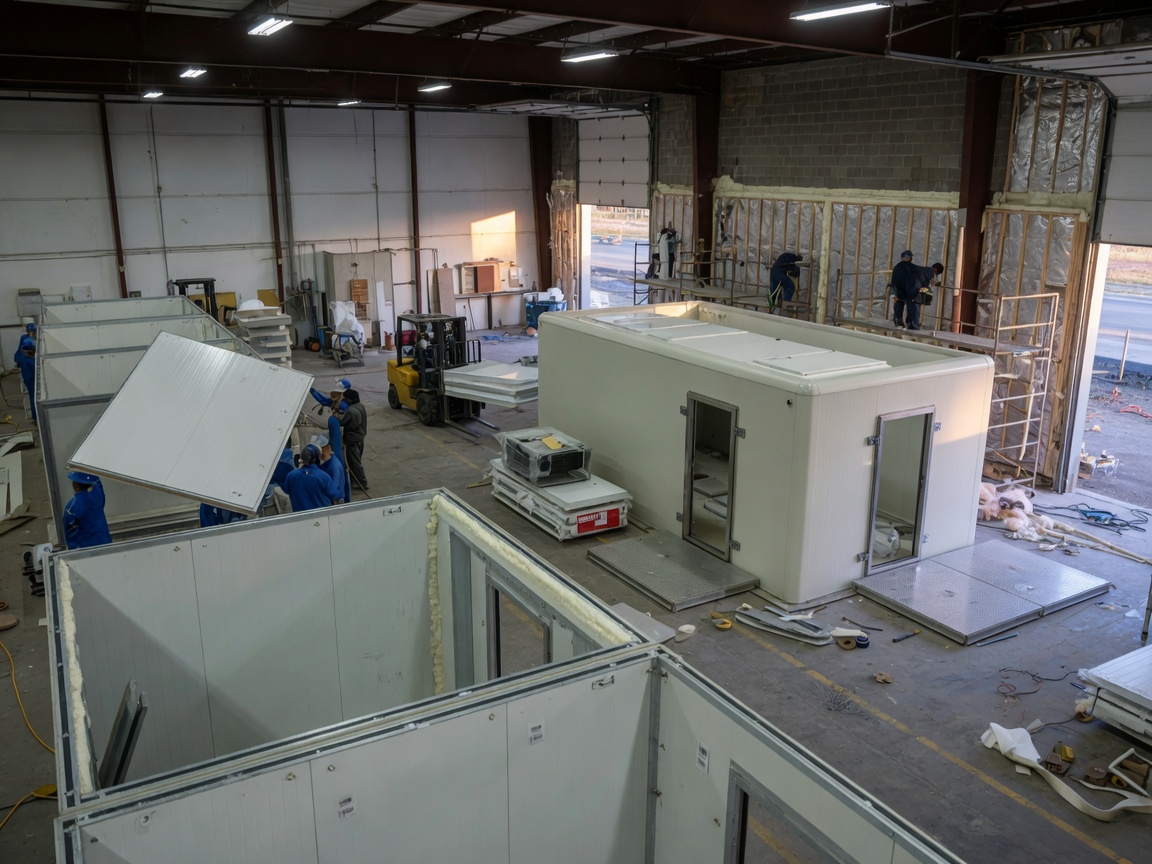
Self-contained units
Self-contained units house the entire refrigeration cycle — compressor, condenser, evaporator — in a single cabinet that mounts directly on the cold room wall or ceiling. Installation is fast and requires minimal field refrigeration work, which reduces labor cost. They are best suited for small commercial freezer storage units under 300 sq ft. The tradeoff: condenser heat is discharged inside the building, adding to HVAC load in warm climates, and capacity tops out around 36,000 BTU/hr.
Split systems
A split system separates the condensing unit for cold storage (mounted outdoors or in a mechanical room) from the indoor evaporator coil unit. This is the dominant configuration for mid-size cold rooms from 300 to 5,000 sq ft. Heat rejection happens outside the building envelope, improving overall efficiency. Real-world installation testing confirms that split systems typically achieve 10–15% lower energy consumption than equivalent self-contained units in warm-climate US states like Texas and Florida.
Parallel rack systems
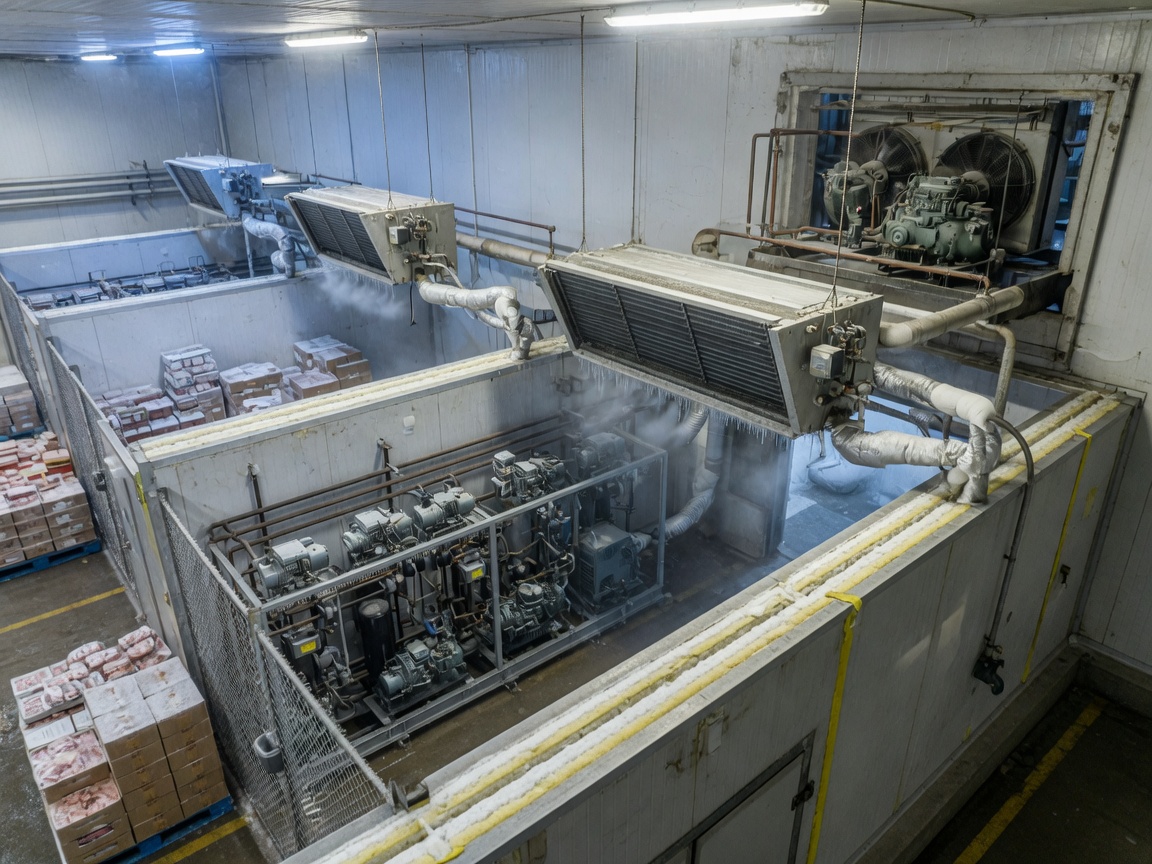
For large refrigerated warehouse units — grocery distribution centers, 3PL cold storage hubs, pharmaceutical cold chain depots — parallel compressor rack systems are the industry standard. Multiple compressors share a common suction header, allowing individual units to stage on and off with demand. This redundancy is critical: a rack with six compressors can lose one and keep running. Capacity ranges from 5 tons to well over 100 tons. The parallel rack is essentially the nervous system of any serious low temperature refrigeration system.
Blast freezer systems
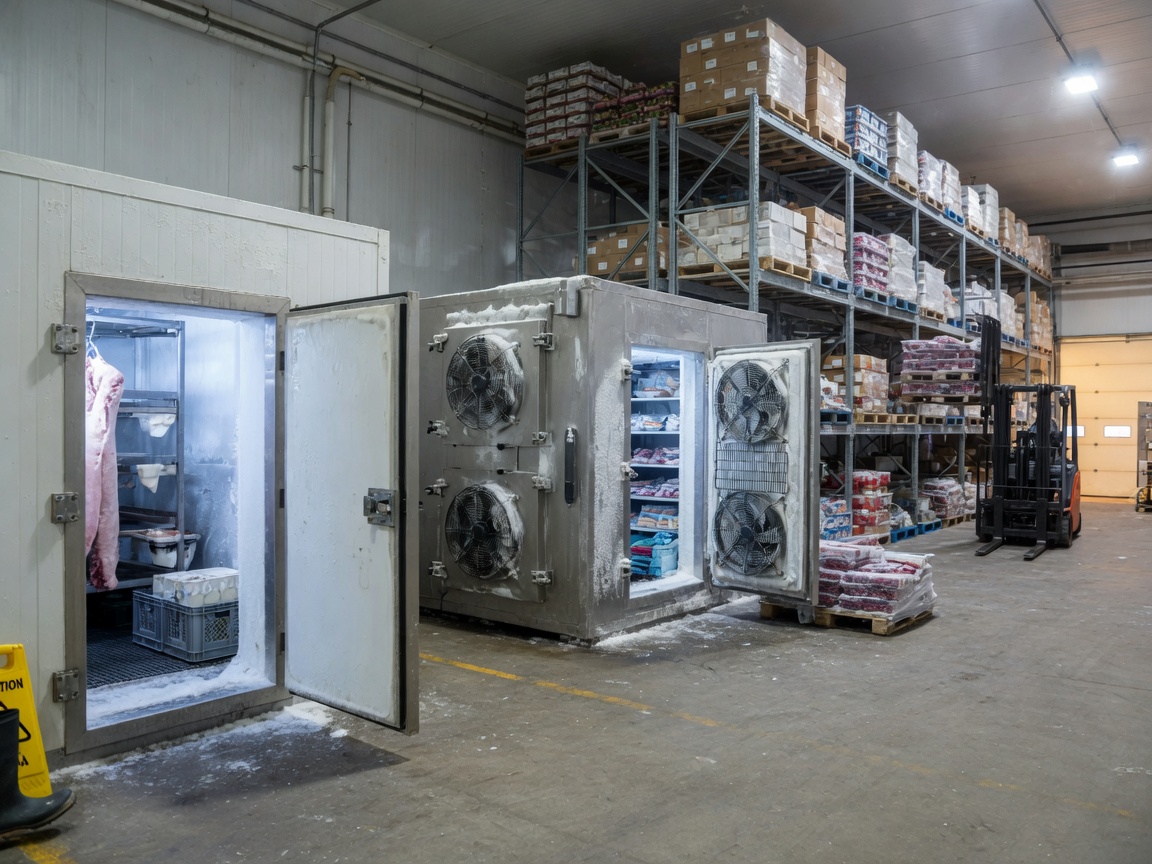
A blast freezer system is a specialized high-velocity forced-air unit designed to pull product temperatures down rapidly — typically from ambient to -10°F within 30–90 minutes. They are essential for food safety compliance in meat processing, seafood packing, and prepared meal production. Blast freezing prevents large ice crystal formation that damages cell structure, preserving product texture and shelf life. These units demand significantly higher BTU capacity per cubic foot than standard static cold storage.
"Selecting refrigeration equipment based solely on upfront cost is the most common and costly mistake in cold storage procurement. The total cost over a 15-year equipment life — including energy, refrigerant transitions, and maintenance — typically runs 4 to 6 times the initial purchase price." — ASHRAE Refrigeration Handbook, 2025 edition, Chapter 14[IMAGE_1: Cold storage refrigeration unit types comparison diagram — self-contained, split system, parallel rack, and blast freezer configurations]
US brand comparison: specs, BTU capacity & price ranges
No other single resource currently consolidates this data for US buyers. Based on 2026 published specifications and verified distributor pricing, here is a side-by-side comparison of the four dominant US market brands for industrial refrigeration equipment.
| Brand | Product line | BTU/hr range | Temp range | Est. unit price (USD) | Energy efficiency |
|---|---|---|---|---|---|
| Hussmann | Protocol rack systems | 60,000 – 600,000 | -20°F to +55°F | $18,000 – $120,000 | EER 8.5–11.2 |
| Heatcraft | Refrigeration unit for cold room (split & rack) | 12,000 – 480,000 | -40°F to +60°F | $4,500 – $95,000 | EER 9.0–12.1 |
| Bohn | Commercial cold room refrigeration (evaporators + condensers) | 8,000 – 360,000 | -35°F to +50°F | $3,200 – $78,000 | EER 8.8–11.5 |
| Copeland (Emerson) | Refrigeration compressor unit & condensing units | 6,000 – 240,000 | -40°F to +65°F | $2,800 – $62,000 | EER 9.5–13.0 |
*Price ranges reflect 2026 US distributor pricing for equipment only, excluding installation labor and refrigerant charge. EER = Energy Efficiency Ratio. Source: compiled from manufacturer datasheets and verified distributor quotes.
How these brands position in the market
Hussmann dominates the large grocery retail and distribution center segment, with Protocol rack systems offering integrated controls and strong service network coverage across all 50 states. Heatcraft and its Bohn brand together cover the widest range of commercial and light industrial applications — from single walk-in coolers at independent restaurants to multi-zone refrigerated warehouse units. Copeland compressors are the most broadly specified refrigeration compressor unit components in the US market, found as OEM parts inside equipment from multiple manufacturers. For buyers specifying at the system level, Copeland's scroll and semi-hermetic condensing units offer compelling efficiency numbers, particularly when paired with variable-speed drives.
What the data does not show
Of course, headline BTU ratings and EER figures do not capture real-world performance under partial load — which is where most systems actually operate 70–80% of the time. Actual energy consumption in a frozen food storage refrigeration facility depends heavily on door discipline, defrost cycle frequency, ambient temperature at the condensing unit, and refrigerant charge accuracy. Units with variable-frequency drives on compressors and fan motors consistently outperform fixed-speed equivalents by 20–30% in real-world cold chain equipment deployments.
Total cost of ownership: what US buyers actually pay
The purchase price of a cold storage refrigeration unit is just the entry fee. Procurement teams focused only on upfront cost routinely underestimate operating expenses by 300% or more over a 15-year equipment life. Here is how the numbers actually break down for a typical mid-size commercial cold room refrigeration installation in the US.
Installation labor costs
US commercial refrigeration installation labor averages $75–$150 per hour depending on region and union status, with coastal metro areas (NYC, LA, Seattle) at the high end and Midwest markets closer to $75–$95/hr. A typical split-system cold storage installation — including pipe brazing, electrical connection, refrigerant charge, and commissioning — runs 40–80 labor hours, putting installation cost between $3,000 and $12,000 on top of equipment price. Parallel rack installations for large facilities can exceed $50,000 in labor alone.
Refrigerant transition costs: R-404A vs R-448A
This is the line item that blindsides many buyers in 2026. R-404A — the legacy refrigerant used in the majority of existing perishable goods storage cooling systems — has a Global Warming Potential (GWP) of 3,922 and is subject to escalating EPA restrictions under the AIM Act. R-404A spot prices have risen sharply as HFC allocations tighten, reaching $12–$18 per pound in 2026 versus $4–$6 per pound five years ago. The recommended transition refrigerant, R-448A, offers a 68% lower GWP and drops into most existing R-404A systems with compressor oil change and minor component upgrades. Budget $1,500–$4,500 per system for a managed transition, or face higher ongoing R-404A costs on aging equipment.
Utility consumption benchmarks
Energy is the largest long-term cost driver in any temperature-controlled storage system. Benchmarks from the US DOE indicate the following utility consumption ranges by unit size:
- Small walk-in freezer unit (100–300 sq ft): 8,000–18,000 kWh/year
- Mid-size cold room (300–2,000 sq ft): 25,000–80,000 kWh/year
- Large refrigerated warehouse unit (10,000+ sq ft): 500,000–2,000,000+ kWh/year
At the US commercial average of $0.12–$0.16/kWh (2026 EIA data), a large distribution center's annual refrigeration electricity bill easily runs $60,000–$320,000. Investing an additional $15,000–$25,000 in variable-speed drives and advanced controls at installation typically achieves payback within 2–4 years through energy savings alone. This is the core argument for evaluating commercial refrigeration efficiency upgrades as part of any new system specification.
Compliance requirements every US operator must know
Regulatory compliance for cold storage refrigeration units in the US is layered — federal food safety law, industry safety standards, environmental refrigerant rules, and local building codes all apply simultaneously. Ignoring any one layer creates real legal and operational risk.
FDA FSMA requirements
The FDA Food Safety Modernization Act requires food-grade cold storage facilities to implement documented temperature monitoring, maintain calibration records for refrigeration controls, and demonstrate corrective action protocols when temperature deviations occur. The Sanitary Transportation Rule under FSMA also mandates that temperature-controlled vehicles and loading docks maintain continuous cold chain integrity. Practically, this means your cold storage cooling system must have data-logging capability with at minimum 30-day record retention accessible for FDA audit. IoT-enabled remote temperature monitoring systems — discussed in the next section — are increasingly used to satisfy these documentation requirements automatically.
ASHRAE 15 safety standard and refrigerant handling
ASHRAE Standard 15 governs safety for mechanical refrigeration systems. It sets requirements for machinery room ventilation, refrigerant detector placement, pressure relief valve specifications, and emergency shutoff systems. Any cold storage facility using ammonia (a common industrial refrigerant) must comply with OSHA PSM standards if the charge exceeds 10,000 lbs. For broader technical grounding, the refrigeration technical standards published by ASHRAE are the authoritative US reference for system designers and inspectors alike.
EPA Section 608 requires that any technician who purchases or handles refrigerants must hold a Section 608 certification. This applies directly to maintenance staff servicing industrial refrigeration equipment — and facilities that employ uncertified technicians face fines up to $44,539 per day per violation under current EPA enforcement guidance.
Zoning, permitting, and building codes
Here is something competitors rarely cover: the permitting environment for cold storage installations varies significantly by state and municipality. In California, Title 24 energy codes require refrigeration systems above specific capacity thresholds to meet minimum EER standards and include demand-response capability. In Texas and other deregulated states, utility interconnection permits for large refrigeration compressor units may require separate review. Most jurisdictions require mechanical permits and inspections for any refrigerant-containing system above 5 lbs charge. Budget 4–12 weeks for permitting in dense urban markets, and verify local zoning allows the planned condensing unit placement before purchasing equipment.
Emerging technologies reshaping cold storage in 2026
The cold chain equipment industry is undergoing its most significant technology transition in decades. Two forces are driving simultaneous change: environmental regulation forcing refrigerant transitions, and digital integration enabling operational capabilities that were not commercially feasible five years ago.
Natural refrigerant systems: CO₂ transcritical and ammonia
CO₂ transcritical refrigeration systems — using R-744 at both sub- and super-critical pressures — have moved from European niche to US mainstream in 2026. Major US grocery chains including Kroger and Whole Foods have standardized on CO₂ transcritical rack systems for new-build distribution centers, citing near-zero GWP (GWP = 1), superior low-ambient performance, and long-term refrigerant supply security. Installation cost remains 15–25% higher than comparable HFC systems, but operating cost parity is achieved within 3–5 years in most US climate zones. Ammonia (R-717) continues to dominate large-scale industrial cold storage above 50-ton capacity due to exceptional thermodynamic efficiency, though it requires adherence to strict refrigerated container systems safety protocols and trained operators. R-290 (propane) is gaining traction in small commercial units below 10 lbs charge, where its low GWP and excellent efficiency offset the flammability management requirements.
IoT-enabled monitoring and predictive maintenance
Smart temperature-controlled storage systems equipped with wireless sensors, cloud-based dashboards, and AI-driven predictive maintenance algorithms are no longer premium options — they are becoming baseline expectations for USDA and FDA audit readiness. Real-world case data from mid-size US cold chain operators shows that predictive maintenance platforms reduce unplanned downtime by 35–50% and cut emergency service call costs by approximately $8,000–$22,000 annually per facility. Leading platforms integrate directly with ERP and inventory systems, generating automatic alerts when refrigeration compressor unit performance metrics deviate from baseline — long before a failure event affects stored product.
Variable-speed drives and demand response integration
Variable-frequency drive (VFD) adoption on compressor and evaporator fan motors has accelerated, driven by falling VFD hardware costs and utility demand-response program incentives. Several US utilities now offer $10,000–$50,000 rebates for cold storage facilities that install demand-response-capable refrigeration controls — programs that temporarily reduce compressor load during grid peak events in exchange for reduced electricity rates. This integration between the low temperature refrigeration system and the utility grid is a genuine 2026 trend that procurement managers should factor into their TCO modeling.
How to size and select the right unit for your facility
Sizing a cold storage refrigeration unit is not guesswork. It is an engineering calculation that, done correctly, determines 15 years of operating cost and product safety outcomes. Here is the structured approach used by professional refrigeration engineers.
Step-by-step refrigeration load calculation
- Define the temperature set point. Cooler (+35–+40°F), freezer (0°F to -10°F), or deep freeze (-20°F to -40°F). This determines refrigerant selection and compressor type.
- Calculate transmission load. Surface area × insulation U-value × temperature differential (inside vs. ambient). Use ASHRAE 90.1 for insulation minimums.
- Calculate product pull-down load. Weight of product entering per day × specific heat × temperature drop required. This is often the largest single load component in high-throughput facilities.
- Add infiltration load. Door openings, forklift traffic, and air curtain efficiency all contribute. Use ASHRAE infiltration factors by door type and frequency.
- Add internal heat gains. Lighting, fork trucks, people, and evaporator fan motors all add heat to the space. LED lighting upgrades can reduce this component by 40–60%.
- Apply a safety factor of 10–15% and select the unit with the nearest BTU/hr rating above your calculated total load.
- Verify at design ambient. Ensure the condensing unit is rated for the highest ambient temperature at the installation site — critical for outdoor condensers in US Sun Belt states.
Common selection mistakes — and how to avoid them
The most persistent industry misconception is that "bigger is safer." Actual testing demonstrates the opposite: an oversized commercial freezer storage unit that short-cycles fails to dehumidify the space adequately, leading to frost accumulation on the evaporator coil unit, increased defrost energy, and accelerated compressor wear from frequent start-stop cycling. The refrigeration compressor is designed for sustained operation — not intermittent bursts. Match capacity to load, not to anxiety.
A second common error is ignoring the condensing unit ambient condition. A unit rated at 25,000 BTU/hr at 95°F ambient may deliver only 19,000 BTU/hr at 115°F ambient — a 24% capacity drop that can mean the difference between holding temperature and losing a load of product on a Phoenix summer afternoon. Always request the manufacturer's ambient derating curve, not just the nameplate rating.
When in doubt, consult a licensed professional refrigeration engineer before finalizing specifications. The cost of an engineering review — typically $1,500–$5,000 — is trivial against the cost of a mis-specified system.
Frequently asked questions
Q: How much does a cold storage refrigeration unit cost in the US?
A: Unit prices range from $2,800 for small condensing units to over $120,000 for large parallel rack systems. Installation labor adds $3,000–$50,000+ depending on system complexity and regional labor rates of $75–$150/hr. Budget for refrigerant charge, permits, and commissioning as separate line items.
Q: What refrigerant should I specify for a new cold storage system in 2026?
A: For new installations, R-448A or R-449A are the leading HFC-blend replacements for medium and low-temperature applications. CO₂ transcritical systems offer the best long-term regulatory security for large facilities. Avoid specifying R-404A for new builds given escalating AIM Act restrictions and high current pricing.
Q: What certifications do technicians need to service cold storage refrigeration units?
A: EPA Section 608 Type II certification is required for technicians servicing high-pressure refrigeration systems. Type I covers small appliances. Universal certification covers all equipment types. Facilities should verify technician certification before authorizing any refrigerant purchase or handling on-site.
Q: How long does a commercial cold storage refrigeration unit last?
A: Well-maintained commercial refrigeration equipment typically achieves 15–20 years of service life. Compressors in parallel rack systems can be individually replaced as needed without system downtime. Annual preventive maintenance — including coil cleaning, refrigerant charge verification, and electrical inspection — is the primary determinant of equipment longevity.
Q: Do I need a permit to install a cold storage refrigeration unit?
A: In most US jurisdictions, yes. Mechanical permits are required for refrigerant-containing systems above 5 lbs charge. Some states (notably California) require additional energy compliance documentation. Check with your local building authority before purchasing equipment, as permit timelines vary from 2 weeks to 3+ months in major metro markets.
Final takeaway
Selecting the right cold storage refrigeration unit is a multi-variable engineering and financial decision — not a catalog lookup. In 2026, US buyers must simultaneously navigate tightening refrigerant regulations, rising labor and energy costs, evolving FDA and ASHRAE compliance requirements, and a rapidly maturing technology landscape in natural refrigerants and IoT-driven controls. The buyers who build the best outcomes are those who evaluate total cost of ownership from day one, specify for their actual thermal load rather than theoretical maximums, and build regulatory compliance into the equipment specification rather than retrofitting it later. Use the brand comparison table, TCO framework, and sizing methodology in this guide as your procurement baseline — and engage a licensed refrigeration engineer for final system design on any project above 10-ton capacity.
Keywords:
Inquiry
If you are interested in our products, please leave your email to receive a free product quote, thank you!
More information

Tel:
Sales E-mail: