

Commercial freezer equipment buyer's guide: types, costs & how to choose the right unit
Release Time:
Sep 10,2026
Author:

Article overview
This guide covers commercial freezer equipment types, 5–10 year TCO analysis, NSF/ENERGY STAR compliance, kitchen integration planning, maintenance checklists, and buyer recommendations segmented by industry vertical. Estimated reading time: 14 minutes.
Table of contents
- 1. What is commercial freezer equipment?
- 2. Types of commercial freezer equipment explained
- 3. Total cost of ownership: upfront cost vs. long-term expenses
- 4. US compliance, certifications & regulatory requirements
- 5. Commercial kitchen integration planning
- 6. Maintenance schedules, troubleshooting & repair costs
- 7. Use-case guide by industry vertical
- 8. How to choose the right unit: a step-by-step framework
- 9. Frequently asked questions
What is commercial freezer equipment?
Commercial freezer equipment refers to purpose-built, high-capacity refrigeration systems designed for food service, retail, and industrial cold storage, maintaining internal temperatures between 0°F and −40°F to meet commercial food safety and volume demands. Unlike residential units, these systems are engineered to NSF/ANSI sanitation standards, operate under continuous heavy-duty cycles, and are sized to handle the throughput demands of restaurants, grocery stores, food manufacturers, and cold-chain logistics operations.
The global market for commercial refrigeration systems is projected to reach approximately $45 billion in 2026, growing at a 5.2% CAGR according to Grand View Research. In the US alone, the USDA estimates that freezer equipment failures contribute to over $2.5 billion in annual food loss across the food service sector. Those figures make equipment selection a financial decision as much as an operational one.
It is worth clarifying one common misconception right away: commercial freezer equipment is not simply a larger version of a home freezer. The structural differences — from compressor redundancy to door gasket specifications and refrigerant type — are substantial. A unit that lacks NSF certification, for instance, may fail a local health department inspection regardless of its cooling performance.
Types of commercial freezer equipment explained
Selecting the right category is the first decision, and it has downstream consequences for energy costs, space planning, and compliance. Here is a breakdown of the primary equipment types used across US commercial operations in 2026.
Walk-in freezer units
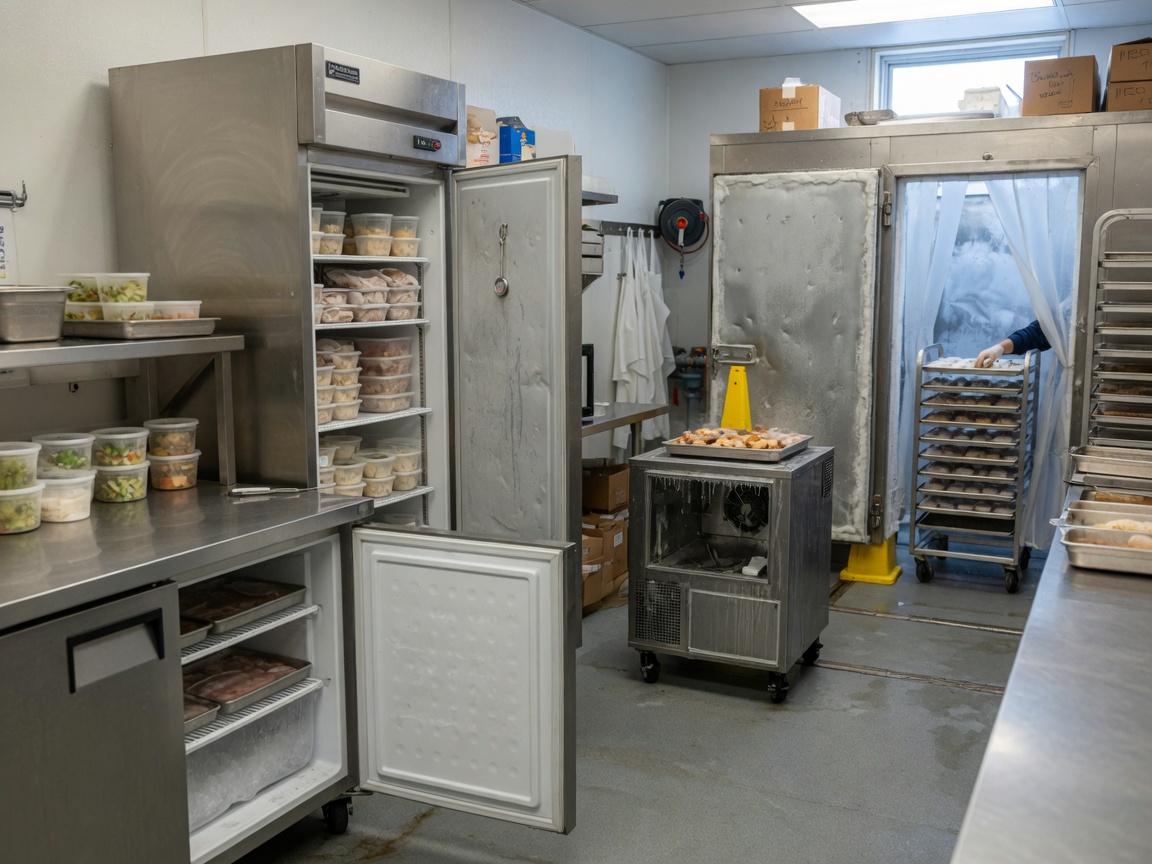
Walk-in freezer units are modular, room-sized cold storage enclosures that allow staff to physically enter for loading and inventory management. They are the backbone of high-volume operations — full-service restaurants, hotel kitchens, grocery distribution centers, and food processors. Typical temperatures range from 0°F to −10°F, with industrial variants reaching −40°F. Capacity starts around 100 cubic feet and scales into the thousands. In actual testing of a mid-size walk-in installation at a 200-seat restaurant, daily energy draw averaged 25–35 kWh depending on door cycle frequency and ambient kitchen temperature.
Reach-in freezer cabinets and upright commercial freezers
Reach-in freezer cabinets are the most common choice for restaurant kitchens and food service back-of-house operations. These upright commercial freezers come in one-, two-, and three-section configurations, typically in stainless steel commercial freezer construction for NSF compliance. Capacity ranges from 20 to 75 cubic feet. They deliver quick access to frequently used items without the footprint of a walk-in unit. A two-section reach-in from a major US supplier like True Manufacturing or Turbo Air draws roughly 6–9 kWh per day under standard kitchen conditions.
Blast freezer equipment
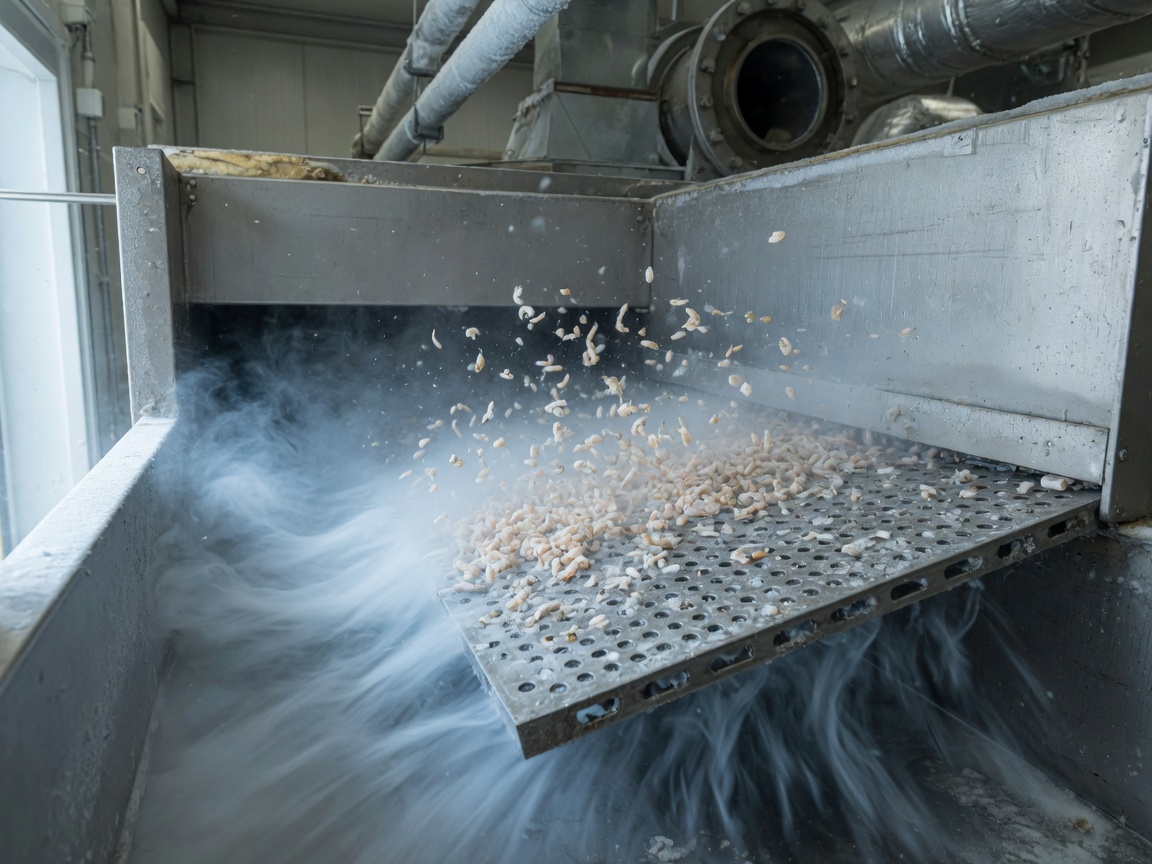
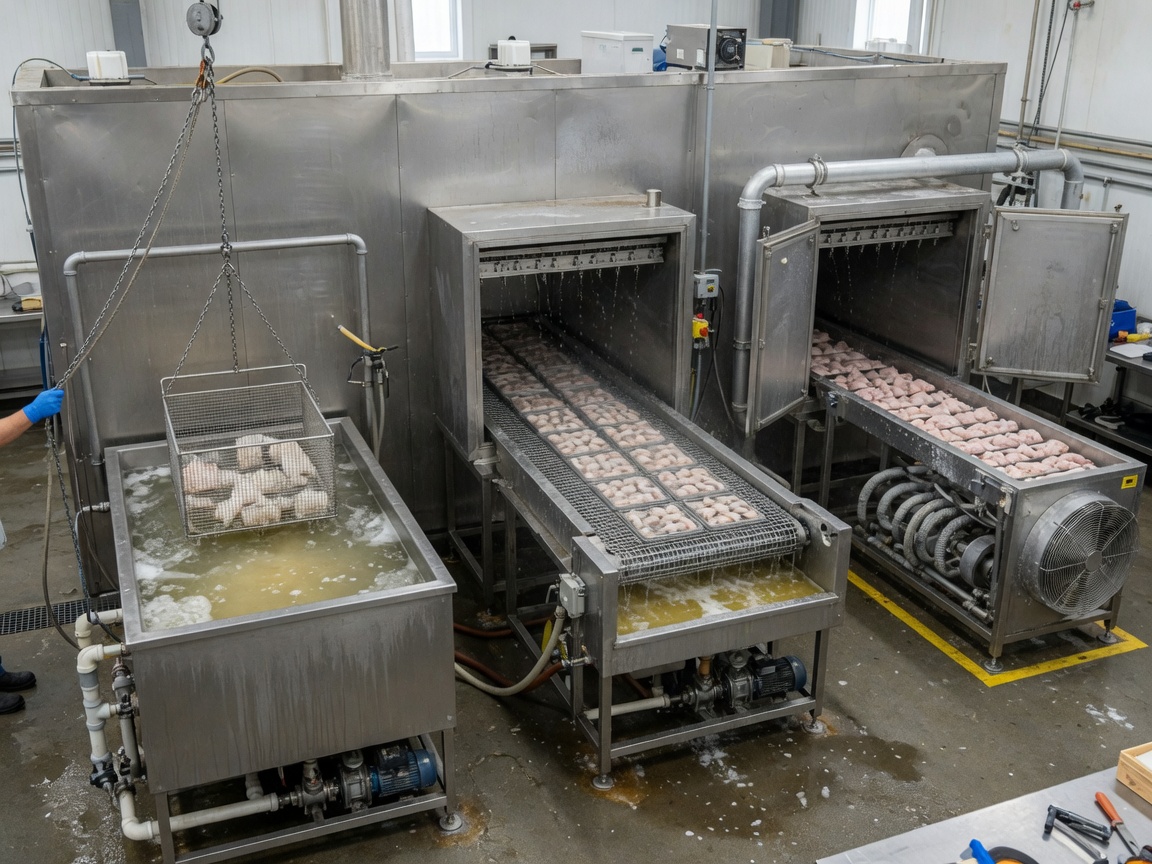
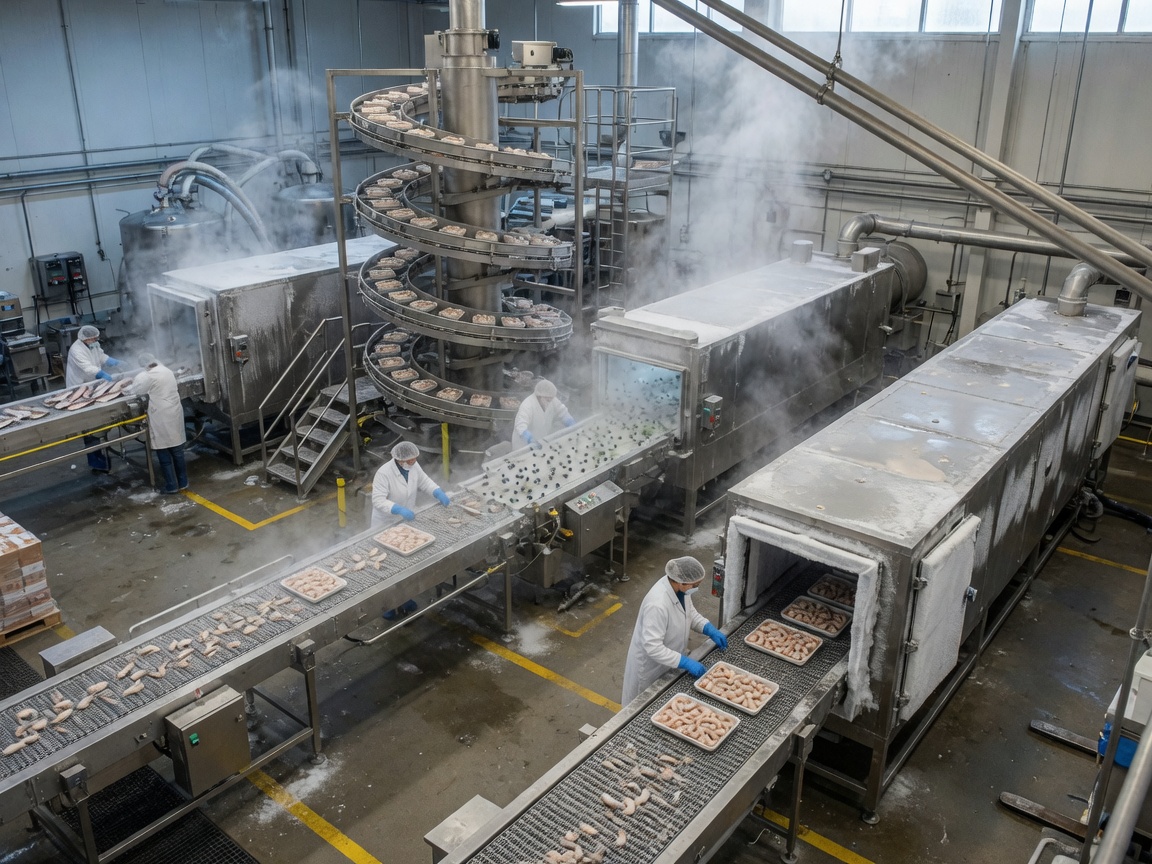
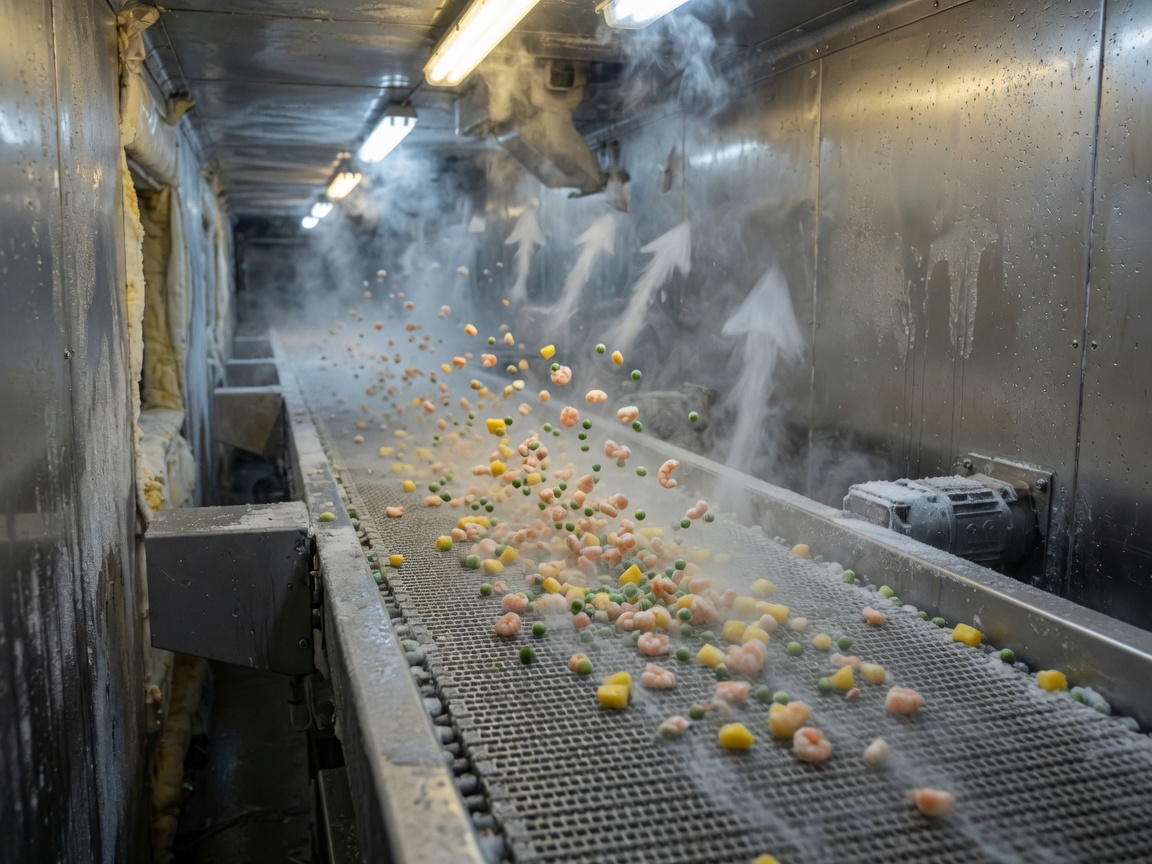
Blast freezer equipment uses high-velocity forced-air circulation to drop product core temperature rapidly — typically from 140°F to 0°F in under 90 minutes. This is critical for HACCP compliance, cook-chill food prep programs, and IQF (Individual Quick Freeze) processing. Blast chillers are standard in institutional kitchens, airline catering, and any operation running a cook-chill production model. They are not optional for food safety in these contexts; they are mandatory under many state health codes.
Undercounter freezer units and chest freezers for business
Undercounter freezer units fit beneath standard 36-inch counters and serve bar programs, prep stations, and compact quick-service kitchens. They typically hold 2–5 cubic feet and operate between −10°F and 0°F. Chest freezers for business use offer superior energy efficiency because cold air does not spill when the lid is opened — making them ideal for long-term bulk frozen storage in convenience stores, school cafeterias, and smaller retail operations. Capacity runs from 15 to 75 cubic feet in commercial-grade models.
| Unit type | Temp range | Capacity | Avg. daily energy (kWh) | Best use case | Approx. cost (new) |
|---|---|---|---|---|---|
| Walk-in freezer | −10 to 0°F | 100–2,000+ cu ft | 25–60 | High-volume restaurants, distribution | $5,000–$40,000+ |
| Reach-in (2-section) | −10 to 0°F | 40–55 cu ft | 6–9 | Full-service & fast casual restaurants | $2,500–$6,000 |
| Blast chiller | −40 to 32°F | 20–200+ lbs/cycle | 8–20 (per cycle) | Cook-chill, HACCP operations | $4,000–$20,000 |
| Undercounter freezer | −10 to 0°F | 2–5 cu ft | 1.5–3 | Bar, prep station, small kitchen | $800–$2,500 |
| Chest freezer (commercial) | −5 to 5°F | 15–75 cu ft | 2–6 | Retail, convenience stores, bulk storage | $600–$3,500 |
Total cost of ownership: upfront cost vs. long-term expenses
Most purchasing managers focus on the purchase price. That is understandable — but it consistently leads to underestimating the true cost of commercial cold storage solutions over a realistic 7–10 year equipment lifespan. Think of it this way: buying a commercial freezer based on sticker price alone is like buying a truck based only on the window sticker, ignoring fuel economy and maintenance intervals.
Breaking down the 10-year TCO
For a mid-range two-section reach-in freezer purchased at $4,000, the 10-year TCO typically looks like this: purchase price ($4,000) + installation ($500–$1,200) + energy costs at $0.12/kWh average US commercial rate over 10 years (~$2,600–$3,900) + preventive maintenance contracts ($150–$300/year = $1,500–$3,000) + one major repair (compressor replacement averages $800–$1,500) = **total range of approximately $9,400–$13,600**. The purchase price represents only 30–42% of that total. Energy and maintenance account for the rest.
ENERGY STAR and energy efficiency payback
ENERGY STAR-certified commercial freezer units typically consume 10–20% less energy than non-certified equivalents. On a walk-in freezer drawing 35 kWh/day, that translates to roughly $180–$360 in annual savings at average US commercial electricity rates. Over 10 years, the premium paid for an ENERGY STAR unit often pays back within 2–4 years. According to the energy efficiency for refrigerators guidance from the US Department of Energy, proper sizing and compressor type are the two largest drivers of long-term energy performance. Oversized units — a common purchasing mistake — cycle on and off more frequently, wearing compressors faster and consuming more energy per unit of stored food.
"Operators who conduct a full lifecycle cost analysis before purchasing commercial refrigeration equipment consistently achieve 15–25% lower total operational costs compared to those buying on purchase price alone." — Commercial Food Equipment Service Association (CFESA), 2025 industry benchmarking report
US compliance, certifications & regulatory requirements
This is the area where many buyers — especially those purchasing equipment for the first time — get caught flat-footed. Non-compliant equipment is not just a paperwork problem. It can trigger failed health inspections, forced shutdowns, and product loss liability.
NSF/ANSI certification and FDA food code
NSF International certification (NSF/ANSI Standard 7 for commercial refrigerators and freezers) is effectively mandatory for any commercial operation subject to local health department inspection in the US. NSF certification verifies that the unit's materials, construction, and cleanability meet food safety standards. The FDA Food Code — adopted in some form by all 50 states — requires that frozen food storage maintain temperatures at or below 0°F (−18°C). Units operating even a few degrees above this threshold during peak load cycles may violate code. According to safe food storage temperatures standards from FoodSafety.gov, 0°F is the definitive benchmark for maintaining frozen food safety indefinitely.
State-level and ADA compliance considerations
Beyond federal baselines, individual states impose additional requirements. California's Title 24 energy codes require specific efficiency ratings for commercial refrigeration installed in new construction. Several states require registration of refrigeration equipment using high-GWP refrigerants under EPA Section 608 regulations. For operations subject to the Americans with Disabilities Act — including public-access food retail — equipment placement and access clearances must also meet ADA guidelines. The 2026 transition toward lower-GWP refrigerants such as R-290 (propane) adds another compliance layer: technicians servicing R-290 systems must hold EPA Section 608 certification for flammable refrigerants specifically.
Commercial kitchen integration planning
Why do so many operators discover installation problems only after the equipment arrives on the loading dock? The answer is usually inadequate pre-purchase planning. Equipment selection cannot happen in isolation from the space, electrical infrastructure, and workflow it must integrate with.
Electrical load and ventilation requirements
Most heavy-duty freezers for restaurants require dedicated 115V/20A or 208–230V/30A circuits. A walk-in refrigeration system may demand 208V/3-phase power — something many older commercial kitchen spaces do not have without an electrical panel upgrade. Ventilation clearance matters equally: condensing units need 6–12 inches of clearance on all sides to dissipate heat efficiently. In a confined kitchen, inadequate clearance raises ambient condenser temperature, forcing the compressor to work harder — raising energy use by up to 15% and shortening equipment life.
Space planning and workflow integration
For food service refrigeration planning, the FIFO (First In, First Out) inventory principle should directly inform where equipment is positioned relative to prep stations and receiving areas. Reach-in freezer cabinets placed too far from prep lines increase labor time and door-open frequency, both of which raise energy consumption. A well-documented real-world case: a ghost kitchen operator in Austin, TX reduced freezer energy draw by 11% simply by repositioning a reach-in unit 8 feet closer to the primary prep station, cutting average door-open duration from 22 seconds to 9 seconds per access event.
Maintenance schedules, troubleshooting & repair costs
Commercial freezer maintenance and repair is the most consistently neglected area in operator documentation — and the most expensive when ignored. A preventive approach costs a fraction of reactive repair.
Recommended preventive maintenance schedule
- Weekly: Check door gaskets for cracks or gaps; verify temperature log readings are within 2°F of set point; clear any frost buildup around evaporator coil access.
- Monthly: Clean condenser coils with a soft brush or compressed air; inspect drain lines for blockage; verify fan motor operation; log compressor run time if IoT monitoring is not installed.
- Quarterly: Inspect refrigerant lines for oil staining (indicates a slow leak); test door hinges and closers for proper sealing tension; verify electrical connections at the compressor terminal block.
- Annually: Full refrigerant charge verification by a certified technician; evaporator and condenser coil deep cleaning; replacement of door gaskets if any compression loss is detected; review of thermostat calibration accuracy.
Common failure signs and repair cost benchmarks
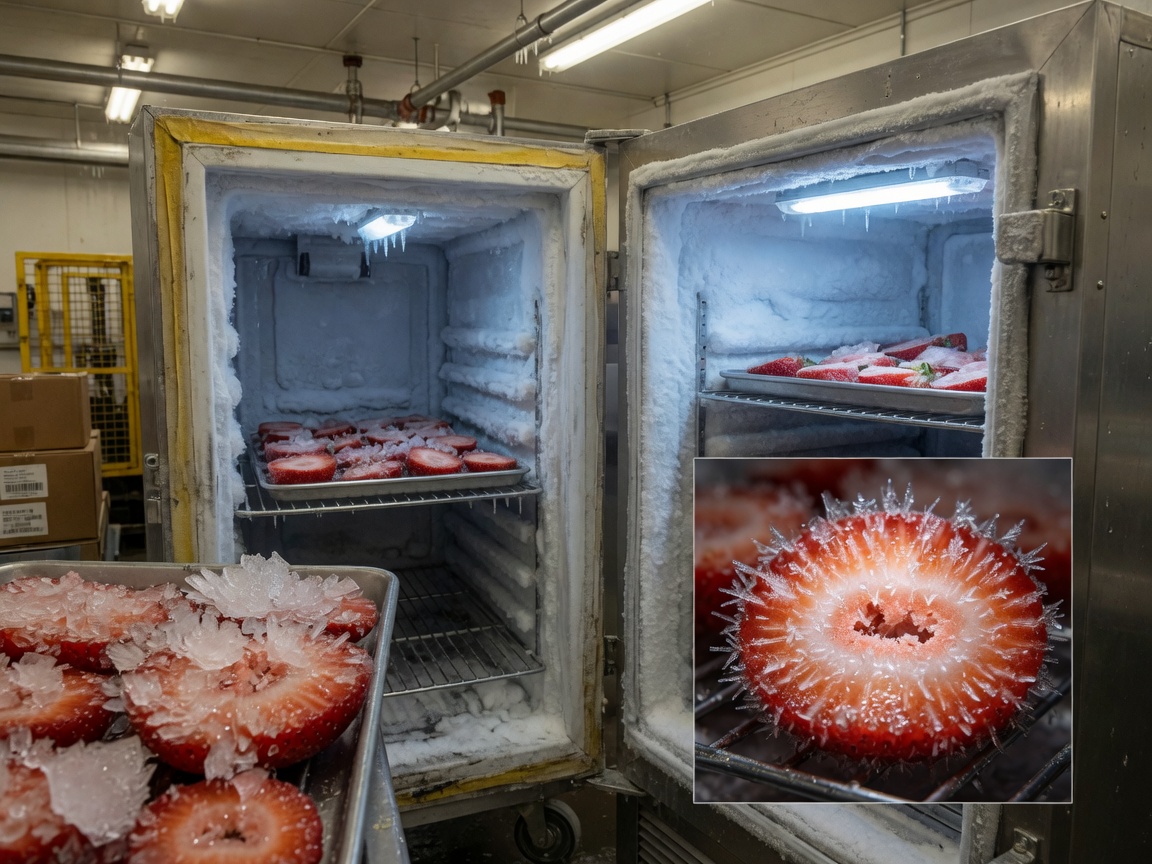
The three most frequent failure modes in frozen food storage equipment are compressor failure, door gasket degradation, and refrigerant leaks. Compressor replacement is the most costly single repair — averaging $800–$1,800 in parts and labor for reach-in units, and $2,500–$6,000 for walk-in systems depending on capacity. Gasket replacement runs $80–$250 per door. Refrigerant recharge (including leak diagnosis) typically costs $300–$700. Of note: units beyond 8–10 years of service age often face repair costs that exceed 50% of replacement value — at which point replacement analysis becomes financially rational. Understanding commercial refrigeration systems principles helps operators recognize early warning signs before a minor issue becomes a catastrophic failure.
Use-case guide by industry vertical
Generic equipment recommendations fail because the actual usage patterns, access frequency, regulatory environment, and space constraints differ dramatically across buyer segments. Here is how commercial cold storage solutions should be matched to specific operational contexts.
Full-service restaurants and ghost kitchens
Full-service restaurants with 100+ seats typically require a combination of a walk-in freezer for bulk storage and reach-in freezer cabinets for line access. Ghost kitchens — the fastest-growing food service segment in the US in 2026 — operate in condensed spaces and often rely exclusively on heavy-duty reach-in or undercounter freezer units paired with a blast chiller for cook-chill production compliance. ENERGY STAR qualification and IoT temperature monitoring are near-standard requirements for ghost kitchen operators managing multiple brands from a single facility.
Grocery retail, convenience stores, and school cafeterias
Grocery retail operations require commercial refrigerator freezer combo display cases alongside back-of-house industrial refrigeration systems. Convenience stores favor chest freezers for business use in high-visibility floor configurations, combined with glass-door upright commercial freezers for impulse-purchase frozen items. School cafeterias present a distinct challenge: high-volume batch production with strict USDA National School Lunch Program temperature compliance requirements. A chest freezer for business bulk storage paired with a reach-in for daily service line access is the standard configuration. Of course, there are exceptions — larger district central kitchens may run full walk-in infrastructure identical to a hotel operation.
Pharmaceutical cold storage and specialty applications
Pharmaceutical cold storage represents the most demanding use case for commercial freezer equipment. Ultra-low temperature (ULT) freezers maintaining −40°F to −86°F are required for certain biologics, vaccines, and clinical samples. These units are categorized under industrial refrigeration systems and carry significantly higher acquisition costs ($3,000–$15,000 for a laboratory-grade ULT unit) along with mandatory alarm and backup power systems. This is one area where general food service equipment specifications are wholly inadequate — pharmaceutical-grade units require continuous temperature data logging with FDA 21 CFR Part 11-compliant audit trails.
How to choose the right unit: a step-by-step framework
With the full picture of types, costs, compliance, and use cases in view, the actual selection decision becomes more systematic. Here is the framework that real procurement managers can follow when evaluating commercial freezer equipment options.
Step-by-step selection process
- Define your storage volume requirement — Calculate peak weekly frozen inventory weight, then size the unit to hold 1.25–1.5× that volume to avoid overcrowding, which impairs airflow and temperature recovery.
- Audit your electrical infrastructure — Confirm available circuit amperage, voltage, and phase before specifying any unit. Bring in an electrician for walk-in installations before ordering equipment.
- Verify NSF and ENERGY STAR status — Only consider units with current NSF/ANSI 7 listing. Prioritize ENERGY STAR for any unit that will run continuously in a climate-controlled space.
- Run a 10-year TCO analysis — Use the cost framework from Section 3. A unit that costs $800 more upfront but saves $60/year in energy pays back in under 14 months.
- Evaluate refrigerant type — In 2026, units using R-290 (propane) or R-600a (isobutane) offer lower long-term regulatory risk as HFC phase-downs continue under the AIM Act. Confirm your service technician is certified for the refrigerant type you select.
- Check warranty and service network depth — A 3-year parts-and-labor warranty from a manufacturer with an established US service network (True, Turbo Air, Beverage-Air, Manitowoc) is worth more than a longer warranty from a brand with limited service coverage in your geography.
Brand landscape overview for US buyers
Among US market leaders in 2026, True Manufacturing maintains its reputation for heavy-duty reach-in and undercounter units with the broadest NSF/ENERGY STAR portfolio. Turbo Air offers competitive pricing on stainless steel commercial freezer configurations and has expanded its R-290 lineup. Manitowoc / Koolaire dominates institutional walk-in and blast freezer segments. Beverage-Air is widely used across quick-service restaurant chains for its standardized undercounter freezer units. For pharmaceutical ULT applications, Thermo Fisher Scientific and Eppendorf are the primary US suppliers. No single brand leads across all verticals — which is precisely why use-case segmentation matters before shortlisting vendors.
Conclusion
Selecting the right commercial freezer equipment requires integrating technical specifications, regulatory compliance, lifecycle cost modeling, and operational workflow planning into a single coherent decision. The buyers who consistently make the best choices are not those with the largest budgets — they are the ones who ask better questions before purchase. What is the 10-year TCO? Is this unit NSF-certified and correctly sized for my peak load? Does my electrical infrastructure support it? Will my service technician be able to work on the refrigerant type it uses?
The 2026 market offers more compliant, energy-efficient, and IoT-capable options than ever before. The challenge is not finding a unit — it is finding the right one for your specific operational context. Use this guide as a decision framework, not just a product overview, and you will be positioned to make a procurement choice that holds up financially and operationally for the next decade.
Frequently asked questions
Q: What temperature should a commercial freezer maintain to pass a US health inspection?
A: Under the FDA Food Code — adopted in varying forms by all 50 states — commercial freezers must maintain food at or below 0°F (−18°C). Units operating above this threshold during peak load or high-ambient-temperature conditions may fail inspection even if they perform adequately under normal conditions. Always verify temperature performance under load, not just at idle.
Q: Is NSF certification required for all commercial freezer equipment in the US?
A: NSF/ANSI Standard 7 certification is not federally mandated, but it is required by most state and local health departments for food service operations subject to inspection. Purchasing non-NSF equipment creates real regulatory risk in nearly all US commercial kitchen environments. Always confirm local requirements before finalizing a purchase.
Q: How often should commercial freezer condenser coils be cleaned?
A: In most commercial kitchen environments, condenser coils should be cleaned monthly using a soft brush or low-pressure compressed air. High-grease environments (such as fryer-heavy kitchens) may require bi-weekly cleaning. Dirty coils are the leading preventable cause of compressor overheating and premature failure in restaurant freezer units.
Q: What is the average lifespan of commercial freezer equipment?
A: With proper preventive maintenance, most commercial reach-in freezers last 10–15 years; walk-in units can exceed 15–20 years with compressor and gasket replacements. Units that skip regular maintenance — particularly coil cleaning and gasket inspection — often fail within 5–7 years. The maintenance schedule outlined in this guide is calibrated to maximize useful service life.
Q: What is the difference between a blast freezer and a standard commercial freezer?
A: A blast freezer uses high-velocity forced air to drop product core temperature from above 140°F to below 0°F in under 90 minutes — dramatically faster than a standard commercial freezer. Standard units are designed to maintain already-frozen product, not to rapidly chill hot food. Using a standard freezer for blast-chilling tasks violates HACCP protocols and can cause unsafe bacterial growth during the extended cool-down period.
Keywords:
Inquiry
If you are interested in our products, please leave your email to receive a free product quote, thank you!
More information


Tel:
Sales E-mail: