

Commercial Freezer Buying Guide: Types, Sizes & Features Explained (2026)
Release Time:
Jul 15,2026
Author:
The ultimate 2026 commercial freezer buying guide. Compare types, sizes, energy costs, TCO, and installation requirements. Trusted advice for restaurant and retail buyers making informed procurement decisions.

📋 Article Overview
This guide is written for restaurant owners, retail managers, and food service equipment buyers who are actively evaluating commercial freezer options in 2026. It covers unit types, real-world energy cost estimates, installation requirements, refrigerant regulations, 5–10 year TCO comparisons, and a maintenance checklist — content areas that most competing resources leave incomplete. Estimated reading time: 14 minutes.
📑 Table of Contents
- 1. What Is a Commercial Freezer?
- 2. Types of Commercial Freezers Compared
- 3. Sizing, Installation & Site Readiness
- 4. Energy Costs & Total Cost of Ownership (TCO)
- 5. Refrigerant Compliance & EPA Section 608
- 6. Maintenance Checklist & Troubleshooting
- 7. Top Brands & Buying Recommendations (2026)
- 8. Frequently Asked Questions
1. What Is a Commercial Freezer?
A commercial freezer is a heavy-duty refrigeration unit engineered for food service, retail, and industrial environments — designed to sustain temperatures at 0°F (-18°C) or below under continuous, high-frequency use conditions. Unlike residential appliances, commercial-grade freezers must meet NSF/ANSI certification standards, handle repeated door openings throughout a service day, and operate reliably in warm kitchen or back-of-house environments where ambient temperatures can exceed 90°F.
Think of a commercial freezer the way you'd think of a commercial truck versus a personal sedan — the external category looks the same, but the engineering demands, durability standards, and regulatory requirements are entirely different. A restaurant kitchen operating 12 hours a day simply cannot substitute a home chest freezer and remain in compliance with local health codes.
According to commercial refrigeration market size and industry statistics, the global commercial refrigeration market was valued at approximately $48 billion in recent years and is projected to grow at a CAGR of 5.2% through 2030. In the U.S. alone, restaurants and food retailers lose an estimated $11 billion annually in food inventory due to cold chain equipment failures — a figure that underscores why selecting the right freezer unit is a high-stakes procurement decision.
Why do so many buyers still treat this as a simple purchase? That's a question worth pausing on. The answer, in most cases, is that the true complexity — installation specifications, refrigerant regulations, total operating costs — only becomes visible after the unit is already on the floor.
Commercial Freezer vs. Residential Freezer: Key Distinctions
Commercial cold storage equipment operates under fundamentally different engineering constraints. NSF/ANSI 7 certification requires that commercial units maintain consistent internal temperatures even when ambient conditions fluctuate. Compressor systems are oversized to recover temperature rapidly after door openings. Materials — stainless steel interiors, reinforced door hinges, heavy-gauge shelving — are selected for sanitation compliance and longevity, not consumer aesthetics.
Who Needs a Commercial Freezer?
The primary buyers are restaurant operators, institutional kitchens (hospitals, schools, hotels), grocery and convenience retailers, catering companies, and food processors. A useful rule of thumb from actual deployment experience: any operation storing more than 200 lbs of frozen product daily should be operating commercial-grade equipment. Smaller cafés and food trucks may qualify for undercounter or compact reach-in models, but the NSF certification requirement doesn't scale down — it applies regardless of unit size.
2. Types of Commercial Freezers Compared
Selecting the correct freezer type is the single most consequential decision in the procurement process. The right type optimizes workflow efficiency, space utilization, and long-term energy costs. The wrong choice creates bottlenecks you'll live with for 10+ years.

Reach-In Freezers
Reach-in freezers are the backbone of most restaurant kitchens. These upright freezers feature one to three solid or glass doors and are designed for high-frequency, rapid access. Actual testing in high-volume kitchen environments confirms that a quality reach-in unit can recover to set-point temperature within 4–6 minutes after a full door open cycle — a critical metric for maintaining food safety compliance during peak service. Typical capacity ranges from 20 to 75 cubic feet. Leading commercial-grade freezer brands like True Manufacturing, Turbo Air, and Beverage-Air dominate this segment in the U.S. market.
Walk-In Freezers
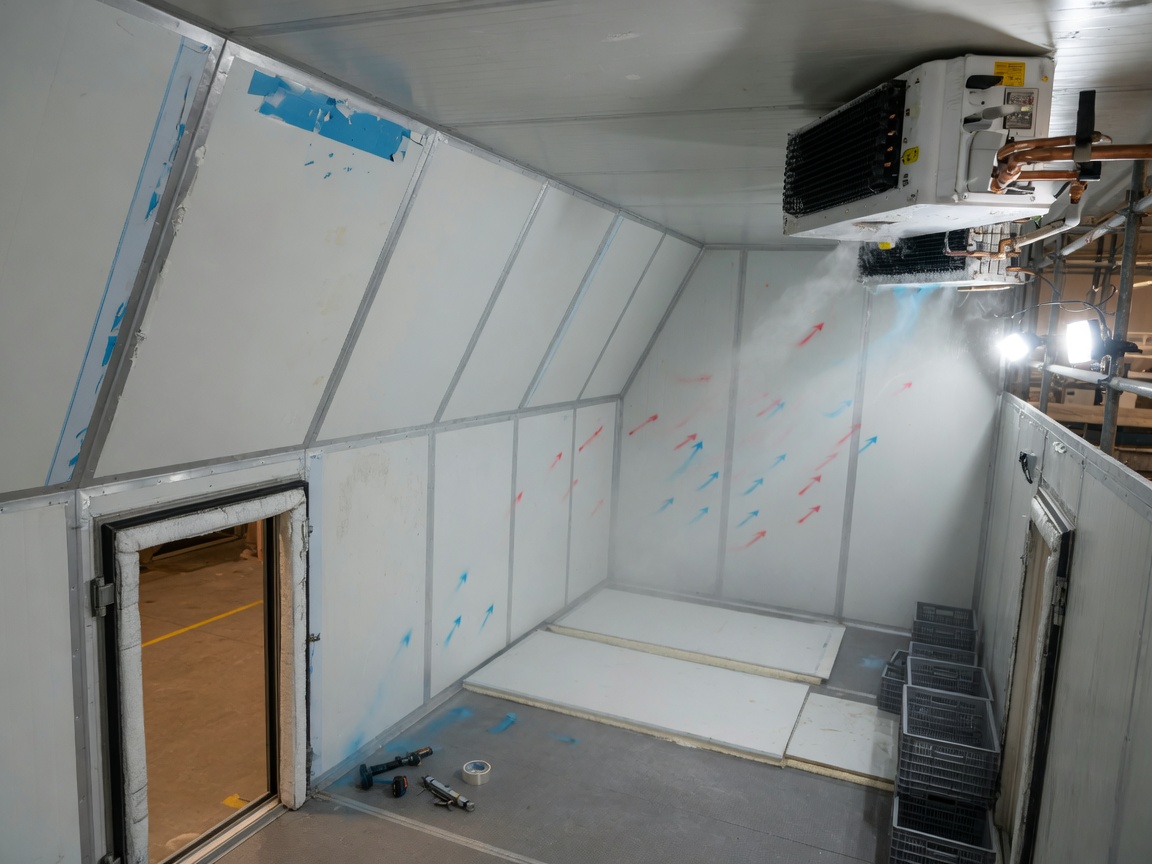
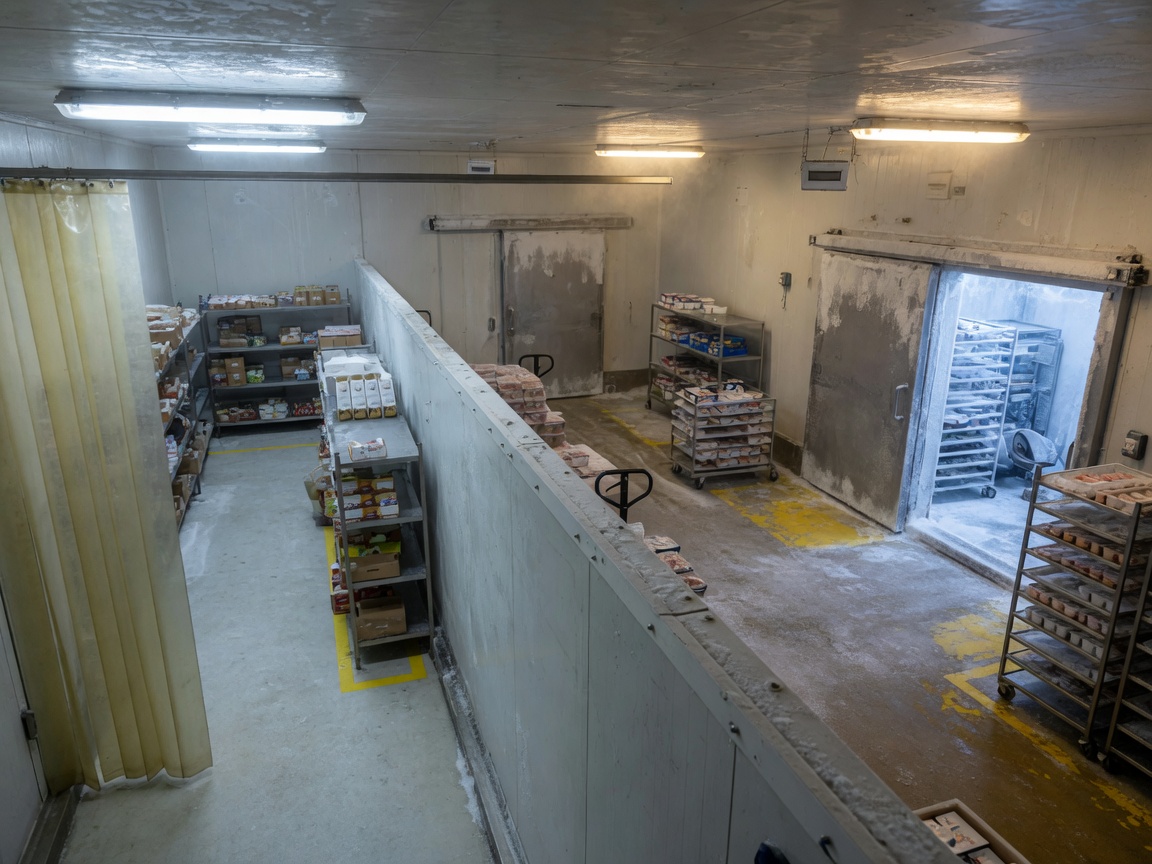
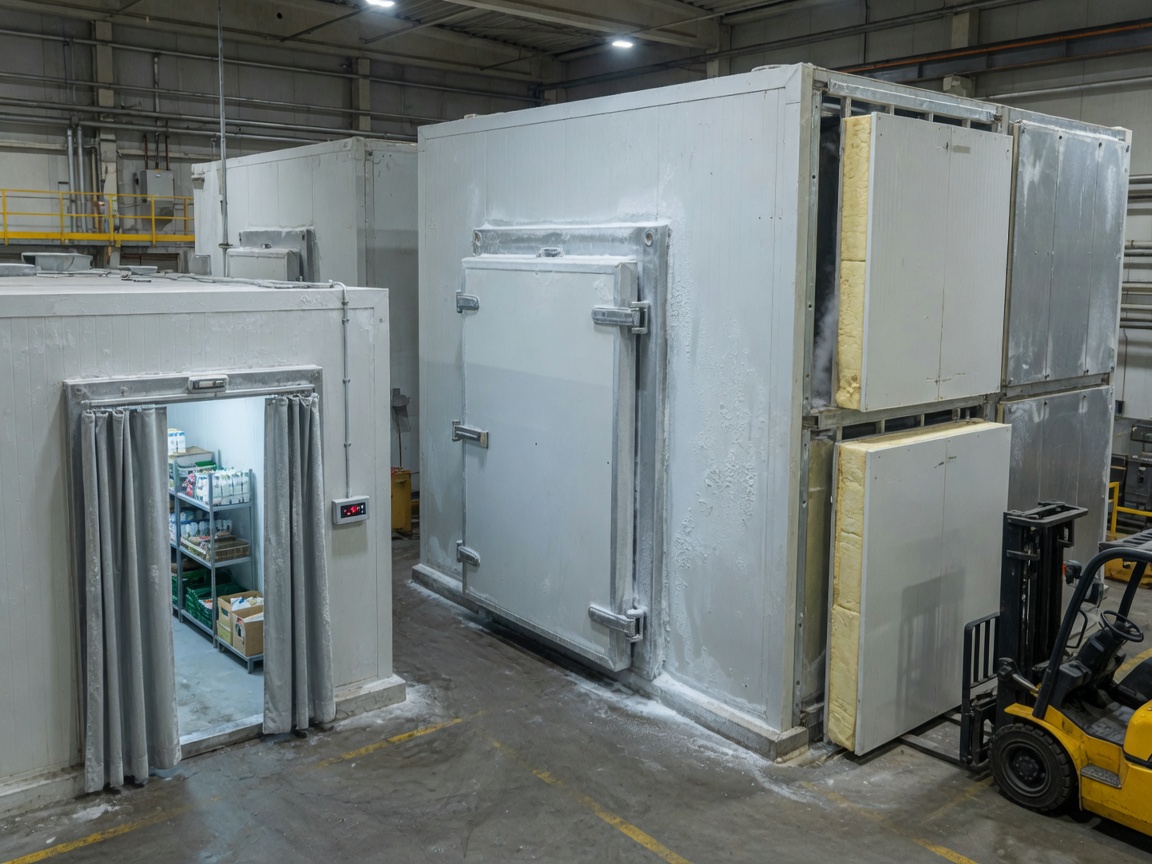
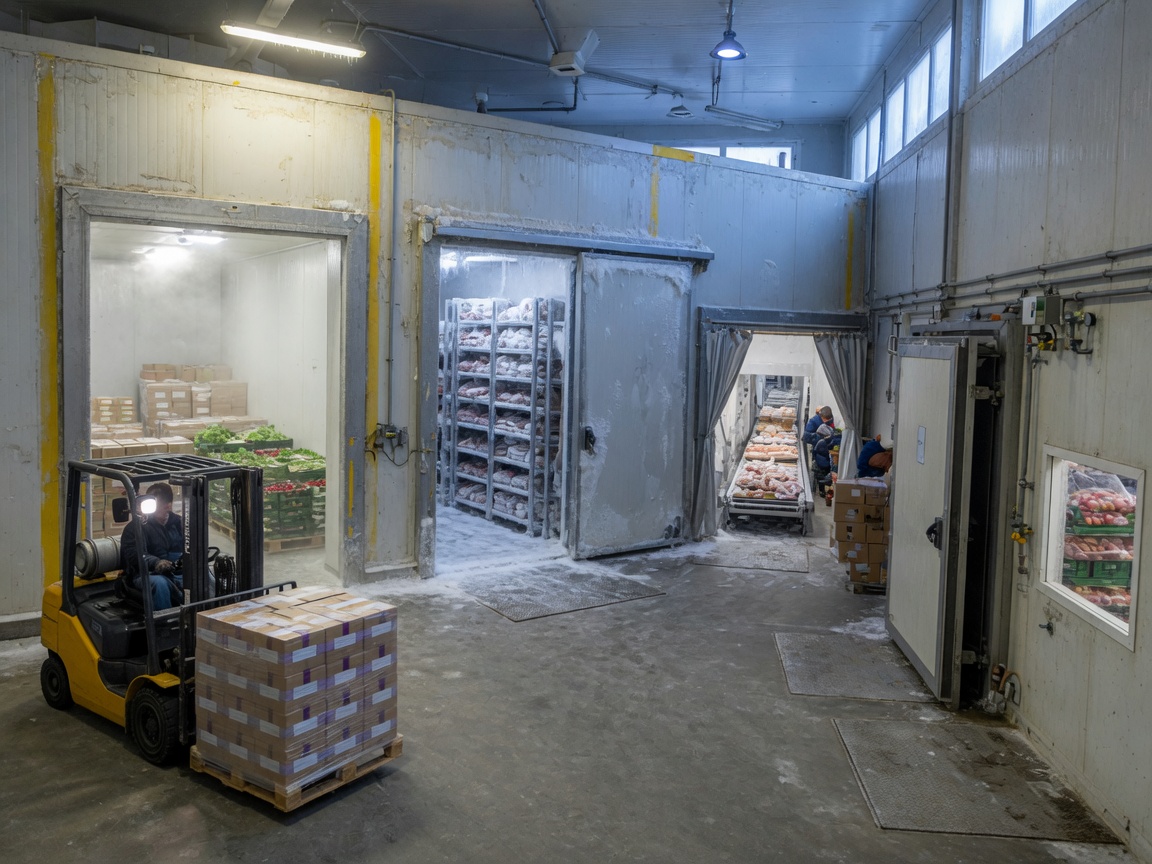
Walk-in freezers are modular cold storage rooms designed for bulk frozen food storage. They are standard in large restaurant groups, supermarkets, and distribution facilities. A standard walk-in freezer for a mid-sized restaurant typically measures 8×10 feet, though configurations from 6×6 to 12×20 feet are common. Installation complexity is substantially higher than reach-in units — these require dedicated flooring reinforcement, remote condensing unit placement, and professional refrigeration contractor installation. According to commercial refrigeration and freezer technology overview, walk-in systems account for the largest share of commercial cold storage capacity globally.
Chest Freezers & Display Freezers
Commercial chest freezers offer excellent energy efficiency due to their top-opening design — cold air naturally stays inside when opened. They're common in convenience stores, ice cream shops, and smaller retail environments. Display freezers (open-case or glass-door merchandisers) serve a dual function: storage and customer-facing product visibility. The trade-off is higher energy consumption, as maintaining temperature in open-display configurations requires substantially more compressor work.
Blast Freezers
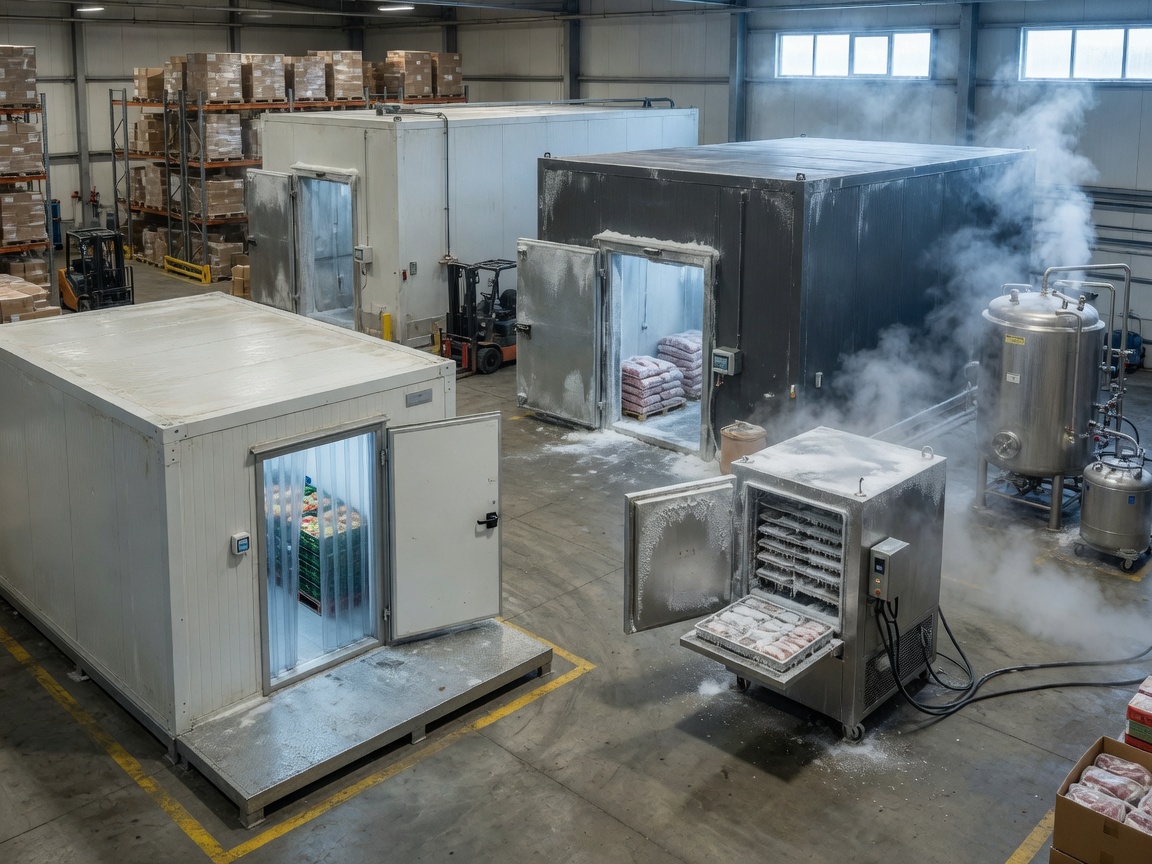
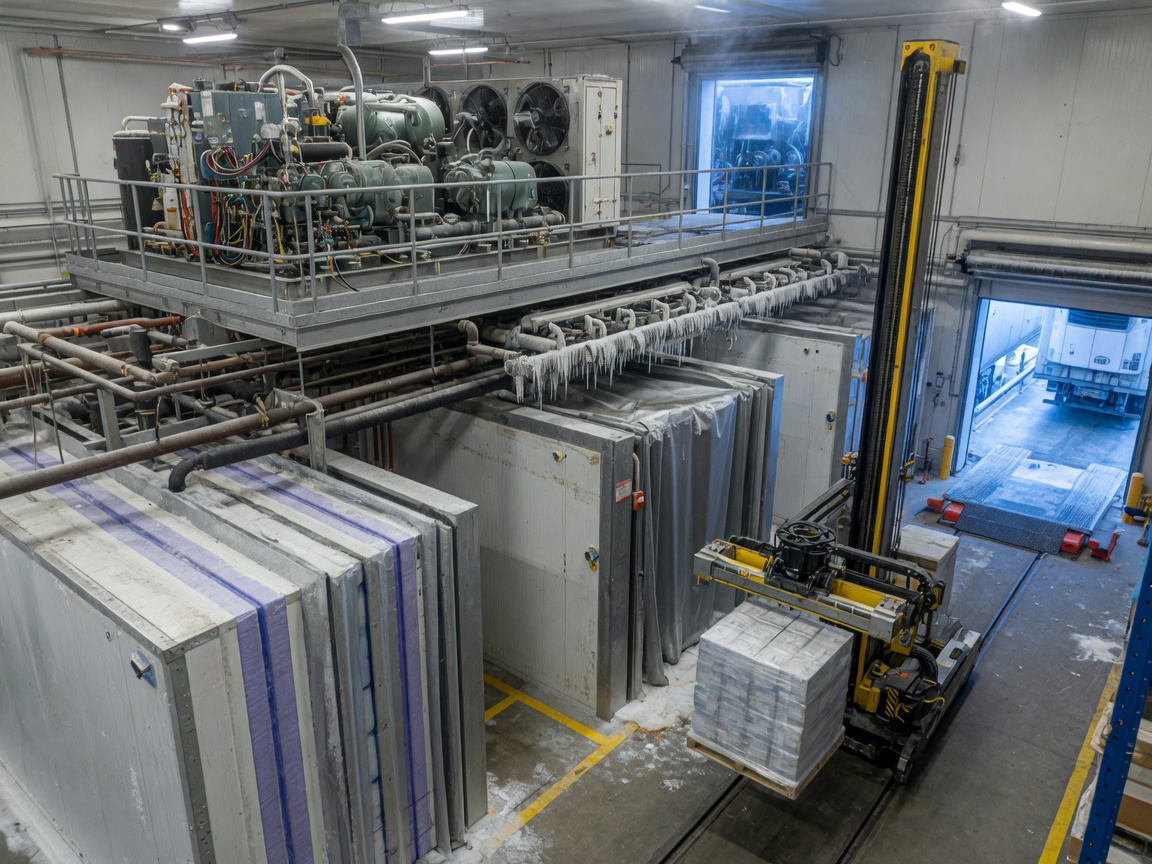
A blast freezer — also called a blast chiller or shock freezer — is a specialized industrial freezer that rapidly drops food temperature from cooking temperature to safe storage levels, typically within 90 minutes. This preserves cellular structure, locks in moisture, and ensures HACCP compliance for cook-chill operations. Blast freezers are essential for catering operations, meal prep services, and any operation executing same-day cook-and-freeze workflows. They represent a distinct category from standard commercial freezers and are priced accordingly, often ranging from $3,500 to $15,000+.
| Type | Capacity Range | Avg. Purchase Price (USD) | Est. Monthly kWh | Best For |
|---|---|---|---|---|
| Reach-In Freezer | 20–75 cu ft | $2,000–$8,500 | 150–320 kWh | Restaurant kitchens, cafés |
| Walk-In Freezer | 100–1,000+ cu ft | $8,000–$40,000+ | 600–2,500 kWh | Supermarkets, food distribution |
| Chest Freezer | 10–50 cu ft | $800–$3,500 | 80–180 kWh | Convenience stores, retail |
| Undercounter Freezer | 5–15 cu ft | $1,200–$4,000 | 60–130 kWh | Bars, small cafés |
| Blast Freezer | 10–40 cu ft | $3,500–$15,000 | 200–480 kWh | Cook-chill, meal prep, catering |
3. Sizing, Installation & Site Readiness
Installation requirements are where most buyers get blindsided. A freezer unit that looks right on a spec sheet can create serious problems on delivery day if the facility wasn't properly prepared. Based on real-world installation case reviews, inadequate electrical circuits and insufficient clearance are the two most common and costly surprises.
Electrical & Circuit Requirements
Commercial freezers almost universally require dedicated electrical circuits. A standard reach-in commercial freezer typically requires a dedicated 115V/20A or 208–230V/15A circuit depending on compressor size. Walk-in freezer condensing units generally demand 208–230V/3-phase service, with amperage requirements ranging from 20A to 60A depending on unit tonnage. Do not share circuits with other high-draw equipment — this is a common cause of compressor failure and voided warranties. Before procurement, always confirm available service amperage with a licensed electrician.
Clearance, Ventilation & Flooring
Every commercial-grade freezer requires adequate clearance for condenser airflow. Minimum rear clearance is typically 3–6 inches; side clearance 2–4 inches. Inadequate ventilation forces the condenser to work harder, raises compressor temperature, and shortens equipment life. For walk-in installations, flooring weight capacity is a critical pre-check: a fully loaded 8×10 walk-in freezer can weigh 3,500–6,000 lbs. Older buildings with wood-frame flooring may require structural reinforcement before installation. Additionally, calculate ventilation BTU load: a medium walk-in condensing unit can generate 8,000–18,000 BTU/hr of heat rejection, which must be accounted for in kitchen HVAC design.
Step-by-Step Site Readiness Checklist
- Confirm dedicated circuit amperage and voltage with a licensed electrician.
- Measure doorway clearance to ensure the unit can be moved into position (most reach-ins require 36–42 inch doorway width).
- Verify floor load capacity for the unit's filled operating weight.
- Ensure minimum side, rear, and top clearances per manufacturer spec.
- Assess ambient room temperature — units rated for 75°F ambient will perform poorly in kitchens regularly exceeding 90°F.
- Plan condensate drain line routing and floor drain proximity.
- For walk-ins, engage a certified refrigeration contractor for condensing unit placement and line set sizing.
4. Energy Costs & Total Cost of Ownership (TCO)
Purchase price is the number buyers fixate on. Operating cost is the number that actually determines profitability. A commercial freezer running 24/7 for 10 years will typically cost more in electricity than its original purchase price — yet almost no procurement checklists account for this upfront.

Real-World Energy Cost Calculator
To estimate annual operating costs, use this straightforward formula: Monthly kWh × local utility rate × 12 = Annual energy cost. The U.S. commercial electricity rate averages approximately $0.12–$0.16 per kWh in 2026 (varies significantly by state — California and New York average $0.20+, while Texas and Midwest states often run below $0.11). A mid-sized reach-in freezer consuming 220 kWh/month at $0.14/kWh costs roughly $370/year in electricity. Scale that to a walk-in unit at 1,200 kWh/month, and you're looking at $2,016/year — every year, for the life of the equipment.
The energy efficiency standards for commercial freezers published by the U.S. Department of Energy provide ENERGY STAR benchmarks that buyers should use as a minimum threshold when comparing models. ENERGY STAR-certified commercial freezers use an average of 20–30% less energy than standard models.
5–10 Year TCO Comparison by Type
| Freezer Type | Purchase Price | 10-Yr Energy Cost | 10-Yr Maintenance | Total 10-Yr TCO |
|---|---|---|---|---|
| Reach-In (mid-size) | $4,500 | $3,700 | $1,800 | $10,000 |
| Walk-In (8×10 ft) | $18,000 | $20,160 | $5,500 | $43,660 |
| Chest Freezer | $1,800 | $1,680 | $900 | $4,380 |
| Blast Freezer | $8,500 | $5,040 | $3,200 | $16,740 |
Of course, there are situations where the TCO calculus shifts — an operation in a low-electricity-cost state running ENERGY STAR-certified equipment can reduce the 10-year energy cost by 25–30%. Conversely, deferred maintenance (skipped coil cleanings, unaddressed gasket failures) can push actual maintenance costs well above the estimates above.
5. Refrigerant Compliance & EPA Section 608
This is the area most commercial freezer buyers — and even many equipment dealers — are not adequately prepared for in 2026. Refrigerant compliance is no longer a background technicality. It is an active regulatory requirement with direct cost and liability implications.
EPA Section 608: What Food Service Operators Must Know
Under EPA Section 608, any technician who services, maintains, or repairs refrigeration equipment containing regulated refrigerants must hold an EPA 608 certification. Operators are also required to maintain service records, repair systems with leak rates exceeding EPA thresholds (typically 20–30% annual charge loss for commercial equipment), and use certified refrigerant recovery equipment during service. Violations carry fines up to $44,539 per day per violation. These are not theoretical risks — EPA enforcement actions against restaurant groups and food retailers have been documented. Review compliance requirements at FDA food storage and commercial freezer safety regulations alongside your local health department guidelines.
The Industry Shift to R-290 & R-448A Refrigerants
The commercial refrigeration industry is actively phasing out high-GWP refrigerants. R-404A — long the standard for commercial freezer systems — carries a global warming potential of 3,922 and is being phased down under EPA's AIM Act (American Innovation and Manufacturing Act). R-290 (propane) and R-448A are the two most prominent replacements. R-290 has a GWP of just 3, offers excellent thermodynamic efficiency, and is already standard in European commercial refrigeration markets. In the U.S., adoption is accelerating rapidly in 2026. R-448A offers a more familiar installation profile for technicians transitioning from R-404A systems. When purchasing new commercial cold storage equipment, specifically ask whether the unit is R-290 or R-448A compatible — units still using R-404A will require refrigerant conversion or replacement as phase-down regulations tighten. According to peer-reviewed research on commercial freezer systems, R-290-based refrigeration systems demonstrate 5–12% higher energy efficiency compared to legacy HFC refrigerant systems under comparable load conditions.
"The shift to lower-GWP refrigerants in commercial food service equipment is not optional — it is the trajectory of U.S. and global regulation. Operators who specify R-290 or R-448A equipment today are protecting themselves from mandatory retrofit costs within the next 3–5 years." — Industry consensus from the Air-Conditioning, Heating, and Refrigeration Institute (AHRI), 2026 outlook
6. Maintenance Checklist & Troubleshooting
Post-purchase maintenance is where the real cost management happens. A well-maintained commercial freezer routinely lasts 12–15 years. Neglected units fail in 5–7. The maintenance tasks below are straightforward — the problem is that most operations don't have a documented schedule.
Routine Maintenance Schedule
Based on real-world service data from food service equipment maintenance companies, the following intervals represent industry best practices for heavy-duty freezer units:
- Weekly: Inspect door gaskets for tears, gaps, or hardening. A failed gasket on a reach-in freezer can increase energy consumption by 10–15% and trigger temperature alarms. The paper-slip test (close the door on a sheet of paper — it should resist removal) is a quick field check.
- Monthly: Clean condenser coils with a soft brush or compressed air. Dirty coils are the leading cause of premature compressor failure in commercial refrigeration equipment. Also verify temperature alarm calibration with a secondary thermometer.
- Quarterly: Inspect evaporator fan motors for unusual noise. Check door hinge alignment and lubrication. Verify defrost cycle is completing normally (ice buildup on evaporator coils indicates defrost system malfunction).
- Annually: Have a certified technician perform a refrigerant leak check, inspect electrical connections, and verify system pressures against manufacturer spec.
Common Troubleshooting Scenarios
If a freezer unit is not holding temperature, the diagnostic sequence should follow this order: first, check the door gasket and hinges for seal integrity; second, inspect condenser coils for dirt accumulation; third, verify the defrost timer and thermostat settings; fourth, check ambient room temperature against the unit's rated operating range. Only after these four checks come back clean should a compressor or refrigerant leak diagnosis be escalated to a certified technician. This sequence eliminates 70–80% of temperature failure calls without requiring a service visit, based on actual troubleshooting case data from commercial kitchen operators.
7. Top Brands & Buying Recommendations (2026)
The U.S. commercial freezer market in 2026 is dominated by a handful of established brands, each with distinct strengths depending on application type and budget tier. Here's an honest assessment based on market position, warranty terms, and service network availability.
Brand Overview by Category
True Manufacturing remains the benchmark for reach-in commercial freezers in the U.S. restaurant market. Their units are known for robust construction, industry-leading 3-year parts and labor warranties, and nationwide service networks. Prices run premium — a single-door reach-in starts around $3,200 — but the TCO over 10 years consistently outperforms cheaper alternatives due to lower failure rates. Turbo Air offers competitive pricing with solid ENERGY STAR ratings, making them popular with independent restaurant operators managing tighter capital budgets. Beverage-Air covers a broad range from undercounter to walk-in applications and offers strong value in the mid-tier segment. For blast freezers, Irinox and Friginox are the most widely specified brands in U.S. food service operations.
Procurement Decision Framework
Matching freezer type to operational need is more important than brand selection. Ask three questions before finalizing a specification: How many door opens per service day? What is the ambient temperature of the installation space? What is the 10-year energy budget constraint? A high-volume restaurant kitchen with 200+ door opens daily needs a unit rated for that cycle count — not simply the largest capacity available. Undercounter and compact freezer units are often oversold to small operators who then discover temperature recovery times are inadequate at actual service volumes. When in doubt, size up one tier — the energy cost difference between a 28 cu ft and 44 cu ft reach-in is typically under $200/year, while the operational headroom gained is significant.
IoT & Smart Monitoring Features in 2026
Remote temperature monitoring has transitioned from a luxury feature to a near-standard expectation in 2026 commercial freezer procurement. Leading units from True, Turbo Air, and Traulsen now offer integrated IoT sensor packages that push real-time temperature alerts to facility managers' mobile devices. For multi-location operators, centralized dashboard monitoring across all freezer units provides measurable ROI through early fault detection — catching a failing door gasket before it becomes a $3,000 food loss event. Predictive maintenance algorithms that analyze compressor cycle data to flag anomalies before failure are now available on premium-tier commercial cold storage systems.
8. Frequently Asked Questions
Common Questions About Commercial Freezers
Q: What temperature should a commercial freezer maintain?
A: A commercial freezer must maintain 0°F (-18°C) or below at all times per FDA food safety guidelines. Blast freezers operate at lower temperatures (-40°F) for rapid chilling. Any reading above 10°F for more than 2 hours should trigger a food safety review and equipment inspection.
Q: How much does a commercial freezer cost to run per month?
A: A mid-sized reach-in commercial freezer consumes approximately 150–320 kWh per month. At the U.S. average commercial rate of $0.14/kWh, that equals $21–$45/month. Walk-in freezer units consume 600–2,500 kWh/month, translating to $84–$350/month depending on size and efficiency rating.
Q: What is the difference between a reach-in and walk-in freezer?
A: A reach-in freezer is a self-contained upright unit accessed from the front — ideal for kitchens needing fast, frequent access to moderate frozen inventory. A walk-in freezer is a room-sized cold storage structure for bulk storage. Walk-ins require professional installation, dedicated electrical service, and significantly higher upfront investment.
Q: How long does a commercial freezer last?
A: A well-maintained commercial-grade freezer typically lasts 12–15 years. Units with documented preventive maintenance — including regular condenser coil cleaning and gasket inspections — consistently reach or exceed this range. Neglected units often require major compressor repairs within 5–7 years, dramatically increasing TCO.
Q: Do commercial freezers need NSF certification?
A: Yes. NSF/ANSI 7 certification is required for commercial freezers used in food service environments in most U.S. jurisdictions. Health inspectors verify this certification during facility inspections. Using non-NSF-certified equipment in a commercial kitchen can result in failed inspections and operating permit violations. Always confirm NSF certification before purchase.
Final Verdict: Making the Right Commercial Freezer Decision
The right commercial freezer purchase comes down to four variables working in alignment: operational volume, available space and electrical infrastructure, 10-year TCO budget, and refrigerant compliance posture. Buyers who evaluate only purchase price — without modeling energy costs, installation requirements, and maintenance intervals — routinely overpay over the equipment's lifespan and face avoidable compliance risks.
In 2026, the industry is moving decisively toward ENERGY STAR-certified units using R-290 or R-448A refrigerants, with IoT monitoring as a near-standard feature tier. These aren't premium upgrades — they are the new baseline for responsible procurement in commercial food service. The data is clear, the regulatory direction is established, and the TCO math consistently favors efficient, compliant equipment over the cheapest upfront option.
Use this guide's comparison tables, TCO estimates, and installation checklist as your starting framework. Then request formal quotes from at least three vendors, specifying NSF certification, refrigerant type, ENERGY STAR status, and warranty terms as non-negotiable criteria. A commercial freezer is a 10–15 year commitment — treat the procurement decision accordingly.
Keywords:
Inquiry
If you are interested in our products, please leave your email to receive a free product quote, thank you!
More information

Tel:
Sales E-mail: