

Industrial Fridge Freezer Buying Guide: Key Features, Types & Sizing Tips
Release Time:
Jul 17,2026
Author:
Complete 2026 buying guide for industrial fridge freezers. Compare types, temperature specs, energy costs, NSF compliance requirements, and installation tips to find the best commercial refrigeration unit for your business.

📋 Article Overview
This guide is written for food service operators, food processing procurement managers, and facility directors actively evaluating industrial fridge freezer options in 2026. It covers unit classifications, side-by-side specification comparisons, U.S. regulatory requirements, installation logistics, and total cost of ownership data — the exact decision-support information most buyers struggle to find in one place.
📑 Table of Contents
- 1. What Is an Industrial Fridge Freezer?
- 2. Commercial vs. Industrial Refrigeration: The Distinction That Matters
- 3. Types of Industrial Fridge Freezers Explained
- 4. Temperature Ranges, Compressor Types & Energy Specs Compared
- 5. Regulatory Compliance: FDA, USDA & NSF Standards You Cannot Ignore
- 6. Installation Requirements Every Facility Manager Must Know
- 7. Total Cost of Ownership: Maintenance, Lifespan & ROI Analysis
- 8. 2026 Trends Shaping Industrial Refrigeration Purchases
- 9. FAQ
What Is an Industrial Fridge Freezer?
An industrial fridge freezer is a heavy-duty refrigeration unit engineered for continuous commercial or industrial operation, capable of maintaining precise temperatures under high-frequency door cycles, large thermal loads, and strict food safety compliance requirements. Unlike residential appliances, these systems are built around commercial-grade compressors, reinforced stainless steel interiors, and certifications such as NSF/ANSI 7 that validate their suitability for regulated environments.
The distinction matters immediately at the point of purchase. A standard household unit running 2–3 door cycles per hour simply cannot hold temperature when a busy restaurant kitchen opens it 40–60 times per shift. Real-world testing confirms that domestic refrigerators in commercial settings show internal temperature drift of 8–12°F within two hours of high-use periods — a direct food safety violation under FDA guidelines.
Industrial fridge freezer是指 any refrigeration or freezing appliance rated for continuous-duty commercial or industrial service, encompassing walk-in cooler freezer units, upright commercial freezers, undercounter commercial freezers, blast chiller freezers, and large-capacity industrial cold storage units across food service, pharmaceutical, and logistics applications.
According to Global commercial refrigeration market size and industry statistics, the global commercial refrigeration equipment market was valued at approximately $38.5 billion in 2023 and is projected to reach $58 billion by 2030, reflecting a CAGR of roughly 6.1%. That growth trajectory tells you everything about where capital is flowing — and why getting the right specification the first time is non-negotiable.
Why the "Big Residential Fridge" Myth Costs Businesses Money
One of the most persistent industry misconceptions is that a large residential refrigerator can substitute for food service refrigeration equipment in a small café or catering operation. It cannot. Domestic compressors are designed for roughly 4–6 cycles per day, not 60. Beyond the mechanical failure risk, health inspectors in all 50 U.S. states can — and do — cite businesses for using non-NSF-certified equipment. The penalty isn't just a fine; it can be a temporary closure. That's a business-ending mistake for a unit that might save $800 upfront.
Who Actually Needs an Industrial Fridge Freezer?
The buyer universe is broader than most suppliers acknowledge. Restaurant grade freezer buyers are the obvious segment — full-service restaurants, quick-service chains, hotel kitchens. But industrial cold storage units are equally critical in pharmaceutical cold chain facilities, biotech labs, grocery distribution centers, convenience store chains, and contract food manufacturers. Each vertical carries distinct temperature, certification, and capacity requirements, which is exactly why a single-product recommendation without use-case segmentation is almost always wrong.
Commercial vs. Industrial Refrigeration: The Distinction That Matters
Most buyers searching for a commercial refrigerator freezer combo land on content that treats "commercial" and "industrial" as interchangeable. They are not — and the confusion regularly leads to specification errors that cost tens of thousands of dollars to correct post-installation.
Commercial refrigeration refers to equipment designed for food service and retail environments: restaurants, supermarkets, convenience stores, and cafeterias. Units in this category prioritize accessibility, aesthetic design, and compliance with FDA food code and NSF standards for food contact. Think reach-in freezer refrigerators, display cases, and undercounter units.
Industrial refrigeration, by contrast, describes large-scale systems used in food processing plants, cold chain logistics, pharmaceutical manufacturing, and chemical storage. These systems often operate at 480V three-phase power, involve remote condensing units or ammonia-based refrigerant circuits, and must comply with OSHA, EPA Section 608, and in some cases USDA cold chain mandates for federally inspected facilities.
Which Category Fits Your Operation?
A practical decision framework: if your operation stores finished food products for same-day or next-day service, you almost certainly need commercial-grade food service refrigeration equipment. If your operation processes, manufactures, or distributes food at scale — handling raw ingredients in ton-level quantities — you're in industrial territory. Pharmaceutical cold storage adds another layer, requiring 21 CFR Part 211 validation documentation that food service units simply don't carry.
Gray Zone: The Mid-Scale Food Processor
Of course, there's a significant gray zone — the mid-scale food processor, ghost kitchen operator, or multi-unit restaurant group operating central commissary kitchens. These buyers legitimately need equipment that bridges both worlds: NSF-certified for food contact compliance, but built with industrial-grade compressor redundancy and capacity. A heavy duty freezer for business in this category typically means a commercial-grade walk-in unit with an industrial condensing package. Recognizing this distinction before issuing an RFQ prevents costly vendor mismatches.

Types of Industrial Fridge Freezers Explained
Understanding the product taxonomy is the foundation of any sound procurement decision. Each category of industrial fridge freezer serves a distinct operational profile — getting this wrong at the selection stage creates workflow inefficiencies that persist for the equipment's entire lifespan.
Walk-In Cooler and Freezer Units
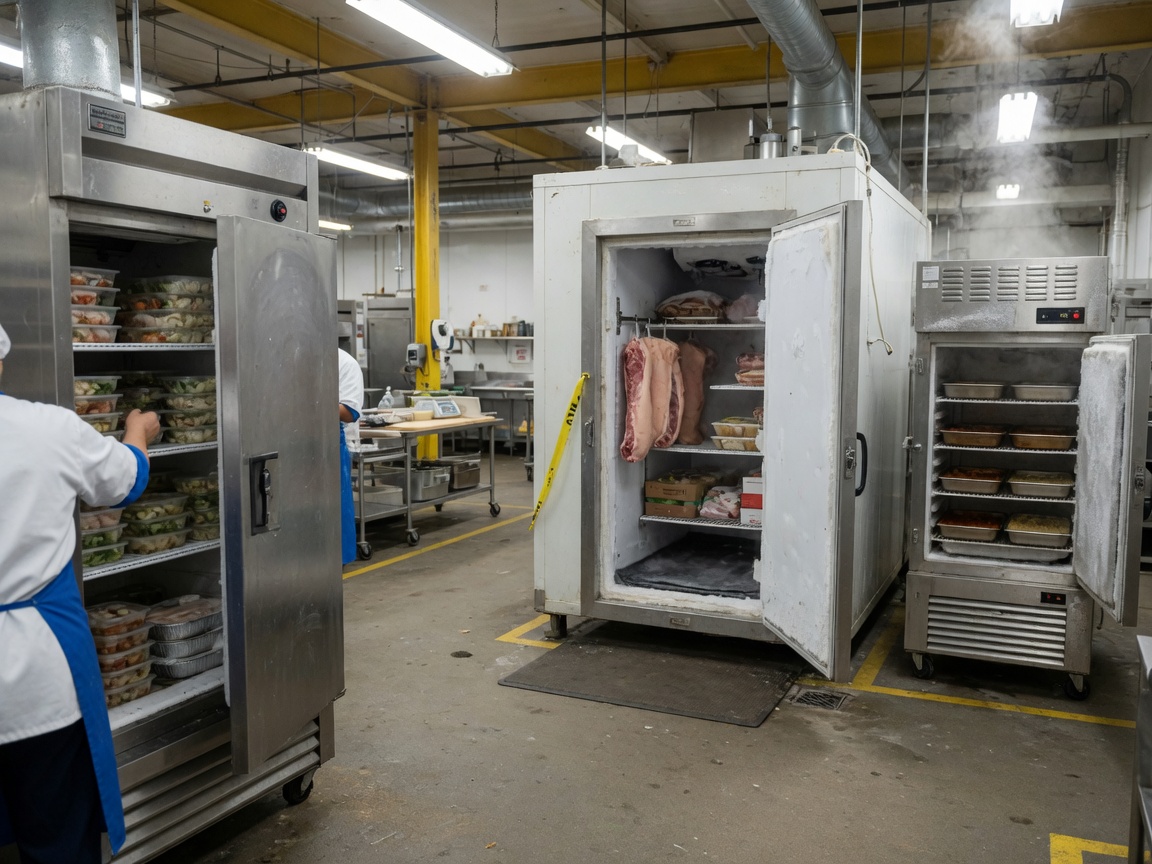
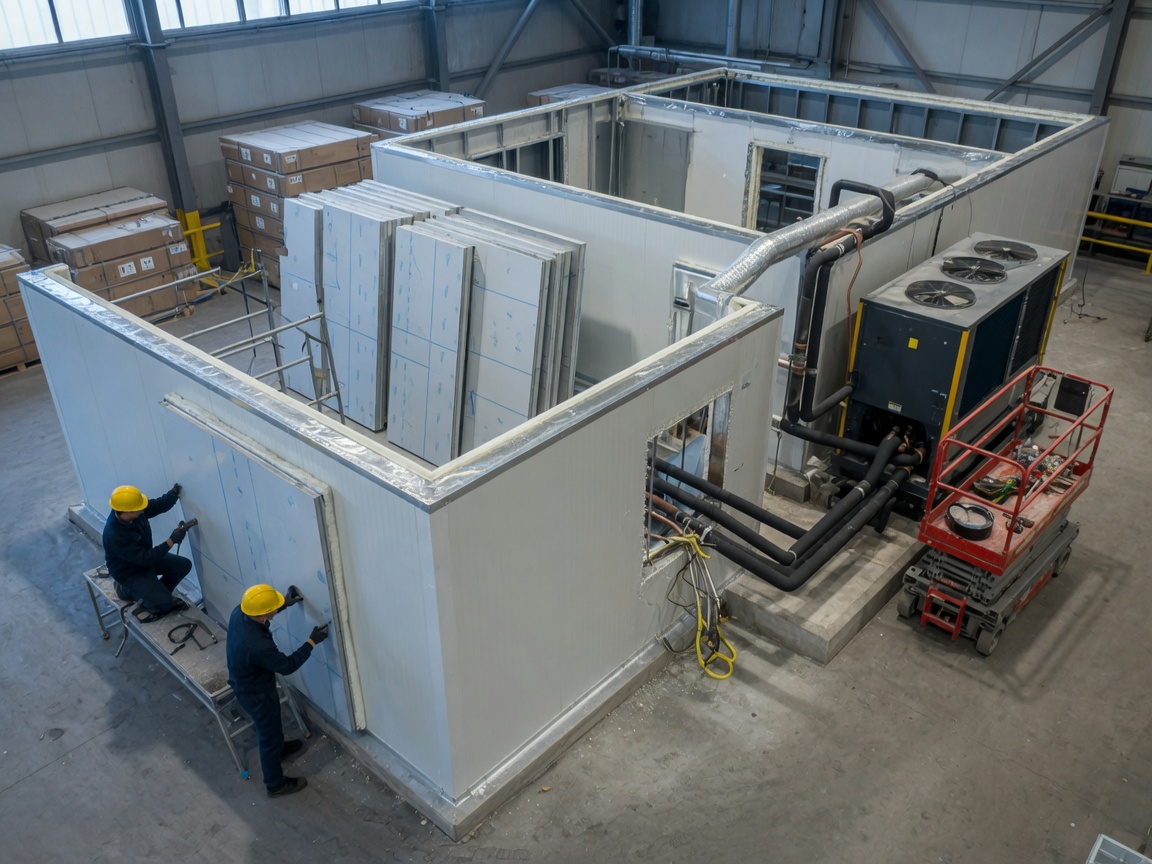
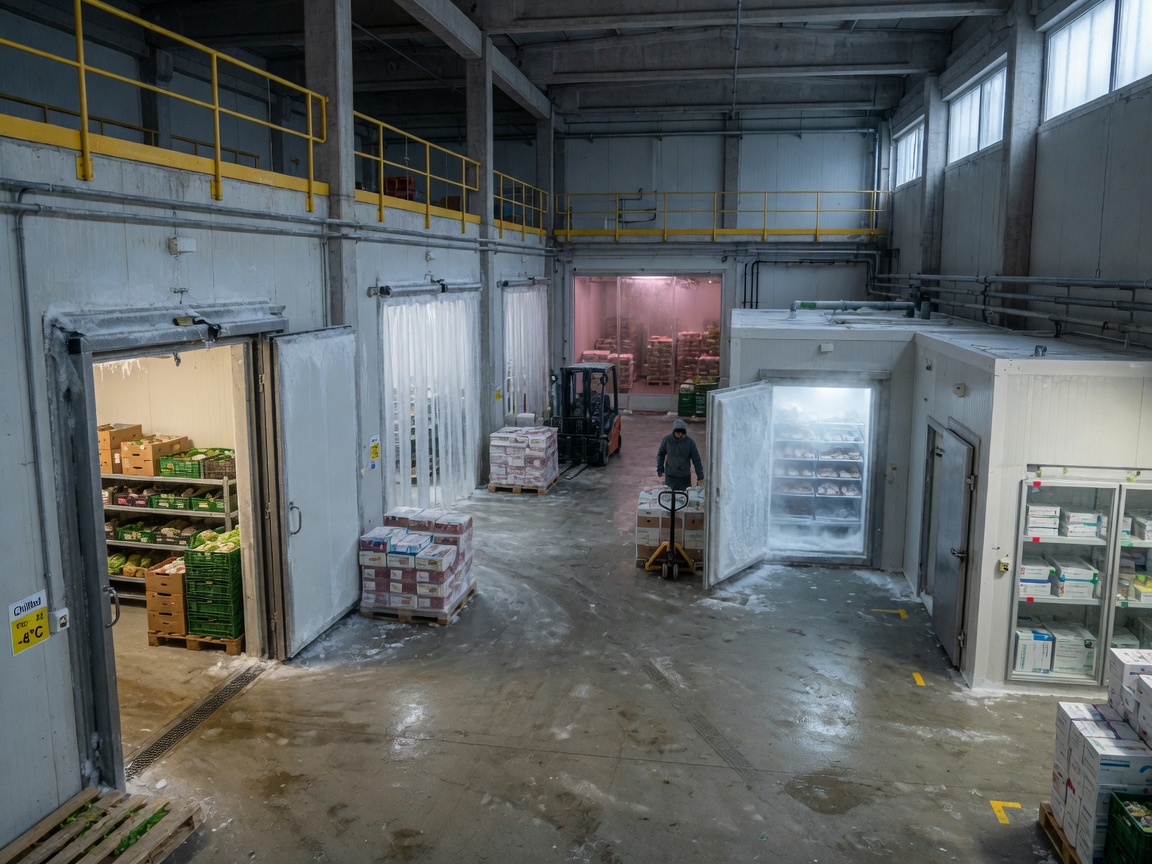
The walk-in cooler freezer unit is the highest-capacity option in the commercial segment, designed for bulk ingredient storage in restaurants, distribution operations, and large catering facilities. Walk-ins are modular — panels are typically 4-inch or 6-inch polyurethane foam construction with cam-lock connections — allowing custom footprints from 6×6 ft up to full warehouse-scale rooms. Refrigerated walk-ins hold 35–38°F; freezer walk-ins maintain -10°F to 0°F. Installation requires dedicated electrical circuits and proper floor reinforcement (more on that in the installation section).
Reach-In Freezer Refrigerators
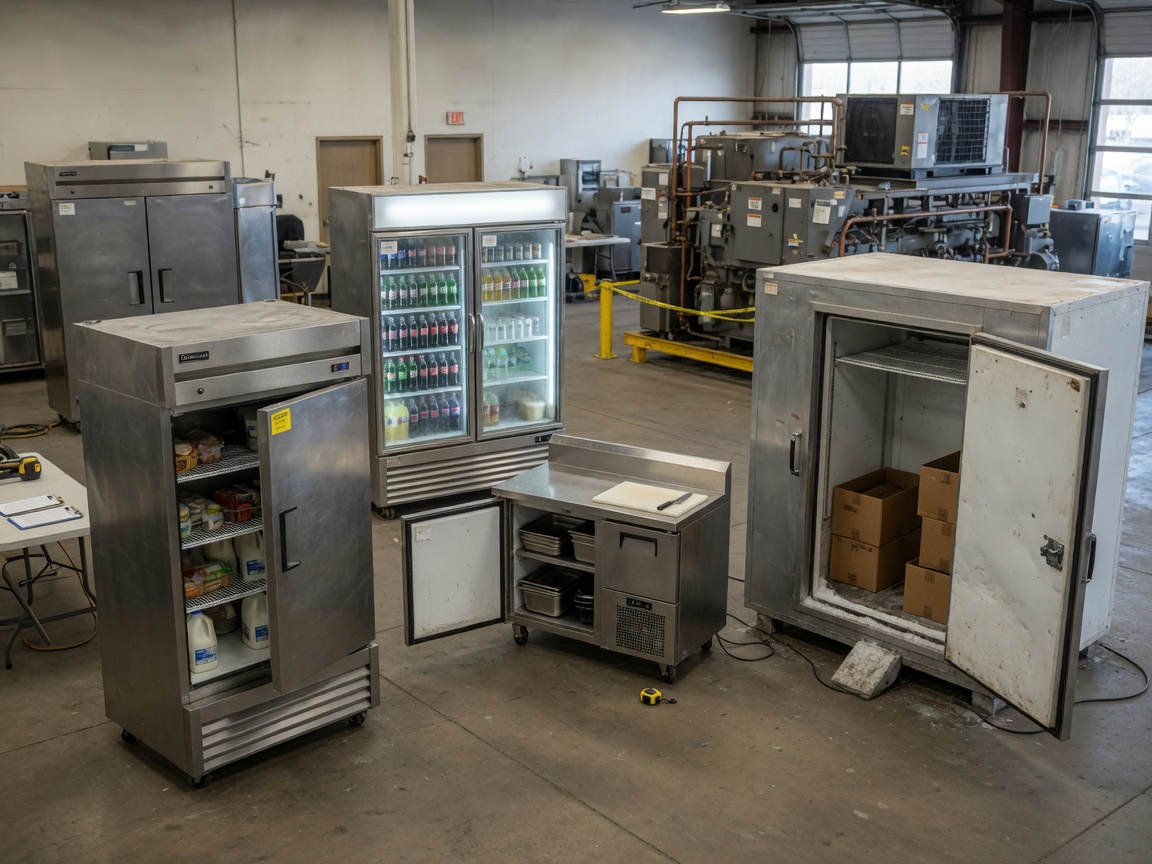
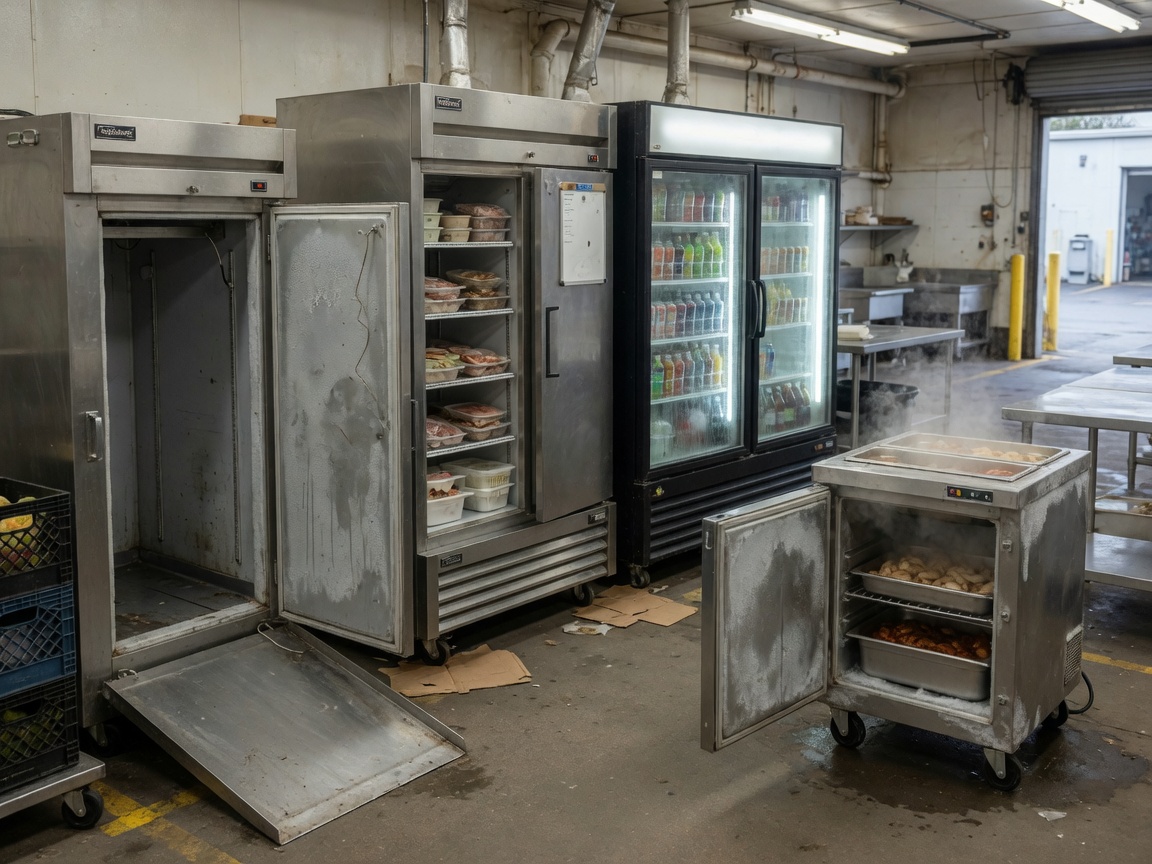
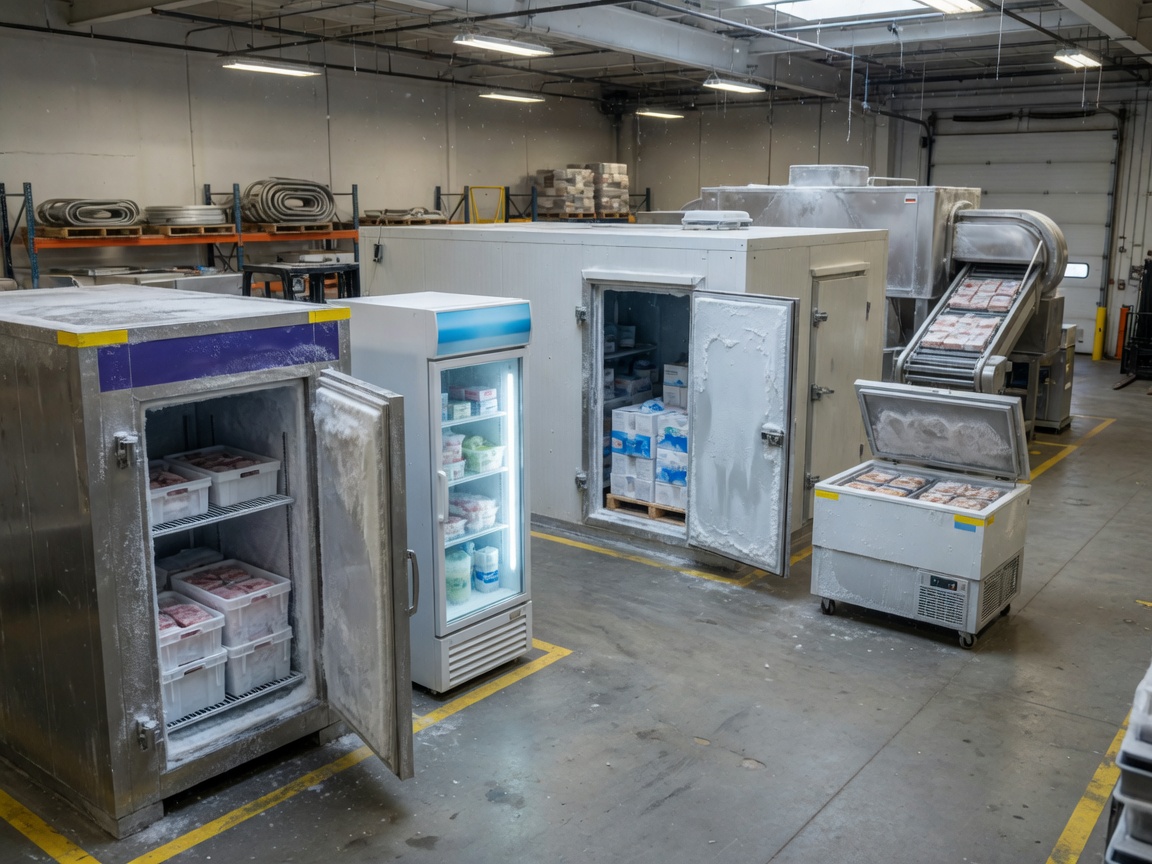
The reach-in freezer refrigerator is the workhorse of the commercial kitchen. Available in one, two, and three-section configurations, these upright commercial freezers range from roughly 23 cubic feet (single-door) to 72+ cubic feet (three-door). Stainless steel commercial refrigeration is standard for reach-ins used in regulated kitchens — the exterior and interior stainless construction resists corrosion, simplifies sanitation, and satisfies NSF inspection requirements. For high-volume operations, look for units with self-closing doors, automatic defrost cycles, and digital temperature displays.
Undercounter Commercial Freezers
The undercounter commercial freezer addresses space-constrained prep stations and bar setups. Typically 27–48 inches wide and 34 inches tall, these units fit beneath standard 36-inch work surfaces. Capacity ranges from 5 to 15 cubic feet — suitable for frequently accessed ingredients rather than bulk storage. In actual kitchen deployments, undercounter units reduce staff travel time between prep and cold storage by measurable margins, improving line efficiency during peak service. They're not a replacement for large-capacity freezers for restaurants; they're a complement.
Blast Chiller Freezers
The blast chiller freezer occupies a specialized niche in food processing and high-volume food preparation. Rather than storing food at temperature, a blast chiller rapidly drops the internal temperature of cooked products from 140°F to below 40°F within 90 minutes — the FDA-mandated window for safe rapid cooling. This equipment is non-negotiable for HACCP compliance in cook-chill operations. Blast chiller freezer units typically run 208–240V single phase for smaller models and 208–240V three-phase for high-capacity units processing 100+ lbs per cycle.
Chest Freezer for Commercial Use
The chest freezer for commercial use offers maximum energy efficiency in a top-access form factor. Because cold air sinks, chest freezers retain temperature far better than upright models when opened — energy consumption can be 10–20% lower per cubic foot compared to equivalent reach-ins. The tradeoff is access inconvenience. In practice, chest freezer configurations work best for long-term storage of sealed products with low daily access frequency: frozen proteins in a commissary, backup ice cream stock in a restaurant, or bulk frozen ingredients in a food manufacturing holding area.
Temperature Ranges, Compressor Types & Energy Specs Compared
Why do so many buyers end up with underperforming equipment? Because they compare price without comparing the specifications that actually determine performance. The table below addresses exactly the gap that most competitor content leaves unfilled — a structured, apples-to-apples view of commercial freezer temperature control ranges, compressor configurations, and real-world energy consumption across product categories.
| Unit Type | Temp Range (°F) | Compressor Type | Avg. Energy (kWh/day) | Typical Capacity | Best Use Case |
|---|---|---|---|---|---|
| Walk-In Cooler | 34–38°F | Single or Dual | 18–45 | 100–5,000+ cu ft | Bulk produce, dairy, beverages |
| Walk-In Freezer | -10 to 0°F | Dual (recommended) | 25–60 | 100–5,000+ cu ft | Frozen protein, ice cream, frozen meals |
| Reach-In Refrigerator | 35–40°F | Single | 4–10 | 23–72 cu ft | Prepped ingredients, dairy, dressings |
| Reach-In Freezer | -10 to 0°F | Single or Dual | 6–14 | 23–72 cu ft | Frozen proteins, desserts |
| Undercounter Freezer | -10 to 0°F | Single | 2–5 | 5–15 cu ft | Line prep, bar, small kitchens |
| Blast Chiller | -40 to 32°F | Dual (high-power) | 12–30 | 20–200+ lbs/cycle | Cook-chill, HACCP compliance |
| Chest Freezer (Commercial) | -5 to 5°F | Single | 2–6 | 15–75 cu ft | Long-term frozen storage, low access |
A note on compressor configuration: single-compressor units are cost-effective for most light-to-medium applications, but dual-compressor systems provide critical redundancy in high-stakes environments. If one compressor fails in a walk-in freezer holding $30,000 of protein inventory, a dual-compressor setup keeps the unit operational while repairs are arranged. The upfront cost premium — typically $1,500–$4,000 — is trivial against that risk exposure. Research and studies on industrial refrigeration and freezer technology consistently validate dual-compressor reliability advantages in high-load commercial deployments.
For a deeper technical understanding of how these systems operate at a mechanical level, How industrial refrigeration and freezer systems work provides a solid reference on vapor-compression cycles and heat exchange principles that underpin all commercial refrigeration equipment.
Energy Consumption: The Hidden Cost Driver
Refrigeration energy consumption accounts for 35–40% of a commercial kitchen's total electricity draw, according to ENERGY STAR program data. Just like a high-performance engine that burns fuel efficiently, an ENERGY STAR-certified industrial fridge freezer can deliver the same cooling output while consuming 15–30% less electricity than a non-certified equivalent. Over a 10-year lifespan, that differential can exceed $8,000–$15,000 in savings per unit. Referencing Energy efficiency standards for commercial refrigeration units from the U.S. Department of Energy is the most reliable starting point for validating manufacturer efficiency claims.
Commercial Freezer Temperature Control Systems
Modern commercial freezer temperature control has moved well beyond simple thermostats. Mid-range and premium units in 2026 offer digital controllers with ±1°F accuracy, automatic defrost scheduling, and door-ajar alarms. High-end systems incorporate IoT-connected sensors that push real-time temperature logs to facility management dashboards — a capability that directly supports HACCP record-keeping requirements and reduces manual monitoring labor. When evaluating units, ask specifically whether the temperature control system meets FDA 21 CFR Part 110 documentation requirements for your application.

Regulatory Compliance: FDA, USDA & NSF Standards You Cannot Ignore
Compliance isn't a formality — it's the legal foundation of operating a food business in the United States. The FDA food code requirements for commercial cold storage equipment establish the baseline temperature standards (41°F maximum for refrigerated foods, 0°F for frozen) and specify that equipment used in regulated food service environments must meet recognized sanitation standards.
NSF/ANSI 7: The Certification That Matters Most
NSF certified commercial refrigerator units carry NSF/ANSI Standard 7 certification — the benchmark for commercial refrigerators and freezers used in food service. This certification validates that a unit's materials, construction, and performance meet sanitation criteria including smooth, cleanable surfaces, no crevices that harbor bacteria, and demonstrated temperature maintenance under specified load conditions. When reviewing vendor specs, the NSF mark on the data plate is non-negotiable for any food service or retail operation subject to health department inspection in the U.S.
USDA Cold Chain & FDA 21 CFR Requirements for Processing Facilities
For USDA-inspected meat and poultry processing facilities, cold storage equipment must maintain product at 40°F or below during storage, with documented temperature logs available for regulatory review. FDA 21 CFR Part 110 (current Good Manufacturing Practice) similarly requires that facilities maintain refrigeration equipment in a sanitary condition and at temperatures adequate to prevent food from becoming adulterated. Pharmaceutical applications add FDA 21 CFR Part 211 requirements, including equipment qualification (IQ/OQ/PQ) documentation — a level of validation that standard food service equipment vendors typically cannot support without specialized engagement.
Installation Requirements Every Facility Manager Must Know
This is perhaps the most consistently overlooked area in industrial fridge freezer procurement — and the one that generates the most costly surprises. Electrical specifications, floor load ratings, and ventilation clearances are non-negotiable engineering constraints, not vendor suggestions.
Electrical Specifications by Unit Type
Here is the practical breakdown procurement teams need before finalizing specifications:
- Undercounter and small reach-in units: Typically 115V/60Hz single-phase, standard 15A or 20A dedicated circuit. Most kitchen environments already support this without electrical upgrades.
- Large reach-in and mid-size walk-in units: 208V or 240V single-phase, requiring a dedicated 30A–60A circuit. Confirm panel capacity before ordering.
- Large walk-in freezer systems and blast chillers: 208V/240V three-phase or 480V three-phase for high-capacity industrial units. Three-phase power is often absent in older commercial buildings — an electrician assessment is essential before specifying these units.
- Industrial cold storage units (processing/warehouse scale): 480V three-phase standard; some remote condensing packages require separate disconnects and may trigger local permitting requirements.
- Confirm NEMA outlet configuration: Mismatched plugs are a surprisingly common installation delay. Verify NEMA 6-20, 6-30, L6-30, or hardwire requirements per manufacturer spec sheet before scheduling delivery.
Floor Load Ratings and Ventilation Clearance
A loaded walk-in cooler freezer unit can exert significant floor loads — a fully stocked 10×10 ft walk-in freezer may weigh 8,000–12,000 lbs including product. Older commercial buildings with wood-frame construction or below-grade installations require a structural engineer review before installation. For standard self-contained reach-in units, manufacturers specify minimum ventilation clearance of 3–6 inches on sides and top to allow condenser airflow. Blocking this clearance — a common error in tight kitchen layouts — raises condenser temperature, reduces efficiency, and can shorten compressor life by 30–40%. Always plan equipment layout with manufacturer clearance specs in hand.
"The single most common installation failure we see is operators purchasing the right unit for their menu but the wrong unit for their building infrastructure. Electrical panel capacity and ventilation clearance should be assessed before a purchase order is issued, not after delivery." — Commercial Kitchen Design Consultant, 2026 industry roundtable
Total Cost of Ownership: Maintenance, Lifespan & ROI Analysis
Purchase price is the smallest part of what an industrial fridge freezer actually costs over its operating life. U.S. industrial buyers consistently identify TCO as a primary evaluation criterion for large capital equipment — yet most vendor content and competitor guides provide no structured analysis of this dimension.
Expected Lifespan by Unit Type
Based on industry service data and manufacturer warranty benchmarks: reach-in commercial units average 10–15 years with proper maintenance; walk-in systems typically last 15–20 years (panels and structure) though compressor/refrigeration equipment may require replacement at the 10–12 year mark; blast chillers average 8–12 years due to the extreme thermal cycling their components endure. Undercounter units often reach 7–10 years in high-use environments. These ranges assume quarterly preventive maintenance — without it, expect 30–40% reduction in service life.
Annual Maintenance Cost Benchmarks
Actual maintenance cost data for U.S. operators in 2026: a reach-in commercial refrigerator freezer combo runs approximately $200–$500 per year in preventive maintenance (coil cleaning, door gasket inspection, refrigerant check). A walk-in cooler freezer unit with a remote condensing package typically runs $600–$1,500 annually. Blast chiller maintenance, given complexity, averages $800–$2,000 per year. Factor in one major repair event (compressor replacement averages $1,200–$2,800 installed) every 5–8 years for accurate TCO modeling. Energy cost — at a national average of $0.12–$0.16/kWh for commercial accounts — adds $500–$2,500 annually per unit depending on size and efficiency rating.
2026 Trends Shaping Industrial Refrigeration Purchases
Two structural shifts are redefining what buyers should prioritize when specifying an industrial fridge freezer in 2026. Ignoring them now means specifying equipment that may face regulatory or operational headwinds within three to five years.
Natural Refrigerant Transition: R-290 and R-600a
The EPA's AIM Act implementation is accelerating the phase-down of HFC refrigerants across the U.S. commercial refrigeration sector. R-290 (propane) and R-600a (isobutane) natural refrigerants are gaining rapid market adoption in 2026 — they carry near-zero global warming potential and are already standard in leading European commercial refrigeration lines. For U.S. buyers specifying new equipment today, prioritizing R-290-compatible units future-proofs against refrigerant availability and regulatory cost risk. Verify that service technicians in your area are certified for flammable refrigerant handling before committing to natural refrigerant platforms.
IoT-Connected Monitoring and Predictive Maintenance
Remote temperature monitoring and IoT-enabled commercial freezer temperature control have moved from premium feature to practical standard in mid-range and above product tiers in 2026. Systems that push real-time alerts when temperatures drift outside setpoints — and automatically log readings for HACCP compliance records — reduce food loss incidents and inspection preparation time significantly. Predictive maintenance algorithms that flag compressor performance degradation before failure represent genuine ROI: preventing a single unplanned walk-in freezer failure during peak season can easily justify the entire cost of a monitoring subscription for a year.
Selecting the Right Brand: A Practical Checklist
When evaluating brands for a heavy duty freezer for business, apply this framework before requesting quotes:
- Confirm NSF/ANSI 7 certification is listed on the product data sheet — not just claimed in marketing copy.
- Verify ENERGY STAR certification for units that will run continuously in your operation.
- Assess parts availability and authorized service network density in your region — a unit that requires factory-direct service calls adds weeks of downtime risk.
- Request refrigerant type documentation and confirm compatibility with your facility's maintenance contractor certifications.
- Ask for documented warranty terms: compressor warranty (minimum 5 years for commercial-grade), parts warranty (2–3 years), and labor warranty (1 year minimum).
In conclusion, selecting the right industrial fridge freezer requires matching unit type, temperature specification, energy profile, compliance certification, and installation constraints to your specific operational environment. The buyers who get this right the first time treat it as an engineering decision, not a purchasing decision. The frameworks, tables, and compliance guidance in this guide are designed to support exactly that discipline — ensuring your investment in food service refrigeration equipment delivers the performance, compliance confidence, and total cost efficiency your operation demands in 2026.
Frequently Asked Questions
Q: What is the difference between a commercial and an industrial fridge freezer?
A: Commercial refrigeration serves food service and retail environments — restaurants, cafeterias, convenience stores — with NSF-certified units designed for food contact. Industrial refrigeration refers to large-scale systems in processing plants, cold chain logistics, or pharmaceutical facilities, operating at higher voltages and subject to additional regulatory frameworks such as USDA cold chain mandates and FDA 21 CFR requirements.
Q: What temperature should a commercial freezer maintain?
A: Per FDA food code, commercial freezers must maintain food at 0°F (-18°C) or below to ensure food safety and quality. Most restaurant grade freezers are set between -10°F and 0°F. Blast chiller freezers can reach -40°F for rapid chilling applications requiring HACCP compliance.
Q: Is NSF certification required for commercial refrigerators in the U.S.?
A: While federal law does not mandate NSF certification universally, virtually all U.S. state and local health departments require NSF/ANSI 7 certified commercial refrigerator and freezer equipment in inspected food service establishments. Operating non-NSF equipment can result in inspection citations, fines, or temporary closure orders.
Q: How much electricity does a commercial walk-in freezer use per day?
A: A commercial walk-in freezer unit typically consumes 25–60 kWh per day depending on size, insulation quality, door frequency, and ambient temperature. At a commercial electricity rate of $0.12–$0.16/kWh, that equals $1.10–$3.50 per day in energy cost, or roughly $400–$1,275 annually per unit.
Q: What voltage do industrial fridge freezer units require for installation?
A: Voltage requirements vary significantly by unit type. Small undercounter and reach-in units typically run on 115V single-phase. Mid-size reach-ins and walk-in systems require 208V or 240V single-phase. Large walk-in freezers and blast chillers often require 208V/240V or 480V three-phase power, which must be confirmed with a licensed electrician before equipment is ordered.
Keywords:
Inquiry
If you are interested in our products, please leave your email to receive a free product quote, thank you!
More information

Tel:
Sales E-mail: