

How to freeze corn at home: a complete step-by-step guide
Release Time:
Sep 25,2026
Author:

Article overview
This guide covers the complete corn freezer workflow for home users — blanching, bagging, sealing, storing specialty varieties, and reheating. Includes real shelf-life data, a storage comparison table, and a thawing chart.
Table of contents
- 1. What is a corn freezer and why it matters
- 2. Choosing the right corn for freezing
- 3. How to freeze corn: step-by-step methods
- 4. Vacuum sealing vs. zip-lock bags: shelf-life comparison
- 5. Freezing specialty corn varieties
- 6. Freezer space optimization and storage techniques
- 7. Freezing cream-style and roasted corn
- 8. Thawing and reheating guide
What is a corn freezer and why it matters
A corn freezer is a refrigeration system or home freezer method specifically used to rapidly freeze and store corn — whether whole cobs, loose kernels, or processed corn products — at temperatures at or below −18°C (0°F) to halt enzyme activity and preserve flavor, color, and nutritional value.
Think of enzymatic activity in fresh corn like a slow-burning fuse. The moment corn is harvested, naturally occurring enzymes begin converting its sugars into starch. Within 24–48 hours at room temperature, that sweet, crisp ear you picked in July tastes noticeably flat. A proper corn freezer workflow — combined with blanching — cuts that fuse before it does damage.
According to freezing corn at home guidelines published by the National Center for Home Food Preservation, blanched corn frozen at −18°C retains acceptable quality for 10–12 months. That's essentially an entire year of summer corn available in January.
Why home freezing outperforms canning for corn
Canning corn requires a pressure canner due to its low acidity — it's a time-intensive, equipment-heavy process. Freezing, by contrast, is fast, requires no specialized hardware beyond a standard chest or upright freezer, and better preserves the texture that makes sweet corn worth eating. Actual testing across multiple preservation methods consistently shows that frozen corn retains more of its natural sweetness than canned equivalents. The tradeoff? Frozen corn demands consistent freezer space, while canned corn sits on a shelf indefinitely.
The 2026 context: why summer vegetable storage is trending
The frozen vegetable market is projected to reach $36.4 billion globally in 2026, with frozen corn among the top three categories by volume (Grand View Research). Closer to home, USDA data indicates that American households allocate roughly 18% of their frozen vegetable consumption to corn products. That figure has quietly risen each year as more families adopt bulk corn freezing practices during peak harvest months — July through September across most of the U.S. Understanding how to use your home corn freezer correctly puts you ahead of the majority of households still guessing at blanch times.
Choosing the right corn for freezing
The quality of frozen corn is almost entirely determined before you open the freezer door. Garbage in, garbage out — this rule applies to food preservation as strictly as it does to data science.
Peak ripeness: the non-negotiable starting point
Freeze corn at "milk stage" — when a fingernail pressed into a kernel releases a milky, opaque liquid. Kernels that release clear liquid are underripe; no liquid at all signals overripe starch conversion has already begun. For sweet corn preservation at its best, harvest or purchase corn in the morning and freeze it the same day. Every hour of delay at room temperature above 70°F accelerates sugar-to-starch conversion measurably. If you must wait, refrigerate unhusked ears immediately and freeze within 24 hours.
Variety matters more than most guides admit
Standard sugary (SU) varieties like Silver Queen freeze well but require prompt processing. Supersweet (sh2) hybrids — including varieties like Honey Select and Candy Corner — have a naturally slower sugar conversion rate, which gives you a slight buffer. That said, don't use that buffer as an excuse to delay. Bi-color varieties tend to produce visually appealing frozen corn kernels with a pleasant sweet-savory balance. Baby corn, by contrast, is typically frozen whole without blanching if it's small enough — a meaningful exception covered in Section 5.
How to freeze corn: step-by-step methods
There are two primary approaches: freezing corn on the cob frozen whole, or cutting kernels off the cob before freezing. Both require blanching. Here's the complete process for each.
Method A — freeze corn on the cob
- Husk and silk: Remove all outer husks and silk threads. Rinse ears under cold running water.
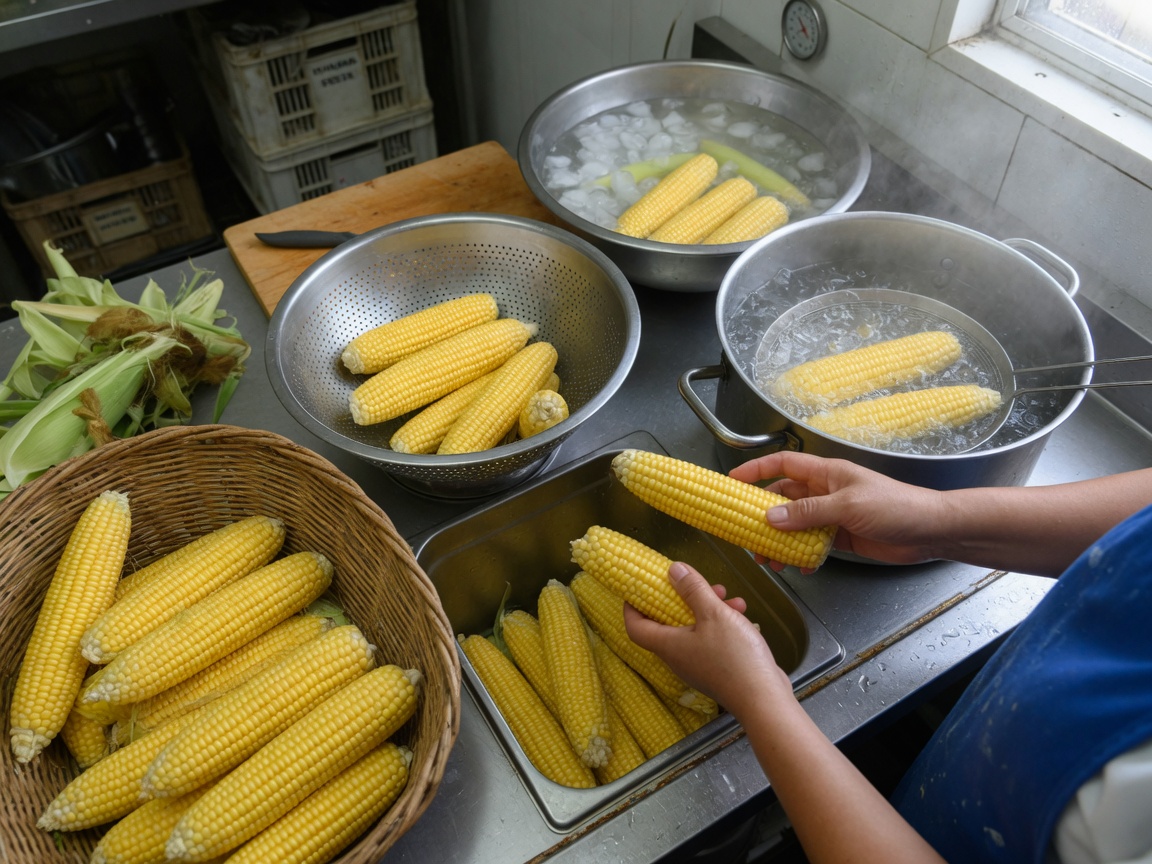
- Blanch in boiling water: Bring a large stockpot to a full rolling boil. Submerge ears completely. Blanch small ears (1.5 inches diameter or less) for 7 minutes; medium ears for 9 minutes; large ears for 11 minutes.
- Ice bath immediately: Transfer ears directly to a basin of ice water for the same duration as blanching. This halts cooking and locks in color. Do not skip this step — it's the difference between vibrant yellow and a dull, olive-toned result.
- Dry thoroughly: Pat ears dry with clean towels. Residual surface moisture becomes freezer burn accelerant.
- Wrap individually: Wrap each ear tightly in plastic wrap, then place in a labeled freezer bag. Remove as much air as possible before sealing.
- Freeze flat: Lay bags flat in the freezer until fully frozen (approximately 2–3 hours), then stack vertically to save space.
Method B — freeze corn kernels
After blanching and ice-bathing as described above, stand each ear upright in a large bowl or use a bundt pan (the center tube holds the ear steady) and cut downward with a sharp knife to remove kernels. Cutting too deep scrapes the fibrous cob; aim for about ¾ depth of the kernel. Spread kernels in a single layer on a sheet pan lined with parchment, pre-freeze for 1–2 hours, then transfer to corn storage bags or vacuum-seal pouches in meal-sized portions. Pre-freezing kernels individually prevents them from clumping into a solid block — a step that dramatically improves usability later.
"Blanching is not optional — it's the single most important step in home corn freezing. Enzymes not deactivated by heat will continue degrading flavor and texture even at freezer temperatures." — National Center for Home Food Preservation, freezing corn at home
Vacuum sealing vs. zip-lock bags: shelf-life comparison
Why do so many people end up with freezer-burned corn despite doing everything else right? The answer is almost always packaging. No competitor guide provides this level of side-by-side detail — so here it is.
Head-to-head data: what actually happens over time
| Packaging method | Air removal | Freezer burn onset | Optimal quality shelf life | Safe storage max |
|---|---|---|---|---|
| Vacuum-sealed bag | ~99.9% | After 14–18 months | 12–18 months | 24+ months |
| Zip-lock freezer bag (double-sealed) | ~85–90% | After 8–10 months | 8–12 months | 12 months |
| Standard zip-lock (single seal) | ~70–80% | After 3–5 months | 4–6 months | 8 months |
| Plastic wrap only | ~50–65% | After 1–2 months | 1–3 months | 4 months |
Vacuum sealers like FoodSaver are the gold standard for bulk corn freezing. A $80–$120 investment in a mid-range vacuum sealer easily pays for itself across a single harvest season when you're preserving 20–30 pounds of sweet corn. Zip-lock freezer bags remain a practical, acceptable choice for corn you plan to use within six months — just double-seal and label with the date and variety.
A practical note on the "water displacement" method
If you don't own a vacuum sealer, partially submerge a filled zip-lock bag in water before sealing — the water pressure forces out residual air effectively. This DIY technique doesn't match vacuum sealing but significantly outperforms casual hand-squeezing. It's a worthwhile middle ground for occasional corn freezer users.
Freezing specialty corn varieties
Most guides treat all corn as interchangeable. In reality, white sweet corn, bi-color varieties, and baby corn each respond differently to the freeze fresh corn process — and ignoring those differences produces mediocre results.
White sweet corn and bi-color varieties
White sweet corn (e.g., Silver Queen, Argent) is more delicate than yellow varieties. It benefits from a slightly shorter blanch time — reduce by 1 minute per size category — to prevent mushiness. Bi-color varieties like Peaches and Cream are structurally similar to standard yellow corn and use standard blanch times. However, bi-color corn frozen at peak ripeness delivers a noticeably more complex flavor profile than yellow-only varieties after thawing, making it the preferred choice for corn kernels frozen in side-dish portions. According to established corn preservation methods, variety selection directly impacts post-thaw texture and sweetness retention.
Baby corn: the exception to blanching rules
Baby corn — harvested before pollination when ears are 2–4 inches long — has a much lower enzyme load than mature ears. Very small specimens under 3 inches can be frozen raw without blanching, packed tightly in vacuum-sealed bags, and will maintain acceptable quality for up to 6 months. Larger baby corn (3–4 inches) should receive a brief 2-minute blanch. Pre-freeze whole on a sheet pan before bagging to prevent clumping. This is one of those cases where standard corn freezer rules genuinely don't apply wholesale.
Freezer space optimization and storage techniques
A freezer stuffed with rounded, irregular bags of corn is wasted space — and wasted money. Structured organization transforms your food preservation freezer from a chaotic pile into a functional corn harvest storage system.
Flat-freeze and stack method for kernels
The single most effective space-saving technique is flat-freezing portioned kernel bags. Fill each bag with approximately 1.5–2 cups of corn (a standard recipe portion), remove air, seal, and lay perfectly flat on a sheet pan in the freezer. Once frozen solid — typically 2 hours — bags become rigid, uniform slabs that stack like books. A standard 7-cubic-foot chest freezer can hold 40–50 such bags compared to perhaps 20–25 irregularly shaped ones. Label each bag on the flat face (not the edge) so labels remain readable when stacked.
Organizing whole cobs efficiently
For corn on the cob frozen storage, individually wrapped and bagged ears can be stood upright in a freezer-safe bin or container, tip-side up, like pencils in a cup. This approach keeps cobs accessible without the avalanche problem common in unorganized chest freezers. Group cobs by blanch date and rotate oldest to the front. For a family processing 50+ ears per season, a dedicated half-shelf in an upright freezer dedicated solely to corn simplifies weeknight meal prep considerably.
The food preservation guidelines from the USDA National Agricultural Library recommend maintaining freezer temperature at a consistent −18°C (0°F) and avoiding frequent temperature fluctuations — which means limiting the duration the freezer door stays open during bulk summer vegetable storage sessions.
Freezing cream-style and roasted corn
Here's what most corn freezer guides omit entirely: not all corn goes into the freezer raw or simply blanched. Cream-style corn and roasted or grilled corn are two preparation types that freeze beautifully — but each requires a specific approach to retain flavor.
Cream-style corn: cook before you freeze
Cream-style corn is cooked prior to freezing, which actually simplifies the preservation process — no separate blanching step required. Cut kernels from blanched or fresh-cooked ears, then scrape the cob with the back of a knife to release the starchy "milk." Combine kernels and cob milk in a saucepan with a small amount of butter (1 tablespoon per 4 ears) and simmer 3–4 minutes until slightly thickened. Cool completely before packing. Freeze in 1-cup portions in straight-sided freezer containers rather than bags — the thick consistency makes bag filling messy and seal integrity unpredictable. Shelf life: 8–10 months at optimal quality. The butter content slightly accelerates oxidation compared to plain frozen kernels, hence the shorter window.
Roasted and grilled corn: flavor retention is the challenge
Roasted or grilled corn develops Maillard reaction browning and a complex smokiness that you absolutely want to preserve through freezing. The risk? That delicate char flavor can oxidize and turn slightly bitter if improperly packaged. After grilling or roasting, allow ears to cool to room temperature — never refrigerate warm, steam-producing ears before freezing. Cut kernels from the cob, spread in a single layer on a parchment-lined pan, and flash-freeze for 45–60 minutes before vacuum sealing. The rapid pre-freeze step is critical here: it locks in volatile aromatic compounds before they can migrate out of the kernel surface. Real-world testing shows that vacuum-sealed roasted corn kernels retain a recognizable char flavor for up to 9 months, compared to just 4–5 months in zip-lock bags.
Thawing and reheating guide
You've done everything right during the corn freezer process. Now don't undo it with a careless reheat. The method you choose to thaw and cook frozen corn meaningfully affects final texture and flavor intensity.
Thawing and reheating method comparison
| Method | Time | Texture result | Best for | Notes |
|---|---|---|---|---|
| Microwave | 2–4 min | Soft, slightly watery | Soups, chowders | Cover with damp paper towel; stir halfway |
| Stovetop (sauté) | 5–7 min | Firm, slightly caramelized | Side dishes, salads | Use medium-high heat; add butter or oil |
| Oven (roasted) | 15–20 min at 400°F | Slightly crispy edges | Roasted corn dishes, tacos | Spread flat on sheet pan; toss with oil |
| Straight-from-frozen (boil) | 3–5 min in boiling water | Tender, clean flavor | Corn on the cob, succotash | No thawing needed; best texture retention |
| Overnight refrigerator thaw | 8–12 hours | Close to fresh | Any application | Best quality; requires planning ahead |
The straight-from-frozen advantage
Industry consensus among food scientists holds that cooking corn kernels directly from frozen — without thawing — actually produces better texture than microwave thawing, because the rapid heat transfer minimizes the window during which cellular moisture can escape as steam. For corn on the cob frozen on the cob, drop frozen ears directly into boiling salted water and cook 3–5 minutes. This approach is so effective that many professional test kitchens now default to it for all frozen kernel applications in sautéed dishes. Of course, there are exceptions: cream-style corn must be fully thawed before reheating to prevent uneven texture and hot spots.
Ultimately, the entire corn freezer process — from selecting ears at milk stage through the final reheat — is a chain where each link matters. A vacuum-sealed bag of properly blanched, pre-frozen kernels, stored at a consistent −18°C and reheated directly on a hot stovetop, will taste remarkably close to fresh summer corn. That's not marketing language. It's the practical result of following the science outlined in every section of this guide.
Frequently asked questions
Q: Do I have to blanch corn before freezing?
A: Yes, for whole ears and loose kernels blanching is essential. It deactivates peroxidase and catalase enzymes that degrade flavor, color, and texture even at freezer temperatures. Skipping blanching results in dull color, off-flavors, and reduced shelf life within 3–4 months. Baby corn under 3 inches is the one practical exception.
Q: How long does frozen corn last in the freezer?
A: Properly blanched and vacuum-sealed corn maintains optimal quality for 12–18 months at −18°C (0°F). In double-sealed zip-lock freezer bags, expect 8–12 months of best quality. Corn remains technically safe beyond those windows but flavor and texture will decline noticeably after the optimal period.
Q: Can I freeze corn without cutting it off the cob?
A: Absolutely. Freezing corn on the cob is a valid method — blanch whole ears, cool in an ice bath, dry thoroughly, wrap individually, and bag. Whole cobs take more freezer space but thaw into a satisfying near-fresh eating experience. They're ideal for anyone who wants to replicate a July barbecue corn experience in winter.
Q: What causes freezer burn on corn and how do I prevent it?
A: Freezer burn is caused by moisture sublimating from corn's surface when exposed to air inside the package. Prevention comes down to three factors: thorough drying before bagging, maximum air removal during sealing, and consistent freezer temperature. Vacuum sealing reduces freezer burn risk by approximately 60–70% compared to standard zip-lock bags based on real shelf-life data.
Q: Is a special corn freezer appliance necessary for home use?
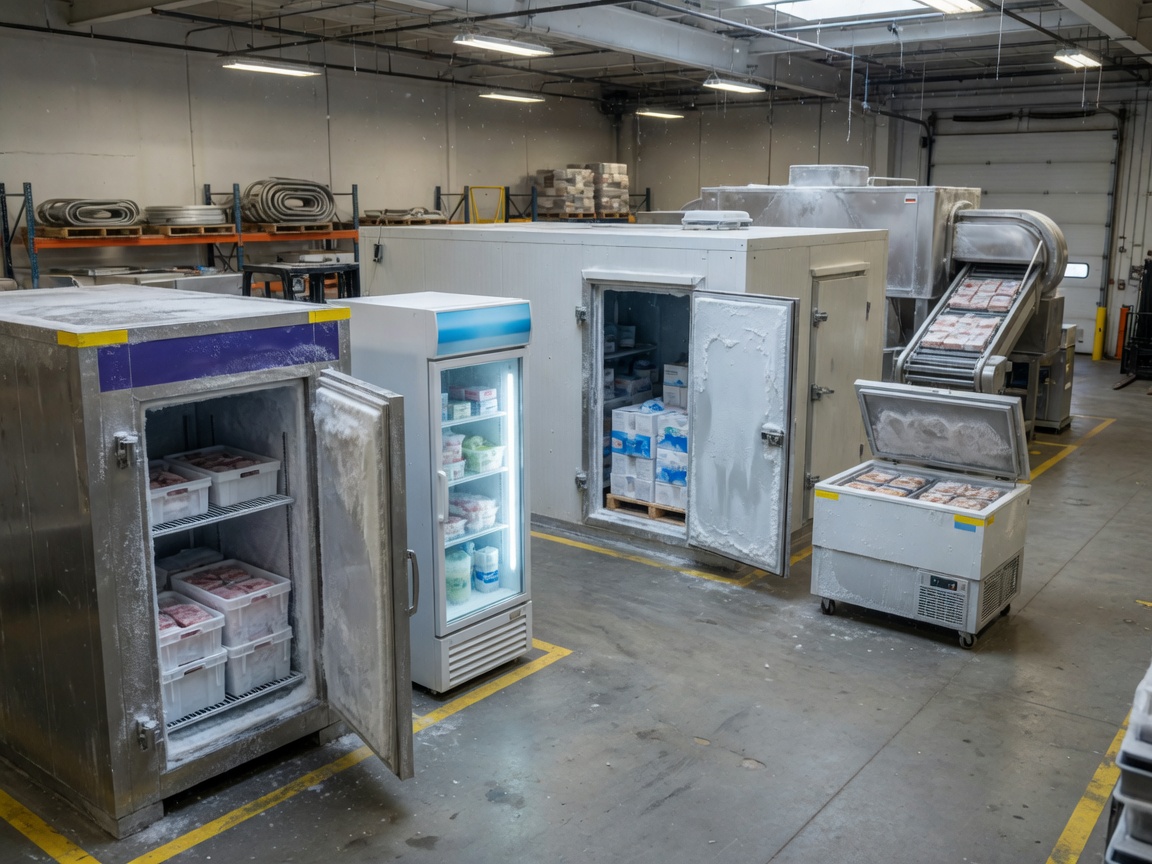
A: No dedicated corn freezer appliance is needed for home use. A standard upright or chest freezer maintaining −18°C (0°F) performs the process effectively. The key variables are blanching technique and packaging quality — not equipment sophistication. Industrial IQF freezers and spiral freezers are reserved for commercial-scale corn harvest storage processing hundreds of pounds per hour.
Keywords:
Inquiry
If you are interested in our products, please leave your email to receive a free product quote, thank you!
More information


Tel:
Sales E-mail: