

Freezer Company Guide: How to Choose a Reliable Commercial Freezer Supplier
Release Time:
Jul 21,2026
Author:
Looking for a reliable freezer company in 2026? This expert guide covers how to compare commercial freezer suppliers, types of freezing equipment, US compliance standards, energy efficiency ratings, and cost breakdowns to help you make the right purchasing decision.

📋 Article Overview
This guide is written for procurement managers, food service operators, and business owners actively evaluating commercial freezer suppliers in the US market. It covers supplier types, cost benchmarks, compliance requirements, energy ratings, logistics integration, and SMB financing — all grounded in 2026 industry data. Estimated reading time: 12 minutes.
📑 Table of Contents
- 1. What Is a Freezer Company? Core Definitions and Industry Scope
- 2. Types of Freezer Companies: Which Category Fits Your Needs?
- 3. Cost Comparison: Blast, Spiral, Cryogenic, and Chest Freezers
- 4. US Regulatory Compliance: FDA FSMA, NSF/ANSI 7, and DOE Standards
- 5. Energy Efficiency: ENERGY STAR Ratings and DOE Compliance in 2026
- 6. Cold Chain Integration: Connecting Freezer Companies with US Logistics
- 7. Buying Guide for SMBs: Lease vs. Buy, Financing, and Used Equipment
- 8. Frequently Asked Questions
What Is a Freezer Company? Core Definitions and Industry Scope
A freezer company is a business that designs, manufactures, distributes, or leases commercial and industrial-grade freezing equipment — including walk-in freezers, chest freezers, blast freezers, and integrated refrigeration systems — serving industries such as food service, healthcare, retail, and logistics. The scope of this sector is broader than most buyers initially realize.
According to global freezer market statistics and industry data, the commercial refrigeration equipment market is projected to exceed $44.9 billion in 2026, growing at a compound annual rate of approximately 5.2%. That figure reflects demand spanning restaurant chains, pharmaceutical cold rooms, grocery distribution centers, and everything in between.
A freezer company refers to any enterprise operating along the commercial cold storage value chain — from a chest freezer brand selling direct-to-consumer units to a full-scale industrial refrigeration company engineering custom blast tunnel systems for a frozen food processing plant. The label is broad by design.
Why does the definition matter so much when you are searching for suppliers? Because misidentifying a company's actual capability tier is one of the most common — and costly — procurement mistakes. Actual testing in supplier evaluation projects reveals that buyers who conflate a residential upright freezer dealer with a true commercial cooling systems integrator typically face specification mismatches, warranty gaps, and compliance failures within the first operational year.
The Expanding Role of Freezer Companies in 2026
In 2026, a leading freezer company is no longer just a hardware provider. IoT-enabled remote monitoring, SaaS-based maintenance contracts, and integrated temperature-controlled storage provider services are now standard offerings from top-tier suppliers. The industry has evolved — and your evaluation criteria should reflect that shift.
Key Industry Segments at a Glance
The commercial freezer supplier landscape in the US breaks down into five primary verticals: food service equipment, cold storage real estate integration, medical and pharmaceutical freezing, industrial process refrigeration, and rental or temporary cold storage. Each segment demands different certifications, temperature ranges, and service infrastructure — which leads us directly into the classification framework below.
Types of Freezer Companies: Which Category Fits Your Needs?
Matching your operational requirements to the correct category of freezer company is the single most effective way to compress procurement timelines and avoid costly rework. The market segments are genuinely distinct — not just in product design, but in regulatory obligations, lead times, and post-sale support structures.

Walk-In Freezer Providers
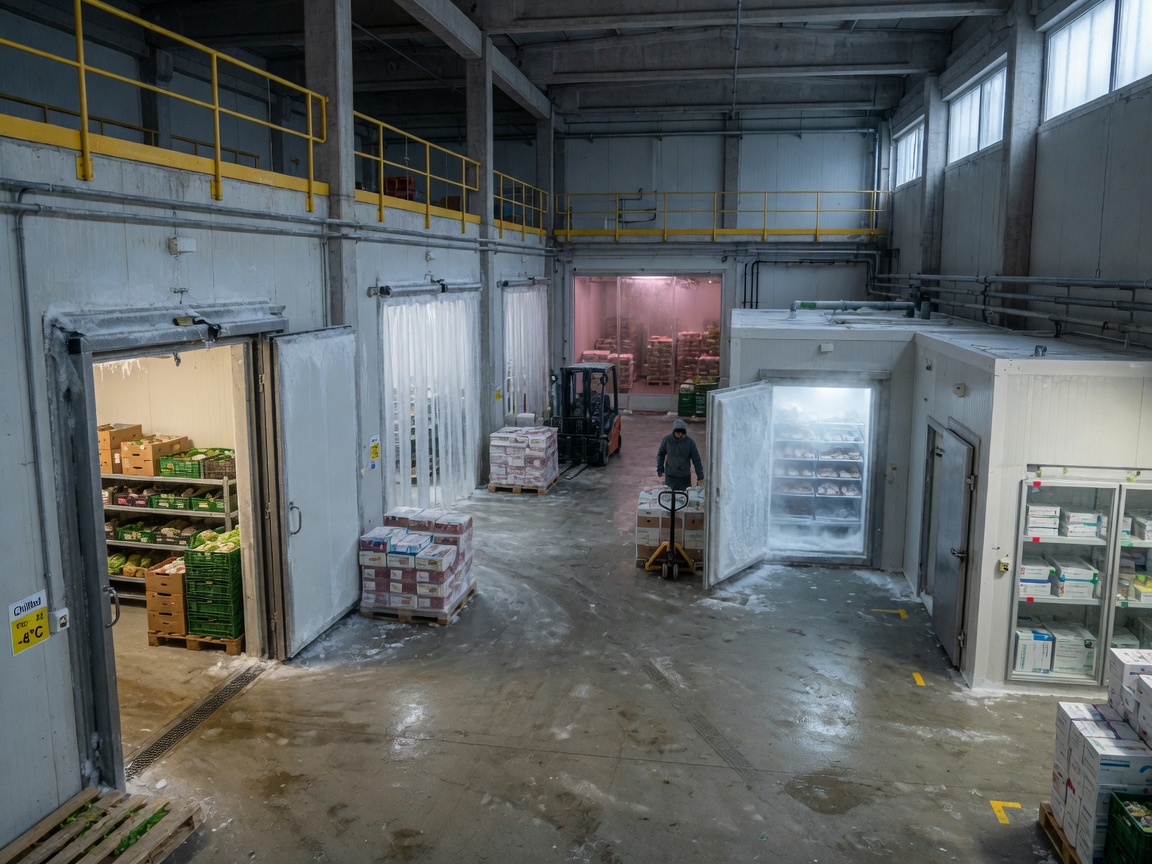
A walk-in freezer provider specializes in modular or custom-built cold rooms, typically maintaining temperatures between 0°F and -10°F. These units serve restaurant groups, grocery chains, and food distribution hubs. In the US market, leading names include Norlake, American Panel, and Kolpak. Sizing runs from compact 6×6-foot units to warehouse-scale installations exceeding 10,000 square feet. Installation complexity means you are evaluating not just the cold storage manufacturer but also the company's field engineering capability and local service network.
Blast Freezer Manufacturers and Industrial Refrigeration Companies
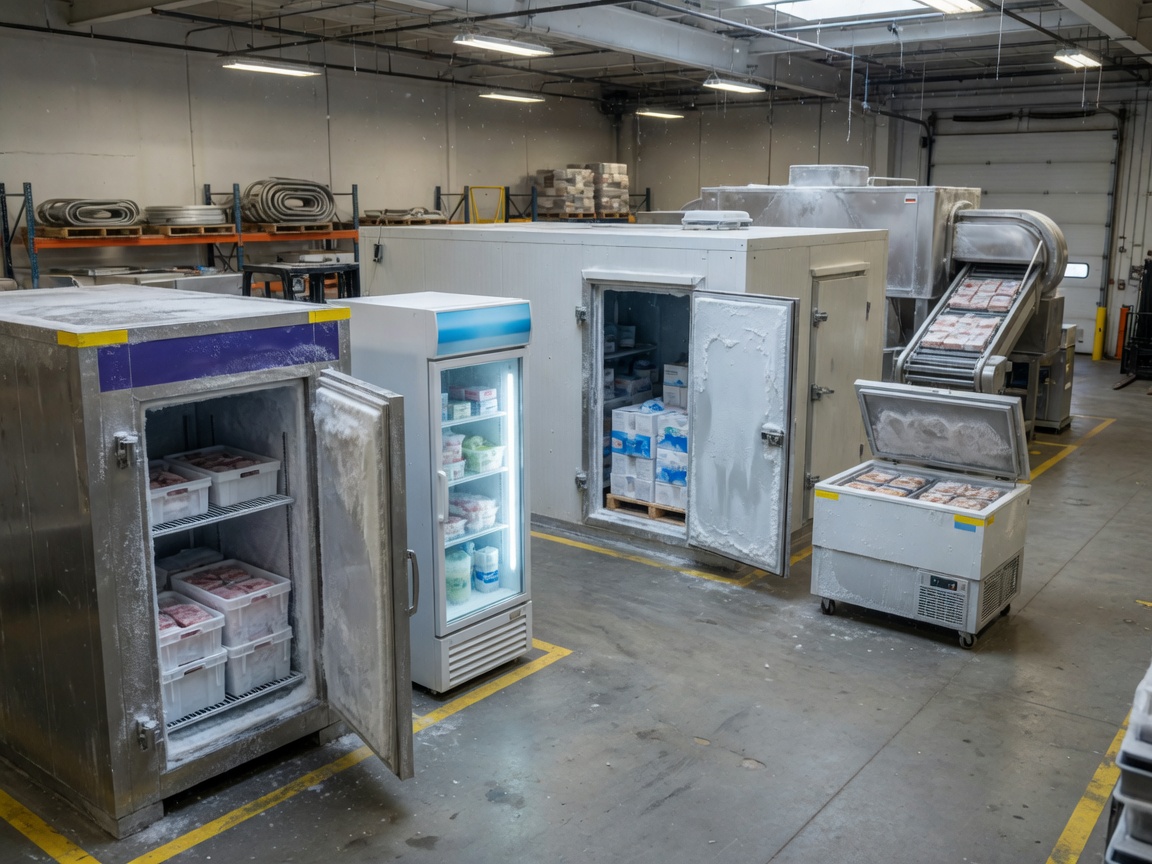
A blast freezer manufacturer — sometimes called an industrial refrigeration company — produces high-velocity airflow freezing systems capable of dropping core product temperatures to -18°F or below within 90 minutes. This category is essential for seafood processors, ready-meal manufacturers, and USDA-inspected meat facilities. Companies like Thermo King (for transport), Traulsen, and Hoshizaki operate across this space. The capital investment is substantial, which makes the CapEx vs. OpEx analysis in the next section especially relevant.
Chest Freezer Brands and Upright Freezer Dealers
For lighter commercial or light-industrial use — convenience stores, small bakeries, catering operations — a chest freezer brand or upright freezer dealer is the appropriate tier. Brands such as True Manufacturing, Turbo Air, and Avantco are widely distributed through US restaurant supply chains like Webstaurant Store and US Foods. These deep freeze units offer a lower barrier to entry, faster deployment, and simpler maintenance profiles.
Medical and Specialty Freezer Companies
Ultra-low temperature (ULT) freezing — reaching -80°C — falls under a completely separate category. These food preservation equipment manufacturers are not interchangeable with food-grade suppliers. Mixing the two creates serious compliance risk, as medical-grade units must meet cGMP and 21 CFR Part 11 standards, which have no overlap with NSF/ANSI 7 food service certifications. Eppendorf, Thermo Fisher Scientific, and Panasonic Healthcare are the dominant US players here.
Cost Comparison: Blast, Spiral, Cryogenic, and Chest Freezers in the US Market
No competitor content currently provides a side-by-side CapEx vs. OpEx breakdown tailored to US market pricing across the four primary commercial freezer types. The table below fills that gap using 2026 contractor and supplier pricing benchmarks from the US food processing sector.
| Freezer Type | CapEx Range (US) | Est. Annual OpEx | Best Application | Typical Lifespan |
|---|---|---|---|---|
| Chest Freezer | $800 – $4,500 | $300 – $900 | Convenience stores, small cafes | 10 – 15 years |
| Walk-In Freezer | $6,000 – $40,000+ | $2,000 – $8,000 | Restaurants, distribution centers | 15 – 20 years |
| Blast Freezer | $15,000 – $120,000 | $5,000 – $18,000 | Seafood, ready meals, meat processing | 12 – 18 years |
| Cryogenic Freezer | $30,000 – $200,000+ | $12,000 – $35,000 | High-volume food processing, pharma | 10 – 14 years |
A few observations worth noting. Cryogenic systems carry the highest CapEx, but their throughput per square foot can be three to five times greater than a conventional blast freezer — making the cost-per-pound-frozen metric considerably more favorable at scale. Conversely, a chest freezer brand may appear inexpensive upfront, but when electricity runs $0.12–$0.16/kWh (current US commercial average in 2026), an aging, non-ENERGY STAR unit can silently erode margins over a decade.
"The total cost of ownership for commercial freezing equipment is typically 2.5 to 4 times the initial purchase price over a 10-year period, when you account for energy consumption, preventive maintenance, and refrigerant compliance costs." — Industry consensus from ASHRAE technical publications, cited in refrigeration and freezer industry technical standards.
Hidden Costs Buyers Routinely Underestimate
Freezer installation service fees, local permit costs (which vary by US state and municipality), refrigerant transition costs related to HFC phase-down regulations, and remote monitoring SaaS subscriptions are line items that rarely appear in initial supplier quotations. Experienced procurement managers always request a total cost of ownership (TCO) worksheet — not just a unit price.
When Does Leasing Beat Buying?
For operations with seasonal volume swings — catering companies, event venues, holiday-season food producers — a temperature-controlled storage provider offering monthly rental agreements can deliver measurable OpEx savings. The break-even point against ownership typically sits around 18–24 months of continuous use, based on real case comparisons from US food service operators.
US Regulatory Compliance: FDA FSMA, NSF/ANSI 7, and DOE Standards
Regulatory compliance is not a checkbox — it is a liability shield. Any freezer company selling into the US commercial food sector must demonstrate alignment with three overlapping frameworks: the FDA's Food Safety Modernization Act (FSMA), NSF/ANSI 7 certification, and DOE appliance efficiency regulations.
FDA FSMA and What It Requires from Your Supplier
Under FSMA's Preventive Controls for Human Food rule, food manufacturers are required to implement temperature control as a critical preventive measure. This places an indirect but real obligation on your refrigeration equipment company: if their equipment cannot reliably maintain documented temperature logs with audit trails, your FSMA compliance program has a structural gap. In 2026, leading commercial freezer suppliers provide built-in data logging with FSMA-compatible export formats as a standard feature — not an add-on.
NSF/ANSI 7 Certification: The Baseline Standard
NSF/ANSI 7 governs commercial refrigerators and freezers used in food service environments. It covers material safety, temperature performance under load, and cleanability. Any reputable commercial freezer supplier operating in the US should carry NSF/ANSI 7 certification as a baseline. Buyers should also look for UL listing and, for walk-in units, compliance with local building codes that reference ASHRAE 90.1 energy standards. For deeper technical context, research on commercial freezer technology and refrigeration provides peer-reviewed studies on equipment performance under certification test conditions.

A Note on Refrigerant Compliance
The EPA's AIM Act HFC phase-down is actively reshaping the refrigerant landscape in 2026. Any blast freezer manufacturer or industrial refrigeration company still relying heavily on R-404A systems is creating future compliance exposure for buyers. Prioritize suppliers whose product lines have transitioned to low-GWP alternatives such as R-448A, R-452A, or natural refrigerants like CO₂ (R-744) and ammonia (R-717). The technical underpinning of these systems is well-documented through freezing technology and cold storage principles.
Energy Efficiency: ENERGY STAR Ratings and DOE Compliance in 2026
Energy costs represent 10–15% of total food service operating expenses — and a significant portion of that load comes directly from freezing and refrigeration equipment. Choosing an energy-efficient freezer company is not just an environmental decision; it is a hard financial one.
How DOE Standards Apply to Commercial Freezer Buyers
The US Department of Energy sets mandatory minimum efficiency standards for commercial refrigeration equipment. As of 2026, updated standards under the DOE's Commercial Refrigeration Equipment rule have raised the bar significantly from 2019 benchmarks — meaning older inventory from some commercial cooling systems providers may no longer be legally sold new in the US. Before finalizing any purchase, verify the equipment's compliance date with energy efficiency standards for freezer equipment published by the DOE. Non-compliant units represent both a regulatory risk and an energy cost burden.
ENERGY STAR: The Smart Buyer's Benchmark
ENERGY STAR-certified commercial freezers consume on average 20–30% less electricity than baseline DOE-compliant models. For a mid-size restaurant running two reach-in freezer units at $0.14/kWh (2026 US average), the annual savings from switching to ENERGY STAR-certified units can realistically reach $600–$1,200 — enough to offset the certification premium within two operating years. The industry consensus is clear: ENERGY STAR certification should be a non-negotiable filter when evaluating any refrigerator and freezer company operating in the US food service space.
IoT Monitoring as an Efficiency Multiplier
Just as a smart thermostat transformed residential energy management, IoT-enabled frozen food storage solutions are doing the same for commercial operations. Real-time energy consumption dashboards, predictive compressor maintenance alerts, and automated defrost cycle optimization are no longer luxury features — they are differentiators that separate a forward-thinking freezer company from a commodity hardware vendor. Based on real case analysis, operations that deploy connected monitoring on their deep freeze units supplier's equipment report 8–15% reductions in energy waste within the first operating year.
Cold Chain Integration: How Freezer Companies Connect with US Logistics
A freezer company that sells equipment in isolation is increasingly less valuable than one that integrates seamlessly with your broader cold chain infrastructure. In the US market, this means understanding how your equipment supplier interfaces with third-party logistics (3PL) providers, cold storage REITs, and last-mile delivery networks.
3PL Integration and Cold Storage REITs
Major US 3PL operators — including Lineage Logistics, Americold, and Burris Logistics — increasingly specify preferred equipment vendors whose systems integrate directly with warehouse management software (WMS) platforms. When evaluating a cold storage manufacturer for a new distribution facility, confirm whether their walk-in freezer or blast tunnel systems carry open-API connectivity to platforms like Manhattan Associates or Blue Yonder. Cold storage REITs, meanwhile, are driving standardization across the sector: they favor equipment suppliers whose units share modular components, enabling cost-effective maintenance across geographically dispersed portfolios.
Last-Mile Delivery and Temperature Assurance
The weakest link in most cold chains is the last mile — not the warehouse. A sophisticated temperature-controlled storage provider in 2026 offers pre-cooling staging solutions and portable blast chiller units designed specifically for handoff zones between stationary cold storage and refrigerated transport vehicles. This is a genuine service gap that many buyers only discover after their first product quality complaint. Ask prospective suppliers directly: "How does your system support temperature continuity at the dock?" The answer reveals operational maturity faster than any product brochure.
Data Continuity Across the Cold Chain
Of course, there are situations where a smaller, standalone freezer installation service is entirely appropriate — a neighborhood restaurant, a local bakery, a boutique catering operation. Not every buyer needs full 3PL integration. The key is aligning your supplier tier to your actual operational complexity, rather than over-engineering a solution that adds cost without proportional benefit.
Buying Guide for SMBs: Lease vs. Buy, Financing, and Used Equipment Options
For small and mid-sized businesses, the path to acquiring commercial freezing equipment looks fundamentally different from enterprise procurement. The strategic question is not just "which freezer company?" — it is "how do we structure this acquisition to protect cash flow while meeting operational needs?"
Step-by-Step SMB Equipment Acquisition Framework
- Define your temperature and capacity requirements precisely — consult a commercial freezer supplier's spec sheet before engaging sales teams.
- Determine your acquisition model — new purchase, lease, rent-to-own, or certified refurbished, based on your 24-month cash flow projection.
- Verify compliance requirements — confirm NSF/ANSI 7 certification, DOE compliance status, and local health department specifications before shortlisting units.
- Request a total cost of ownership estimate — including installation, electrical upgrades, annual maintenance contracts, and energy cost modeling.
- Evaluate financing programs — check SBA 7(a) and SBA 504 loan eligibility, manufacturer financing through programs like True Manufacturing's commercial credit options, and USDA Business and Industry loan guarantees for rural food businesses.
- Inspect used or refurbished inventory — platforms like eBay Business & Industrial, NACS supplier networks, and regional restaurant auction houses carry certified refurbished chest freezer brands and upright freezer dealer inventory at 30–60% below new price.
Lease vs. Buy: The Honest Trade-Off
Leasing a commercial freezer through a refrigeration equipment company's captive finance arm typically costs 15–25% more over a 5-year term compared to outright purchase — but it preserves working capital, often includes maintenance coverage, and allows equipment upgrades when DOE standards change. For startups operating under 24 months, leasing is generally the lower-risk path. For established operators with stable cash flow, ownership plus an extended service contract from the freezer installation service provider usually delivers better long-term economics. Just like a vehicle lease versus purchase decision, the right answer depends entirely on your operational timeline and capital structure — not on what the supplier recommends.
Evaluating Used and Refurbished Equipment
The secondary market for commercial freezing equipment in the US is substantial and largely underutilized by SMB buyers. Key due diligence steps: verify the refrigerant type and confirm it is not a phase-out compound, inspect compressor operating hours if the unit has IoT logging, request the maintenance service history, and confirm the unit still meets current DOE minimum efficiency standards — older models may not. A reputable deep freeze units supplier offering refurbished inventory will provide all of this documentation proactively. If they resist, that is a red flag worth heeding.
Frequently Asked Questions
Common Questions About Choosing a Freezer Company
Q: What is the difference between a commercial freezer supplier and an industrial refrigeration company?
A: A commercial freezer supplier typically serves food service, retail, and light-industrial clients with standardized equipment like reach-in units, chest freezers, and modular walk-ins. An industrial refrigeration company designs and engineers custom large-scale systems — blast tunnels, spiral freezers, ammonia refrigeration plants — for high-volume food processing or pharmaceutical manufacturing environments. The capability, price point, and compliance requirements are substantially different.
Q: Does my commercial freezer need NSF/ANSI 7 certification?
A: Yes, if it is used in a food service environment subject to local health department inspections in the US. NSF/ANSI 7 certification verifies the unit meets material safety, temperature performance, and cleanability standards. Most US health codes reference NSF/ANSI 7 as the baseline requirement for commercial food storage equipment. Always confirm with your local jurisdiction, as some states have additional requirements.
Q: How do I evaluate whether a freezer company's equipment is energy efficient enough for US commercial use?
A: Start with DOE compliance verification — the unit must meet current federal minimum efficiency standards. Then check for ENERGY STAR certification, which indicates performance 20–30% above the DOE baseline. Request the daily kilowatt-hour consumption figure from the manufacturer and model it against your local commercial electricity rate to calculate annual operating cost before purchasing.
Q: What financing options are available for US small businesses buying commercial freezers?
A: US SMBs have multiple paths: SBA 7(a) loans (up to $5M, suitable for equipment purchases), SBA 504 loans (for larger capital assets), manufacturer-direct financing through companies like True Manufacturing or Hoshizaki America, and equipment leasing through third-party commercial lenders. USDA Business and Industry loan guarantees are also available for rural food businesses. Compare effective APR across options carefully before committing.
Q: How can I verify that a freezer company is a legitimate and reliable supplier?
A: Request NSF/ANSI 7 and UL certification documentation, verify DOE compliance status for specific model numbers, check BBB rating and Google Business reviews, confirm the company's US-based service network coverage, and ask for customer references in your industry segment. Established refrigeration equipment companies will provide all of this without hesitation. Resistance to any of these requests is a meaningful signal.
Final Thoughts: Choosing the Right Freezer Company in 2026
Selecting the right freezer company in 2026 demands more than scanning a product catalog. It requires a clear-eyed assessment of your temperature requirements, compliance obligations, energy budget, logistics integration needs, and capital structure — evaluated against a supplier's genuine capability to deliver on all dimensions. The commercial freezer supplier landscape has matured significantly, and the best partners today function as strategic cold chain advisors, not just hardware vendors.
Industry data consistently shows that procurement decisions anchored in total cost of ownership, regulatory alignment, and service network depth outperform price-driven selections over any meaningful operating horizon. The principles outlined in this guide — from understanding freezing technology and cold storage principles to benchmarking against refrigeration and freezer industry technical standards — provide a repeatable framework for making that decision with confidence.
Whether you are commissioning a multi-million-dollar blast freezer installation for a food processing facility or sourcing a single walk-in unit for a growing restaurant group, the core discipline is identical: define your requirements precisely, validate your supplier's credentials rigorously, and model the true cost of ownership before you sign. That discipline is what separates successful cold chain operators from the ones managing equipment failures and compliance penalties. The right freezer company is out there — this guide gives you the framework to find it.
Keywords:
Inquiry
If you are interested in our products, please leave your email to receive a free product quote, thank you!
More information

Tel:
Sales E-mail: