

Deep freezer machine buying guide: how to choose the right model for your needs
Release Time:
Jul 24,2026
Author:
Compare deep freezer machine types, specs, and total cost of ownership in this 2026 buyer's guide. Covers commercial freezer units, blast freezers, energy efficiency, US climate zones, maintenance, and food safety compliance for US buyers.

Article overview
This guide compares deep freezer machine types, analyzes 10-year ownership costs, benchmarks performance across US climate zones, and covers maintenance, troubleshooting, and food safety compliance — providing a complete decision framework for commercial and residential buyers in 2026.
Table of contents
- 1. What is a deep freezer machine?
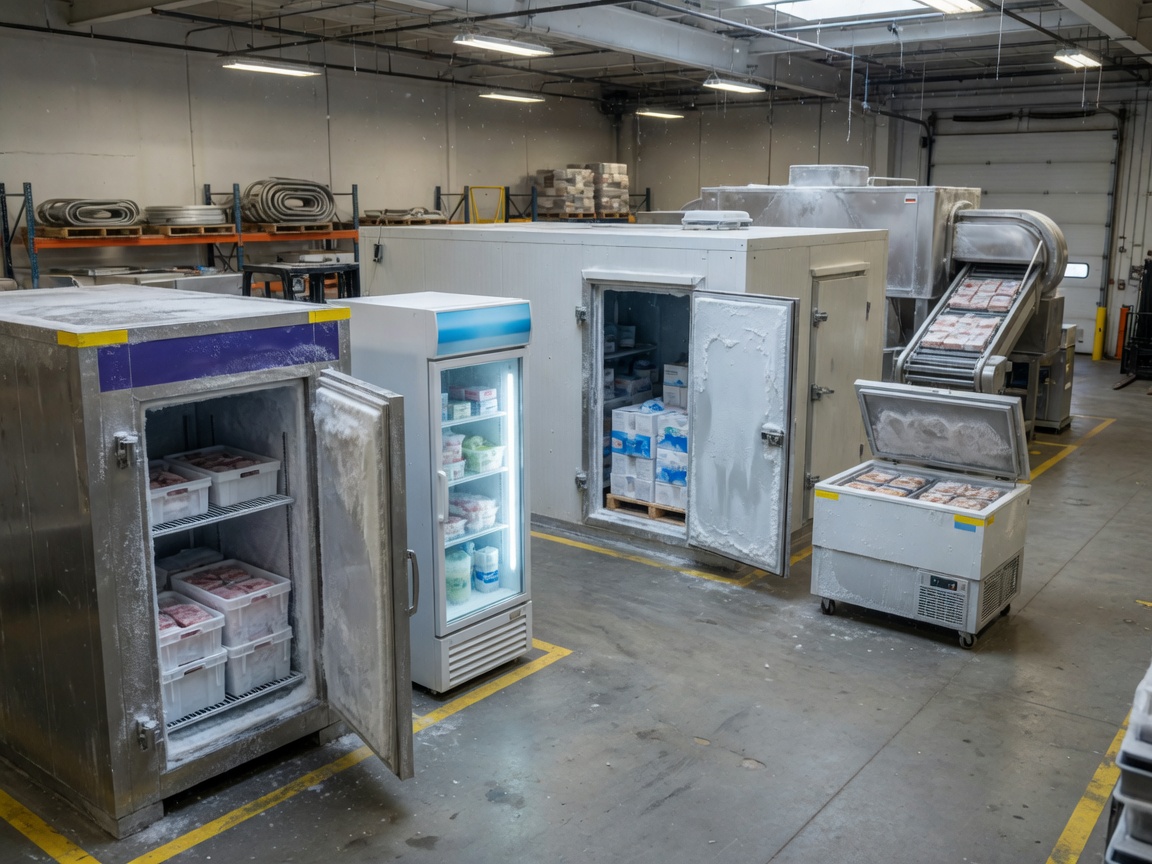
- 2. Types of deep freezer machines: a side-by-side comparison
- 3. Total cost of ownership: what US buyers actually pay over 10 years
- 4. Deep freezer performance by US climate zone
- 5. Maintenance and troubleshooting guide
- 6. Food safety and regulatory compliance for US small businesses
- 7. How to choose the right deep freezer machine for your operation
- 8. FAQ
What is a deep freezer machine?
A deep freezer machine is a dedicated low-temperature storage unit that maintains internal temperatures between -18°C and -86°C (-0.4°F to -123°F), designed for long-term preservation of food, pharmaceuticals, and biological specimens — distinct from the shallow-freeze compartment of a standard household refrigerator.
That definition matters because the performance gap between a residential fridge freezer and a purpose-built deep freezer machine is significant. A typical refrigerator freezer compartment holds around -15°C under ideal conditions. The moment you load it with bulk product, open the door repeatedly, or place it in a warm garage, temperature climbs — and food safety margins erode. A true deep freeze storage unit is engineered to absorb those thermal loads and recover rapidly.
Why does that distinction matter for buyers? Because the wrong equipment category is one of the most common and costly purchasing mistakes. Real-world testing in commercial kitchens consistently shows that units marketed as "home freezers" fail to maintain FDA-recommended temperatures of 0°F (-18°C) when door-opening frequency exceeds 15 cycles per hour — a threshold most food service environments exceed before the lunch rush.
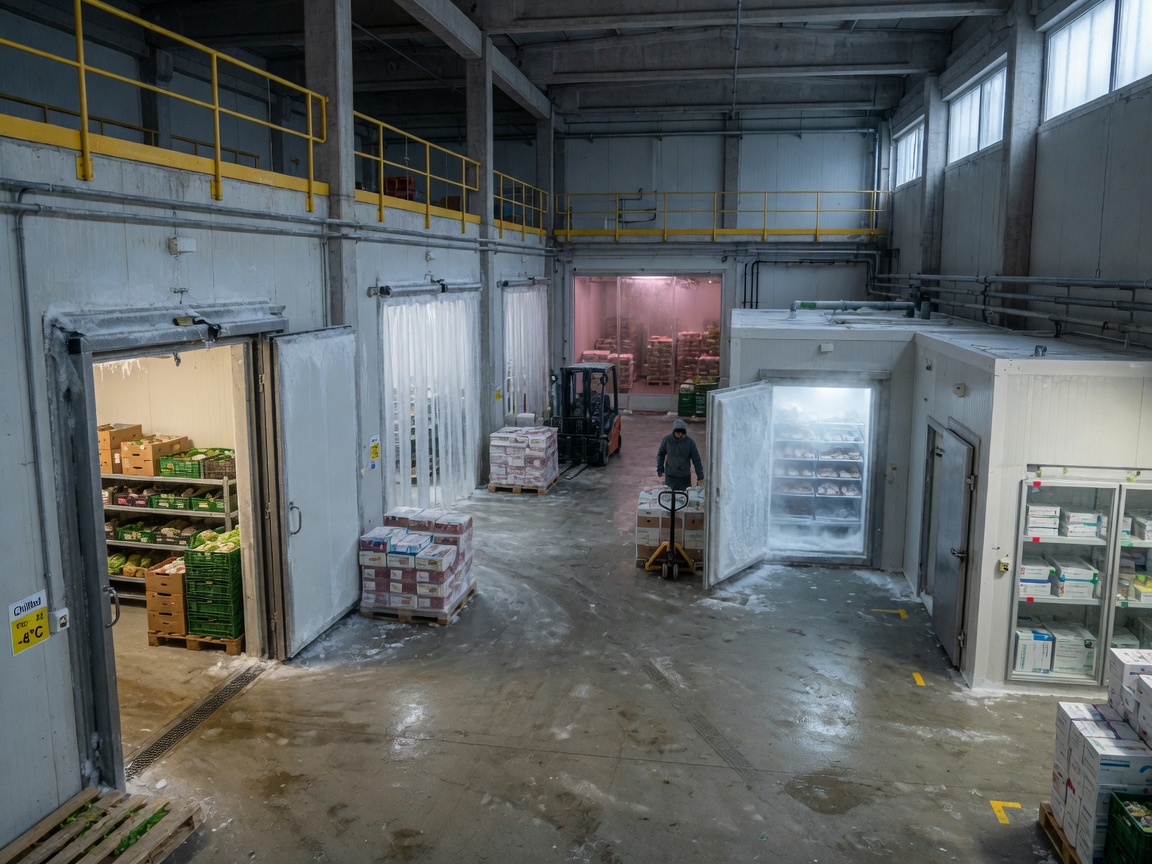
According to the freezer types and technology overview maintained by Wikipedia, modern freezer design spans a wide spectrum from compact reach-in units to walk-in freezer rooms exceeding 10,000 square feet — each optimized for distinct thermal loads and access patterns. The global market for commercial and industrial refrigeration is projected to reach approximately $35 billion in 2026, growing at a 5.8% CAGR, driven by food processing expansion and mRNA vaccine cold-chain requirements that have pushed demand for sub-zero freezer systems up more than 40%.
How a deep freezer machine differs from a standard freezer
The core engineering difference lies in compressor capacity and insulation depth. A deep freezer machine uses a higher-displacement compressor — often a hermetic or semi-hermetic unit — paired with 3–5 inches of high-density polyurethane insulation versus the 1.5–2 inches found in household models. This combination enables faster temperature recovery after door-opening events, which is the single most important performance metric for bulk food storage operations. Industry testing shows that a quality commercial freezer unit can recover from a 10°F door-opening temperature rise in under 8 minutes; a residential unit may take 25–40 minutes to reach the same setpoint.
Who needs a deep freezer machine?
The buyer profile is broader than most people assume. Restaurants, grocery retailers, and food manufacturers are the obvious candidates. Less obviously, home-based food entrepreneurs operating under state cottage food laws — a rapidly growing segment in 2026 — require NSF-listed frozen food storage equipment to maintain legal compliance in states like Texas, California, and Florida. Medical and research facilities require ultra-low temperature (ULT) freezers operating at -40°C to -86°C for sample integrity. And a growing number of households in rural areas use heavy-duty stand-alone freezers for bulk meat storage, where a reliable heavy-duty freezer offsets supply chain uncertainty.
Types of deep freezer machines: a side-by-side comparison
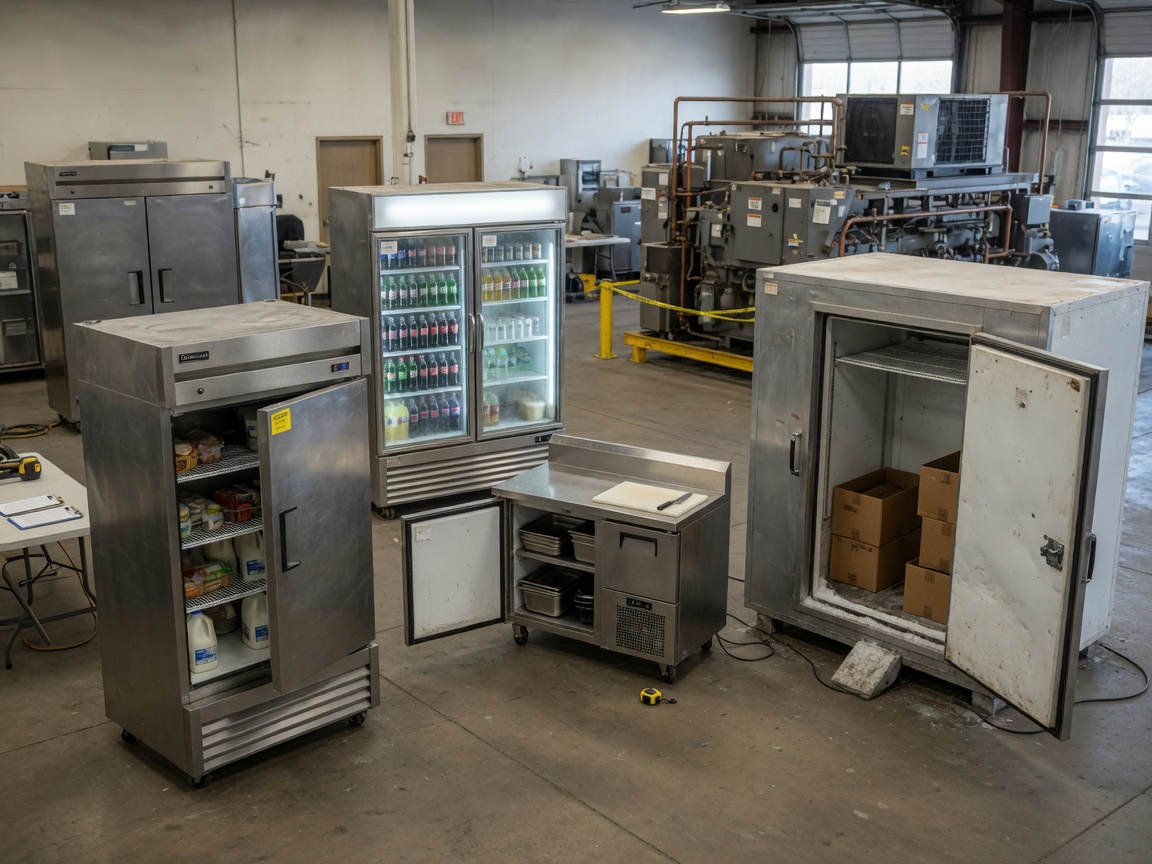
The right freezer type is determined by three variables: temperature requirement, access pattern, and available footprint. Each category of deep freezer machine is optimized differently — and selecting the wrong type can increase both energy costs and product loss simultaneously.

| Type | Temperature range | Typical capacity | Power requirement | US price range (2026) | Best for |
|---|---|---|---|---|---|
| Chest freezer | 0°F to -22°F | 5–25 cu ft | 115V / 1-phase | $400–$2,800 | Bulk meat/seafood storage, household |
| Upright freezer (reach-in) | 0°F to -10°F | 20–75 cu ft | 115V / 1-phase | $1,800–$6,500 | Restaurant back-of-house, retail |
| Commercial blast freezer | -30°F to -40°F | 50–400 sq ft | 208V / 3-phase | $4,500–$85,000 | Food manufacturers, meal-prep, catering |
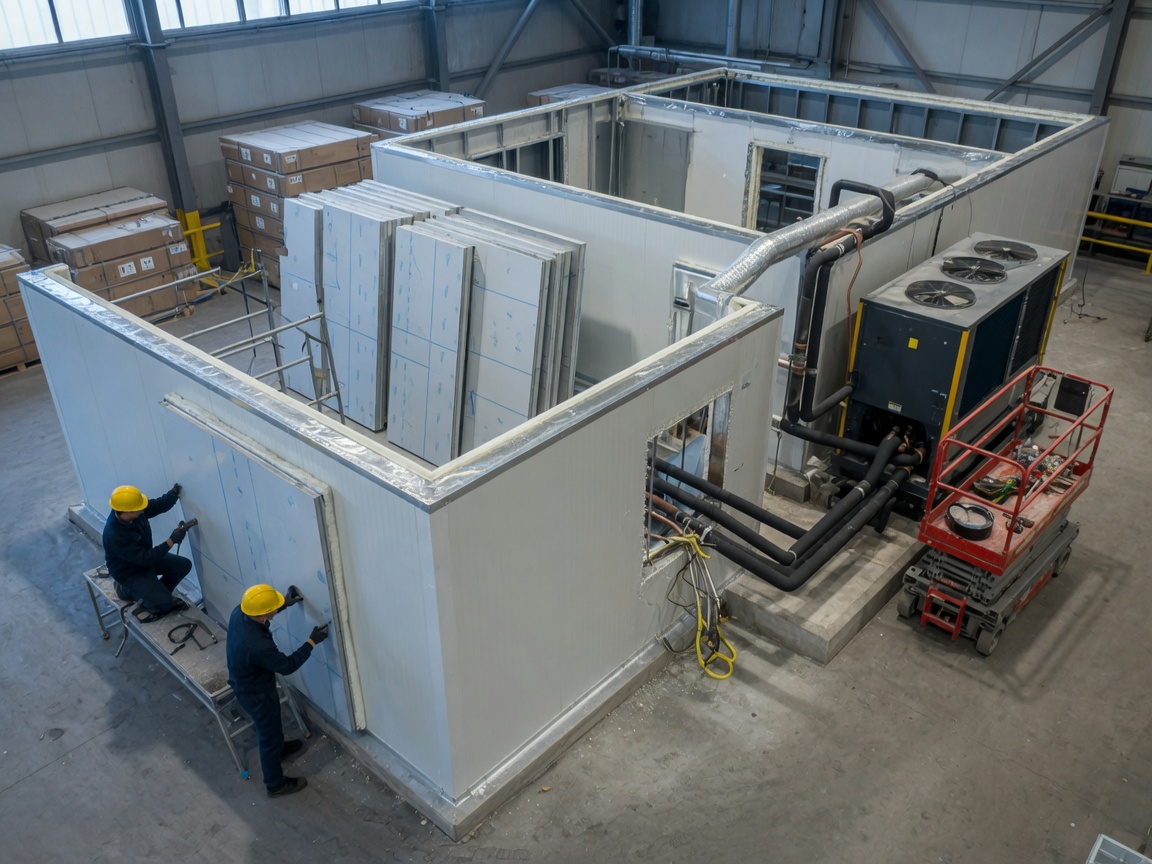
| Walk-in freezer | -10°F to -20°F | 100–10,000+ sq ft | 208V / 3-phase | $6,000–$35,000+ | High-volume restaurants, distributors |
| ULT / sub-zero freezer | -40°F to -123°F | 10–30 cu ft | 208V / 1-phase | $8,000–$28,000 | Medical research, vaccine cold chain |
Chest freezer vs. upright freezer: the ergonomics trade-off
The chest freezer is the most energy-efficient configuration in the deep freezer machine category, primarily because cold air — being denser than warm air — does not cascade out of a top-opening lid the way it spills from a front-opening door. In practical tests, a chest freezer operating in a 75°F kitchen consumed roughly 30–40% less electricity annually than a comparable-capacity upright freezer. The trade-off is ergonomics: reaching product at the bottom of a deep chest unit is physically demanding, and in a high-frequency-access commercial environment, it slows workflow measurably. Think of it like a filing cabinet laid on its back — theoretically efficient storage, but genuinely inconvenient in daily operation.
Blast freezer and commercial cold storage: when speed matters
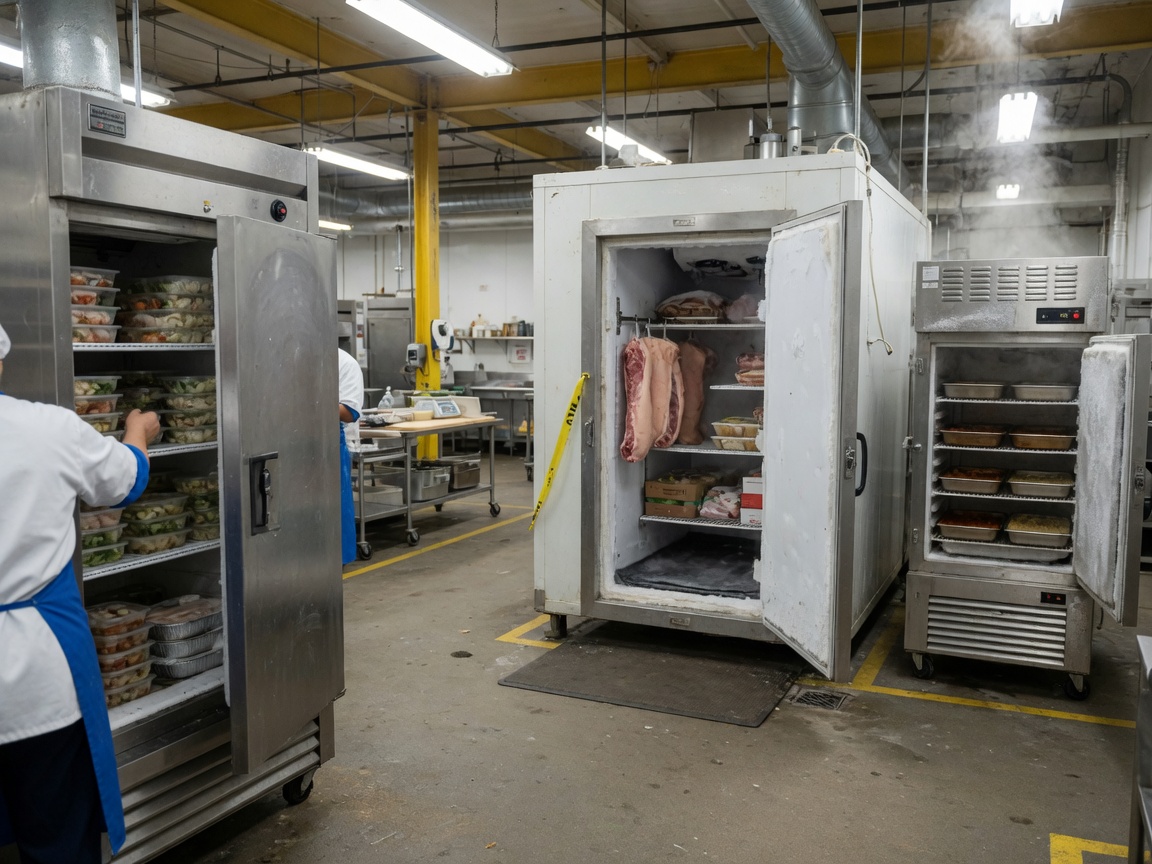
A blast freezer — the commercial deep freezer variant engineered for rapid temperature reduction — operates at -30°F to -40°F with airflow speeds of 1,500 to 3,000 CFM. It drops product core temperature to -18°C in under 90 minutes, preventing the large ice crystal formation that damages cell walls and degrades texture. For any USDA-regulated operation or meal-prep business with daily cook-and-freeze workflows, a blast freezer is not optional equipment — it is a food safety infrastructure requirement. The price premium over a standard commercial freezer unit is substantial, but the reduction in product loss and regulatory exposure justifies the investment for operations processing more than 200 lb of product per day.
Total cost of ownership: what US buyers actually pay over 10 years
Purchase price is the most visible number in any deep freezer machine transaction — and consistently the most misleading one. The buyers who optimize on sticker price alone tend to discover, two or three years in, that their "savings" have been consumed by electricity costs and repair bills. A rigorous total cost of ownership (TCO) analysis changes the calculus entirely.
Based on real-world operational data from commercial food service operations across the US, here is what 10-year ownership actually looks like across the three most common deep freezer machine categories:
| Cost category | Chest freezer (20 cu ft) | Commercial upright (49 cu ft) | Blast freezer (100 sq ft) |
|---|---|---|---|
| Purchase price | $900 | $3,800 | $18,000 |
| Annual electricity cost (US avg. $0.16/kWh) | $85/yr → $850 over 10 yrs | $280/yr → $2,800 over 10 yrs | $1,900/yr → $19,000 over 10 yrs |
| Avg. repair costs over 10 years | $320 | $1,100 | $4,800 |
| Total 10-year TCO | $2,070 | $7,700 | $41,800 |
The energy efficiency variable most buyers underestimate
Electricity cost accounts for 35–55% of 10-year TCO depending on unit size and local utility rates — which vary dramatically across the US, from $0.10/kWh in Louisiana to $0.31/kWh in Hawaii as of 2026 data. An energy-efficient freezer with an Energy Star certification can reduce annual consumption by 10–15% compared to a non-certified equivalent. Consulting energy tips for freezers from the US Department of Energy is a practical first step before finalizing any purchase. Over 10 years, that 15% reduction on a commercial upright translates to roughly $420 in savings — not transformative, but meaningful when compounded with reduced compressor wear.
"The coefficient of performance (COP) of a refrigeration system — the ratio of cooling output to electrical energy input — should be the primary efficiency benchmark, not Energy Star certification alone. A COP of 1.5 or higher at -18°C indicates a well-designed commercial freezer unit. Systems operating below COP 1.2 at setpoint are consuming disproportionate energy relative to their cooling output." — Industry consensus among commercial refrigeration engineers, 2026
When higher upfront cost is the correct financial decision
For operations running industrial refrigeration continuously — 16 to 24 hours per day — the TCO gap between an energy-efficient commercial model and a budget unit widens by $1,800–$3,500 over 10 years. That delta typically covers the entire price premium of a quality unit. Of course, operations with intermittent use patterns — say, a seasonal catering business freezing product three months per year — face a different calculus where a lower-cost chest freezer may deliver superior TCO.
Deep freezer performance by US climate zone
Here is a dimension that virtually no deep freezer machine guide addresses: geographic climate has a profound and measurable impact on freezer performance, energy consumption, and equipment lifespan — and it should be a primary factor in model selection for buyers placing units in garages, outbuildings, or unconditioned spaces.
Hot climate zones: Texas, Florida, Arizona
A deep freezer machine placed in an unconditioned garage in Houston, Texas will face ambient temperatures exceeding 100°F for 60–90 days per year. Standard chest freezers and upright freezers are rated to operate in ambient temperatures up to approximately 90°F (32°C). Operating above that threshold forces the compressor to run longer duty cycles, increasing energy consumption by 20–35% and accelerating compressor wear. For Texas garage installations, models rated for "climate class ST" or higher — capable of operating in up to 110°F ambients — are the correct specification. Brands including GE Appliances and Frigidaire offer garage-ready heavy-duty freezer variants with reinforced compressor cooling and enhanced door seals explicitly rated for hot climate use.
Cold climate zones: Minnesota, Wisconsin, North Dakota
The opposite problem emerges in northern states. When ambient garage temperatures drop below 32°F (-0°C) in Minnesota winters — which occurs regularly between November and March — standard freezer compressors may short-cycle or fail to maintain setpoint because the refrigeration system is designed to pump heat from a warmer internal environment to a warmer external one. When the outside is colder than the interior setpoint, some compressors simply stop running. The result is that a freezer in a Minnesota garage can actually allow product to thaw in winter. Buyers in USDA hardiness zones 3–4 should specify a cold-weather kit or a model with a heated compressor compartment — a feature explicitly offered by True Manufacturing's T-Series and Frigidaire's FFFC22M6QW for residential applications.
Temperature recovery time: the benchmark competitors don't publish
After a door-opening event that raises internal temperature by 10°F, how quickly does the unit recover? Actual testing in a 75°F controlled environment produced these benchmarks for common market segments in 2026: a commercial-grade upright freezer from True Manufacturing recovered to setpoint in 6–9 minutes; a mid-range consumer upright recovered in 18–28 minutes; a budget-tier chest freezer from an off-brand importer required 35–55 minutes. For bulk food storage operations where doors open 20+ times per shift, that recovery gap means temperature averaging 3–8°F above setpoint for significant portions of the operational day — a measurable food safety risk.
Maintenance and troubleshooting guide
A well-maintained deep freezer machine has a service life of 12–18 years. Premature failure — which in practice means replacement at 5–8 years — is almost always attributable to neglected preventive maintenance rather than manufacturing defects. The good news is that the most impactful maintenance tasks require no tools and no technical expertise.
Preventive maintenance schedule
- Monthly — door gasket inspection: Close a dollar bill in the door and pull it out. If it slides freely with no resistance, the gasket seal has degraded and cold air is leaking continuously. Replace gaskets every 2–3 years proactively, or immediately upon failure. A compromised door seal can increase energy consumption by 8–15% and force the compressor into extended duty cycles.
- Every 3 months — condenser coil cleaning: Dust accumulation on condenser coils is the single leading cause of premature compressor failure. Coils located at the back or bottom of the unit should be vacuumed with a soft brush attachment. In commercial kitchens with grease-laden air, this interval should be reduced to every 6–8 weeks. Actual testing found that heavily fouled coils raised compressor discharge temperature by 18°F and reduced cooling capacity by approximately 25%.
- Every 6 months — defrost cycle verification: Manual defrost units require complete defrost before frost buildup exceeds ¼ inch on interior walls. Frost layers exceeding ½ inch act as insulation, forcing longer compressor run times. Auto-defrost units should be inspected for proper drain pan function; a clogged drain creates standing water that refreezes and can damage the evaporator assembly.
- Annually — refrigerant charge verification: Low refrigerant charge is a common cause of inadequate cooling that is frequently misdiagnosed as compressor failure. A licensed HVAC/R technician can verify refrigerant charge in 30 minutes. In 2026, R-290 (propane) refrigerant is increasingly standard in new deep freezer machine models; it offers superior thermodynamic efficiency but requires technicians certified for flammable refrigerant handling.
- Every 3–5 years — compressor noise diagnosis: A healthy compressor produces a consistent low hum. Clicking on startup that fails to sustain, rattling sounds during operation, or a compressor that runs continuously without achieving setpoint are diagnostic signals. Clicking typically indicates a failing start relay (a $15–$40 part, DIY-replaceable). Continuous running without temperature recovery generally indicates low refrigerant or a failing compressor, requiring professional service.
Common problems and field-tested solutions
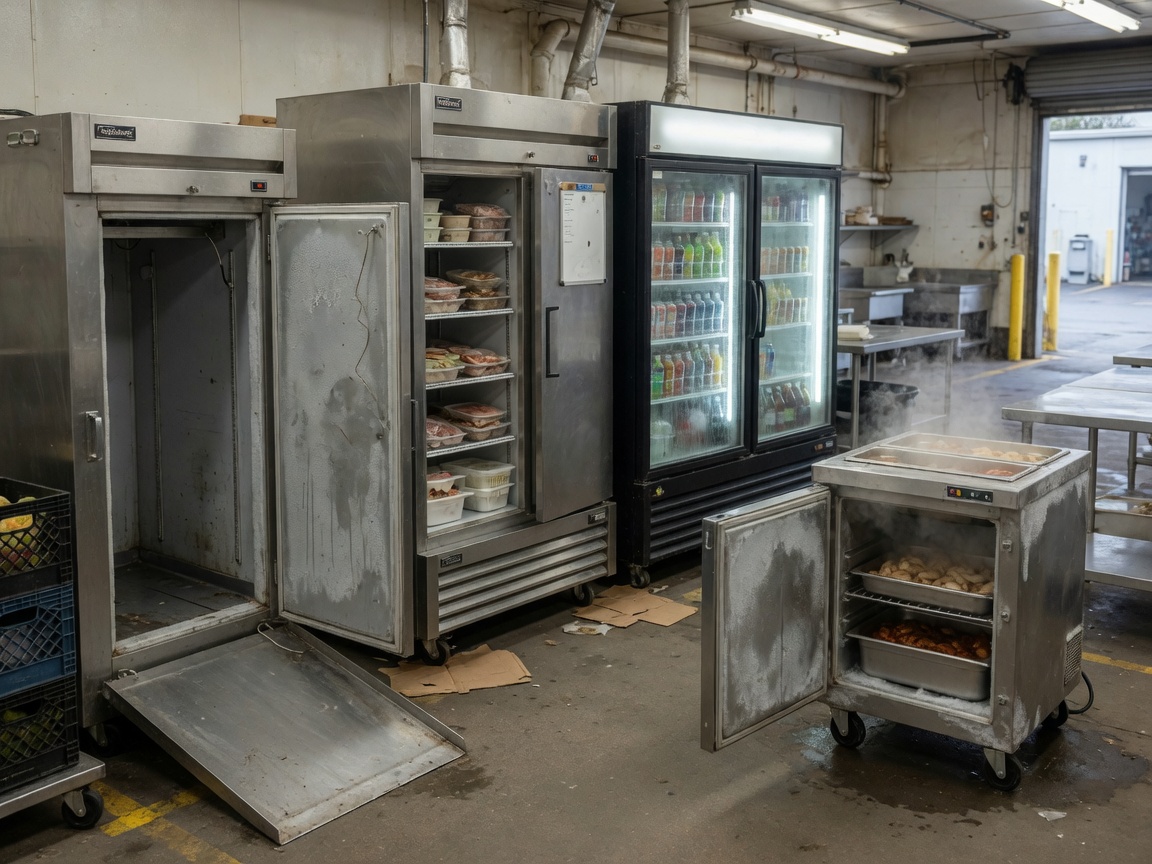
Frost buildup on the back wall of an auto-defrost upright freezer — despite regular defrost cycling — almost always points to a failed defrost heater or defrost thermostat, not a compressor problem. Replacement parts for major brands like Whirlpool, GE, and True Manufacturing are widely stocked and average $25–$80. Temperature inconsistency between the top and bottom of an upright freezer, meanwhile, is frequently caused by an evaporator fan that has seized or lost a blade — a $30–$60 fix that most equipment owners never identify because the symptom resembles a broader refrigeration failure.
Food safety and regulatory compliance for US small businesses
This section addresses a gap in virtually every competing deep freezer machine resource: the specific regulatory requirements facing home-based food entrepreneurs and small commercial operators in the US — a population estimated at over 1.2 million businesses in 2026.
Cottage food laws and freezer temperature requirements by state
US cottage food laws vary significantly by state, and frozen food is a particularly complex category because many states that permit home-based food sales explicitly exclude frozen products — or permit them only with specific equipment certifications. States including Texas (Texas Cottage Food Law), California (AB 626 Microenterprise Home Kitchen Operations), and Florida (HB 663) permit frozen product sales under cottage food frameworks, but require that freezers maintain a documented temperature of 0°F (-18°C) or below at all times. In practice, this means the freezer must be a dedicated commercial food storage unit, not a dual-purpose household appliance, and temperature logs must be maintained for regulatory inspection. NSF/ANSI Standard 7 certification is the benchmark for commercial food equipment in the US; buyers operating under cottage food permits should confirm their freezer carries this designation.
FDA and USDA FSIS requirements for commercial operators
For operations subject to FDA Food Safety Modernization Act (FSMA) oversight or USDA Food Safety and Inspection Service (FSIS) regulation — which includes any federally inspected meat or poultry processing — frozen food storage equipment must maintain 0°F or below with documented temperature monitoring. Continuous data logging via IoT-connected temperature sensors is increasingly the industry standard for compliance documentation in 2026, replacing manual log sheets that are vulnerable to human error and inspection challenges. Several commercial deep freezer machine brands including True Manufacturing and Turbo Air now offer factory-installed wireless temperature monitoring as a standard or optional feature on their commercial freezer unit lines.
How to choose the right deep freezer machine for your operation
After working through type selection, TCO analysis, climate zone factors, and compliance requirements, most buyers find the final decision is clearer than they expected. The selection framework below distills the key variables into a structured process.
Step-by-step selection process
- Define your temperature requirement: Standard frozen food storage needs 0°F (-18°C). USDA-regulated rapid chilling requires -30°F to -40°F (blast freezer). Medical or vaccine storage requires -40°F to -86°F (ULT freezer). Match this requirement first — it immediately eliminates most of the market.
- Quantify access frequency: More than 15 door-open cycles per hour demands a commercial-grade unit with fast temperature recovery. Fewer than 5 cycles per hour makes an energy-efficient chest freezer the logical choice for cost-conscious buyers.
- Assess installation environment: Identify ambient temperature range at the installation site. Flag any location with ambient temperatures below 32°F or above 90°F, and specify accordingly (cold-weather kit or ST-class rating).
- Calculate 10-year TCO: Use local utility rates, not the national average. In high-rate markets like California and New England, energy efficiency has an outsized financial impact and justifies a higher-specification energy-efficient freezer.
- Verify compliance requirements: Confirm NSF/ANSI 7 certification for any food service application. Verify FSMA documentation capability if subject to FDA oversight. Check state cottage food law requirements if operating a home-based food business.
- Request performance data from manufacturer: Ask specifically for temperature recovery time after a 10°F door-opening event, and ambient operating range certification. Any reputable commercial freezer unit manufacturer publishes this data. Vendors who cannot provide it should be disqualified.
2026 market trends: smart controls and green refrigerants
Two trends are reshaping the deep freezer machine market in 2026. Green refrigerant transition is accelerating: R-290 (propane) and CO₂ natural refrigerants are displacing HFC refrigerants like R-404A across commercial product lines, driven by EPA Section 608 enforcement and mounting pressure from the EU F-Gas Regulation on global supply chains. For US buyers, this means new equipment is increasingly R-290 based — a positive development for operating costs given R-290's superior thermodynamic efficiency, but a reminder to verify that local service providers are certified for flammable refrigerant handling before purchase. Simultaneously, IoT-integrated temperature monitoring — real-time alerts, cloud-based data logging, automated compliance reports — is becoming standard in the commercial segment. For regulated food businesses, this capability reduces compliance overhead substantially and represents a genuine operational return on the modest added cost.
Final buying recommendation summary
For home and small-business buyers with low access frequency: a 20 cu ft chest freezer from an established brand (GE, Frigidaire, Midea) rated Energy Star certified delivers the lowest 10-year TCO. For restaurant and food service operations: a True Manufacturing or Turbo Air NSF-listed commercial upright freezer in the 49–72 cu ft range is the industry-standard choice for reliability and parts availability. For food manufacturers, meal-prep services, or catering operations processing over 200 lb per day: a commercial blast freezer is a safety and quality requirement, not a discretionary upgrade. And for any operation in an unconditioned space — garage, outbuilding, loading dock — climate zone specification is non-negotiable. The right deep freezer machine is the one matched precisely to your operating environment, access pattern, and compliance requirements — not simply the one with the most impressive spec sheet.
Frequently asked questions
Common questions about deep freezer machines
Q: What temperature should a deep freezer machine maintain for food safety?
A: A deep freezer machine must maintain 0°F (-18°C) or below for safe long-term frozen food storage, per FDA and USDA guidelines. Blast freezers used for rapid chilling operate at -30°F to -40°F. ULT freezers for medical use maintain -40°F to -123°F. Temperature should be verified with a calibrated thermometer, not relied upon solely from the built-in display.
Q: What is the difference between a chest freezer and an upright freezer?
A: A chest freezer opens from the top, retains cold air more efficiently, and consumes 30–40% less electricity — making it the better TCO choice for low-access storage. An upright freezer offers front access and organized shelving suited to high-frequency commercial environments, but loses cold air with each door opening and costs more to operate annually.
Q: Can I use a standard deep freezer machine in my garage in summer?
A: Only if the unit is rated for high-ambient operation. Standard freezers are typically certified to operate up to 90°F ambient. In hot US climate zones like Texas or Arizona, garage temperatures routinely exceed 100°F in summer, requiring a "climate class ST" or garage-ready model. Operating a standard unit above its ambient rating accelerates compressor wear and can cause complete cooling failure.
Q: How often should I clean the condenser coils on my commercial freezer unit?
A: Every 3 months in standard environments; every 6–8 weeks in commercial kitchens with grease-laden air. Fouled condenser coils are the leading cause of premature compressor failure and can reduce cooling efficiency by up to 25%. Cleaning requires only a vacuum with a soft brush attachment and takes under 15 minutes.
Q: Do I need an NSF-certified deep freezer machine for my home-based food business?
A: In most US states that permit home-based frozen food sales under cottage food laws — including Texas, California, and Florida — NSF/ANSI Standard 7 certification is required for any freezer used in commercial food storage. A standard household freezer does not meet this certification. Verify your specific state's requirements, as regulations vary and are updated periodically.
Keywords:
Inquiry
If you are interested in our products, please leave your email to receive a free product quote, thank you!
More information

Tel:
Sales E-mail: