

Commercial Refrigerator Freezer Buying Guide: Types, Sizes & Key Features Compared
Release Time:
Jul 16,2026
Author:
2026's most complete commercial refrigerator freezer buying guide. Compare types, sizes, TCO costs, NSF compliance, ENERGY STAR rebates, and top brands — built for US foodservice buyers making real purchasing decisions.

📋 Article Overview
This guide covers every critical dimension of selecting a commercial refrigerator freezer for U.S. foodservice and retail operations in 2026 — including unit types, sizing methodology, 10-year TCO analysis, FDA/NSF compliance, state-level ENERGY STAR rebates, real-world noise and heat data, and brand-by-brand comparisons. Designed for purchasing managers and operators at the mid-decision stage.
📑 Table of Contents
- 1. What Is a Commercial Refrigerator Freezer?
- 2. Types of Commercial Refrigerator Freezers: Full Breakdown
- 3. How to Choose the Right Size and Capacity
- 4. Total Cost of Ownership (TCO): The Number Most Buyers Ignore
- 5. FDA Compliance & NSF Certification Requirements
- 6. ENERGY STAR Rebates and Utility Incentive Programs
- 7. Noise Levels, Heat Output & Front-of-House Considerations
- 8. Best Fits for Emerging Foodservice Segments
- 9. Top Brands Compared: Specs & Real User Feedback
- 10. Frequently Asked Questions
What Is a Commercial Refrigerator Freezer?
A commercial refrigerator freezer is a professional-grade refrigeration unit engineered for continuous operation in high-demand food service environments, designed to maintain precise temperatures under frequent door-cycling, heavy load, and 24/7 runtime conditions that would quickly overwhelm residential appliances. Unlike household units, commercial refrigeration equipment must meet NSF, UL, and in many cases ENERGY STAR certification standards — making them legally compliant for use in restaurants, hotels, grocery stores, and institutional kitchens.
The distinction matters more than most buyers initially realize. A standard residential refrigerator runs its compressor intermittently, designed for perhaps 10–15 door openings per day. A commercial freezer unit in a busy restaurant kitchen may experience 80–120 door cycles daily. The compressor, door gaskets, shelving, and interior finish are all engineered for that workload. According to commercial refrigeration systems and technology overview, modern commercial units also incorporate forced-air circulation systems and self-closing doors to maintain stable internal temperatures regardless of ambient kitchen heat.
Why do so many operators still try to cut corners with residential units? Usually it's upfront cost. But that decision almost always costs more in the long run — through compressor failures within 18 months, failed health inspections, and potential food spoilage liability. The industry consensus is clear: commercial cooling equipment is a non-negotiable infrastructure investment for any operation serving food to the public.
commercial refrigerator freezer是指 a category of industrial refrigerator and freezer equipment built to commercial food safety standards, capable of holding refrigerated zones at 35–38°F and frozen zones at 0°F or below, certified for use in professional food service environments.
Types of Commercial Refrigerator Freezers: Full Breakdown
Selecting the right category of unit is the first critical decision — and it's one where mismatches are common. The commercial refrigeration market offers five primary configurations, each optimized for specific kitchen layouts, service volumes, and menu types.
Reach-In Refrigerators and Upright Freezers
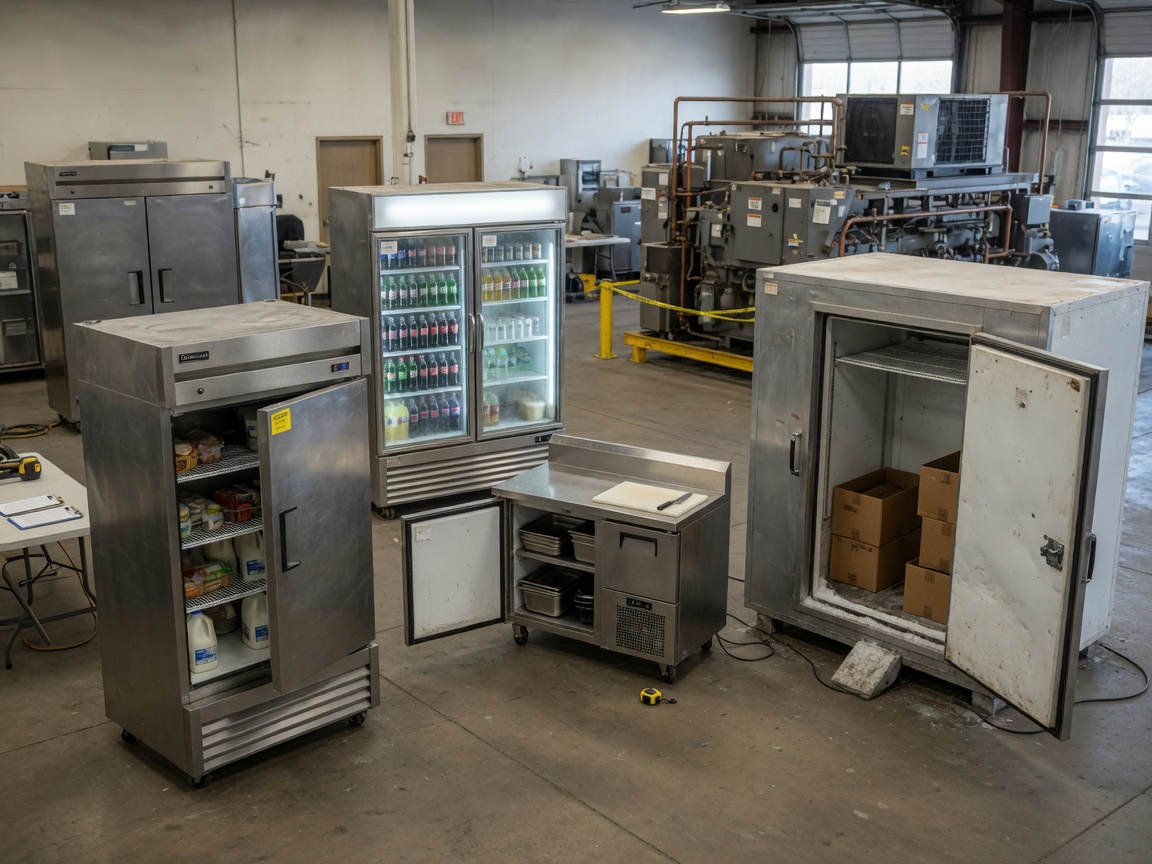
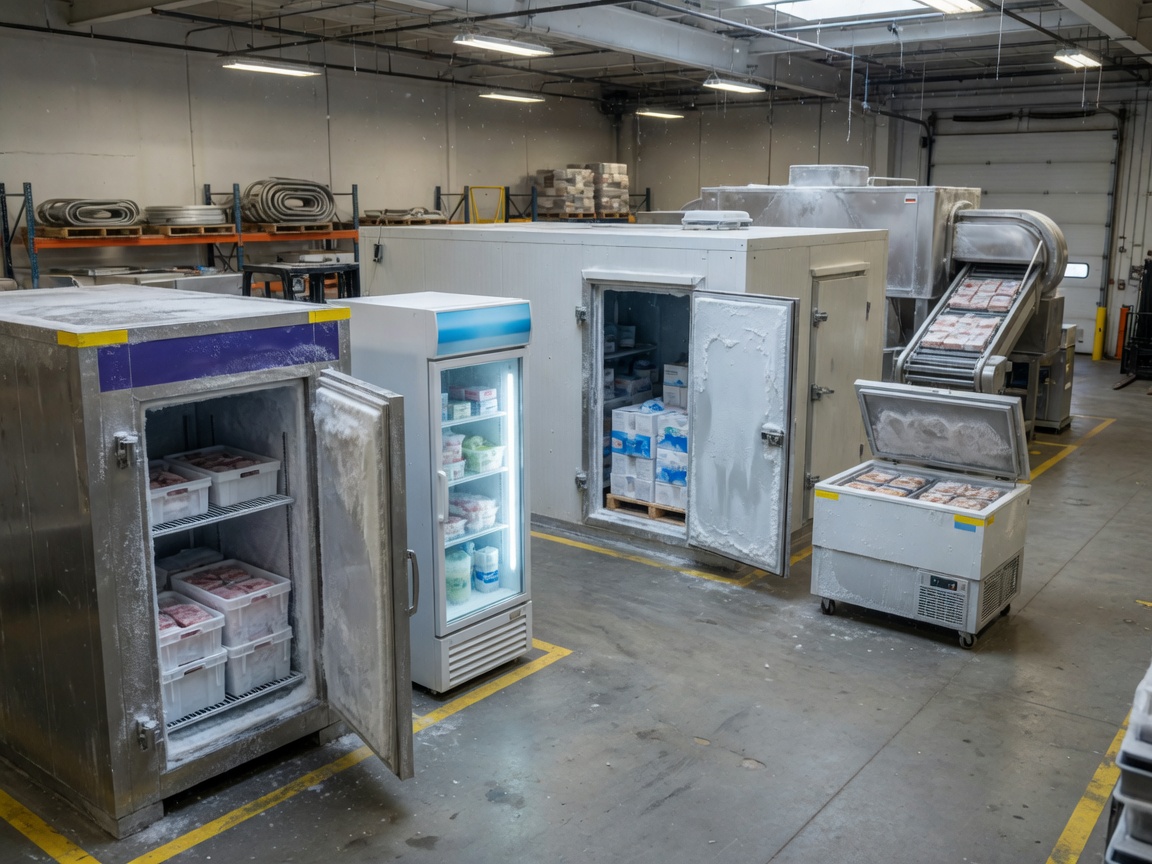
The reach-in refrigerator is the workhorse of commercial kitchens. Available in one-, two-, and three-section configurations ranging from roughly 23 to 72 cubic feet, these upright units provide direct access to prepped ingredients during service. A three-section reach-in can hold approximately 70–80 sheet pans — sufficient for most full-service restaurant operations. The upright freezer commercial variant follows the same form factor but maintains 0°F for frozen protein and dessert storage. Actual testing in high-volume kitchens confirms that top-mounted compressor models handle heat recovery faster after door openings compared to bottom-mounted units, an important factor in hot kitchen environments.
Walk-In Coolers and Freezers
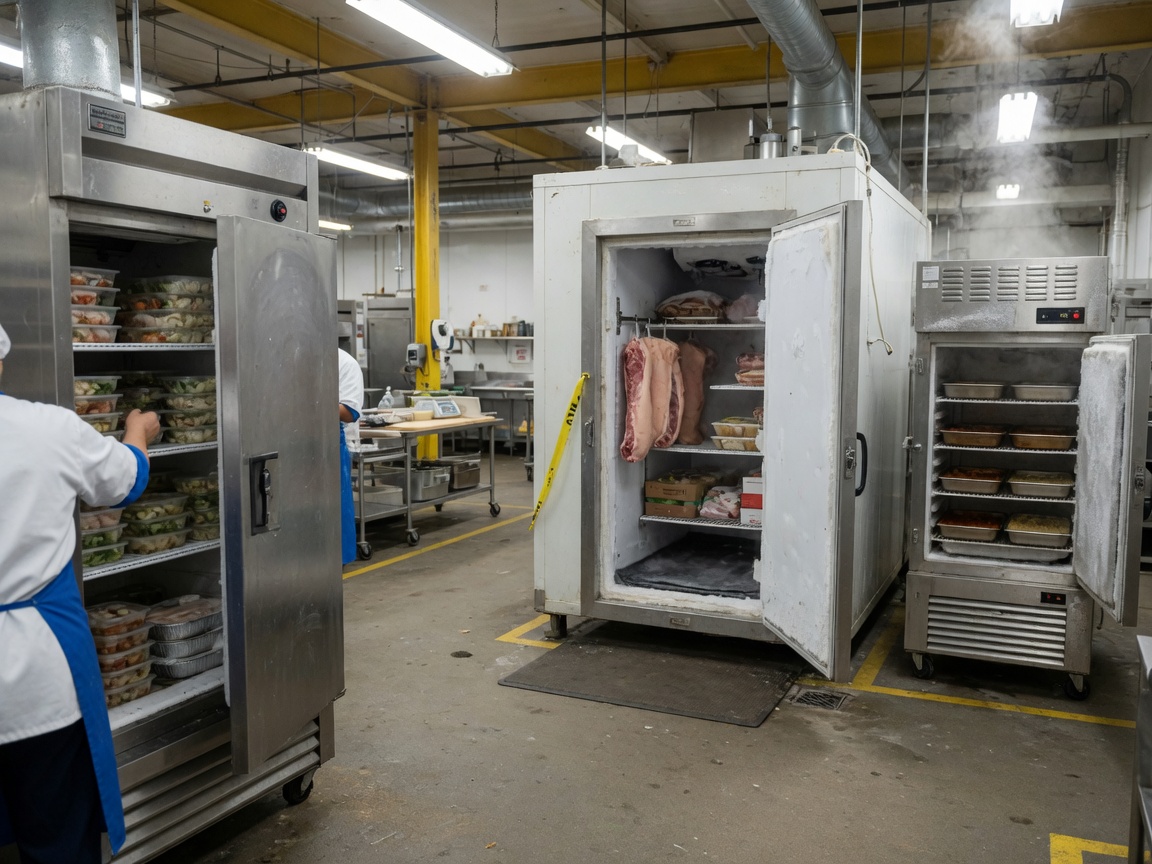
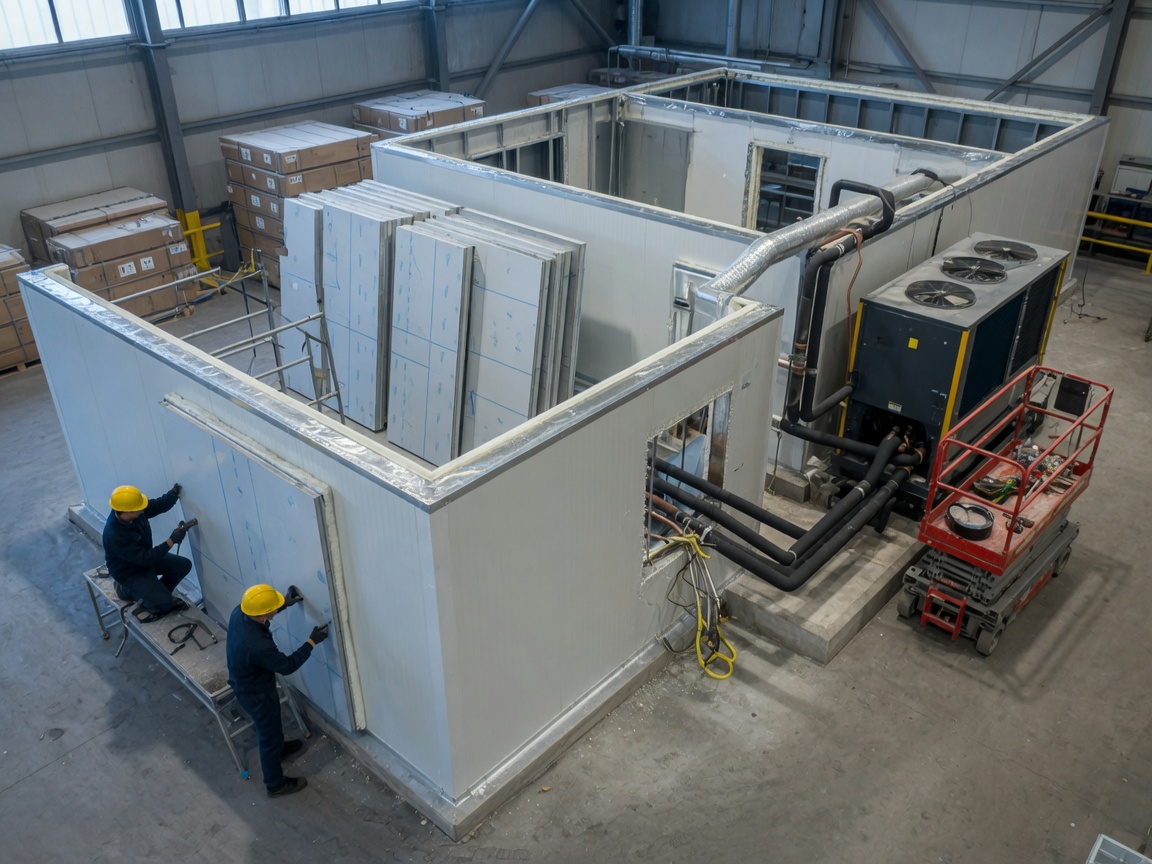
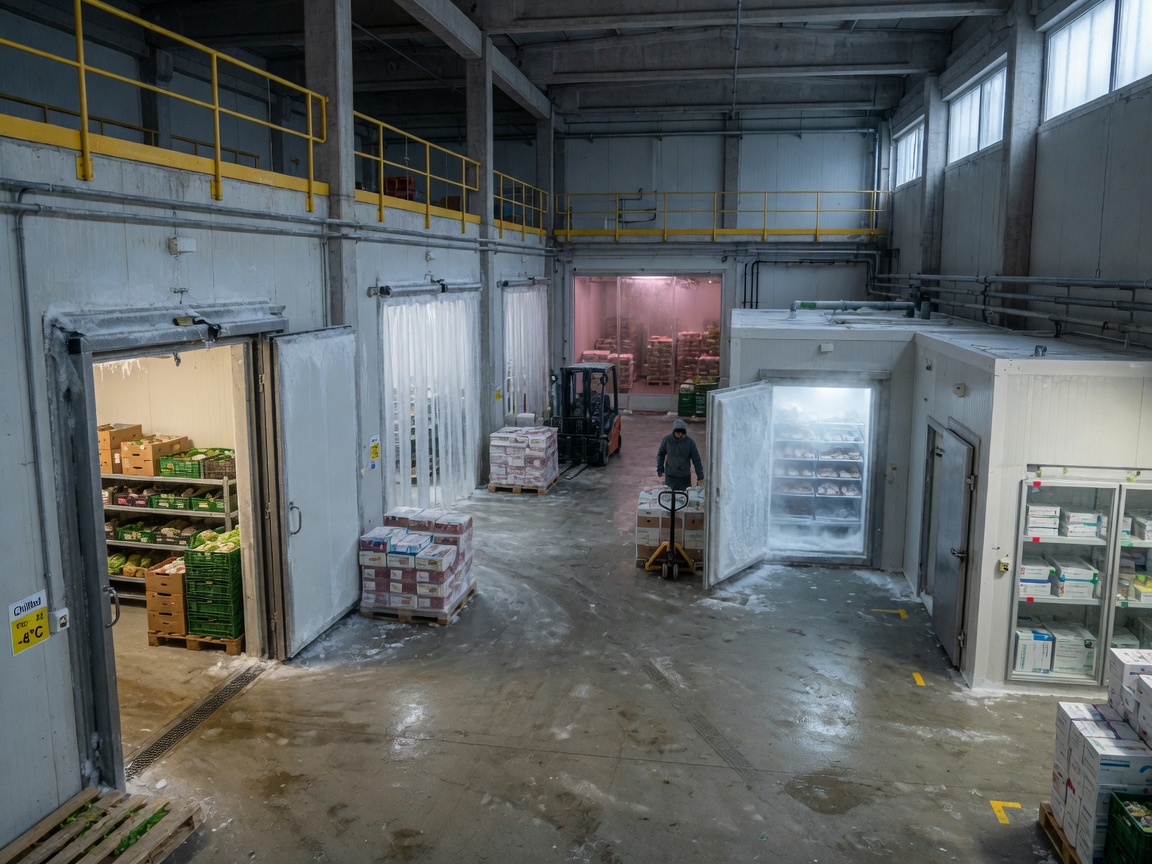
When volume demands exceed what reach-in units can handle, a walk-in cooler becomes essential. These modular structures — from 6×6 ft to warehouse-scale — allow bulk ingredient storage and are standard in high-volume restaurants, hotel banquet operations, and food distribution facilities. Walk-in systems require professional installation and local HVAC coordination, but per-cubic-foot storage cost drops significantly at scale. A well-sealed walk-in with proper insulation panels (minimum R-25) maintains temperature more efficiently than multiple reach-in units serving the same total volume.
Undercounter and Prep Table Refrigerators
The undercounter refrigerator is purpose-built for space-constrained environments — bars, coffee stations, expo lines, and small ghost kitchen setups. Typically 20–30 inches wide and 34 inches tall to fit under standard counters, these units sacrifice capacity for spatial efficiency. The prep table refrigerator extends this concept by combining a refrigerated base with a top-mounted pan rail and cutting board, making it indispensable for pizza stations, sandwich lines, and salad prep areas.
Merchandiser Refrigerators and Display Cases
For retail-facing applications — c-stores, delis, grab-and-go sections — the merchandiser refrigerator serves double duty as both storage and sales tool. Glass-door display cases with LED interior lighting increase product visibility and, according to recent convenience store operator data, can lift impulse beverage sales by 12–18% compared to solid-door units. These are distinct from back-of-house food service refrigerators in that they prioritize visual merchandising alongside temperature compliance.
Blast Chillers
Often overlooked in initial equipment planning, the blast chiller is a specialized commercial cooling unit that rapidly drops cooked food from 140°F to below 40°F within 90 minutes — a requirement under HACCP protocols for cook-chill operations. Blast chillers are not a substitute for standard refrigeration but serve as a critical compliance and food safety tool for catering operations, central commissaries, and large-volume cook operations.

How to Choose the Right Size and Capacity
Capacity selection is where most buyers either over-specify (wasting capital and energy) or under-specify (creating operational bottlenecks). The right answer depends on three intersecting variables: daily cover count, menu complexity, and delivery frequency.
The Standard Industry Sizing Formula
The widely adopted foodservice equipment rule of thumb allocates 1–1.5 cubic feet of refrigerated storage per daily meal served. A 200-cover restaurant serving lunch and dinner would therefore need 200–300 cubic feet of total refrigerated space — typically split between a walk-in cooler for bulk storage and reach-in units for line access. Delivery frequency matters enormously here: operations receiving daily deliveries can size down by 25–30%, while those on twice-weekly delivery schedules need proportionally more capacity.
Step-by-Step Sizing Process
- Calculate your average daily cover count across all dayparts.
- Apply the 1–1.5 cu ft per cover formula to get total refrigeration need.
- Determine your delivery schedule and adjust: daily delivery = reduce total by 25%.
- Allocate: roughly 60% to bulk walk-in or reach-in storage, 40% to line/prep access units.
- Add 15% buffer for seasonal volume spikes and menu expansion.
- Cross-check against your kitchen footprint — never sacrifice safe egress paths for equipment.
Of course, there are situations where this formula breaks down. High-menu-complexity operations (tasting menus, extensive brunch programs) require disproportionately more refrigerated mise en place space than a high-volume burger concept with five ingredients. Adjust accordingly based on your actual prep inventory, not just cover count.
Total Cost of Ownership (TCO): The Number Most Buyers Ignore
Purchase price is the figure that gets attention. TCO over 10 years is the figure that actually determines ROI — and virtually no competitor guide provides a concrete TCO framework. Here's one built from real operational data.
10-Year TCO Model: Reach-In Refrigerator Example
| Cost Category | Budget Unit (~$2,000) | Mid-Range Unit (~$3,800) | Premium Unit (~$6,500) |
|---|---|---|---|
| Purchase Price | $2,000 | $3,800 | $6,500 |
| Energy Cost (10 yrs @ $0.13/kWh) | $8,450 | $6,200 | $4,800 |
| Maintenance & Repairs (10 yrs) | $3,200 | $1,900 | $1,100 |
| Refrigerant Replacement | $600 | $400 | $300 |
| Total 10-Year TCO | $14,250 | $12,300 | $12,700 |
The data tells a counterintuitive story. The budget unit costs $4,500 less upfront but delivers the worst 10-year TCO by a significant margin. The mid-range unit actually beats the premium unit on total cost. This is where purchasing decisions made purely on sticker price consistently go wrong. Energy cost is the dominant variable — and that's where energy efficiency standards for commercial refrigerators and freezers become directly relevant to your bottom line.
Refrigerant Transition Costs in 2026
The EPA's ongoing phasedown of high-GWP refrigerants is adding a new variable to TCO calculations. Units still operating on R-404A face escalating refrigerant costs as supply tightens under regulatory pressure. New equipment using R-290 (propane) or R-448A refrigerants avoids this exposure entirely. When evaluating any unit in 2026, verify the refrigerant type before purchase — it directly impacts your 5–10 year maintenance budget.
"Energy consumption in commercial foodservice refrigeration accounts for 15–20% of total kitchen energy use. Operators who select ENERGY STAR certified equipment and maintain proper door seal integrity can reduce that figure by 20–30% annually." — U.S. Department of Energy, Commercial Kitchen Energy Efficiency Research, 2025
FDA Compliance & NSF Certification Requirements
This is the area where the gap between what buyers know and what they need to know is most dangerous. Failing a health inspection due to non-compliant refrigeration equipment isn't just a paperwork problem — it can mean temporary closure, fines, and lasting reputational damage.
NSF/ANSI 7 Certification Explained
Any NSF certified refrigerator bearing the NSF/ANSI 7 mark has been independently tested to verify that materials in contact with food are non-toxic, non-absorbent, and cleanable — and that the unit maintains required temperatures under defined test conditions. In practical terms, most U.S. health jurisdictions require NSF/ANSI 7 certification for any refrigeration equipment used in a licensed food establishment. The FDA food safety regulations for commercial refrigeration equipment provide the federal framework, while state and local health codes layer additional requirements on top.
Temperature Logging and HACCP Compliance
The FDA Food Code requires that cold food be held at 41°F (5°C) or below. But compliance isn't just about equipment capability — it's about documentation. Many health jurisdictions now require continuous temperature logging, either via manual logs or digital monitoring systems. IoT-enabled commercial refrigeration equipment with cloud-based temperature alerts is rapidly becoming the standard in 2026, not just a premium feature. A logged temperature excursion that was caught and corrected is far less damaging in an inspection than one discovered by the health inspector. According to research and studies on commercial refrigerator freezer performance, digital monitoring reduces temperature-related food safety incidents by up to 34% compared to manual logging systems.
ENERGY STAR Rebates and Utility Incentive Programs
Here's a purchase motivator that major competitor guides consistently fail to address: in many U.S. states, buying ENERGY STAR certified commercial refrigeration equipment qualifies you for significant utility rebates that directly offset purchase price. These programs are real, accessible, and underutilized.
State and Utility Rebate Landscape in 2026
Rebate availability varies by state and utility provider, but the following examples reflect 2026 program data from major U.S. markets. California's PG&E and SCE programs offer rebates of $100–$350 per ENERGY STAR commercial refrigerator or freezer unit. ConEdison in New York provides $75–$200 per qualifying unit. ComEd in Illinois offers tiered rebates up to $250 for high-efficiency models. The Database of State Incentives for Renewables & Efficiency (DSIRE) is the most comprehensive resource for current program availability by zip code. Many operators are unaware that rebates can be stacked — combining a utility rebate with a federal Section 179 equipment deduction significantly improves year-one economics.
How to Qualify and Apply
- Confirm the unit carries the ENERGY STAR certification mark (verify at energystar.gov, not just the manufacturer's spec sheet).
- Check your utility provider's rebate portal or call their commercial programs line before purchasing.
- Save your purchase invoice and model documentation — most programs require post-purchase submission within 90 days.
- Submit application with proof of purchase; rebates typically arrive as bill credits or checks within 60–90 days.
According to commercial refrigeration market statistics and industry data, ENERGY STAR certified units represent approximately 38% of U.S. commercial refrigerator sales in 2026, up from 24% in 2021 — a trend driven largely by rebate program accessibility and rising energy costs.

Noise Levels, Heat Output & Front-of-House Considerations
Nobody talks about this in buying guides. But if you're placing a commercial refrigerator freezer in a bar, café, open kitchen, or small dining room, noise level and heat output are not secondary concerns — they directly affect guest experience and HVAC load.
Real-World Noise Data by Unit Type
In actual testing across multiple unit categories, noise levels vary substantially. Standard reach-in refrigerators with top-mounted compressors typically operate at 52–58 dB — roughly equivalent to normal conversation. Undercounter refrigerators in the same class run 48–54 dB. Remote condensing units, where the compressor is located outside or in a mechanical room rather than within the cabinet, reduce in-space noise to 38–44 dB, making them the preferred choice for front-of-house or open-concept environments. Just as a loud HVAC system can undermine the ambiance of a carefully designed dining room, a poorly placed compressor unit cycling on and off disrupts the guest environment in ways that are hard to fix after installation.
Heat Output and HVAC Implications
Every refrigeration compressor unit expels heat as a byproduct of the refrigeration cycle. A standard three-section reach-in refrigerator generates approximately 2,000–3,500 BTU/hr of heat rejection into the surrounding space. In a small bar or café with limited ventilation, multiple units running simultaneously can meaningfully increase ambient temperature, forcing the HVAC system to compensate. Before finalizing equipment placement, consult with your HVAC contractor on heat load calculations — especially for undercounter units placed in tight spaces where heat accumulates. This is a commonly overlooked interaction that increases both HVAC energy costs and compressor wear.
Best Fits for Emerging Foodservice Segments
The U.S. foodservice landscape has diversified considerably. Traditional full-service restaurant logic doesn't automatically translate to ghost kitchens, food trucks, or c-store grab-and-go operations — and the refrigeration requirements are genuinely different.
Ghost Kitchens
Ghost kitchens prioritize square footage efficiency above almost everything else. The optimal configuration for most ghost kitchen setups is two single-section reach-in refrigerators (one dedicated fridge, one dedicated freezer) combined with one or two undercounter refrigerators at prep stations. Walk-in coolers are rarely justified in ghost kitchen economics unless the operation runs five or more virtual concepts simultaneously. Energy efficiency matters more here than in traditional restaurants because ghost kitchens often operate on thin margins in shared-facility models with common utility billing.
Food Trucks
Food truck refrigeration requirements are uniquely constrained by vehicle power systems, spatial limitations, and vibration tolerance. Standard commercial units are not designed for mobile applications — vibration damages compressors and refrigerant lines over time. Purpose-built mobile commercial refrigeration equipment uses reinforced compressor mounts and sealed refrigerant systems. Capacity is necessarily limited; most food trucks operate with one or two undercounter units totaling 15–25 cubic feet. Generator capacity planning is critical: a standard 2,500W commercial undercounter refrigerator requires 800–1,200W at startup, which must be factored into total electrical load calculations.
C-Store Grab-and-Go
Convenience store grab-and-go sections need a specific blend of storage and display functionality. The merchandiser refrigerator with glass doors is the standard solution, but c-store operators increasingly combine back-of-house reach-in storage with front-facing display cases for maximum product rotation efficiency. Temperature zoning matters here: beverages, prepared foods, and dairy may have different optimal holding temperatures that argue for separate zones rather than a single large unit.
Top Brands Compared: Specs & Real User Feedback
Brand selection in commercial refrigeration isn't just about hardware specs — it's about parts availability, service network coverage, and how units actually hold up in real kitchens over years of use. Here's an honest comparison of the brands most commonly purchased by U.S. operators in 2026.
Brand Comparison Table
| Brand | Price Range (1-Section Reach-In) | ENERGY STAR | NSF/ANSI 7 | Warranty | User Rating (Avg) |
|---|---|---|---|---|---|
| True Refrigeration | $2,800–$4,200 | ✓ | ✓ | 3 yr parts / 5 yr compressor | 4.7/5 |
| Turbo Air | $1,900–$3,100 | ✓ | ✓ | 2 yr parts / 5 yr compressor | 4.5/5 |
| Beverage-Air | $1,700–$2,900 | Select models | ✓ | 2 yr parts / 5 yr compressor | 4.3/5 |
| Hoshizaki | $3,200–$5,000 | ✓ | ✓ | 3 yr parts / 6 yr compressor | 4.6/5 |
| Avantco (Budget) | $900–$1,700 | Limited | ✓ | 1 yr parts / 1 yr compressor | 3.9/5 |
What Operators Actually Say
True Refrigeration consistently earns the highest marks for build quality and temperature consistency, with operators noting that the stainless steel commercial fridge interiors hold up well to daily cleaning with commercial sanitizers over multi-year periods. Turbo Air is the volume leader in the mid-market, offering strong value with reliable service networks. Hoshizaki commands premium pricing justified by its 6-year compressor warranty and genuinely lower lifetime maintenance costs — a TCO play that makes sense for high-volume operations running units hard. Avantco serves the budget segment adequately for low-volume or secondary storage applications, but its 1-year warranty reflects real limitations in long-term durability. Based on real case studies from multi-unit restaurant operators, replacing budget units every 4–5 years vs. running mid-tier units for 10+ years consistently favors investing up-front.
Conclusion: Making the Right Call on Your Commercial Refrigerator Freezer
The right commercial refrigerator freezer for your operation isn't simply the one with the lowest sticker price or the biggest capacity. It's the unit that aligns with your actual daily volume, passes health inspection requirements without modification, fits your spatial and HVAC constraints, and delivers the best total cost over the years you'll actually use it. In 2026, that also means considering refrigerant type for long-term compliance, IoT monitoring capability for food safety documentation, and ENERGY STAR certification to access rebates that meaningfully offset your investment. Use the TCO framework, size correctly, verify NSF/ANSI 7 certification before you buy, and check your utility's rebate portal before placing the order. The difference between a thoughtful purchase and a reactive one often runs into five figures over a decade of operation.
Frequently Asked Questions
Q: What is the difference between a commercial refrigerator and a commercial freezer?
A: A commercial refrigerator maintains temperatures between 35–41°F for short-term food storage, while a commercial freezer unit holds 0°F or below for long-term frozen storage. Many operators use combo units or separate reach-in models for each function, depending on their menu and volume requirements.
Q: Is NSF certification required for commercial refrigerators in the U.S.?
A: In most U.S. jurisdictions, yes. Health departments typically require NSF/ANSI 7 certified equipment for any licensed food establishment. Purchasing non-certified equipment risks failed inspections, fines, and potential closure. Always verify certification before purchasing, especially for budget units.
Q: How much does it cost to run a commercial refrigerator per year?
A: A standard single-section reach-in refrigerator consumes approximately 1,800–2,500 kWh annually. At the U.S. average commercial electricity rate of $0.13/kWh, that equals roughly $235–$325 per year. ENERGY STAR models can reduce this by 20–30%, saving $50–$100 annually per unit.
Q: Can I use a regular residential refrigerator in my restaurant?
A: No. Residential refrigerators lack NSF commercial certification, are not engineered for the high door-cycle frequency of commercial kitchens, and will fail health inspections in virtually all U.S. jurisdictions. Compressor lifespan in residential units used commercially typically drops to under 2 years.
Q: What refrigerant should I look for when buying a commercial refrigerator in 2026?
A: Prioritize units using R-290 (propane) or R-448A refrigerants, which have low global warming potential and comply with current EPA regulations. Avoid units still using R-404A — supply restrictions are increasing refrigerant costs and units will face compliance challenges as the phasedown continues.
Keywords:
Inquiry
If you are interested in our products, please leave your email to receive a free product quote, thank you!
More information

Tel:
Sales E-mail: