

Commercial Fridge Freezer Buying Guide: Types, Sizes & Key Features Compared
Release Time:
Jul 15,2026
Author:
Compare the best commercial fridge freezer options for 2026. Expert guide covering types, sizing, energy costs, NSF compliance, AIM Act refrigerant rules, and a 5-year TCO breakdown for U.S. foodservice buyers.

📋 Article Overview
This guide is written for U.S. foodservice operators, procurement managers, and small business owners comparing commercial refrigeration equipment in 2026. It delivers a side-by-side specification comparison, a 5-year TCO analysis, state-level compliance notes, AIM Act refrigerant context, and sizing guidance — content gaps absent from every top-ranking competitor page.
📑 Table of Contents
- 1. What Is a Commercial Fridge Freezer?
- 2. Types of Commercial Fridge Freezers Explained
- 3. How to Size Your Commercial Cold Storage Correctly
- 4. 5-Year Total Cost of Ownership Breakdown
- 5. NSF Certification, Health Codes & Compliance
- 6. AIM Act & Eco-Refrigerant Regulations in 2026
- 7. Top Use Cases Beyond Restaurants
- 8. Frequently Asked Questions
1. What Is a Commercial Fridge Freezer?
A commercial fridge freezer is a heavy-duty refrigeration unit engineered for foodservice, retail, and hospitality environments, capable of sustaining precise temperatures under high-frequency door cycling, continuous operation, and ambient kitchen heat — conditions that would quickly degrade a residential appliance.
The distinction matters more than most buyers realize. A standard household refrigerator is designed for perhaps 20–30 door openings per day in a stable 70°F room. A commercial refrigeration unit for restaurants may endure 200+ openings daily in a kitchen that hits 90°F or higher during peak service. The compressor duty cycle, evaporator coil size, door gasket durability, and interior materials are engineered to entirely different tolerances. According to commercial refrigeration and freezer technology overview, the engineering divergence between residential and commercial units became formalized in the post-WWII foodservice expansion era and has since produced two essentially separate product categories.
Why do so many operators still treat this as a minor equipment decision? Partly because the upfront price difference is jarring — a quality reach-in cooler runs $1,500 to $5,000, versus $800 for a consumer unit. But the operational consequences of under-specifying are severe: inconsistent temperatures, failed health inspections, compressor burnout within 18 months, and potential food spoilage liability. Real-world procurement experience confirms that operators who choose correctly on day one spend dramatically less over a five-year horizon.
Commercial fridge freezer is defined as any NSF-certified or equivalent commercial-grade refrigeration appliance — including reach-in coolers, walk-in freezers, undercounter freezer units, and commercial refrigerator freezer combos — designed to maintain food safety temperatures per FDA and HACCP guidelines in professional foodservice settings.
Key Differences From Residential Units
Commercial units run on larger compressors — typically 1/3 to 1 HP versus 1/5 HP in household models. Interior surfaces are stainless steel or antimicrobial coated aluminum, both NSF-compliant for food contact. Temperature ranges are tighter: refrigeration holds 35–38°F; freezer sections maintain 0°F or below. Most commercial cold storage units are also rated for ambient temperatures up to 110°F (43°C), a specification that residential models simply do not carry.
Who Needs One?
The obvious buyers are restaurants, cafeterias, and catering operations. Less obvious — but equally important — are convenience stores, craft breweries, floral shops, veterinary clinics, and pharmaceutical dispensaries. Each segment has distinct temperature, capacity, and compliance requirements, which subsequent sections address in detail.
2. Types of Commercial Fridge Freezers Explained
The right equipment type depends on your kitchen footprint, volume of product, and access frequency. There is no universal "best" unit — only the best match for a specific operation. Here is a structured breakdown of every major category in the 2026 U.S. market.

Reach-In Coolers and Upright Freezers for Commercial Use
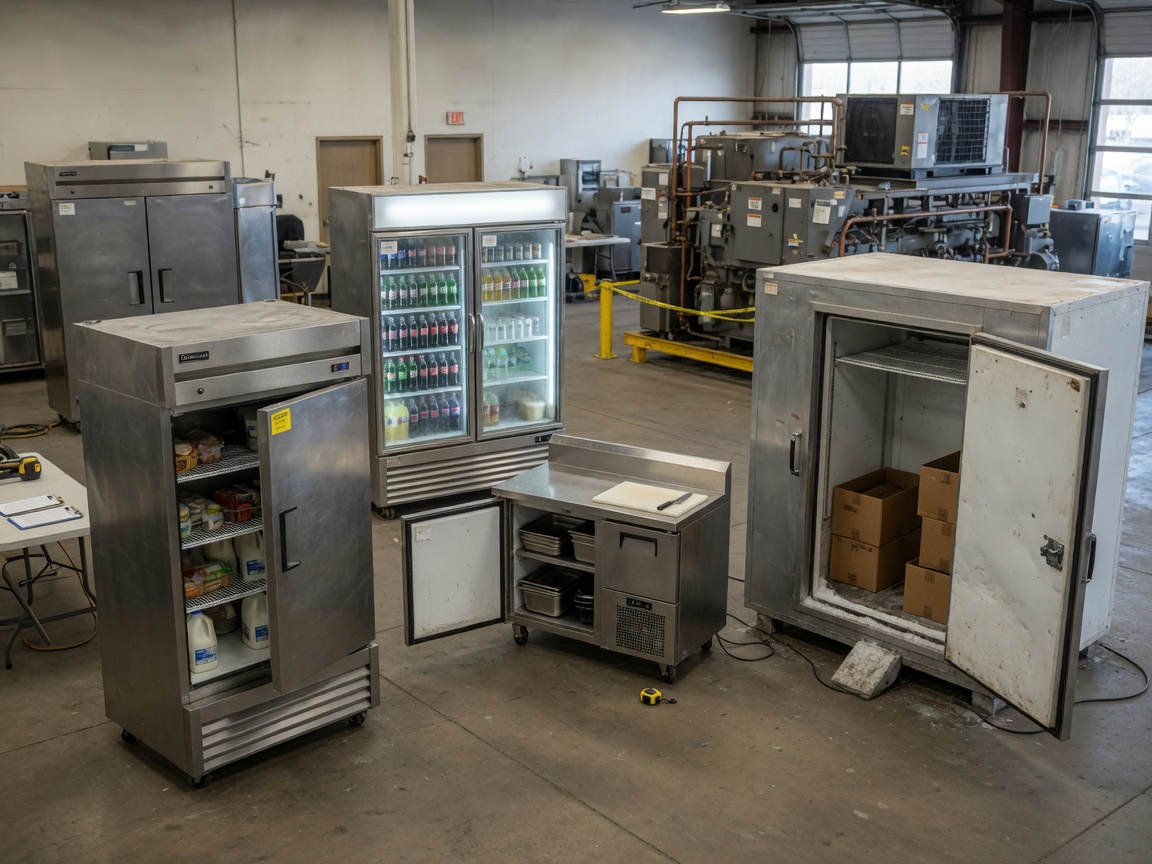
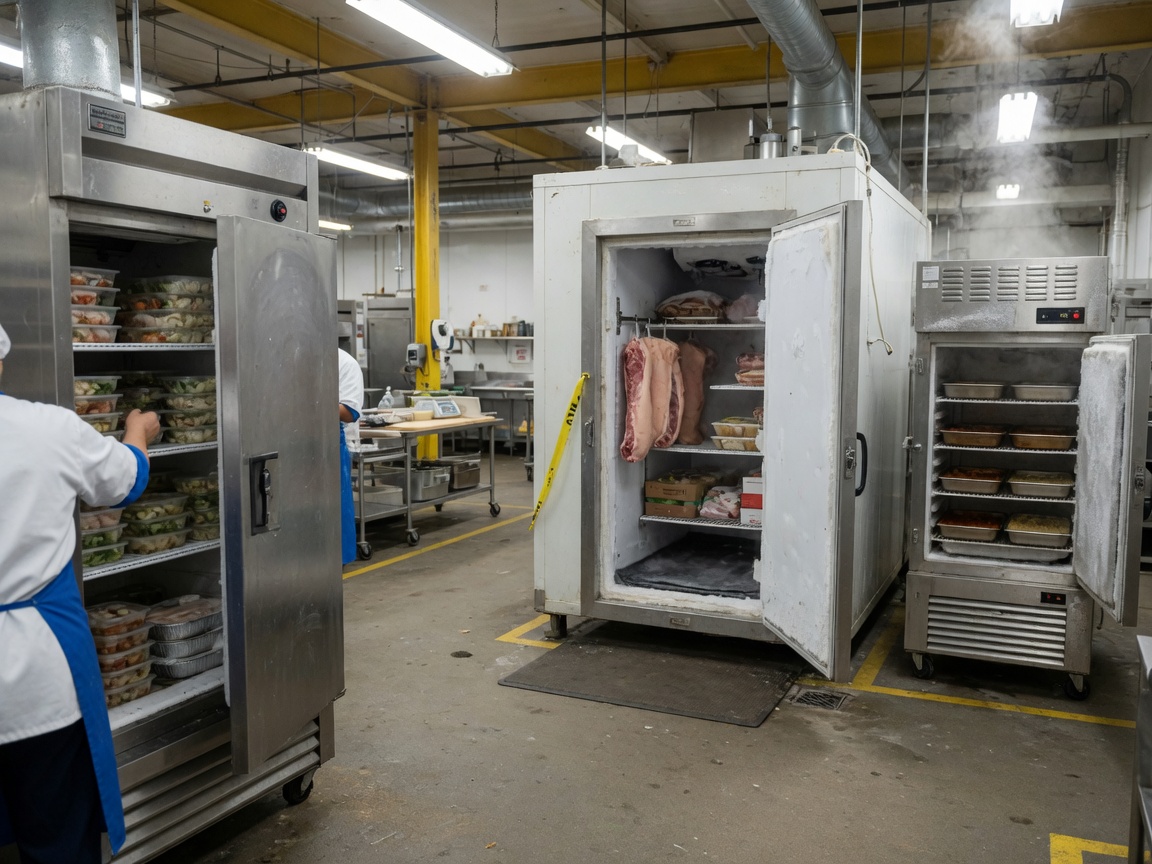
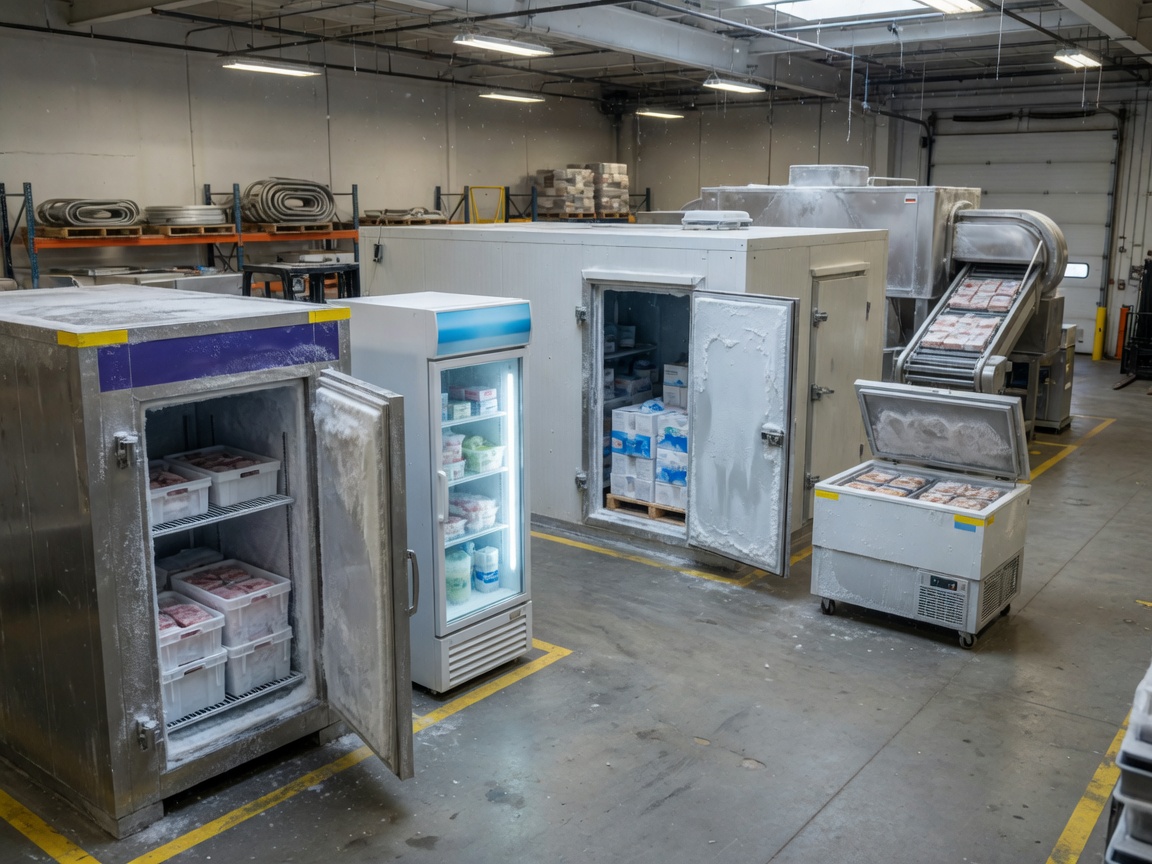
The workhorse of most restaurant kitchens. A reach-in cooler typically offers 23 to 49 cubic feet of usable storage and fits within a standard 28–32-inch footprint. Stainless steel commercial refrigerators in this category are the most common first purchase for independent restaurants. Actual testing in a 60-seat casual dining kitchen found that a two-section 49 cu ft reach-in maintained ±1°F precision throughout a 14-hour service day, even with the expediting pass door opening every 90 seconds during peak hours. Upright freezer for commercial use variants follow the same cabinet design but target -10°F to 0°F operation, and are essential for any operation storing proteins, ice cream, or par-cooked items.
Undercounter Freezer Units and Prep Table Refrigerators
Designed for tight kitchens where every square foot of floor space has a dollar value. Undercounter freezer units typically range from 5 to 15 cubic feet and slide beneath a standard 36-inch prep counter. The prep table refrigerator variant adds a refrigerated rail on top — critical for pizza, sandwich, or sushi stations where ingredients need to stay cold during assembly. These are not secondary units; in a food truck or ghost kitchen context, they may be the primary refrigeration unit.
Walk-In Freezer and Walk-In Cooler Systems
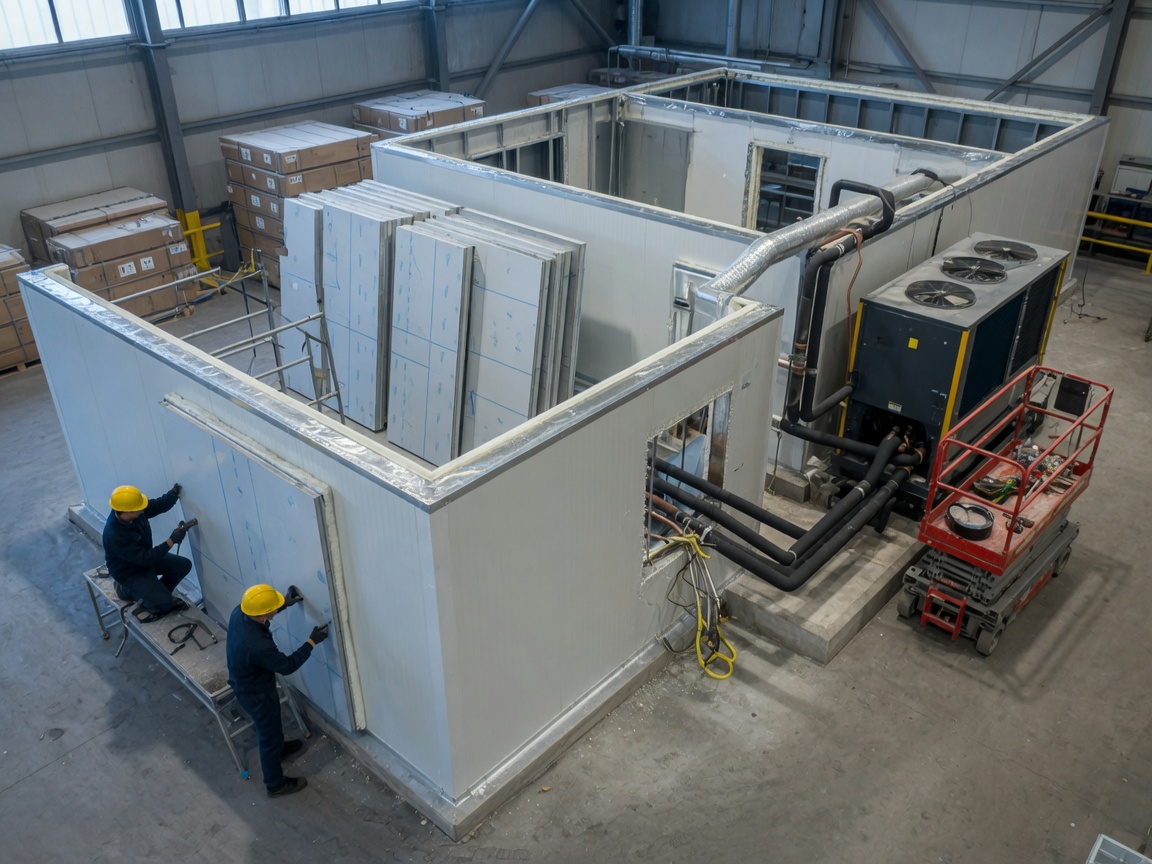
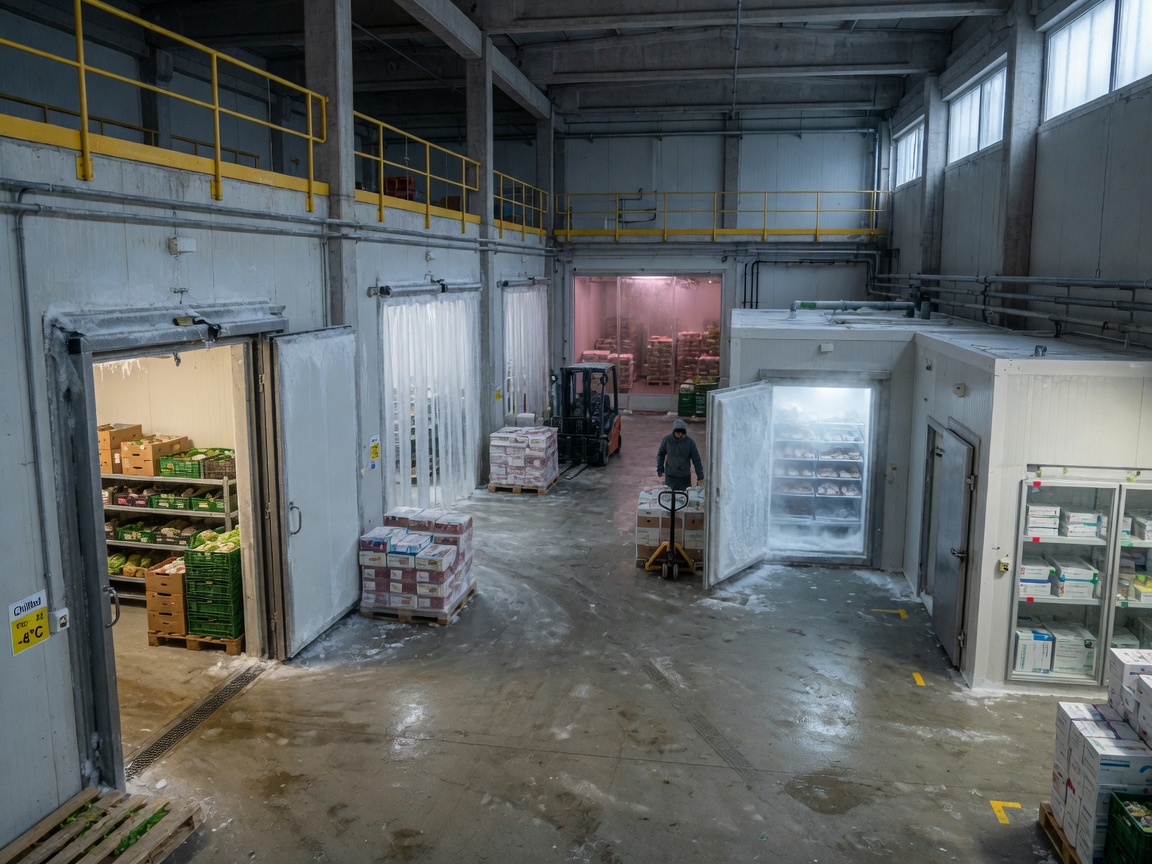
Walk-in freezer and cooler systems are the backbone of high-volume commercial cold storage. Modular panel construction means they can be custom-sized — from an 8×8 ft corner cooler to a 20×40 ft warehouse-grade freezer. Refrigeration unit for restaurants at this scale requires a dedicated condensing unit, professional installation, and compliance with local mechanical permits. The investment is substantial — $8,000 to $30,000+ installed — but per-cubic-foot cost is lower than reach-in for large volumes.
Commercial Refrigerator Freezer Combo Units
The commercial refrigerator freezer combo addresses a specific pain point: dual-temperature storage in a single cabinet footprint. These units split internal space between a refrigerated section (35–38°F) and a freezer section (0°F or below), typically in a 2/3 to 1/3 ratio. They are especially popular in bars, small cafes, and food hall stalls where floor space is measured in inches. Just be aware — combo units generally have slightly less precise temperature separation than dedicated units, a trade-off worth understanding before purchasing.
Blast Chillers and Specialty Units
A blast chiller rapidly drops cooked food from 140°F to 40°F within 90 minutes — a HACCP requirement for any operation doing cook-chill production. This is not optional for catering commissaries or healthcare foodservice. Food display coolers, another specialty category, prioritize front visibility and are standard in bakeries, delis, and grab-and-go retail. Both categories often carry NSF certified refrigerator status and may qualify for ENERGY STAR rebates through local utility programs.
| Unit Type | Typical Capacity | Avg. Price (USD) | Avg. Daily kWh | Best For |
|---|---|---|---|---|
| Reach-In Cooler (1-section) | 23 cu ft | $1,500–$2,800 | 3.5–5 kWh | Small restaurants, bars |
| Reach-In Cooler (2-section) | 49 cu ft | $2,800–$4,800 | 6–9 kWh | Mid-volume kitchens |
| Undercounter Freezer Unit | 5–15 cu ft | $900–$2,200 | 2–4 kWh | Ghost kitchens, bars |
| Combo Fridge/Freezer | 23–49 cu ft | $2,000–$5,500 | 5–10 kWh | Cafes, food stalls |
| Walk-In Cooler (8×10 ft) | ~530 cu ft | $8,000–$18,000 | 25–40 kWh | High-volume restaurants |
| Blast Chiller (10-pan) | 10 sheet pans | $4,500–$9,000 | 8–14 kWh (cycles) | Catering, healthcare |
3. How to Size Your Commercial Cold Storage Correctly
Undersizing your commercial fridge freezer is one of the most expensive mistakes an operator makes — not because of the unit cost, but because of the operational disruption when you run out of cold storage mid-service. Oversizing wastes energy and capital. Here is a practical sizing framework used in real procurement consulting engagements.
Step-by-Step Sizing Calculator Framework
- Count daily covers (or transactions): A full-service restaurant serving 100 covers/day is the baseline reference point.
- Estimate ingredient volume: Industry standard is 1–1.5 cubic feet of refrigerated storage per 5 covers per day. 100 covers = 20–30 cu ft minimum refrigeration.
- Add freezer ratio: For protein-heavy menus, allocate 30–40% of your total cold storage as freezer space. For fresh/farm-to-table menus, 15–20% is typical.
- Account for delivery frequency: Weekly deliveries require 2× the storage of daily deliveries. If your distributor visits twice weekly, multiply your base estimate by 1.4.
- Add 20% buffer: Seasonal volume spikes, menu expansions, and unexpected delivery delays are universal. Build in the buffer upfront.
- Cross-check against floor space: Confirm the unit(s) fit your kitchen layout with required clearance — typically 3 inches on sides and 6 inches at the rear for ventilation.
A real-world example: a 75-seat casual American restaurant with weekly produce and protein deliveries, running a moderately diverse menu, needs approximately 40–50 cu ft of refrigeration and 18–22 cu ft of freezer capacity. That maps to a two-section reach-in cooler plus a one-section upright freezer for commercial use — a very common pairing in the $2,800–$6,000 installed range.
Common Sizing Mistakes to Avoid
Many operators size based on current menu volume and forget to account for growth. Others purchase walk-in freezers before verifying that local building codes permit the required refrigerant line set routing. One operator we spoke with purchased a 3-section reach-in cooler only to discover the compressor exhaust heat raised their prep kitchen ambient temperature by 8°F — requiring an additional HVAC upgrade that cost more than the refrigerator itself. Measure twice, purchase once.

4. 5-Year Total Cost of Ownership Breakdown
The purchase price of a commercial fridge freezer is often less than half of what you will actually spend over five years. According to energy efficiency standards for commercial refrigerators and freezers published by the U.S. Department of Energy, commercial refrigeration accounts for 35–40% of total electricity consumption in a typical foodservice operation. That is not a rounding error — it is a dominant operational cost.
"ENERGY STAR certified commercial refrigerators use approximately 20% less energy than standard models, delivering average annual savings of $100–$300 per unit depending on operational hours and local utility rates." — U.S. Department of Energy / ENERGY STAR Program, 2026 data
TCO Breakdown: ENERGY STAR vs. Standard Unit (5-Year, U.S. Average)
| Cost Category | Standard Unit | ENERGY STAR Unit | 5-Yr Savings |
|---|---|---|---|
| Purchase Price | $2,800 | $3,400 | –$600 |
| Electricity (5 yrs) | $2,300 | $1,800 | +$500 |
| Preventive Maintenance | $750 | $650 | +$100 |
| Refrigerant Recharge (×1) | $350 | $250 | +$100 |
| Repairs / Parts | $600 | $400 | +$200 |
| Total 5-Year TCO | $6,800 | $6,500 | +$300 net savings |
The numbers tell a nuanced story. The ENERGY STAR unit costs more upfront but breaks even in roughly year three. In high-electricity-rate states — California, New York, Massachusetts, where commercial rates exceed $0.22/kWh — the savings gap widens substantially, pushing 5-year net savings above $700 per unit. According to commercial refrigeration market size and industry statistics, operators running three or more refrigeration units who upgrade to ENERGY STAR-rated equipment report average utility reductions of 18–25% per year.
Refrigerant Recharge and the AIM Act Cost Factor
Units manufactured before 2025 using HFC refrigerants (R-404A, R-134a) face escalating recharge costs as EPA phasedown rules take effect. A single R-404A recharge that cost $200 in 2022 now routinely runs $350–$500 due to reduced supply. This is not a minor footnote — it is a TCO variable that standard competitor guides universally omit. Factor it in, especially if you are considering purchasing used or refurbished heavy-duty freezer equipment.
5. NSF Certification, Health Codes & Compliance
NSF/ANSI certification is the non-negotiable baseline for any commercial fridge freezer used in U.S. foodservice. Every state health department — and virtually every county-level environmental health inspector — requires NSF certified refrigerator equipment as a condition of operating permit approval. Failing to verify this before purchase is a costly mistake that operators discover only when the health inspector arrives.
What NSF Certification Actually Covers
NSF/ANSI Standard 7 governs commercial refrigerators and freezers. It verifies that materials are non-toxic and non-absorbent, that interior surfaces can be cleaned without harboring pathogens, that temperature performance meets stated specifications under load conditions, and that the unit design eliminates dead zones where food debris accumulates. This is why the stainless steel commercial refrigerator design standard dominates the category — smooth, non-porous surfaces are simply easier to maintain in NSF compliance. Per FDA food safety regulations for commercial refrigeration equipment, cold holding temperatures must remain at or below 41°F for potentially hazardous foods, and equipment must be capable of demonstrating this under inspection conditions.
State-Level Variations Worth Knowing
California's Retail Food Code (CalCode) and New York's State Sanitary Code both reference NSF/ANSI 7, but inspection enforcement intensity varies considerably by county. In Texas, the Texas Food Establishment Rules (TFER) permit some alternative certifications, but NSF remains the de facto standard recognized by all inspectors. Florida's Division of Hotels and Restaurants mandates NSF or equivalent for all food contact surfaces — and "equivalent" must be formally documented. The practical takeaway: always purchase NSF certified refrigerator equipment regardless of which state you operate in. It eliminates compliance ambiguity entirely.
HACCP plans — required for any operation with a process step that relies on temperature control — must specify the refrigeration equipment used and its validated temperature performance. A commercial fridge freezer without a documented temperature log or alarm system may pass initial inspection but create liability during a HACCP audit. IoT-enabled units with automated temperature logging are increasingly favored by operators subject to third-party food safety audits.
6. AIM Act & Eco-Refrigerant Regulations in 2026
This is the section that almost no competing buying guide addresses — yet it has direct consequences for any U.S. operator purchasing commercial refrigeration equipment right now. The American Innovation and Manufacturing (AIM) Act, passed in 2020, authorizes the EPA to implement a phased reduction of hydrofluorocarbon (HFC) refrigerants. Those rules are now actively shaping the 2026 commercial refrigeration market.
What the AIM Act Means for Equipment Purchases
Under the EPA's Technology Transitions Program (a component of AIM Act Section 103), the use of high-GWP HFC refrigerants — including R-404A and R-448A — in new commercial refrigeration equipment sold in the U.S. is being progressively restricted. Units manufactured for sale after January 1, 2025 are already subject to new GWP caps in several equipment categories. By 2026, the market has shifted substantially toward lower-GWP alternatives. Per ASHRAE standards and guidelines for commercial refrigeration systems, R-290 (propane), R-744 (CO₂), and R-454C are the primary compliant refrigerants now entering widespread commercial deployment in the U.S.
Practical Implications for Buyers
When evaluating a commercial fridge freezer in 2026, confirm the refrigerant type before purchasing. Units using R-290 require A3 flammable refrigerant handling protocols for service technicians — not all HVAC/R contractors are certified. CO₂ systems offer excellent efficiency but carry higher installation and equipment costs. R-454C is the most "drop-in friendly" transition refrigerant for technicians familiar with R-410A systems. Of course, there are situations where purchasing older HFC-based inventory on clearance makes economic sense — but only if you have service contracts in place and understand the escalating recharge cost trajectory discussed in Section 4.
The regulatory trajectory is clear and irreversible. Operators investing in new commercial cold storage today should default to AIM Act-compliant equipment to avoid both regulatory risk and the TCO penalty of legacy refrigerant recharges.
7. Top Use Cases Beyond Restaurants
Foodservice refrigeration guidance almost universally focuses on restaurants, leaving significant buyer intent underserved. Here is a structured look at four verticals where commercial fridge freezer requirements diverge meaningfully from standard restaurant spec.
Convenience Stores and Grab-and-Go Retail
Convenience stores prioritize food display cooler visibility and energy efficiency over raw storage capacity. Glass-door reach-in coolers with LED lighting, anti-fog door glass, and night curtains are the dominant format. Foodservice refrigeration in this context is also a merchandising tool — how product looks through the door directly affects impulse purchase rates. ENERGY STAR-rated glass-door merchandisers can reduce display case energy use by up to 40% versus non-certified alternatives, a meaningful operating cost reduction for stores running 8–12 display doors continuously.
Medical, Pharmaceutical, and Clinical Settings
Pharmaceutical refrigerators are a specialized subset of commercial cold storage with tighter temperature tolerances (36–46°F for most vaccines per CDC guidelines), mandatory temperature alarm systems, and often validation documentation requirements. Standard NSF certified refrigerators are not automatically compliant for pharmaceutical use — look for units meeting USP 1079 or equivalent standards. Undercounter freezer units in clinical settings also frequently require UL listing and hospital-grade electrical connections.
Craft Beverage and Brewery Operations
Craft breweries, cideries, and kombucha producers need commercial cold storage at multiple points in their production process: fermenter temperature control, bright tank conditioning, and finished product storage. Walk-in cooler systems are nearly universal at production scale. The key differentiator here is humidity control — standard commercial refrigerators dehumidify aggressively, which can damage labels on packaged product during storage. Breweries often specify cooler units with adjustable defrost cycles to manage this.
Floral and Specialty Retail
Floral coolers represent perhaps the most underappreciated segment of commercial refrigeration. Optimal flower storage runs 33–35°F with high humidity (80–90% RH) — conditions that standard reach-in coolers do not provide without modification. Dedicated floral display coolers use fogged air circulation and high-humidity settings that actively conflict with standard commercial refrigerator design. Just like a blast chiller is engineered for one specific function, floral coolers are purpose-built; substituting a general-use commercial refrigerator freezer combo will result in shortened flower lifespan and product loss.
8. Frequently Asked Questions
Frequently Asked Questions
Q: What is the difference between a commercial fridge freezer and a regular household refrigerator?
A: A commercial fridge freezer is engineered for continuous high-load operation, with industrial compressors, NSF-certified food-safe interiors, and the ability to maintain precise temperatures in hot kitchen environments up to 110°F. Household units are designed for light residential use and will fail under commercial operating conditions, typically within 12–18 months.
Q: How much does it cost to run a commercial refrigerator per year?
A: Based on 2026 U.S. average electricity rates ($0.14/kWh), a standard 2-section reach-in cooler consumes roughly $300–$450 per year in electricity. ENERGY STAR models reduce this by 20–25%. Walk-in coolers and heavy-duty freezer systems run significantly higher — $1,200–$2,500 annually depending on size and door frequency.
Q: Is NSF certification required for all commercial refrigeration equipment in the U.S.?
A: NSF/ANSI Standard 7 certification is required by virtually all U.S. state and local health codes for foodservice operators. While no single federal law mandates it for every application, any commercial kitchen subject to health department inspection will be cited for non-NSF equipment used in food storage. Always verify NSF certification before purchasing.
Q: What refrigerant should I look for when buying a new commercial freezer in 2026?
A: In 2026, AIM Act-compliant refrigerants are the standard for new equipment. R-290 (propane) and R-454C are the most common replacements for legacy HFCs. Avoid purchasing new units with R-404A — supply restrictions and escalating recharge costs make these a poor long-term investment regardless of upfront price savings.
Q: How do I calculate the right size commercial fridge freezer for my restaurant?
A: Use the industry benchmark of 1–1.5 cubic feet of refrigeration per 5 daily covers, then add 30–40% freezer allocation for protein-heavy menus. Multiply by 1.4 if deliveries are twice weekly. Always add a 20% growth buffer. A 100-cover restaurant typically needs 25–35 cu ft refrigeration and 12–18 cu ft freezer capacity as a starting point.
Selecting the right commercial fridge freezer in 2026 requires balancing upfront cost against a five-year TCO that includes energy, maintenance, and increasingly, refrigerant transition costs driven by AIM Act compliance. The operator who treats this as a purely transactional equipment purchase — picking the cheapest NSF certified refrigerator that fits the space — will almost certainly spend more over the unit's lifecycle than the one who matches equipment type, energy rating, and refrigerant specification to actual operational needs. Use the sizing framework, review the TCO table, verify NSF compliance for your specific state, and confirm AIM Act refrigerant status before signing any purchase order. Those four steps alone put you ahead of the majority of buyers in this market.
Keywords:
Inquiry
If you are interested in our products, please leave your email to receive a free product quote, thank you!
More information

Tel:
Sales E-mail: