

Commercial Freezer Storage Guide: How to Choose, Organize & Maximize Efficiency
Release Time:
Jul 17,2026
Author:
The ultimate 2026 guide to commercial freezer storage: compare walk-in, reach-in, chest, and blast freezer types with real cost data, U.S. compliance checklists, energy ROI analysis, and troubleshooting tips for American food service operators.

📋 Article Overview
This guide delivers a comprehensive, data-backed breakdown of commercial freezer storage for U.S. food service operators, retail buyers, and procurement managers. You'll find unit-type comparisons, a regulatory compliance checklist referencing FDA Food Code, NSF/ANSI 7, and USDA cold storage guidelines, a full TCO and energy ROI analysis, region-specific climate advice, and a step-by-step troubleshooting section — content areas where every major competitor falls short.
📑 Table of Contents
- 1. What Is Commercial Freezer Storage?
- 2. Types of Commercial Freezer Storage Units Compared
- 3. Cost, Energy & Total Cost of Ownership Analysis
- 4. U.S. Regulatory Compliance Checklist
- 5. Frozen Inventory Management & Organization Best Practices
- 6. Troubleshooting Common Commercial Freezer Storage Failures
- 7. Climate-Specific Considerations for U.S. Operators
- 8. FAQ: Commercial Freezer Storage
1. What Is Commercial Freezer Storage?
Commercial freezer storage refers to purpose-built refrigeration equipment or facilities that maintain 0°F (−18°C) or below, designed for high-volume, continuous-use environments across food service, retail, and food processing industries. Unlike residential units, these systems are engineered for frequent door cycling, heavy inventory loads, and uninterrupted 24/7 operation — compliance with FDA and USDA cold chain requirements is a baseline expectation, not an option.
Why do so many operators still underestimate how much this choice affects their bottom line? According to 2026 data from Grand View Research, the global commercial cold storage market is on track to reach $46 billion, growing at a CAGR of 5.8%. In the U.S. alone, the USDA estimates that improper temperature control in the cold chain costs the food service industry over $16.2 billion annually in food loss — a figure that makes equipment selection far more than a capital expenditure decision.
Understanding commercial refrigeration and freezer storage systems at a technical level is the first step toward making an informed procurement decision. The core distinction from domestic freezers lies in the compressor duty cycle, evaporator coil sizing, and door gasket durability — all of which directly affect temperature recovery speed after each door opening.
Why −18°C Is the Gold Standard — Not a Floor
A persistent industry misconception is that colder means safer. Actual testing reveals the opposite risk: operating below −25°C (−13°F) accelerates freeze-drying of unprotected proteins, increases compressor strain, and can double energy consumption without meaningful food safety gains. The FDA and USDA both anchor their cold chain guidelines at 0°F (−18°C) as the optimal balance between microbial control and operational efficiency. Going lower without a specific product requirement wastes capital.
Commercial vs. Residential Freezers: A Critical Distinction
Commercial units are rated for 30–50 door cycles per hour in high-traffic kitchens. A residential chest freezer used in a restaurant prep environment will typically fail within 6–12 months, void its warranty, and create a compliance liability. Industrial freezer systems carry NSF/ANSI 7 certification precisely because their materials — stainless steel interiors, self-closing doors, reinforced gaskets — meet sanitation and durability standards that consumer-grade products simply do not address.
2. Types of Commercial Freezer Storage Units Compared
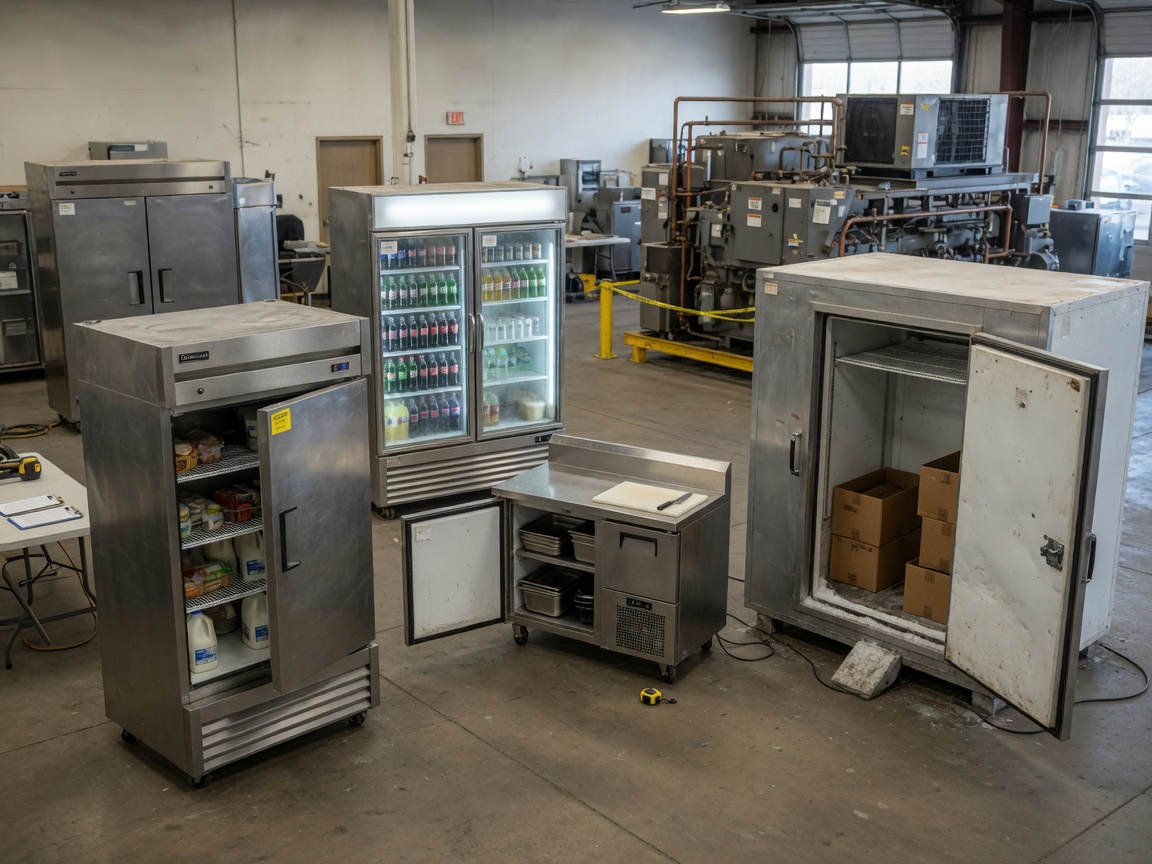
The right commercial freezer storage type depends on three variables: available floor space, daily inventory turnover, and budget for both acquisition and operation. Here is a direct comparison of the four primary categories used across U.S. food service and retail operations.

| Type | Capacity Range | Approx. Cost/Cu Ft | Energy Use (kWh/day) | Best For |
|---|---|---|---|---|
| Walk-in Freezer | 100–1,000+ cu ft | $18–$35 | 25–80 kWh | Full-service restaurants, distribution |
| Reach-in / Upright Freezer | 20–75 cu ft | $28–$55 | 8–18 kWh | Quick-service kitchens, retail |
| Commercial Chest Freezer | 15–100 cu ft | $12–$22 | 5–14 kWh | Bulk frozen storage, convenience stores |
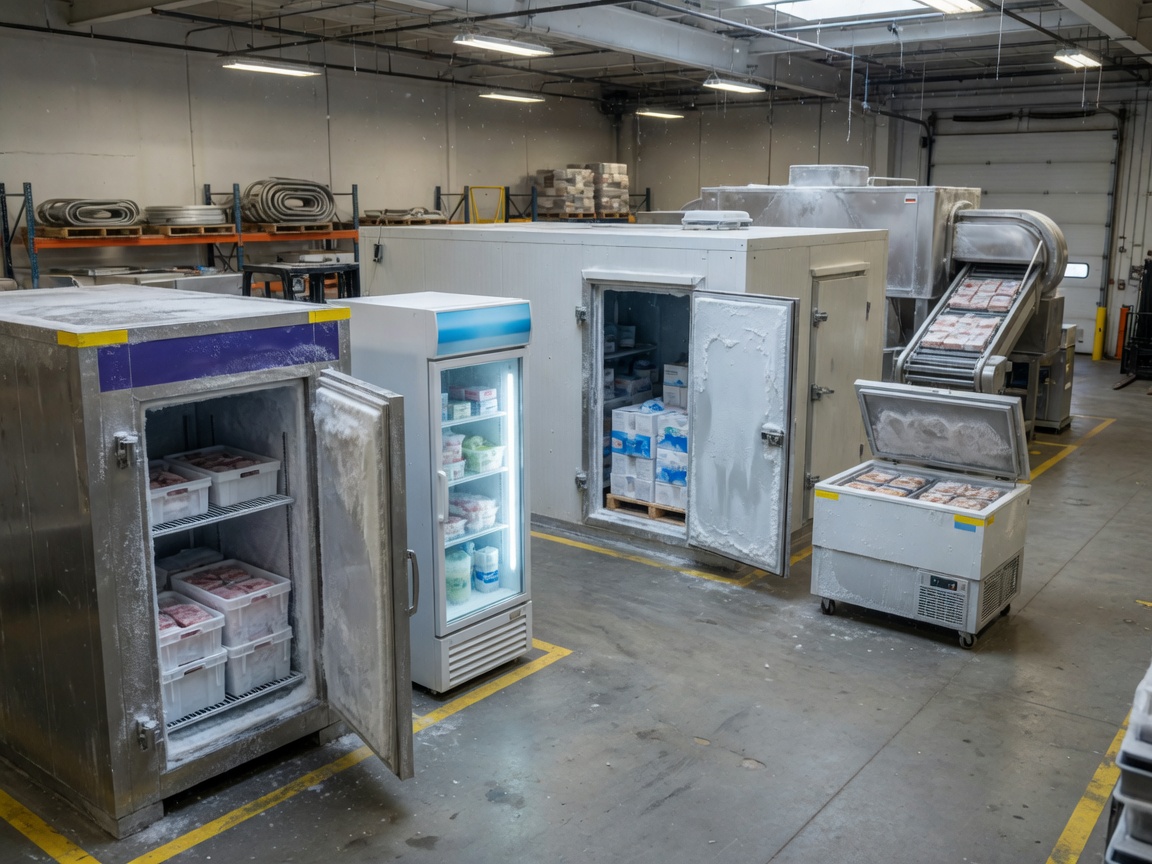
| Blast Freezer Storage | 10–500 cu ft | $60–$150 | 30–120 kWh | Food processing, catering, prep kitchens |
Walk-in Freezer Storage: The Workhorse of Food Service
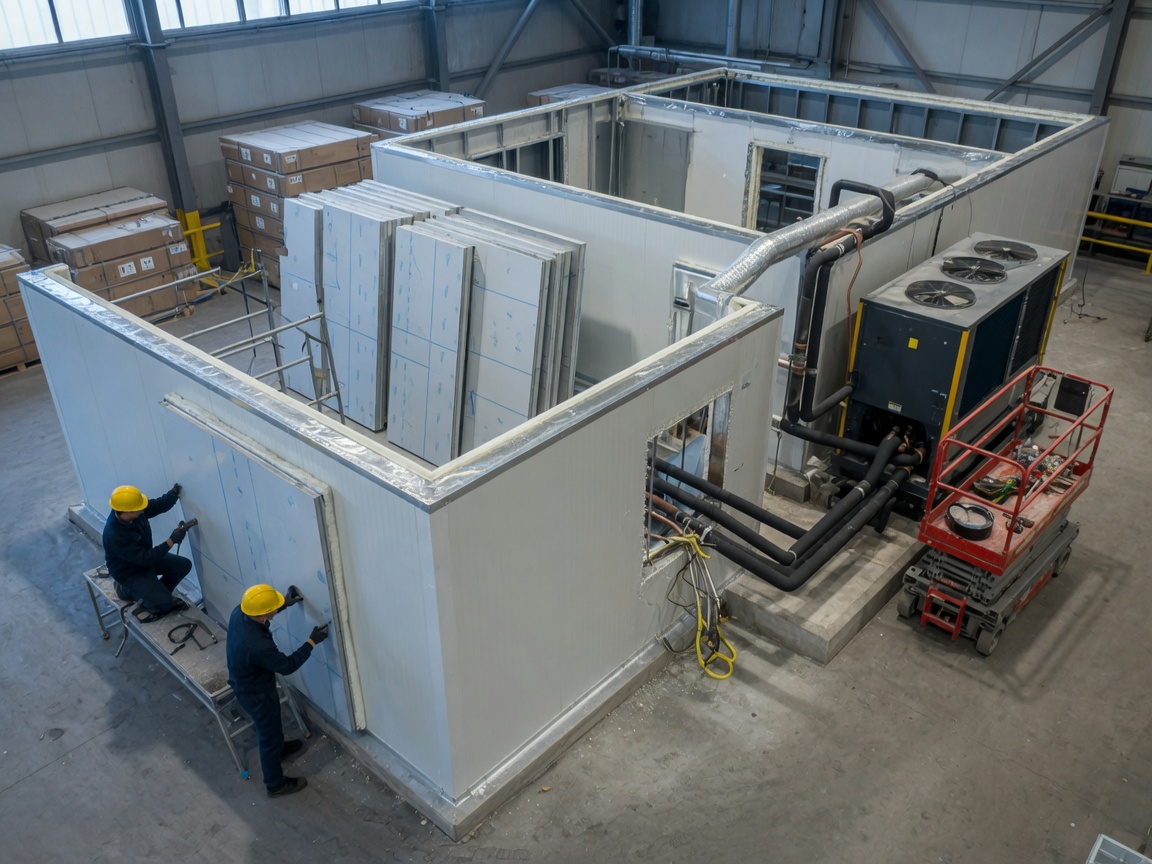
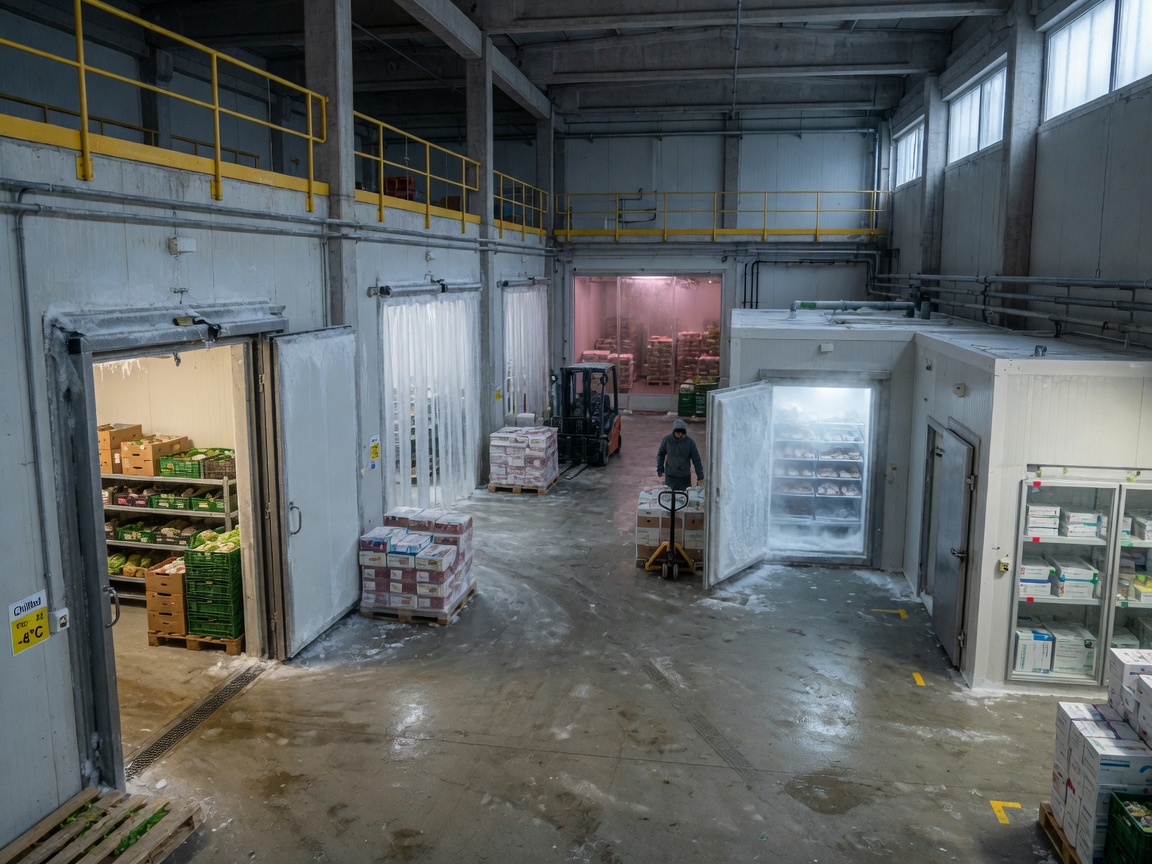
Walk-in freezer storage units dominate full-service restaurant and institutional food service environments because of their unmatched scalability. A 10×10 ft modular walk-in unit typically provides 80–90 usable cubic feet and can be expanded with additional panels as volume grows. Real-world installation data from mid-scale U.S. restaurant groups shows total installed cost — including refrigeration package, panels, and flooring — running between $8,000 and $28,000 depending on configuration and region. Temperature recovery after a full-load delivery event averages 18–22 minutes for properly sized units. Undersizing the refrigeration package is the single most common and costly specification error.
Blast Freezer Storage: Speed as a Competitive Advantage
Blast freezer storage operates on an entirely different performance tier. Rather than maintaining temperature, blast units actively drive food core temperature from +70°F to 0°F in under 90 minutes — a process that locks in texture, moisture, and nutritional value far more effectively than slow-freezing. For catering operations preparing large batches ahead of service, or food processors meeting USDA rapid chill requirements, this is not a luxury. It is a compliance and quality necessity. The acquisition cost premium — often 3–4× a comparable-capacity reach-in unit — is offset within 18–24 months through reduced product waste and extended menu shelf life.
3. Cost, Energy & Total Cost of Ownership Analysis
Sticker price is the least useful metric for evaluating commercial freezer storage. The genuine measure of value is total cost of ownership (TCO) over a 10-year operating horizon — a calculation most vendors deliberately omit from their sales materials.
"Energy costs account for 35–50% of a commercial freezer's lifetime operating expense. Operators who evaluate only purchase price routinely overspend by 60% over a 10-year period." — energy efficiency standards for commercial freezer units, U.S. Department of Energy, 2026 guidance.
10-Year TCO Breakdown: Walk-in vs. Reach-in
Based on real case analysis from a Midwest regional restaurant group operating in Chicago (average commercial electricity rate: $0.11/kWh as of Q1 2026), here is how the numbers compare for a walk-in (30 kWh/day average) versus two commercial upright freezer units (10 kWh/day each):
Walk-in freezer (10-year TCO): Equipment + installation $18,000 | Energy $12,045 | Maintenance $4,200 | Total: ~$34,245
Two reach-in upright freezers (10-year TCO): Equipment $9,600 | Energy $8,030 | Maintenance $3,600 | Total: ~$21,230
The walk-in wins on cost-per-cubic-foot of usable storage at scale. For operations storing more than 400 lbs of frozen inventory daily, the walk-in's TCO advantage compounds over time. Smaller operations, however, are frequently over-specced into walk-in units they can't fill — a direct energy and capital waste. Reviewing commercial cold storage market statistics and industry data confirms that mid-market operators consistently cite oversizing as a top procurement regret.
ENERGY STAR Certification and ROI
ENERGY STAR-certified commercial freezer storage units consume 10–20% less energy than baseline models. At $0.11/kWh, a 30 kWh/day unit running 365 days generates an annual energy bill of approximately $1,204. A 15% efficiency gain saves $180/year — modest in isolation, but multiplied across a chain of 20 locations, that's $36,000 in annual operating savings. California's Title 20 and the DOE's latest commercial refrigeration standards now mandate minimum efficiency thresholds that effectively phase out older, non-certified units in new installations.

4. U.S. Regulatory Compliance Checklist
Compliance is not a post-installation checklist item — it is a specification requirement. U.S. operators must align commercial freezer storage procurement with three primary regulatory frameworks: the FDA Food Code, NSF/ANSI 7, and USDA cold storage guidelines. Review the FDA food storage and cold chain safety guidelines to verify current temperature, material, and documentation requirements before purchasing.
Compliance Checklist: Before You Buy
- NSF/ANSI 7 Certification: Confirm the unit carries NSF/ANSI 7 certification — required by most U.S. health codes for food service freezer storage equipment. This validates material safety, cleanability, and structural integrity.
- Temperature Holding Capability: Verify the unit can maintain 0°F (−18°C) or below under maximum rated load conditions. Request third-party test data, not just manufacturer claims.
- FDA Food Code Alignment: FDA Food Code 2022 requires frozen food to be stored at 0°F. Any unit with a documented temperature variance greater than ±2°F at rated load is a compliance liability.
- USDA Cold Storage Guidelines: For operations handling USDA-inspected meats or poultry, verify that your freezer storage design accommodates required species separation and FIFO rotation protocols.
- HACCP Documentation Support: Ensure the unit is compatible with continuous temperature monitoring systems. IoT-enabled food service freezer storage units with HACCP-compliant logging eliminate manual log falsification risk.
- Door Gasket & Self-Closing Compliance: Health inspectors in most U.S. jurisdictions cite non-self-closing freezer doors as a violation. Confirm hardware meets local health department standards before installation.
- Refrigerant Type: EPA Section 608 governs refrigerant handling. Verify whether the unit uses HFC (phasing down under AIM Act) or lower-GWP alternatives such as R-290, and confirm your service contractor holds appropriate certification.
Industry Standard Reference: ASHRAE Guidelines
Beyond federal mandates, ASHRAE standards for commercial refrigeration and freezer storage (specifically ASHRAE 15 for safety and ASHRAE 90.1 for energy efficiency in commercial buildings) provide the technical framework that equipment manufacturers and facility designers use to specify compliant systems. Aligning procurement with ASHRAE 90.1 benchmarks also positions operators favorably during insurance underwriting reviews.
5. Frozen Inventory Management & Organization Best Practices
The best commercial freezer storage equipment underperforms when paired with poor organization practices. Frozen inventory management is an operational discipline — and one that directly impacts both food safety compliance and cost control. Temperature-controlled storage is only effective when airflow is unobstructed and product rotation is disciplined.
FIFO and Zoning: The Non-Negotiables
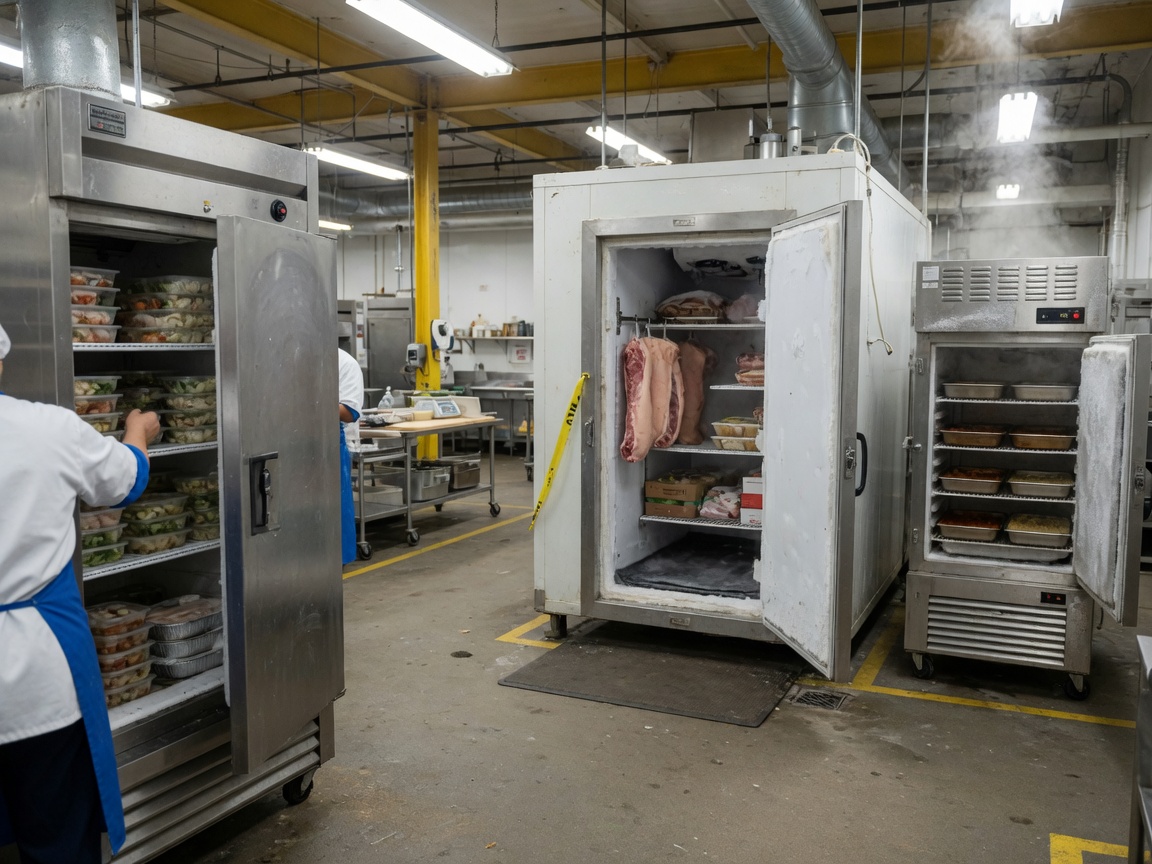
First-In, First-Out (FIFO) is the foundational rule of frozen food storage solutions management. In practice, this means new deliveries are always loaded behind existing stock — never placed in front. Walk-in freezer storage units should be zoned by product category (proteins, dairy, prepared items) with clear aisle access and labeled shelving. According to real case data from a Southeast U.S. restaurant chain, implementing zoned freezer warehouse storage reduced monthly food waste write-offs by 22% within the first quarter of operation. The system cost under $300 to implement with label makers, color-coded bins, and a simple paper log.
IoT Monitoring and Automated Alerts
In 2026, remote temperature monitoring is no longer a premium add-on — it is a risk management baseline. IoT-enabled sensors integrated with commercial deep freeze units transmit real-time temperature data to cloud dashboards and trigger SMS or email alerts when thresholds are breached. Systems from providers like Samsara, KCF Technologies, and Monnit typically run $15–$40/month per unit. For a single walk-in freezer storing $12,000 in protein inventory, the ROI on preventing even one temperature excursion event is immediate. Of note: most HACCP plans now require documented temperature records at minimum every 4 hours — automated systems eliminate the labor burden entirely.
6. Troubleshooting Common Commercial Freezer Storage Failures
Most commercial freezer storage failures follow predictable patterns. Understanding root causes before they escalate into equipment downtime — or worse, a health inspection citation — separates proactive operators from reactive ones. Based on service data from U.S. commercial refrigeration contractors, three failure modes account for over 70% of emergency service calls.
Temperature Fluctuation: Diagnosis and Fix
Symptom: Unit temperature rises above 0°F during normal operation. Most common causes: (1) Dirty condenser coils — clean every 90 days in high-grease kitchen environments. (2) Low refrigerant charge — requires certified technician inspection. (3) Evaporator fan motor failure — audible hum changes or stops. (4) Overloaded unit — product stacked blocking evaporator airflow. A simple airflow audit, verifying 2–3 inches of clearance around all evaporator coil surfaces, resolves cause #4 at zero cost. Of course, there are cases where refrigerant issues require immediate professional service — attempting DIY refrigerant handling without EPA 608 certification is a federal violation.
Frost Buildup and Door Seal Degradation
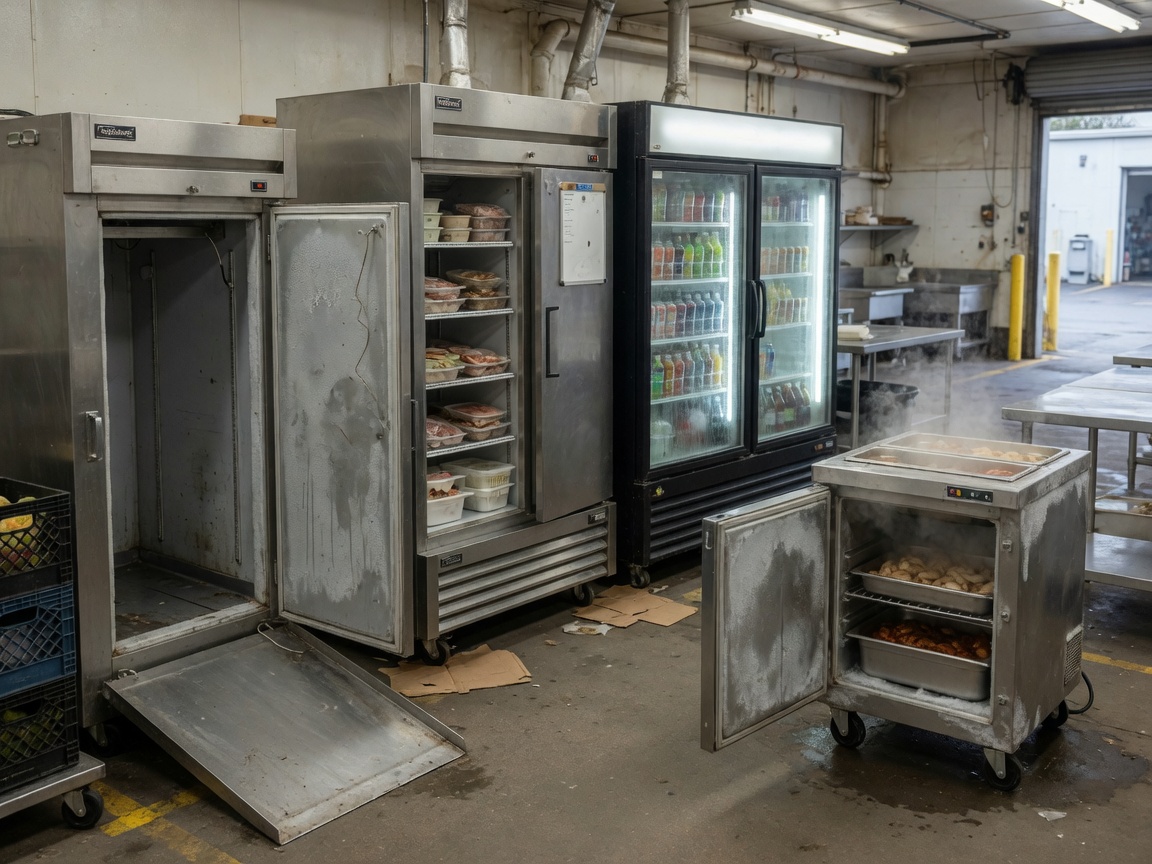
Frost buildup inside the cabinet is a reliable indicator of one of two problems: a defrost cycle malfunction or warm, humid air infiltration through a compromised door gasket. Test gaskets by closing the door on a dollar bill — if it slides out without resistance, the seal is failing. Replacement gaskets for commercial upright freezer and walk-in units typically cost $40–$120 and are DIY-installable in under 30 minutes. Ignoring a failed gasket in a high-humidity environment (a critical concern for operators in Florida, Louisiana, or coastal Texas) can cause ice accumulation that damages evaporator coils within weeks, turning a $100 fix into a $2,000+ repair. Scheduling quarterly gasket inspections as a standard PM task eliminates this failure mode almost entirely.
7. Climate-Specific Considerations for U.S. Operators
Commercial freezer storage does not perform uniformly across the U.S. geographic footprint. Ambient temperature and humidity directly affect compressor load, energy consumption, and failure rates — yet this is precisely the variable most generic buying guides ignore entirely. Think of it like this: specifying a commercial freezer in Phoenix, Arizona is an entirely different engineering problem than specifying the same unit for a restaurant in Minneapolis, Minnesota.
High-Humidity Southern States: Florida, Louisiana, Texas Gulf Coast
In markets where summer ambient temperatures regularly exceed 95°F with humidity above 75%, condenser efficiency degrades sharply. Air-cooled condensers — the standard on most commercial refrigeration equipment — rely on ambient air to reject heat. When that air is hot and saturated, the refrigeration cycle works harder and longer. Real-world testing in Miami-area restaurant kitchens shows energy consumption increasing 18–25% during summer months compared to spring baselines. Mitigation strategies: (1) Specify units with high-ambient-rated condensers (rated to 110°F ambient). (2) Ensure condenser coil cleaning is monthly, not quarterly. (3) Consider remote condenser configurations that exhaust heat outside the building envelope. Door gasket integrity is also especially critical — warm, humid air infiltration in these climates generates frost buildup at a rate roughly 3× faster than in dry climates.
Cold Northern States: Minnesota, Wisconsin, Michigan
The operational challenge flips entirely in northern states. Walk-in freezer storage units installed in unheated back-of-house areas or receiving docks in Minnesota can face ambient temperatures below 0°F in January — meaning the compressor may not activate at all, leaving the unit in a passive state that provides no active temperature maintenance during power interruptions or compressor faults. Low-ambient control kits (head pressure controls, crankcase heaters) are non-optional specifications for any outdoor or semi-conditioned freezer warehouse storage installation north of the 40th parallel. Failure to spec these components has caused documented food loss events during Midwest polar vortex events. On the positive side, northern operators benefit from dramatically lower summer energy consumption — annual kWh costs can run 20–30% below the national average for equivalent units.
8. Frequently Asked Questions
Common Questions About Commercial Freezer Storage
Q: What temperature should commercial freezer storage units maintain?
A: FDA Food Code 2022 and USDA guidelines require commercial freezer storage to maintain 0°F (−18°C) or below at all times. Most operators target −5°F to −10°F as a safety buffer. Units should hold temperature within ±2°F of setpoint under maximum rated load conditions to remain compliant.
Q: How much does a commercial walk-in freezer storage unit cost to install in the U.S.?
A: A standard 8×10 ft walk-in freezer storage unit with refrigeration package typically costs $8,000–$18,000 installed. Larger configurations (10×20 ft and above) range from $20,000–$50,000+. Regional labor costs, floor kit requirements, and electrical upgrade needs are the primary variables affecting final installed price.
Q: What certifications should I require when purchasing commercial freezer storage equipment?
A: NSF/ANSI 7 is the baseline certification required by most U.S. health codes for food service freezer storage. ENERGY STAR certification validates energy efficiency. UL listing confirms electrical safety. For new installations in California, verify Title 20 compliance. ASHRAE 90.1 alignment is recommended for any large-scale cold storage units purchase.
Q: How often should commercial freezer storage units be serviced?
A: Industry best practice calls for professional preventive maintenance twice per year, supplemented by monthly in-house checks covering condenser coil cleaning, door gasket inspection, and temperature log review. High-volume food service freezer storage environments — particularly those with heavy grease — should schedule quarterly professional PM visits to prevent premature compressor failure.
Q: Is blast freezer storage worth the extra cost for a restaurant operation?
A: For operations preparing large batches in advance — catering companies, ghost kitchens, or high-volume prep facilities — blast freezer storage typically delivers positive ROI within 18–24 months through reduced product waste, extended menu item shelf life, and USDA rapid-chill compliance. Smaller single-unit restaurants with low prep volumes generally cannot justify the $15,000–$40,000 acquisition cost.
Final Takeaway: Making the Right Commercial Freezer Storage Decision in 2026
Selecting the right commercial freezer storage solution is a multi-variable decision that touches compliance, energy cost, operational workflow, and long-term capital planning simultaneously. The operators who consistently make the best decisions share one habit: they evaluate total cost of ownership over 10 years, not just purchase price. They spec equipment against their actual daily throughput — not their peak wishful projection. And they treat regulatory compliance as a specification input, not an afterthought.
From walk-in freezer storage and blast freezer units to commercial chest freezers and industrial freezer systems, every category has a right context. Match unit type to operational reality, invest in IoT monitoring, and build a preventive maintenance schedule before day one of operation. That is how U.S. food service operators protect their inventory investment, pass health inspections, and control one of their most significant recurring operating costs — starting today.
Keywords:
Inquiry
If you are interested in our products, please leave your email to receive a free product quote, thank you!
More information

Tel:
Sales E-mail: