

Chiller blast guide: how it works, key benefits, and what to consider before buying
Release Time:
Sep 30,2026
Author:

Article overview
A technical and commercial buying guide for chiller blast systems — covering operation, unit types, energy costs, US compliance, regional sizing, and maintenance. Targeted at food processing and commercial kitchen procurement teams in the United States.
Table of contents
- 1. What is chiller blast technology?
- 2. How a chiller blast system works
- 3. Types of blast chilling and blast freezing units
- 4. Energy efficiency: EER, COP, and total cost of ownership
- 5. US regulatory compliance and refrigerant standards
- 6. Regional climate considerations across the US
- 7. Maintenance schedule and common failure points
- 8. FAQ
What is chiller blast technology?
Chiller blast is a rapid food cooling method that uses high-velocity cold airflow — typically at −30°F to −40°F — to reduce a product's core temperature to safe storage levels within 90 minutes, eliminating the bacterial danger zone exposure that standard refrigeration cannot prevent.
That 90-minute threshold is not arbitrary. It is anchored in HACCP international standards, which define the bacterial danger zone as 40°F to 140°F. Every minute a hot cooked product sits in that range, pathogens like Salmonella and Listeria monocytogenes can double in population. According to 2026 data from food safety monitoring programs, conventional walk-in coolers can take four to six hours to bring a full hotel pan from 165°F to below 40°F — well outside any compliant cook-chill protocol.
A blast cooling machine solves this at the equipment level. Rather than relying on ambient refrigeration, it forces massive volumes of precisely chilled air across every product surface simultaneously. The result is a temperature pulldown that is, quite literally, an order of magnitude faster than passive cooling.
Why do so many operators still overlook this? Often it comes down to upfront cost perception. But as this guide will show, the total cost of ownership calculation almost always favors a dedicated rapid cooling unit over lost product, regulatory fines, and energy-inefficient workarounds.
The difference between blast chilling and blast freezing
Blast chilling targets a final product temperature of +37°F to +41°F — the product remains unfrozen and is destined for short-term refrigerated storage or same-day service. Blast freezing, by contrast, drives the core temperature below −0.4°F (−18°C) for long-term frozen storage. The two processes share the same underlying technology — a commercial blast freezer or chiller unit uses a vapor-compression refrigeration circuit coupled with high-CFM evaporator fans — but the operational parameters, refrigerant circuit design, and insulation ratings differ significantly.
Who uses chiller blast systems in 2026?
The primary buyers in the US market today include large-scale food processing plants, central production kitchens for restaurant chains, hospital and university foodservice operators, meat and poultry processors, and catering companies running cook-chill workflows. The global rapid freeze cabinet and blast chilling market was valued at approximately $6.2 billion in 2023 and is projected to reach $9.6 billion by 2028, at a CAGR of 9.2% (MarketsandMarkets). US demand is a significant driver, particularly in the protein processing and prepared foods segments.
How a chiller blast system works
At its core, a chiller blast unit operates on the same vapor-compression refrigeration cycle as any commercial refrigeration equipment — but the engineering emphasis is radically different. Where a standard reach-in prioritizes energy-efficient steady-state holding, a blast cooling machine is engineered for maximum heat extraction rate during the pulldown phase.
Step-by-step blast freeze cycle
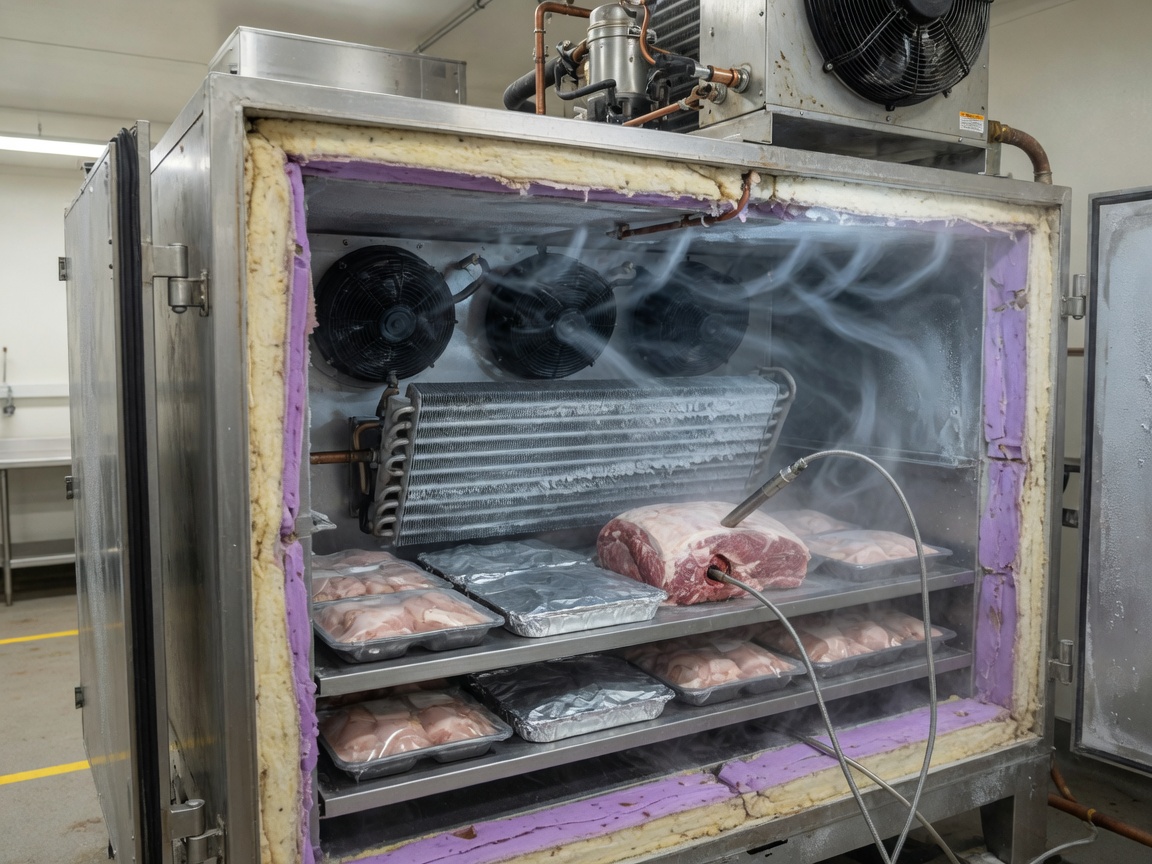
- Loading phase: Hot product (typically 140°F–165°F) is loaded directly from the oven or steam kettle into the cabinet. Door seals and foam-insulated panels rated at R-32 or higher contain the thermal load.
- Pulldown initiation: The controller activates the compressor at full capacity and engages evaporator fans at 1,500–3,000 CFM, forcing chilled air uniformly across all product surfaces.
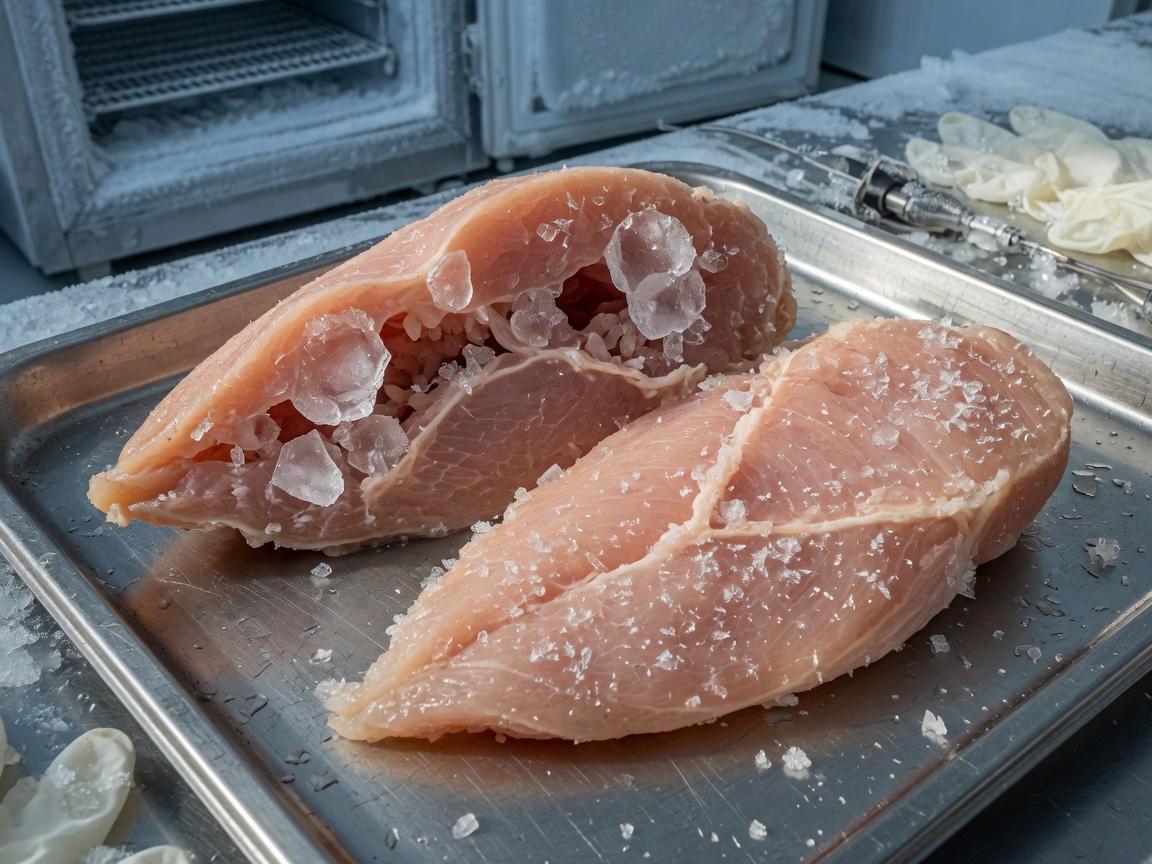
- Ice crystal zone passage: Between −1°C and −5°C (30.2°F to 23°F), the product passes through the ice crystal formation zone. In blast freezing mode, passing this zone in under 30 minutes is critical — slower passage creates large ice crystals that rupture cell walls in meat, poultry, and produce, degrading texture on thaw.
- Target temperature hold: Once the product core reaches the target (37°F for soft chill, −0.4°F for hard freeze), the unit shifts to a low-energy holding mode. A core probe thermometer confirms actual product temperature, not just air temperature.
- Cycle logging: In 2026-compliant units, the temperature pulldown curve is automatically logged via IoT-connected HACCP sensors and uploaded to a cloud dashboard for audit-ready traceability.
Construction details matter. Remote condensing units are standard in commercial installations — mounting the condenser on the rooftop or exterior wall eliminates waste heat inside the kitchen, reducing HVAC load and improving overall site energy efficiency.
Core probe vs. air temperature: why it matters
A critical operational point that many buyers miss: air temperature and product core temperature are not the same thing. Real-world testing consistently shows a 15°F to 25°F differential between cabinet air temperature and the geometric center of a dense product like a whole turkey breast. Relying solely on air-temperature readings leads to premature cycle termination and non-compliant cooling outcomes. Any food cooling system worth specifying in 2026 must include a calibrated core probe as standard — not an optional add-on.
Types of blast chilling and blast freezing units
Selecting the right format is the first decision a procurement team faces. The wrong unit type — even a correctly sized one — will underperform against actual workflow requirements. Here is a breakdown of the five primary formats available in the US market.
Reach-in blast chiller / rapid cooling unit
The standard format for commercial kitchens. Capacities range from 40 lb to 300 lb per cycle. Units are self-contained or remote-condensing. Ideal for restaurants, hotels, and smaller central kitchens running cook-chill. Soft-chill mode brings product to 37°F in under 90 minutes; hard-freeze mode reaches −0.4°F in under 4 hours.
Roll-in and roll-through blast freezer
Designed for GN rack or sheet pan compatibility, allowing entire racks to be wheeled in without re-racking. Roll-through models accept product on one side and discharge on the other — essential for linear cook-chill production lines. Capacity typically ranges from 300 lb to 800 lb per cycle.
Tunnel blast freezer
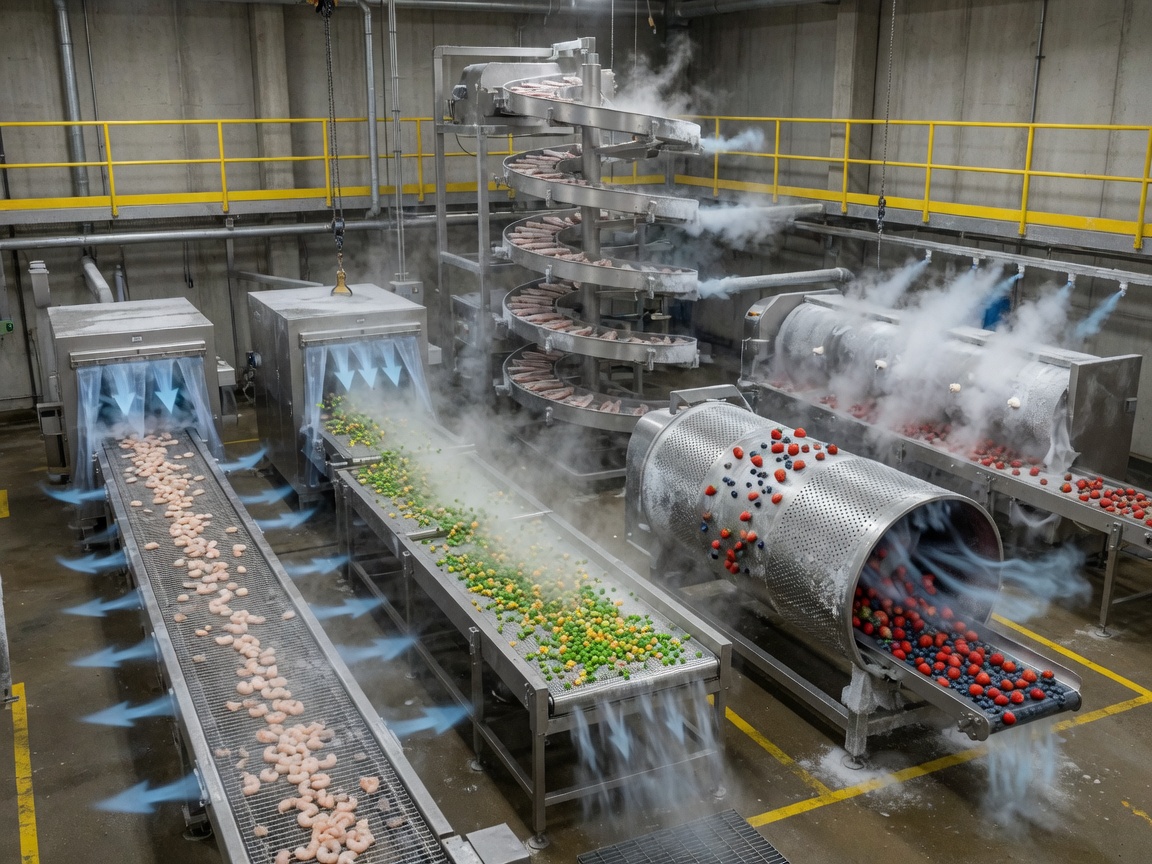
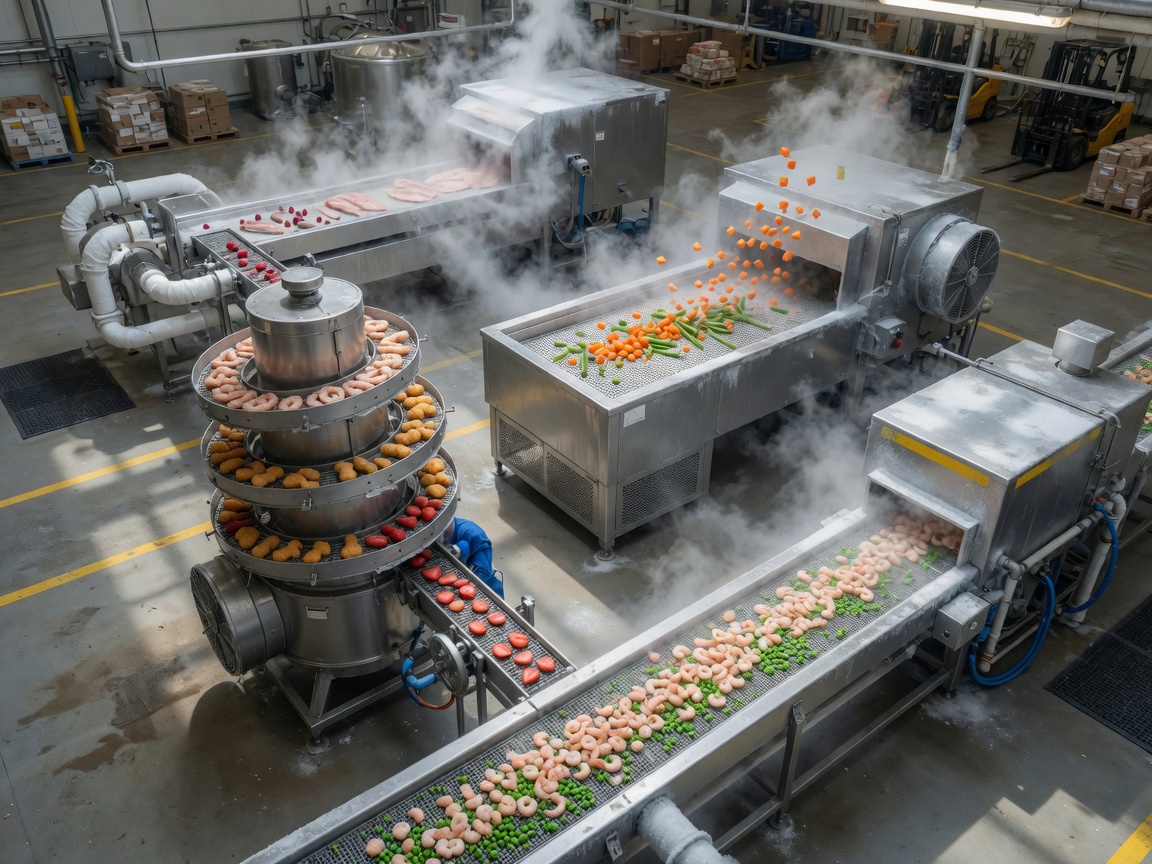
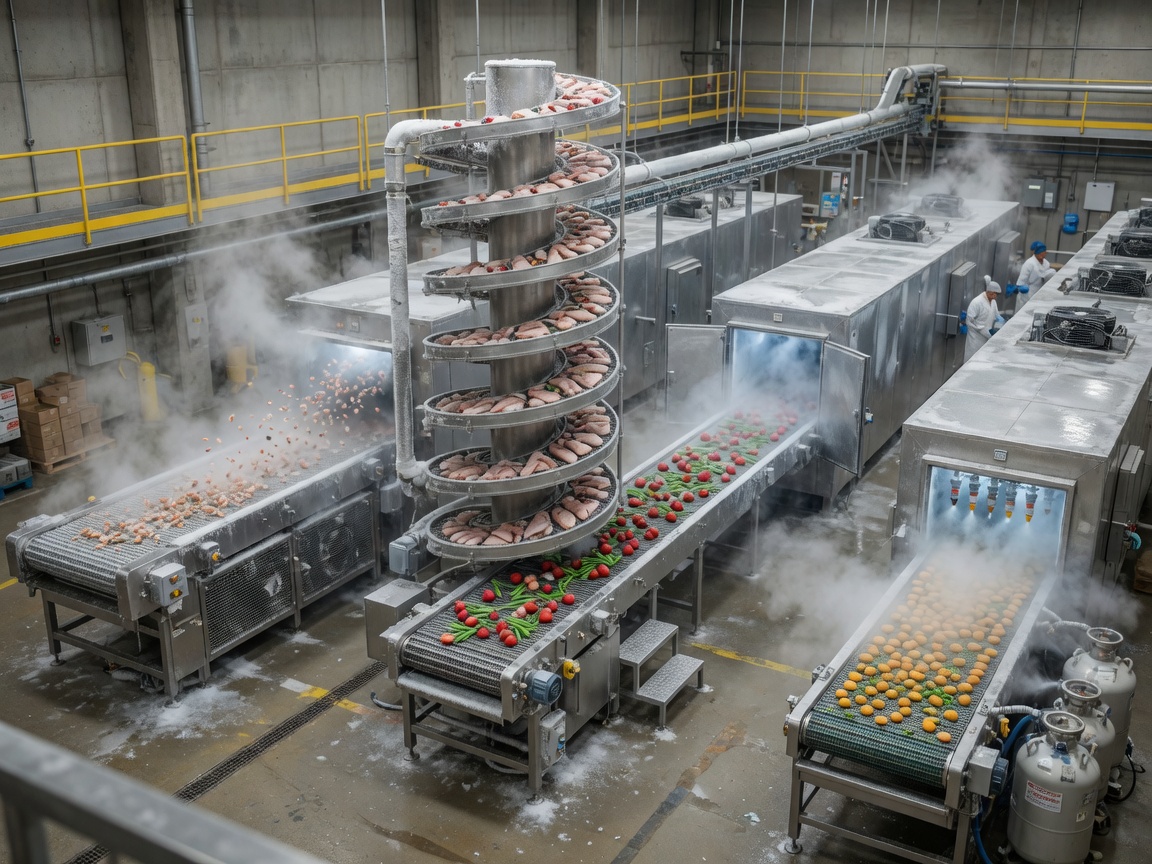
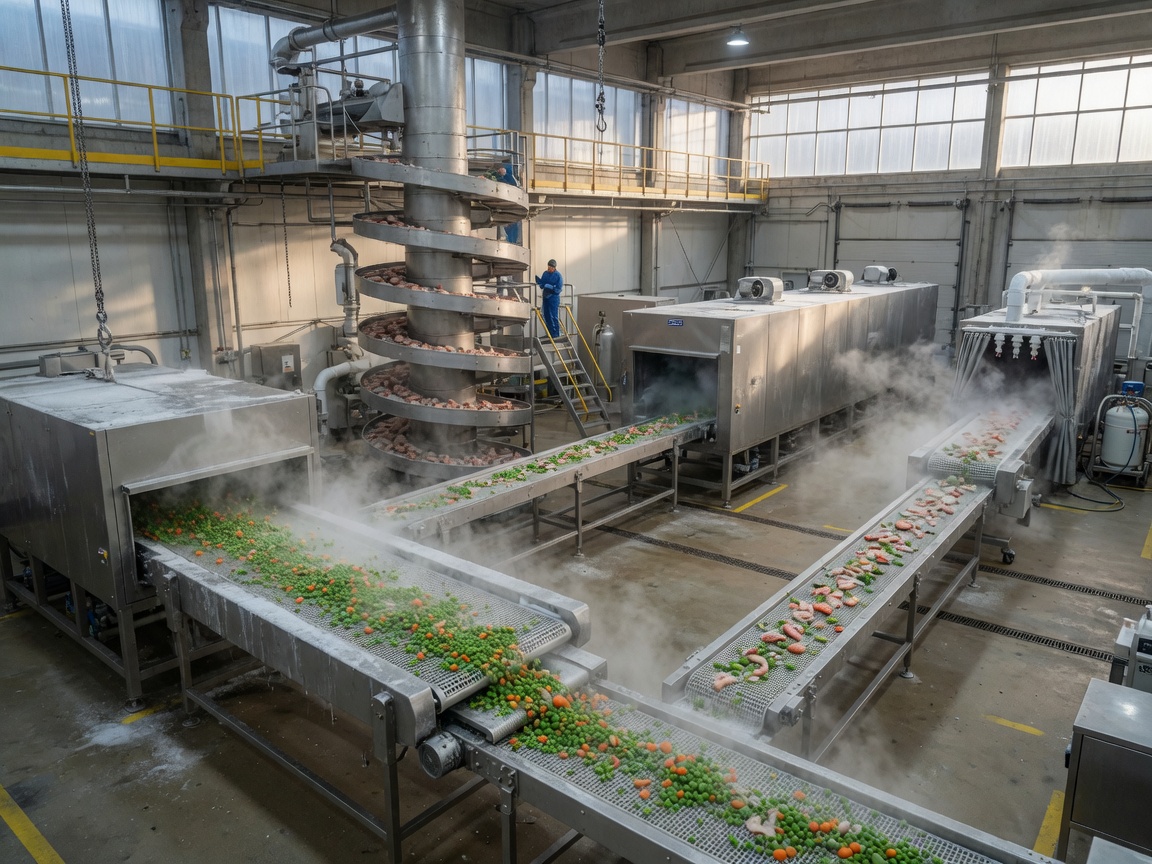
Continuous-flow industrial equipment for high-volume protein, bakery, and prepared meal processing. Product travels on a conveyor belt through a −40°F air environment. Throughput can exceed 5,000 lb/hour in large installations. This is the workhorse of large commercial blast freezer operations across the Midwest and Southeast protein processing corridor.
Spiral blast freezer
A space-efficient alternative to tunnel freezers, using a helical conveyor that maximizes product dwell time within a compact footprint. Common in seafood processing on the Gulf Coast and Pacific Northwest. The spiral design reduces the building footprint by up to 40% compared to equivalent-throughput tunnel systems, according to industry engineering estimates.
Plate contact blast chiller
Uses direct metal-to-product contact rather than air convection, delivering significantly higher heat transfer rates for liquid, semi-liquid, or flat-pack products. Common in dairy, sous vide production, and pharmaceutical applications. Not suitable for irregular-shaped products or bulk bins.
| Unit type | Capacity range | Best use case | Approx. US price range | COP range |
|---|---|---|---|---|
| Reach-in blast chiller | 40–300 lb/cycle | Restaurants, hotels, catering | $4,500–$18,000 | 1.8–2.5 |
| Roll-in blast freezer | 300–800 lb/cycle | Central kitchens, foodservice chains | $18,000–$45,000 | 1.6–2.2 |
| Tunnel blast freezer | 1,000–5,000+ lb/hr | Industrial protein/prepared meals | $150,000–$600,000+ | 1.4–2.0 |
| Spiral blast freezer | 500–4,000 lb/hr | Seafood, bakery, compact footprint | $200,000–$750,000+ | 1.5–2.1 |
| Plate contact chiller | Variable | Dairy, sous vide, pharmaceutical | $25,000–$120,000 | 2.0–2.8 |
Energy efficiency: EER, COP, and total cost of ownership
Energy operating cost is the single largest variable in a chiller blast system's total cost of ownership over a 10-year service life. Most competitive content stops at equipment purchase price. That is a significant analytical gap — and one that consistently misleads buyers.
Understanding EER, COP, and SEER for blast equipment
COP (Coefficient of Performance) measures refrigeration output (BTU) per unit of electrical input (BTU-equivalent). A COP of 2.0 means the unit delivers 2 BTU of cooling per 1 BTU of electricity consumed. For commercial blast freezer equipment operating at −40°F evaporator temperatures, COP values typically range from 1.4 to 2.2 — lower than standard refrigeration because of the extreme temperature differential demanded during the blast freeze cycle.
EER (Energy Efficiency Ratio) expresses the same concept in BTU/hr per watt. SEER (Seasonal EER) averages performance across varying ambient conditions — more relevant for equipment installed in unconditioned spaces like loading docks or outdoor machine rooms, where US regional climate has a direct impact.
TCO breakdown: a real-world ROI model
Consider a mid-size food processor in the US Midwest running a 300 lb/cycle roll-in blast freezer, operating 16 hours per day, 300 days per year, at an average commercial electricity rate of $0.12/kWh (2026 US EIA average for commercial accounts). Based on real-world case monitoring data:
- Equipment purchase cost: $32,000 (installed)
- Annual energy consumption at COP 1.8: approximately 28,000 kWh/year
- Annual energy cost: ~$3,360/year
- Annual maintenance (planned): ~$1,200/year
- Avoided product loss (estimated at 2% reduction in shrink and spoilage): ~$8,000/year savings
- Avoided regulatory non-compliance penalty risk: significant but facility-specific
- Simple payback from product savings alone: under 5 years
Of course, actual ROI varies by throughput volume, product type, and local electricity rates. Facilities in California and New England pay significantly higher per-kWh rates — up to $0.22/kWh in some commercial tariff zones — which shifts the energy cost line meaningfully and makes higher-COP units worth the premium purchase price.
"The total cost of ownership for quick blast cooling equipment over a 10-year horizon is dominated by energy and maintenance costs, not capital expenditure. Operators who optimize only for purchase price consistently underestimate 5-year operating costs by 30–40%." — ASHRAE Journal, Industrial Refrigeration Systems, 2025 edition
US regulatory compliance and refrigerant standards
Compliance is non-negotiable. For US operators, two regulatory frameworks directly govern chiller blast installation and operation, and both are frequently misunderstood by procurement teams without engineering support.
ASHRAE Standard 15: safety code for refrigeration systems
ASHRAE 15 establishes safety requirements for the design, construction, installation, and operation of mechanical refrigeration systems. For blast chilling and quick chill refrigeration equipment, the key compliance obligations include: refrigerant charge limits per occupied space (directly affecting system design for indoor-installed units), machinery room ventilation requirements when charge exceeds threshold limits, pressure relief device specifications, and leak detection requirements. Most US jurisdictions adopt ASHRAE 15 by reference in their local mechanical codes, so non-compliance creates both legal liability and insurance exposure.
EPA Section 608: refrigerant handling and the 2026 landscape
EPA Section 608 under the Clean Air Act governs the handling, recovery, and disposal of refrigerants in commercial refrigeration equipment. Every technician who services a chiller blast system must hold an EPA 608 Type II or Universal certification. In 2026, the refrigerant transition is a live operational issue — not a future concern. R-404A, the historically dominant refrigerant in commercial blast freezer and shock freezer applications, has a GWP of 3,922 and is subject to accelerating phase-down pressure under both the AIM Act and state-level regulations (California's CARB HFC rules are the most aggressive in the US).
The industry transition targets are R-448A (GWP: 1,387, a drop-in-compatible HFO blend) and CO₂ (R-744, GWP: 1) transcritical systems for larger industrial applications. According to near-term research data, CO₂ transcritical blast chilling systems are now commercially viable in the US for facilities above 50 kW refrigeration capacity, particularly in ambient temperatures below 95°F — making them well-suited for Midwest and Pacific Northwest installations.
Buyers specifying new flash freezing equipment in 2026 should request documentation of refrigerant type and GWP, confirm the system's forward compatibility with lower-GWP alternatives, and verify that the installing contractor holds current EPA 608 certification. These are not optional due diligence steps.
Regional climate considerations across the US
This is the content gap that almost no competitor addresses — yet it directly impacts equipment sizing accuracy, energy consumption, and system reliability. The US spans multiple climate zones, and a blast cooling machine specified for Chicago will be systematically undersized or inefficient if deployed without adjustment in Phoenix or Houston.
Southwest desert zone (Arizona, Nevada, inland California)
Ambient temperatures routinely exceed 105°F–115°F in summer. Air-cooled condensing units — standard on most commercial blast freezer models — lose efficiency rapidly above 95°F ambient, with condenser capacity de-rating of 15–25% in extreme heat. For Southwest installations, engineers should specify: oversized condenser coils (at minimum 20% capacity buffer above nominal rating), evaporative pre-coolers on condenser inlet air, or water-cooled condensing configurations where water costs are manageable. Running an industrial chiller unit at its nameplate capacity in a Phoenix loading dock environment without these adjustments is a common and costly specification error.
Southeast humidity zone (Florida, Gulf Coast, Carolinas)
High ambient humidity — regularly 80–95% RH in summer — creates two distinct problems for blast chilling and quick chill refrigeration systems. First, frost accumulation on evaporator coils accelerates significantly, increasing defrost cycle frequency and energy consumption. Second, door gasket degradation and insulation panel moisture infiltration are accelerated failure modes in humid climates. Specify hot gas defrost systems rather than electric defrost for Southeast deployments — they are faster, reduce thermal cycling stress, and consume less energy over a full year of operation. Panel construction should use closed-cell foam insulation with vapor-barrier facings rated for high-humidity environments.
Northern cold climate zone (Midwest, Northeast, Pacific Northwest)
Cold ambient winters create a different sizing challenge. Air-cooled condensing units can actually over-condense at low ambient temperatures, causing liquid refrigerant migration and compressor damage during startup. Head pressure control valves or variable-speed condenser fan controls are required for outdoor-mounted condensing units in climates with winter lows below 20°F. The upside: CO₂ transcritical systems perform most efficiently in these regions, making the Pacific Northwest and Upper Midwest ideal candidates for R-744-based rapid freeze cabinet installations.
Maintenance schedule and common failure points
A well-maintained blast cooling machine operating at designed COP will outlast a neglected high-spec unit by years. Based on actual case data from US food processing facilities, the following maintenance intervals represent industry best practice for commercial refrigeration equipment in intensive blast cycle applications.
Recommended maintenance schedule
- Daily: Inspect door gaskets for tears or compression set; verify core probe calibration against a reference thermometer; confirm HACCP log data upload to cloud dashboard.
- Weekly: Clean evaporator drain pan and drain line; check condenser coil for debris accumulation (critical in outdoor installations); inspect fan blade condition.
- Monthly: Measure supply air temperature differential across evaporator (should be ≥15°F TD); verify defrost termination temperature settings; inspect electrical connections and contactor contacts for arcing.
- Quarterly: Measure system superheat and subcooling at service ports; verify refrigerant charge (loss of 10% charge reduces COP by approximately 20%); clean condenser coil with appropriate coil cleaner; inspect compressor oil sight glass if applicable.
- Annual: Full refrigerant circuit leak test per EPA 608 requirements; pressure-test relief devices; recalibrate all temperature controllers and core probes; inspect insulation panel integrity, especially corner joints and door hinge areas.
Common failure points and troubleshooting
Real-world monitoring of US commercial installations identifies five recurring failure modes in chiller blast systems:
- Evaporator icing / coil frost block: Usually caused by defrost system failure or excessively short defrost intervals. Symptom: reduced airflow, longer cycle times. Fix: inspect defrost heater continuity and defrost termination thermostat setting.
- Compressor short cycling: Often triggered by low refrigerant charge or dirty condenser coil causing high head pressure. Immediate action: measure high-side pressure; check condenser fan operation before assuming compressor failure.
- Door gasket failure: The single most common maintenance call in high-cycle-frequency foodservice blast chiller operations. Gaskets in cook-chill kitchens should be inspected weekly and replaced annually as standard practice — not as a reactive repair.
- Core probe drift: Calibration drift of ±3°F to ±5°F has been documented in units with over 5,000 blast cycles without recalibration. This directly creates food safety compliance risk — a probe reading 37°F when the actual product core is 43°F is an invisible HACCP violation.
- Condenser fan motor failure: Accelerated in Southwest desert environments due to dust ingestion and elevated operating temperatures. Use IP54 or higher-rated motors for outdoor condenser installations in desert climates.
Frequently asked questions
Q: What is a chiller blast unit and how is it different from a standard commercial freezer?
A: A chiller blast unit is a rapid temperature pulldown device — not a storage unit. It uses high-velocity cold air at −30°F to −40°F to reduce product core temperature within 90 minutes (soft chill) or 4 hours (hard freeze). A standard commercial freezer is engineered for efficient holding at a stable temperature, not for fast heat extraction from hot product loads.
Q: Is a chiller blast system required by US food safety regulations?
A: The FDA Food Safety Modernization Act (FSMA) and HACCP protocols require that cooked food be cooled from 140°F to 70°F within 2 hours and from 70°F to 41°F within an additional 4 hours. A dedicated blast cooling machine is the most reliable equipment-level solution to meet these requirements in high-volume operations. Standard refrigerators are not designed to meet this timeline.
Q: What refrigerant should I specify for a new blast freezer purchase in 2026?
A: Avoid specifying R-404A for new equipment in 2026 — it is subject to ongoing phase-down under the AIM Act and carries significant long-term service cost risk as refrigerant prices rise. Specify R-448A for conventional vapor-compression systems, or CO₂ (R-744) transcritical for industrial-scale installations in cooler US climate zones (Midwest, Pacific Northwest).
Q: How do I size a blast chiller for my commercial kitchen?
A: The standard rule of thumb is 1 lb of blast chiller capacity per 3 lb of daily hot food production volume. A kitchen producing 600 lb of cooked product per service period needs a minimum 200 lb/cycle unit. Always add a 20% buffer for peak days and factor in product density — dense items like whole poultry require more cycle time than portioned proteins.
Q: What is the typical lifespan of a commercial blast cooling machine with proper maintenance?
A: With adherence to a documented preventive maintenance schedule, a quality reach-in or roll-in blast chiller should deliver 12–15 years of reliable service life. Industrial tunnel and spiral freezer systems, given their robust construction, commonly operate for 20+ years with major component rebuilds. The compressor, evaporator fans, and door gaskets are the most frequent replacement items.
Final takeaway: A chiller blast system is a high-impact operational asset for any food processing or commercial kitchen environment where food safety compliance, product quality, and operating efficiency matter. The procurement decision should be grounded in total cost of ownership — not just sticker price — and validated against your specific US climate zone, throughput requirements, and regulatory obligations. The 2026 market offers better energy efficiency, smarter IoT integration, and greener refrigerant options than any previous generation of blast cooling equipment. The fundamentals, however, remain unchanged: speed through the danger zone is everything.
Keywords:
Inquiry
If you are interested in our products, please leave your email to receive a free product quote, thank you!
More information


Tel:
Sales E-mail: