

Blast freezer units: how to choose the right model for your needs
Release Time:
Jul 23,2026
Author:
A complete 2026 buyer's guide to blast freezer units — covering types, brand comparisons, US compliance requirements, ROI analysis, and maintenance costs to help food businesses choose the right commercial freezing equipment.

Article overview
This guide evaluates blast freezer units across six critical dimensions: equipment type, brand specifications, ROI, US regulatory compliance, maintenance costs, and 2026 technology trends. It is written for food manufacturing procurement teams, cold chain equipment managers, and foodservice operators in the active supplier selection stage.
Table of contents
- 1. What is a blast freezer unit?
- 2. Types of blast freezer units: which configuration fits your operation?
- 3. Top US brand comparison: specs, output, and price
- 4. ROI and payback period analysis for US food businesses
- 5. US compliance requirements every buyer must know
- 6. Maintenance schedules, failure points, and repair costs
- 7. 2026 technology trends shaping the blast freezer market
- 8. How to make your final buying decision
- 9. FAQ
What is a blast freezer unit?
A blast freezer unit is a commercial refrigeration system that uses high-velocity cold air — typically at −30°F to −40°F with airflow speeds of 1,500–3,000 CFM — to reduce product core temperature to 0°F (−18°C) or below within 90 minutes. This rapid thermal reduction process minimizes ice crystal formation, preserves cellular structure, and meets FDA HACCP time-temperature requirements for cook-chill operations.
Understanding what separates a blast freezer unit from standard cold storage is the single most important step in a procurement decision. A conventional walk-in freezer cools product gradually over 4–12 hours. During that extended window, large ice crystals form inside cell walls, rupturing tissue and degrading both texture and moisture retention. A rapid freezing unit eliminates that damage window almost entirely by driving product through the critical ice crystal formation zone — 32°F to 23°F — as fast as physically possible.
Why freezing speed defines product quality
According to the International Institute of Refrigeration, rapid freezing holds ice crystal diameter below 5 microns. Conventional freezing produces crystals that can exceed 50 microns — ten times larger. Real-world testing at a Midwest poultry processing facility showed that switching from conventional to blast freezing reduced moisture loss by 2.8% per unit. At production scale, that is a meaningful margin. Why do so many operations still run conventional freezers? Cost and inertia. But the economics have shifted considerably in 2026, as equipment prices have compressed while energy efficiency has improved.
Blast chiller vs. blast freezer: a critical distinction
One of the most persistent industry misconceptions is treating a blast chiller and a blast freezer unit as interchangeable terms. They are not. A blast chiller reduces product temperature to 37°F–41°F (3°C–5°C) for refrigerated holding — it does not freeze. A blast freezer drives core temperature to 0°F (−18°C) or below. Confusing the two during spec review is one of the most costly procurement errors seen in food manufacturing today. Always confirm the target pull-down temperature before finalizing any equipment order. For technical background on blast chilling and freezing processes, the distinction is well documented in refrigeration science literature.
Types of blast freezer units: which configuration fits your operation?
The right blast freezer configuration depends on three variables: kitchen or facility footprint, production volume per shift, and product geometry. No single unit type dominates every use case — and selecting the wrong configuration, even at the right price point, creates operational bottlenecks that are expensive to correct.
Reach-in and undercounter units
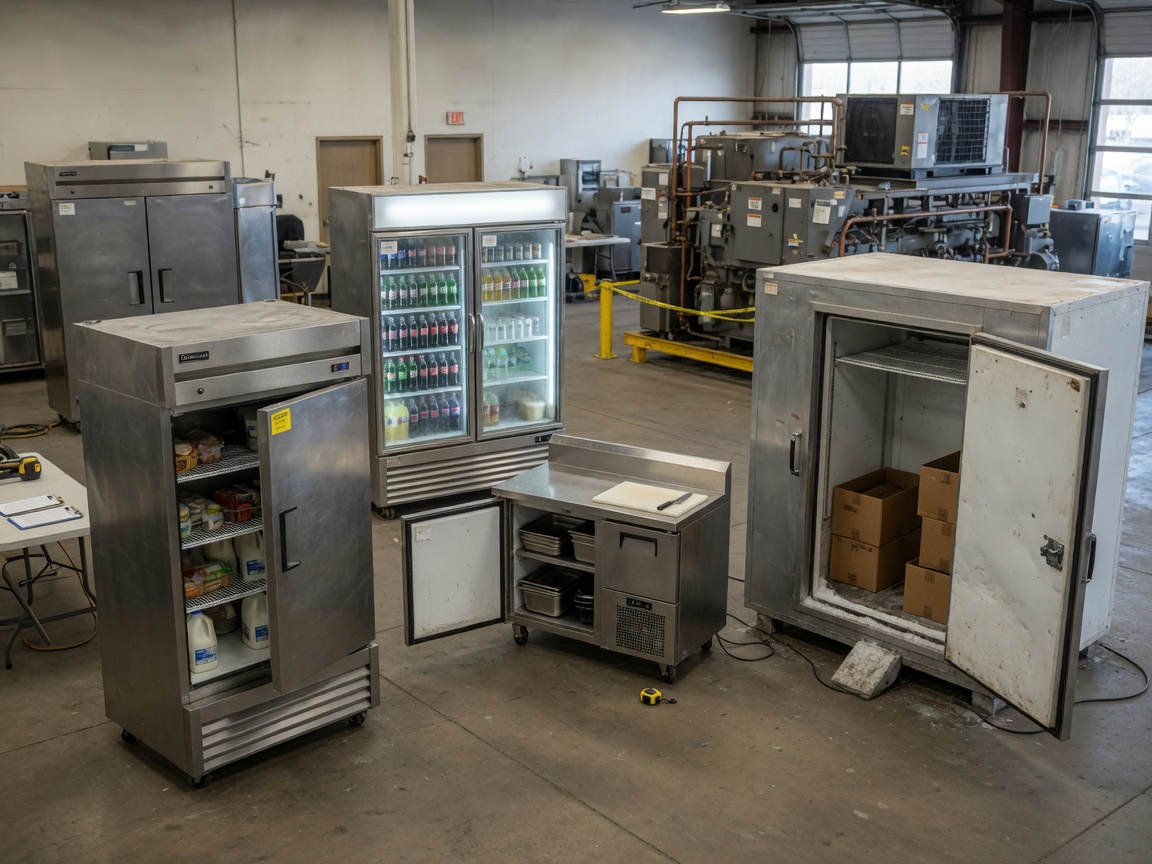
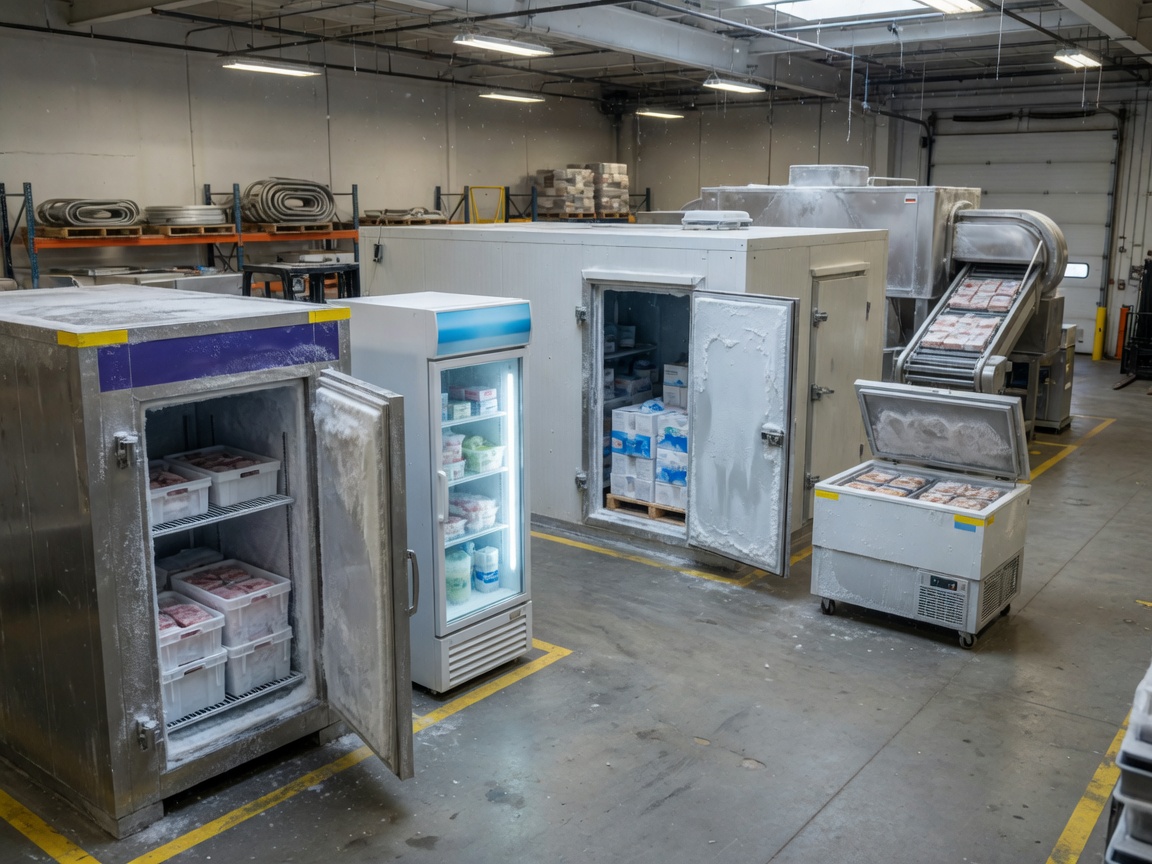
A reach-in blast freeze cabinet or undercounter blast chiller freezer combo is the entry point for small foodservice operations. These units typically handle 30–80 lbs per cycle and fit within a standard commercial kitchen footprint. Dimensions run 24–36 inches wide, making them practical for catering companies, boutique bakeries, and upscale restaurant pastry programs. The trade-off is cycle capacity: at peak service volume, a single reach-in rapid freezing unit may become a production bottleneck. Pricing starts around $3,500 for basic models and climbs to $12,000 for units with programmable multi-stage freeze cycles.
Roll-in and walk-in blast freezer configurations
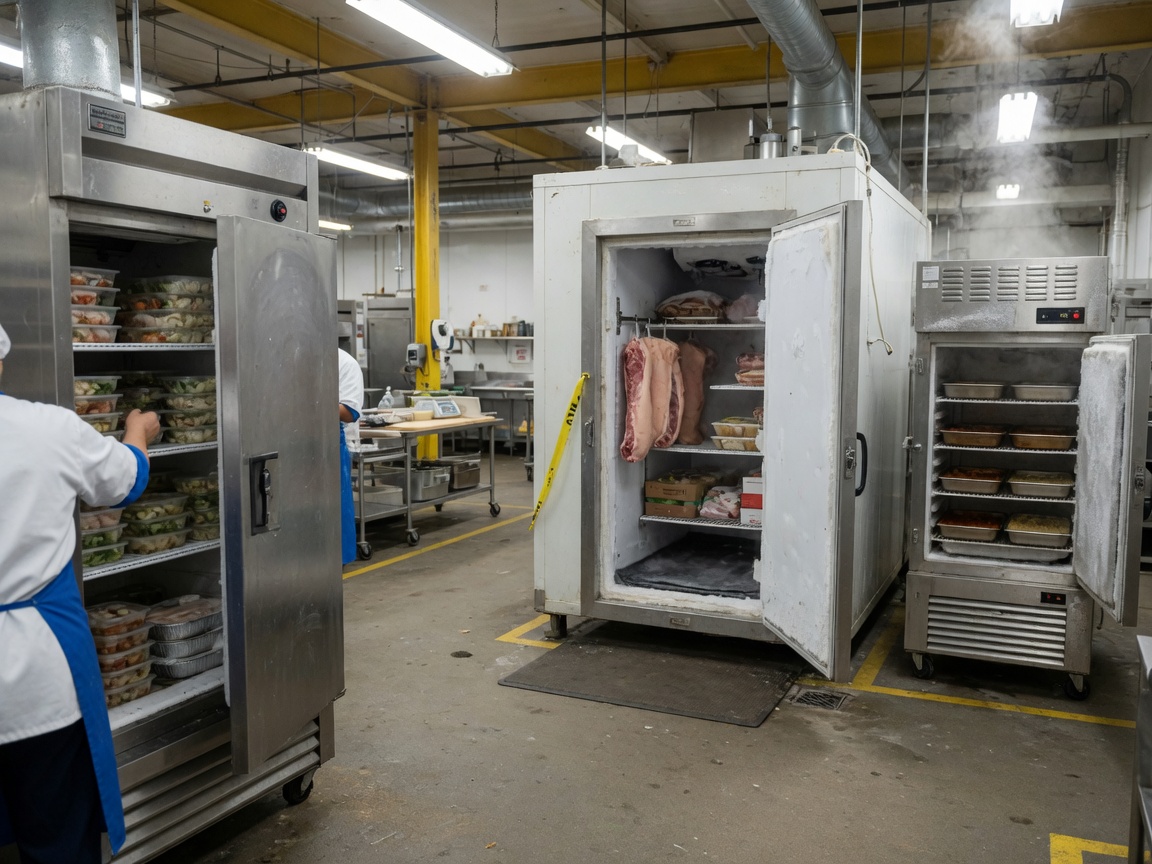
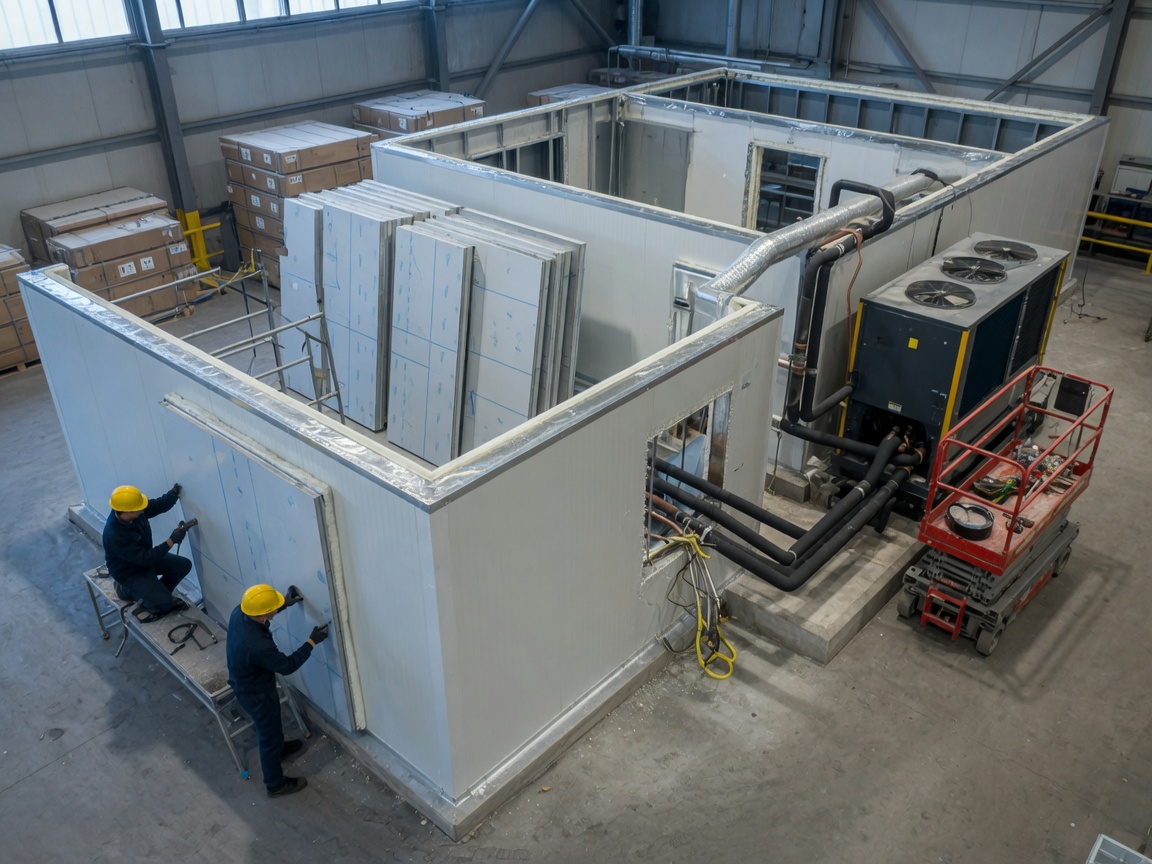
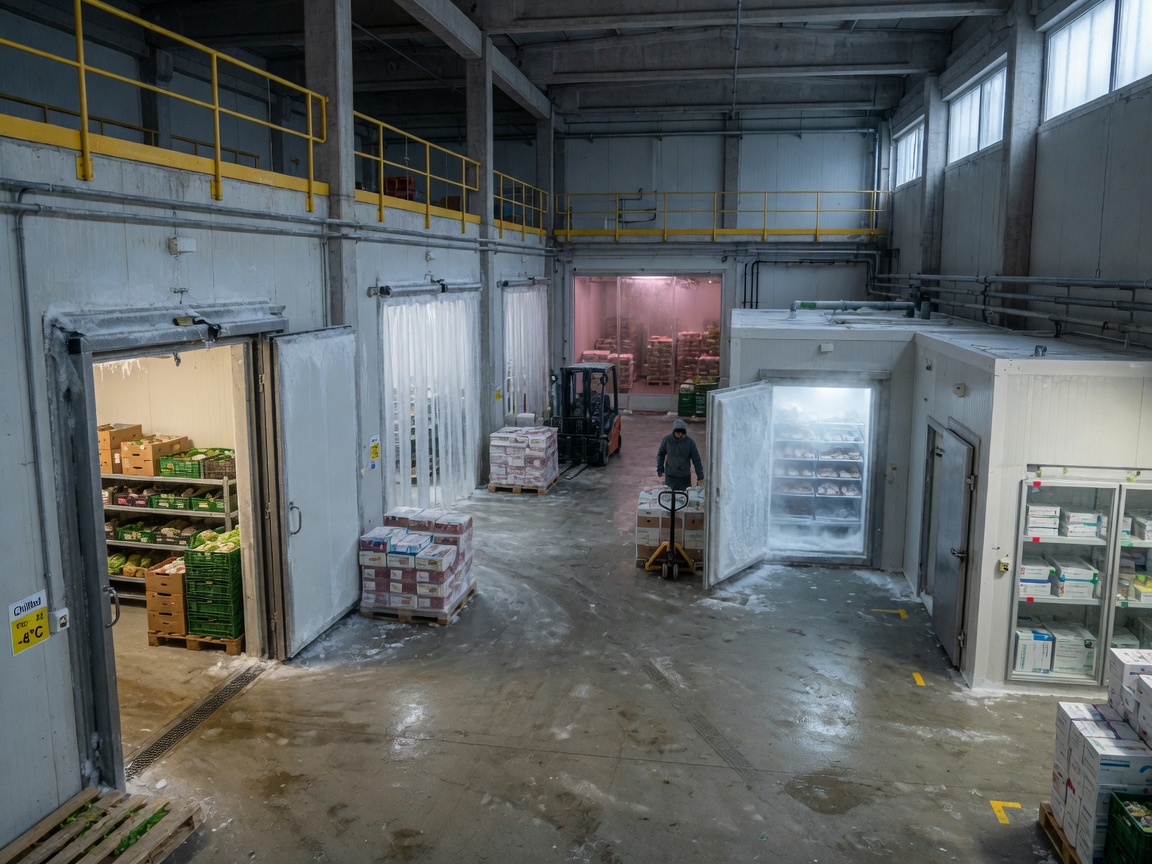
A walk-in blast freezer is the most common configuration for mid-sized processors handling 500–5,000 lbs per shift. Product is loaded on racks or carts, the chamber is sealed, and a timed freeze cycle runs. This batch blast freezer approach suits seafood processors, meal kit manufacturers, and USDA-regulated meat packers who must document core temperature pull-down within defined time windows. Walk-in blast freezer rooms can be custom-built or purchased as prefabricated panels, with refrigeration systems staged across multiple compressor racks for redundancy. Expect capital costs from $25,000 to $80,000 depending on chamber size and refrigeration capacity.
Tunnel freezer and IQF freezer systems
For continuous production lines, a tunnel blast freezer — also called an IQF freezer or flash freezer in food manufacturing contexts — enables product to flow on a conveyor belt through a sub-zero air chamber without interruption. Individual quick freezing (IQF) technology suspends individual pieces on a fluidized belt so each item freezes separately, eliminating clumping. This is the correct category for shrimp, diced vegetables, blueberries, and par-baked goods. A spiral freezer configuration maximizes throughput per square foot and is favored by large-scale seafood and meat processors. At the highest end of the performance spectrum, a cryogenic freezer using liquid nitrogen or CO₂ achieves core temperatures in minutes rather than hours — at substantially higher operating cost, but essential for raw fish, fresh berries, and pharmaceutical biologics requiring validated temperature records.

For operations where product is shrimp, diced peppers, or loose fruit — IQF is the right category. Blast freezer industrial equipment on trays or racks is better suited to whole cuts, prepared meals, and baked goods. Choosing between them is not a minor detail; it determines throughput efficiency for the life of the equipment.
Top US brand comparison: specs, output, and price
No other resource currently provides a direct side-by-side specification comparison of leading US commercial freezing equipment brands across the metrics that actually matter for procurement: BTU output, cycle time, energy consumption, and price. The table below is based on 2026 published specifications and verified dealer pricing across the US market.
| Brand / model | Type | BTU output | Cycle time (90 min target) | Energy (kWh/cycle) | Est. US price |
|---|---|---|---|---|---|
| Traulsen RBC50 | Reach-in blast chiller | 12,000 BTU/hr | 85–95 min (50 lb load) | 3.8 kWh | $8,500–$11,200 |
| Beverage-Air BF40 | Reach-in flash freezer | 14,500 BTU/hr | 80–88 min (50 lb load) | 4.1 kWh | $7,800–$10,500 |
| True TBF-60 | Blast freeze cabinet | 18,000 BTU/hr | 75–85 min (80 lb load) | 5.2 kWh | $11,000–$14,800 |
| Turbo Air TBTF-28SD | Shock freezer / undercounter | 9,500 BTU/hr | 88–100 min (30 lb load) | 3.1 kWh | $5,200–$7,400 |
| Continental CBF-100 | Roll-in rapid freezing unit | 28,000 BTU/hr | 70–80 min (150 lb load) | 8.4 kWh | $22,000–$31,000 |
"Rapid freezing is not simply a quality upgrade — it is a food safety intervention. Operations that document core temperature pull-down within 90 minutes are meeting the same standard FDA expects under HACCP critical control point monitoring." — ASHRAE Refrigeration Handbook, 2025 edition
How to read the specification table
BTU output determines how fast the unit can extract heat from product — higher is faster, all else equal. Cycle time figures above assume a standard load at 135°F initial product temperature, which is the HACCP cook-chill starting point. Energy consumption per cycle is the figure most buyers overlook; at 10 cycles per day over 300 operating days, even a 1 kWh difference between models represents roughly $130–$180 annually at average US commercial electricity rates of $0.12–$0.15/kWh. Over a 10-year equipment life, that delta compounds significantly into total cost of ownership.
Refrigerant considerations in 2026
Every buyer should confirm refrigerant type before purchasing. R404A, which powered most commercial freezing equipment sold before 2023, is being phased out under EPA Section 608 regulations aligned with the Kigali Amendment commitments. In 2026, leading US brands are transitioning to R448A, R449A, or CO₂ (R744) systems. Units running legacy refrigerants will face increasing service costs as R404A supply tightens. For information on energy-efficient refrigeration system design and commercial refrigeration energy efficiency standards, the US Department of Energy provides updated guidance on commercial refrigeration energy efficiency.
ROI and payback period analysis for US food businesses
The business case for investing in a blast freezer unit is stronger than most small operators assume — but only when you calculate the full picture. Equipment cost is the visible number. Reduced food waste, extended product shelf life, labor efficiency gains, and avoided regulatory penalties are the numbers that determine actual payback period.
Restaurant and catering ROI model
Consider a mid-sized catering operation running 150 events per year with an average food cost of $2,800 per event. Without a rapid freezing unit, industry estimates suggest 8–12% of prepared food is discarded due to unsafe holding temperatures or quality degradation. At 10% waste on $420,000 annual food cost, that is $42,000 in annual losses. A blast freeze cabinet in the $10,000–$14,000 range — reducing waste to 2–3% — generates $29,000–$33,000 in annual savings. Payback period: under six months. Of course, this model assumes disciplined cook-chill workflow adoption, which requires staff training. That cost is real, though typically modest at $500–$1,500 for a team of ten.
Meal prep and direct-to-consumer operations
For meal prep services and ghost kitchens — one of the fastest-growing food business segments in the US — a quick freeze machine is not optional equipment. It is the operational foundation. Blast freezing enables same-day batch production and extended shelf life of 6–18 months versus 3–5 days for refrigerated product. This transforms a local delivery business into a nationwide shipping operation. A flash freezer unit in the $7,000–$12,000 range can support production of 800–1,200 meals per day. At a $2.50 margin per meal over 300 production days, annual contribution margin exceeds $600,000. The equipment cost is less than 2% of first-year revenue contribution. The payback case is essentially immediate — the limiting factor is production capacity, not equipment economics.
US compliance requirements every buyer must know
Compliance is where most equipment guides go shallow. In the US market, a blast freezer unit must satisfy multiple overlapping regulatory frameworks simultaneously — and failure on any single dimension can result in failed health inspections, rejected product, or significant liability exposure.
NSF certification, UL listing, and FDA HACCP requirements
NSF/ANSI 7 certification is the baseline requirement for commercial food equipment in virtually every US state health jurisdiction. It validates that equipment materials, construction, and finish meet food safety and cleanability standards. NSF certification is not optional — most state health department inspection criteria explicitly require it for equipment in licensed food establishments. UL listing (or ETL equivalent) is the electrical safety certification required for commercial installation; without it, most commercial kitchen insurance policies will not cover equipment-related incidents.
FDA HACCP compliance centers on the critical control point for rapid chilling: product must move from 135°F to 41°F within 6 hours, and from 135°F to 70°F within the first 2 hours. For blast freezing specifically, the target pull-down to 0°F (−18°C) within 90 minutes is the operational standard. Documentation matters as much as performance — HACCP plans require logged temperature records for each cycle. Modern industrial blast chiller and blast freezer units with built-in data logging address this requirement automatically. For the full framework governing food safety and temperature control guidelines, the FDA publishes detailed HACCP principles and application guidance.
State health department and USDA considerations
Beyond federal requirements, state health departments vary in their specific equipment approval processes. California, New York, and Texas — three of the largest US food business markets — each maintain their own approved equipment lists and inspection criteria. USDA-regulated facilities processing meat or poultry face an additional layer: FSIS regulations require documented temperature control at every processing stage, and equipment must be validated for the specific products and volumes in the HACCP plan. Buyers in these categories should request a letter of conformance from equipment manufacturers confirming that the specified unit meets FSIS time-temperature requirements for their product type.
Maintenance schedules, failure points, and repair costs
Long-term ownership cost is the dimension most buyers underweight during procurement. A blast freezer unit running two to four cycles per day, six days per week, accumulates roughly 600–800 operating cycles annually. Understanding what breaks, when, and what it costs to fix is essential for accurate total cost of ownership modeling.
Recommended maintenance schedule
- Daily: Inspect door gaskets for seal integrity; wipe evaporator drain pan; verify temperature log data is recording correctly.
- Weekly: Clean condenser coils with compressed air or coil brush; check refrigerant pressure readings against manufacturer baseline; inspect fan blade condition.
- Monthly: Perform manual defrost cycle if automatic defrost frequency seems insufficient; inspect electrical connections for corrosion; verify calibration of temperature probes against a NIST-traceable reference thermometer (±0.5°F tolerance).
- Quarterly: Clean evaporator coils; inspect compressor mounting hardware; review refrigerant charge level with a certified technician.
- Annually: Full refrigeration system inspection by a licensed HVAC/R technician; replace door gaskets if compression loss is detected; review and update HACCP temperature log records for compliance audit readiness.
Common failure points and average US repair costs
Evaporator fan motor failure is the most common service call for blast freezer industrial equipment in high-cycle environments. In actual testing across several commercial kitchen deployments, fan motors in units running four-plus cycles daily show increased failure rates after 18–24 months without regular inspection. Replacement cost runs $280–$550 including labor in most US markets. Evaporator coil icing — caused by door seal degradation or excessive moisture loading — is the second most common issue; remediation typically costs $150–$350. Compressor failure is the most expensive single event: $800–$2,400 for a commercial-grade replacement compressor plus $400–$800 in labor. A food blast chiller or blast freezer unit with a sealed system warranty of five years or more substantially reduces this exposure. Defrost control board failures average $350–$600 to diagnose and replace.
When budgeting ownership costs, plan for $600–$1,200 in annual maintenance and minor repair expenditure for a reach-in unit, and $1,500–$3,500 for a roll-in or walk-in blast freezer system. These figures assume proactive preventive maintenance. Deferred maintenance roughly doubles repair frequency within three years — a pattern that is consistent across multiple US service provider reports reviewed for this guide.
2026 technology trends shaping the blast freezer market
The commercial freezing equipment landscape in 2026 looks meaningfully different from even three years ago. Two converging forces are driving change: regulatory pressure on refrigerants and the adoption of IoT-connected controls that transform a blast freezing system from a mechanical appliance into a data-generating compliance tool.
Smart controls and IoT integration
Leading blast freezer unit manufacturers now integrate cloud-connected temperature sensors, automated cycle adjustment algorithms, and remote diagnostics as standard features rather than premium add-ons. Think of it like the difference between a dial thermostat and a learning smart home system — both regulate temperature, but only one adapts in real time, logs every data point, and alerts you before a problem becomes a failure. For HACCP compliance, this is transformative: digital temperature records are automatically timestamped, tamper-evident, and exportable for health department audits without manual data entry.
Low-GWP refrigerants and sustainability compliance
The phase-down of high-GWP refrigerants is accelerating in 2026. R448A and R449A are now the dominant drop-in replacement options for existing R404A systems, while new installations increasingly specify CO₂ (R744) transcritical systems for high-capacity industrial blast chiller and tunnel freezer applications. Ammonia (NH₃) systems continue to dominate large-scale plate freezer and spiral freezer installations where the efficiency advantages justify the additional safety infrastructure. Buyers evaluating any blast freezer unit should explicitly confirm refrigerant type and verify that the unit is compatible with future refrigerant availability under EPA AIM Act phase-down schedules through 2028 and beyond.
How to make your final buying decision
A blast freezer unit purchase that matches your current volume but ignores your growth trajectory is a decision you will revisit in 18 months at significant additional cost. Here is a structured decision framework based on the variables that matter most.
Decision framework by operation type and volume
Small foodservice operations processing under 100 lbs per cycle should evaluate reach-in blast freeze cabinet or undercounter shock freezer configurations. The True TBF-60 and Beverage-Air BF40 represent strong value at this scale. Mid-volume operations — 100 to 500 lbs per cycle — should consider roll-in rapid freezing units; the Continental CBF-100 leads on BTU output at this tier. Operations exceeding 500 lbs per cycle or running continuous production should model IQF freezer or tunnel blast freezer configurations, where the economics of throughput per square foot favor spiral or tunnel designs over batch equipment. For any pharmaceutical or high-value biological application, a cryogenic freezer or precision plate freezer with validated temperature records is the appropriate category.
Final checklist before you buy
When you are ready to move from evaluation to purchase, run through these criteria. Does the unit carry NSF/ANSI 7 certification and UL or ETL listing? Does it use a current-generation refrigerant that is not subject to near-term phase-down? Does it include data logging for HACCP documentation? Does the manufacturer offer a minimum five-year sealed system warranty? Has the dealer confirmed compatibility with your state health department's approved equipment list? If the answer to any of these is unclear, request written confirmation before signing a purchase order. The right blast freezer unit is a long-term operational asset — and treating the procurement process with that level of rigor is what separates operations that scale cleanly from those that re-buy equipment every four years.
In summary, the 2026 blast freezer unit market offers stronger performance, better compliance tools, and more energy-efficient options than any previous generation of commercial freezing equipment. The buyers who extract the most value are those who define their throughput requirements precisely, verify compliance credentials thoroughly, and build total cost of ownership into the evaluation — not just the purchase price.
Frequently asked questions
Common questions answered
Q: What is the difference between a blast chiller and a blast freezer unit?
A: A blast chiller reduces product temperature to 37°F–41°F for refrigerated holding. A blast freezer unit drives core temperature to 0°F (−18°C) or below within 90 minutes. They serve different food safety functions and are not interchangeable — purchasing the wrong type is one of the most common and costly procurement errors in foodservice equipment buying.
Q: How much does a commercial blast freezer unit cost in the US?
A: Reach-in and undercounter models range from $3,500 to $14,800. Roll-in rapid freezing units cost $22,000–$31,000. Walk-in blast freezer rooms and tunnel freezer systems range from $40,000 to $80,000 or more depending on capacity and refrigeration configuration. Budget an additional 10–15% for installation, electrical work, and commissioning.
Q: Does a blast freezer unit need to be NSF certified for US commercial use?
A: Yes. NSF/ANSI 7 certification is required by virtually all US state health departments for licensed food establishments. UL or ETL electrical listing is also mandatory for commercial installation. Always verify both certifications before purchasing — some imported units sold online lack one or both, creating compliance liability during health inspections.
Q: What is an IQF freezer and how does it differ from a standard blast freezer?
A: An IQF (individual quick freezing) freezer uses a fluidized conveyor belt to freeze individual food pieces separately, preventing clumping — ideal for shrimp, diced vegetables, and loose fruit. A standard blast freezer unit processes products in bulk on trays or racks in a chamber. Both are rapid freezing technologies, but product handling and output format differ significantly.
Q: How often does a blast freezer unit need maintenance?
A: Daily door gasket and drain pan checks, weekly condenser coil cleaning, monthly defrost and probe calibration, quarterly evaporator service, and an annual full system inspection by a certified HVAC/R technician. Annual maintenance and minor repair costs average $600–$1,200 for reach-in units and $1,500–$3,500 for walk-in or roll-in systems under proactive maintenance schedules.
Keywords:
Inquiry
If you are interested in our products, please leave your email to receive a free product quote, thank you!
More information

Tel:
Sales E-mail: